

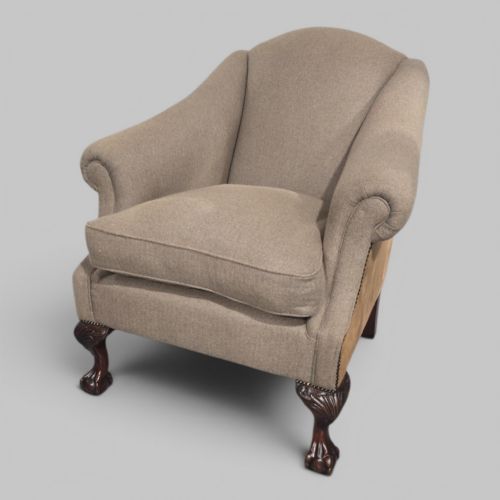


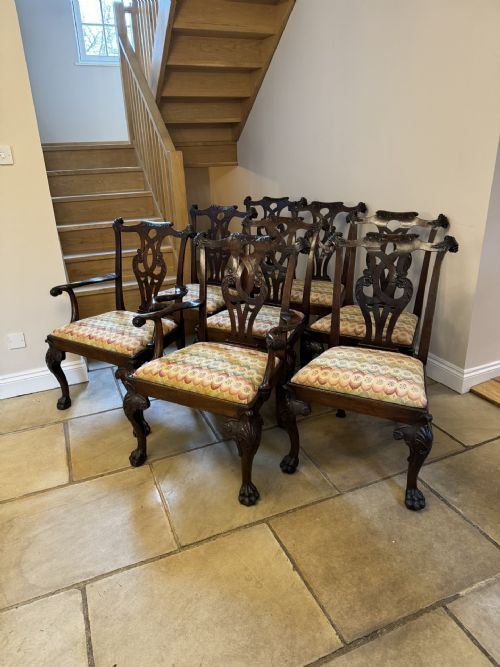


Dark Wood Cabriole Armchair
Dark wood cabriole armchair choices combine curved legs with solid timber frames, offering historical seating grounded in centuries of joinery traditions.
Dark Wood Cabriole Armchair
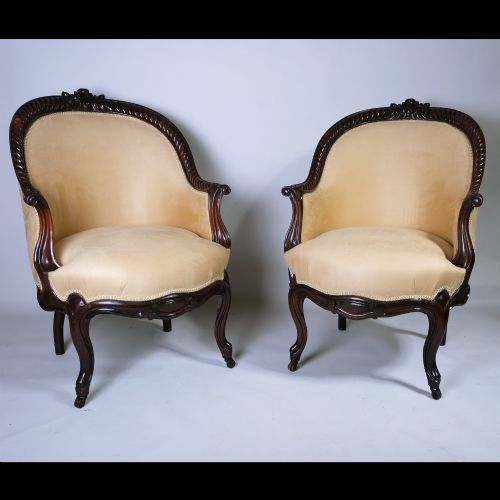
A dark wood cabriole armchair brings together sturdy timber frames and the signature double-curved leg profile associated with periods like the eighteenth century and Victorian revivals. Buyers searching for a dark wood cabriole armchair encounter various formats including library seats, desk chairs, and salon elbow chairs.
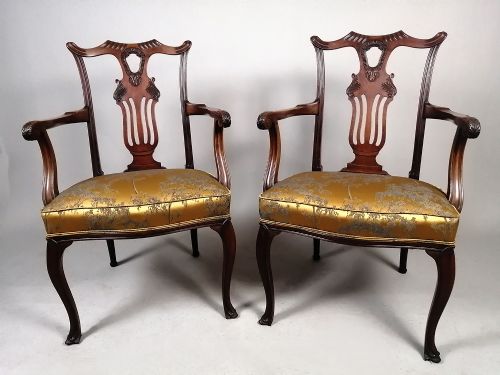
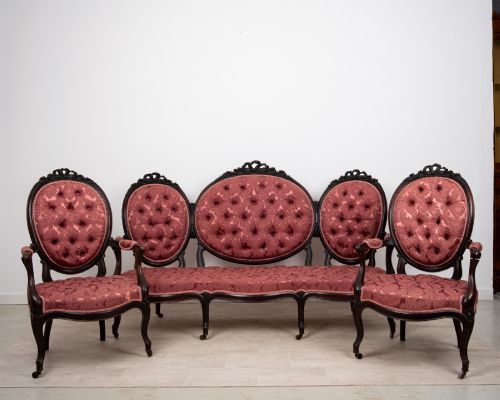
Forms range from individual library armchairs to matched pairs and larger dining sets featuring open arms or upholstered panels. Each variant reflects the prevailing taste of its original era while retaining the characteristic stance of curved supports.
Factors That Separate Examples
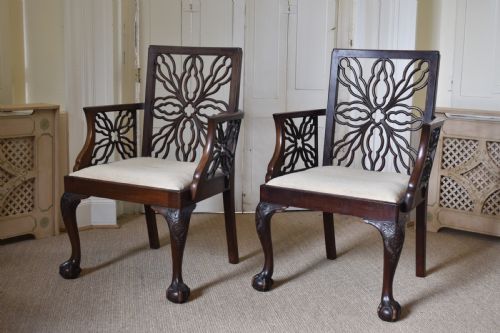
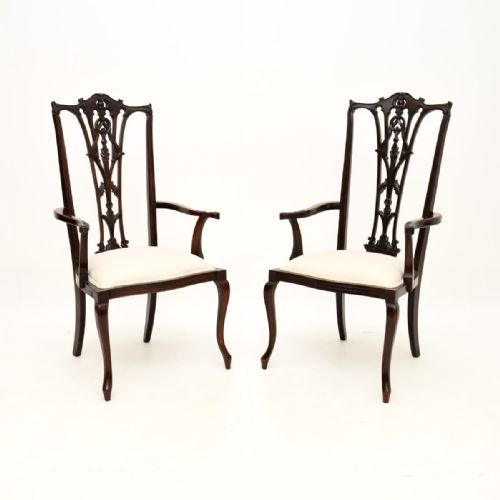
The standard of carving and timber selection determines the distinction between ordinary production and superior craftsmanship. Crisp execution in details like spider web backs or shell motifs on the knees indicates a more accomplished hand.
Integrity of the timber frame and the survival of original upholstery materials influence how successfully a piece maintains its structural and aesthetic character over time. Cohesion between the dark wood frame and its supporting elements governs the overall presence of the seating.
Listings span the eighteenth, nineteenth, and early twentieth centuries, featuring mahogany, rosewood, walnut, oak, and elm timbers combined with diverse fabric upholstery.
The Dark Wood Cabriole Armchair Glossary
- Cabriole leg
- A furniture leg featuring a double curve, swelling outward at the knee and tapering inward toward the foot. This shape draws inspiration from animal limbs and defines many classical seating styles.
- Chippendale style
- A design framework originating in the eighteenth century and revived later, known for intricate back splints and carved ornamentation. Pieces in this aesthetic often incorporate scroll details and polished dark timber.
- Elbow chair
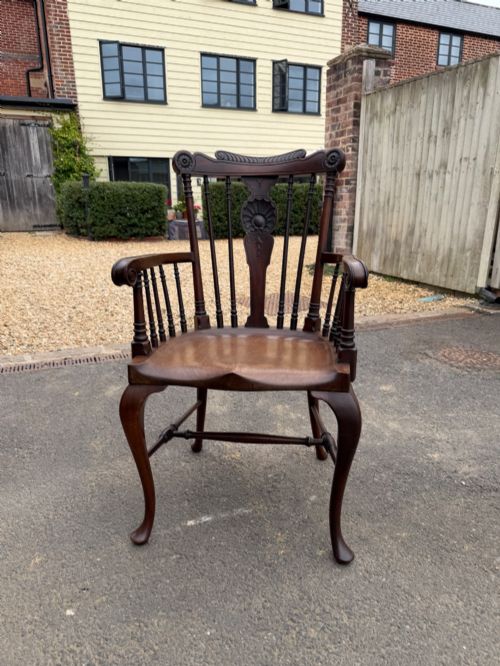
- An armchair featuring wooden armrests designed to support the arms while seated. These chairs frequently serve as carvers at the ends of dining tables or as standalone desk seats.
- Wing chair
- An upholstered armchair with high backrests and side panels designed to shield the occupant from draughts. Early examples utilise substantial timber frames beneath heavy fabric coverings.
- Windsor chair
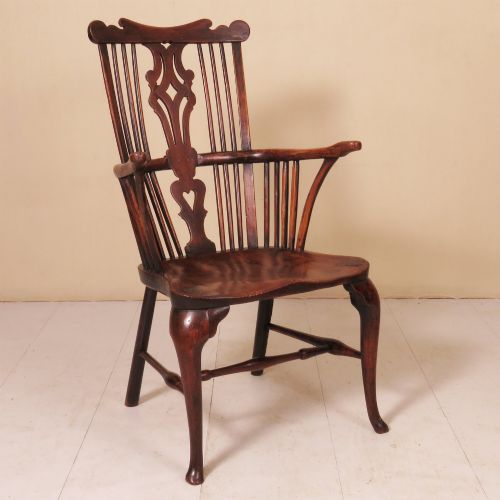
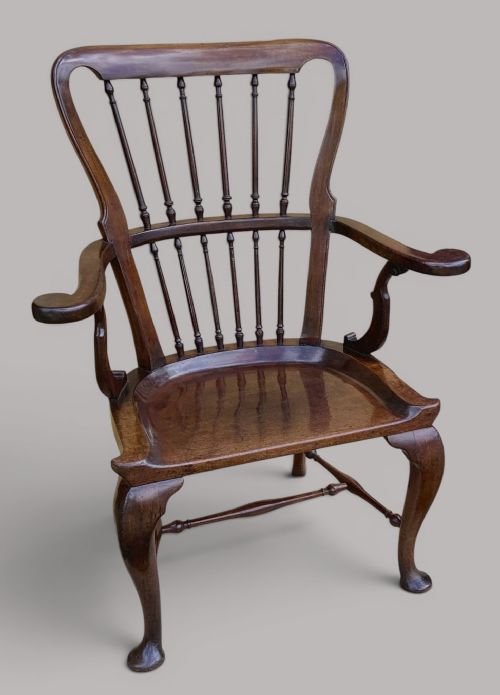
- A wooden seating form constructed with turned spindles inserted into a solid sculpted seat. Variations include comb backs, wheel backs, and ash or elm construction.
Dark Wood Cabriole Armchair: Frequently Asked Questions
What is a cabriole leg?
A cabriole leg is a curved furniture support that bows outward near the top and tapers inward toward the base, mimicking an animal leg. This form became prominent during the eighteenth century and reappeared in later revival periods.
Makers shaped these legs from solid timbers like mahogany and walnut, integrating them seamlessly into the seat frames of chairs and armchairs.
How do I identify a revival piece?
Revival pieces are later interpretations of historical styles, such as nineteenth-century furniture built to emulate eighteenth-century Chippendale or George II designs. Examination of tool marks, timber ageing, and construction techniques helps reveal the true manufacturing date.
Listings often denote these items with specific revival labels or dates spanning the late Victorian and Edwardian eras.
What woods were used for these armchairs?
Cabinetmakers utilised dense hardwoods including mahogany, walnut, rosewood, oak, elm, and cherrywood to build durable chair frames. These dark timbers offered the strength required for slender legs and intricate carved embellishments.
Alternative woods like ash also appear in specific regional chair forms such as Windsor variations.
Where were elbow chairs used?
Elbow chairs served multiple functions within period interiors, acting as desk seats, library chairs, or principal seats at dining tables. Their armrests provided added comfort for reading, writing, or dining.
Pairs or single examples often populated parlours, salons, and studies alongside matching side chairs.