
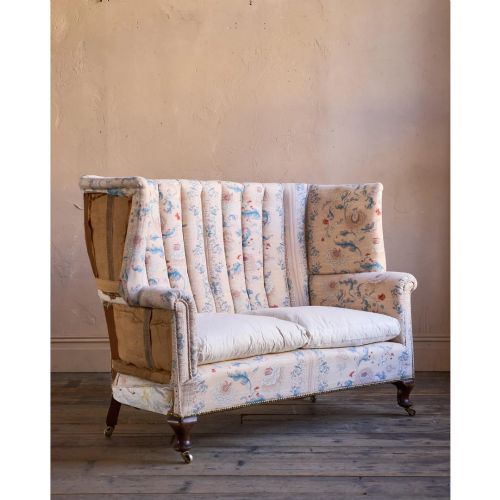


Channel Back Wing Chair
Channel back wing chair designs offer deep comfort and classic form, bringing structured seating and period character to any room.
Channel Back Wing Chair
When you search for channel back wing chair pieces, you find traditional seating designed for comfort and presence. These items include armchairs and sofas featuring enclosed wing designs and supportive backs.
The selections span several distinct periods including Georgian, Victorian, and later 1920 or 1930 examples. You encounter styles ranging from Queen Anne influence to Art Deco interpretations.
Mahogany and walnut form the wooden framework for these upholstered seats. Makers applied various textiles over hessian foundations to complete the distinctive silhouette.
How they were made
Craftsmen shaped solid mahogany and walnut to form the structural frames and exposed legs. Brass details sometimes supplemented the woodwork on specific examples.
Upholsterers built up the seats and backs using supportive materials like hessian before applying outer layers of linen, fabric, or damask. Fluted and ribbed stitching defined the vertical channels characteristic of the backrests.
Listings feature items spanning the Georgian era, the 19th Century, and the 1920 to 1930 decades in mahogany, walnut, and various fabrics.
What varies in quality
Quality rests in the precision of the woodwork and the integrity of the upholstered frame. Refined carving on mahogany or walnut timber elevates certain pieces above simpler construction.
The execution of the fluted or ribbed channel work dictates the visual success of the upholstery. Tighter stitching and well-maintained fabric finishes separate finer examples from standard seating.
The Channel Back Wing Chair Glossary
- Channel back
- An upholstered backrest divided into vertical padded sections or flutes. This technique creates a distinctive ribbed texture.
- Wingback
- An armchair featuring side panels designed to shield the sitter from drafts. These wings extend from the upper back to the armrests.
- Mahogany
- A durable tropical hardwood with a reddish-brown tone. Makers utilised this timber extensively for furniture frames.
- Hessian
- A coarse woven fabric used as a foundation layer in traditional upholstery. It supports the internal padding before the outer cover is applied.
Channel Back Wing Chair: Frequently Asked Questions
What is a channel back wing chair?
A channel back wing chair is an upholstered seat featuring vertical fluted padding on the backrest and protective side wings. These design elements combine draught-exclusion with structured vertical comfort.
Such chairs appear in various historical styles, spanning from Georgian interpretations through to later 1930s forms.
How were these chairs used?
These chairs were placed near firesides to trap heat and shield occupants from cold draughts. The high wings directed warmth toward the person sitting.
Over time, they transitioned into general living spaces and reading rooms as decorative seating choices.
Which woods are common?
Mahogany and walnut form the primary timber framework for these upholstered pieces. Craftsmen selected these hardwoods for their strength and ability to hold carved details.
Exposed wooden legs and trim often display the natural grain and colour of these materials.
How do I spot a Georgian piece?
Georgian examples display proportions and woodwork characteristic of the eighteenth-century aesthetic. They often feature mahogany frames built according to period conventions.
Comparing the structural joinery and leg styling helps distinguish these earlier pieces from later Victorian or 1920s reproductions.