


Yellow Bedroom Armchair
These yellow bedroom armchair selections combine period comfort with distinctive upholstery, offering a practical seating option for domestic spaces.
Yellow Bedroom Armchair
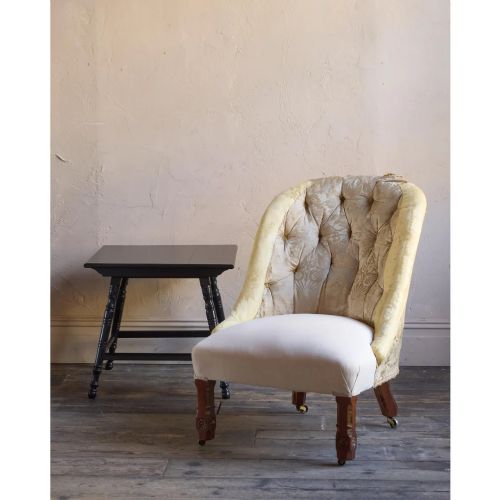
A yellow bedroom armchair serves as both a functional seat and a decorative anchor in private rooms, drawing on forms from the 19th Century, Victorian, and Edwardian periods. Buyers exploring this category encounter varied seating types including nursing chairs, salon chairs, and low armchairs designed for private chambers.
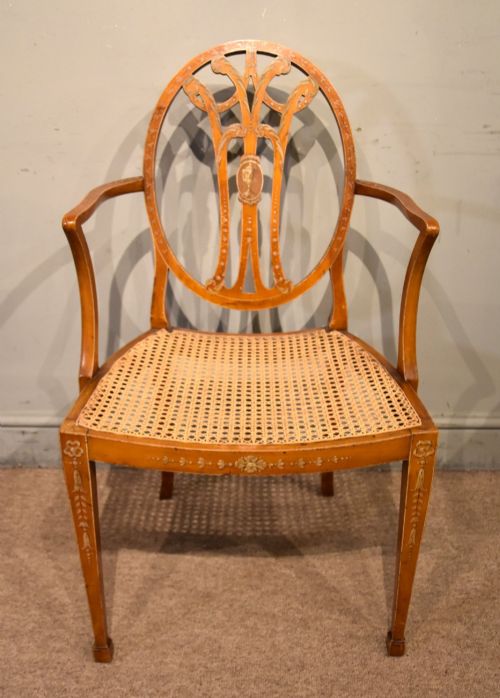
The pieces appearing on this page span several distinct stylistic revivals and cabinet-making traditions, ranging from Rococo Revival and Queen Anne style to Regency and early 20th century designs. Materials recorded in these examples encompass mahogany, walnut, satinwood, and various woods paired with rich textile coverings.
Materials and construction methods
Frames rely upon cabinet timbers such as mahogany and walnut, frequently shaped through turning, carving, or string inlay to define the silhouette. Edwardian examples often utilise painted finishes or light satinwood, whilst Victorian pieces favour heavier carved mahogany and exposed wood borders.
Upholstery techniques involve traditional stuffing and springing secured beneath textile layers, including button back configurations and plain tensioned fabric. Brass accents and detailed needlepoint panels are integrated into specific frames to enhance decorative appeal.
Distinctions in construction and finish
The calibre of a yellow bedroom armchair rests upon the integrity of the frame joinery, the crispness of any carved or painted ornament, and the execution of the upholstery work. Pieces associated with established workshops demonstrate superior timber selection and more refined proportion.
Subtleties in wood grain, the complexity of string inlay, and the retention of original maker marks or stamps differentiate standard production pieces from more accomplished examples.
Harrods London·Hindley And Sons·Howard And Sons
The Yellow Bedroom Armchair Glossary
- Nursing chair
- A low-seated upholstered chair designed in the Victorian era, intended originally for feeding infants or personal grooming. These items typically feature an open frame and a low centre of gravity.
- Spoon back
- A padded chair back shaped like the bowl of a spoon, curving inward to fit the human spine. This ergonomic contour appears frequently in Victorian walnut seating.
- String inlay
- Fine lines of contrasting wood veneer embedded into the surface of a furniture frame. Edwardian cabinet makers utilised this technique to accentuate geometric panels.
- Needlepoint
- A type of counted thread embroidery stitched onto a stiff canvas foundation. It provides durable and decorative upholstery for open armchairs.
- Satinwood
- A pale, hard tropical timber with a lustrous sheen, popular for inlaid and painted furniture during the Edwardian period. It accepts fine painted decoration remarkably well.
Yellow Bedroom Armchair: Frequently Asked Questions
What defines a Victorian nursing chair?
Victorian nursing chairs are characterised by their notably low seats and high, upholstered backs, which were designed to provide comfort during private domestic tasks.
They frequently employ walnut or mahogany frames and may feature button-tufted upholstery or carved spoon-back contours.
How do Edwardian armchairs differ from earlier pieces?
Edwardian armchairs typically exhibit lighter proportions, brighter wood tones like satinwood, and delicate painted details or string inlay rather than heavy carving.
They reflect a shift toward airier drawing room aesthetics while maintaining traditional upholstered comfort.
Where were these armchairs originally used?
These seating forms were primarily intended for private bedrooms, dressing rooms, and intimate sitting salons rather than large formal reception spaces.
Their compact scale allowed them to fit comfortably beside dressing tables or near bedroom hearths.
How can I identify the period of an armchair?
Dating relies on observing structural characteristics, timber choices, and decorative motifs such as Rococo Revival curves or Edwardian painted satinwood.
Maker signatures, stamps, and specific upholstery techniques also help establish the approximate era of production.