
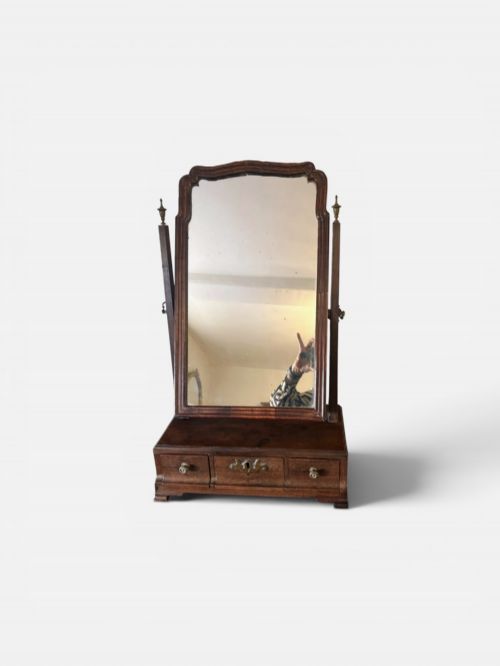


Dark Wood Box Mirror
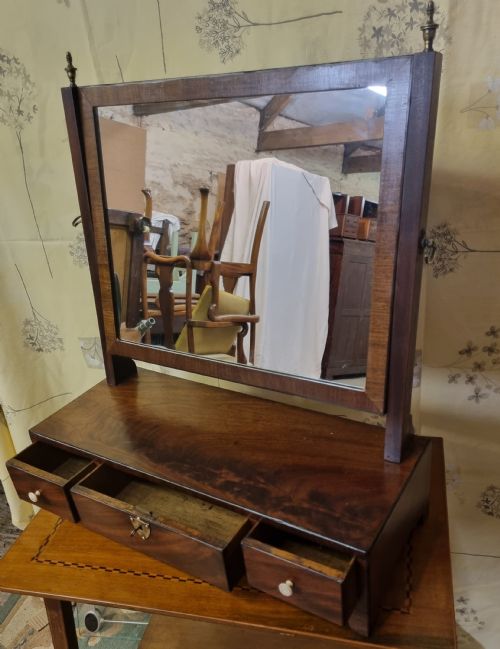
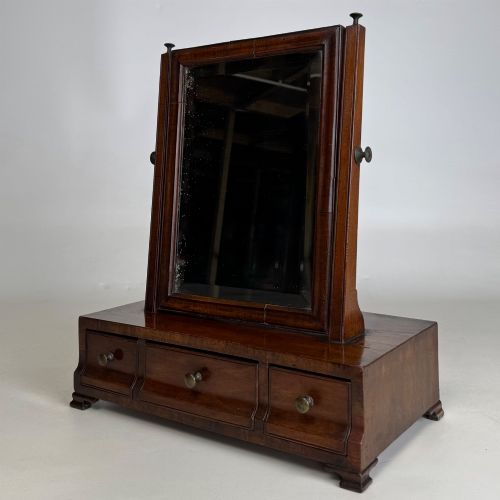
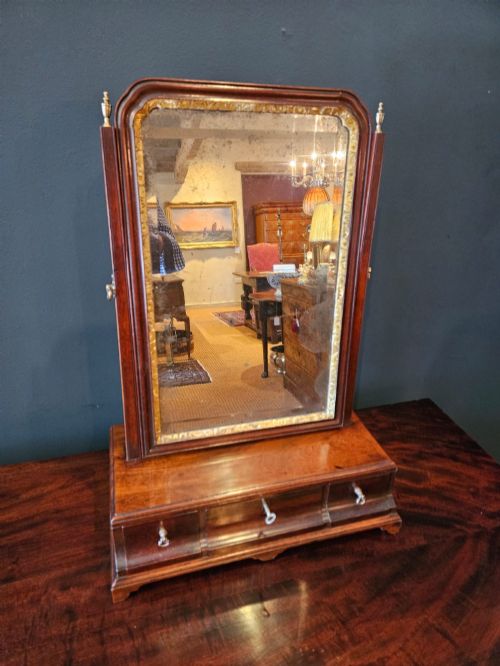
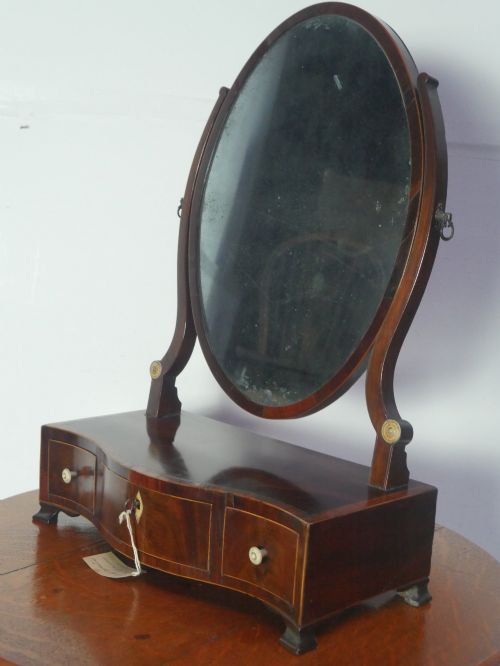
These dark wood box mirror pieces are compact table mirrors with integrated drawer bases, offering a practical surface for grooming.
Dark Wood Box Mirror
A dark wood box mirror sits on a table or dressing surface, combining a swinging glass frame with a small storage compartment below. These items appear across Georgian, Victorian, and later periods.
Most examples found here date from the eighteenth and nineteenth centuries, constructed primarily in mahogany with occasional walnut and oak variants. The lower section often incorporates small drawers for personal items.
Forms range from simple toilet mirrors to bureau mirrors and dressing table variants. They served as essential bedroom and boudoir fittings before full-length dressing mirrors became common.
How they were made
Cabinet makers constructed the box bases using dense timbers such as mahogany and walnut, frequently selecting finely figured grain for the visible surfaces. Brass fittings like pivoting screws and small drawer pulls provided functional contrast.
The glass plates were silvered and set into pivoting frames supported by upright arms attached to the box base. Inlaid details using lighter woods or bone sometimes adorned the drawer fronts and borders.
Some gentlemen's vanity models included secret compartments hidden behind the smallest drawers for storing currency.
What varies in quality
The distinction between standard and superior pieces rests on timber selection and joinery precision. Finely figured mahogany and subtle string inlay separate refined examples from utilitarian ones.
Proportion and the retention of original mirror glass and brass hardware dictate desirability. Well-balanced supports and neatly dovetailed drawer construction indicate skilled workshop production.
John Franklin London
The Dark Wood Box Mirror Glossary
- Box mirror
- A compact dressing mirror mounted on a shallow wooden box base containing small drawers. This format was popular throughout the eighteenth and nineteenth centuries.
- Toilet mirror
- An alternative term for a dressing table mirror designed for use on a chest of drawers or washstand. These pieces were standard bedchamber furnishings.
- Swing mirror
- A glass plate hung on pivoting pins between upright arms, allowing the user to tilt the reflection. The mechanism relies on brass screw caps and threaded posts.
- Serpentine
- A curved shape curving outward at the centre and inward at the sides, often seen on the front of drawer bases. This contour required careful woodworking skill.
- String inlay
- A narrow line of contrasting wood or bone set flush into the primary timber surface to create decorative borders. It appears on cabinet work from the Georgian period onward.
Dark Wood Box Mirror: Frequently Asked Questions
What is a dark wood box mirror?
It is a portable table mirror fitted onto a small wooden base that contains one or more drawers.
These pieces were designed to sit on top of a chest of drawers or dressing table for daily grooming.
How were these mirrors used?
They provided a stable, adjustable reflection for shaving, styling hair, or applying cosmetics in private bedchambers.
The base compartment held small personal items, jewellery, or writing materials depending on the specific form.
Where should I place a box mirror?
They sit comfortably on top of chests of drawers, sideboards, or dressing tables in bedrooms and hallways.
Their compact footprint allows them to function effectively in smaller spaces without dominating the room.
How do I date a Georgian box mirror?
Dating relies on timber choice, cabinet construction methods, and the profile of the base and mirror uprights.
Georgian examples frequently utilise solid mahogany with hand-cut dovetails and original brass pivoting hardware.