
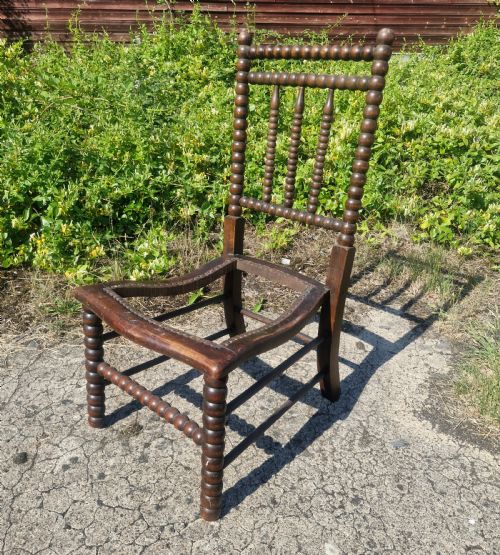
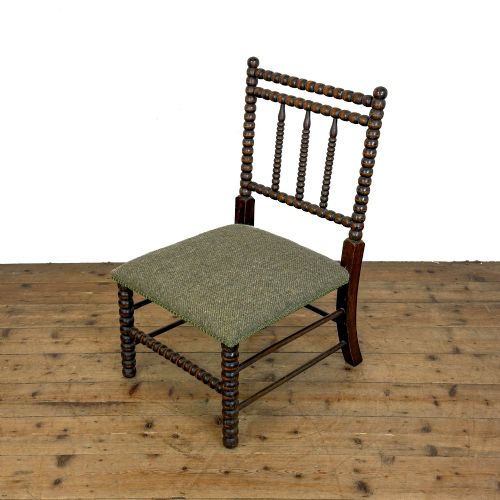


Dark Wood Bobbin Chair
These dark wood bobbin chairs bring distinctive turned spindles and sturdy timber frames into domestic spaces.
Dark Wood Bobbin Chair
A dark wood bobbin chair relies on cylindrical turnings resembling rows of bobbins or spools along its frame. These seating forms emerge across multiple eras, ranging from Victorian revivals back to earlier centuries of vernacular furniture making.
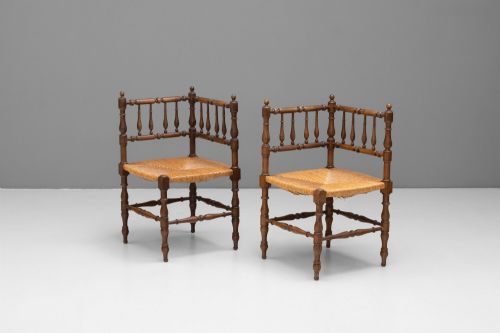
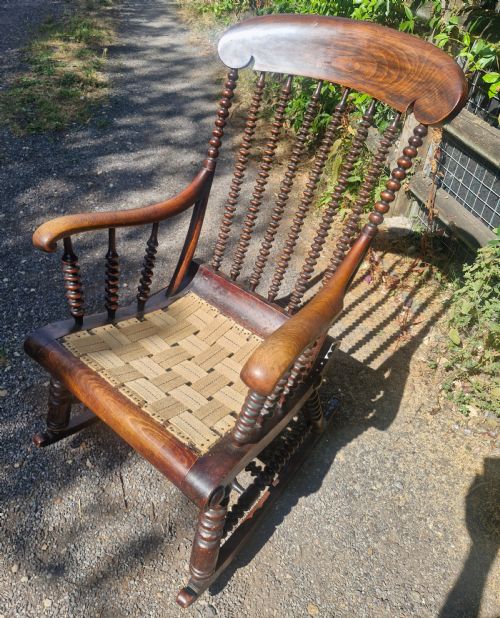
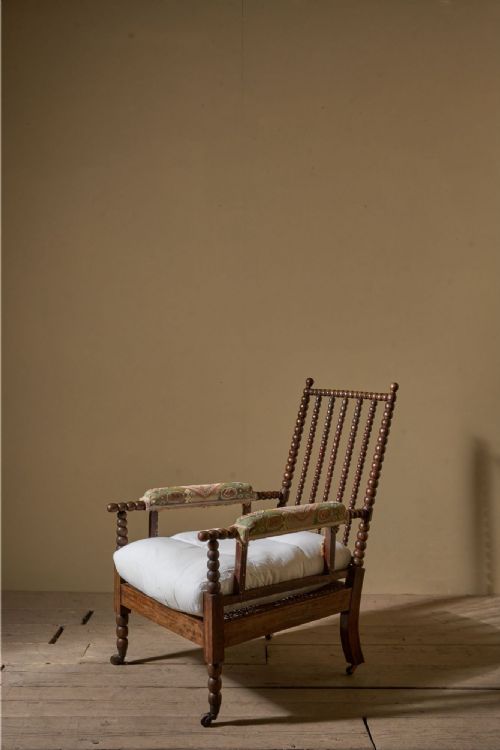
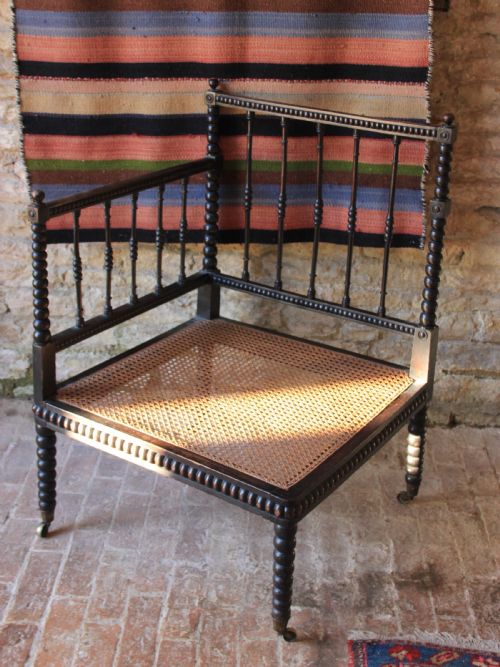
Buyers encounter varied seating arrangements within this category, including low bedroom chairs, rocking variants, and corner configurations. Timber species such as oak, birch, and simulated rosewood provide the structural integrity for these turned components.
Regional variations span from Scottish vernacular rocking chairs to English country forms and continental interpretations. Each piece demonstrates the enduring appeal of turned spindle construction in domestic interiors.
Materials and construction
Turned wooden members form the primary skeleton of these chairs, shaped on a lathe to create the repeating spherical or cylindrical motifs. Hardwoods like oak and birch, alongside stained or simulated woods, deliver both durability and deep colouration.
Seats incorporate traditional flexible elements such as woven rush or cane, or feature upholstered pads covered in fabric, leather, or textile. Brass hardware and structural joinery stabilize the complex frameworks without obscuring the decorative turnings.
Listings feature oak, birch, and simulated rosewood alongside rush, cane, and fabric seating surfaces across multiple centuries.
Assessing quality and execution
The precision and uniformity of the lathe work define the sculptural ambition of the frame, where sharply defined turnings indicate careful craftsmanship. Timber selection also matters, as solid oak or figured rosewood finishes provide greater substance than softer stained alternatives.
The integrity of the structural joints and the tension in woven rush or cane surfaces determine longevity and daily usability. Original upholstery methods and well-preserved turning details elevate an example above later, simpler reproductions.
Liberty & Co
The Dark Wood Bobbin Chair Glossary
- Bobbin turning
- A form of woodturning characterised by a succession of rounded, spool-like shapes carved along the length of a spindle. This technique defines the visual rhythm of the entire chair frame.
- Rush seating
- A traditional method of weaving dried marsh grass into a durable, textured seat base. It appears frequently on vernacular and country chairs.
- Corner chair
- A seating form designed to fit diagonally into the corner of a room, typically featuring a curved backrest supported by multiple posts. These pieces offer compact seating arrangements.
- Vernacular furniture
- Domestic objects made by regional craftsmen using local materials and traditional methods, rather than following high-style metropolitan fashions. These pieces reflect local practical needs.
Dark Wood Bobbin Chair: Frequently Asked Questions
How do I care for a bobbin chair frame?
Dust the turned spindles regularly with a soft cloth to prevent grime settling into the recesses of the wood. Apply a suitable microcrystalline wax occasionally to nourish the timber without building up heavy residues.
Keep the chair away from direct heat sources and strong sunlight to protect the wood from splitting or fading. Check the joints periodically to ensure the turned components remain firmly seated.
Are these chairs comfortable for daily use?
Many models provide upright support suited for reading, desk work, or occasional seating in a bedroom or hallway. Chairs featuring upholstered pads or flexible rush seats offer a softer sit than solid wooden boards.
Rocking variants and deep armchairs provide a more relaxed posture for prolonged sitting. Consider adding a small lumbar cushion if extra support is required for your daily routine.
How can I tell the age of a turned chair?
Examine the timber species, tool marks left during production, and the method of joinery used to assemble the frame. Earlier examples often display hand-turned irregularities, while later revival pieces show more mechanical uniformity.
Compare the style of the turnings and the upholstery foundation against documented periods such as the Victorian era or the seventeenth century. Subtle signs of wear on high-contact areas help confirm long-term use.
Where do these chairs work best in a home?
Corner chairs fit neatly into neglected room angles, adding architectural interest to small landings or sitting rooms. Low bedroom chairs serve well beside a dressing table or in a quiet reading corner.
Rocking and armchair variants act as statement pieces in living areas, pairing naturally with textured textiles and natural wood furniture. Their sculptural silhouettes draw the eye without overwhelming surrounding decor.