



Victorian Bobbin Armchair
These Victorian bobbin armchairs bring distinctive turned framing and vernacular seating into contemporary rooms.
Victorian Bobbin Armchair
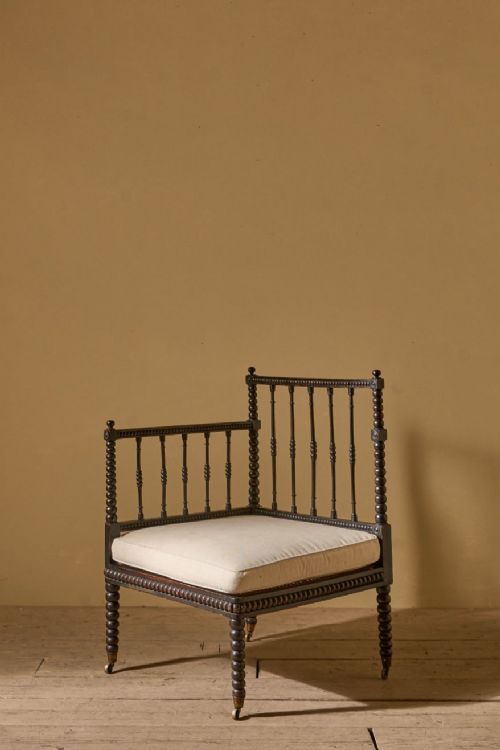
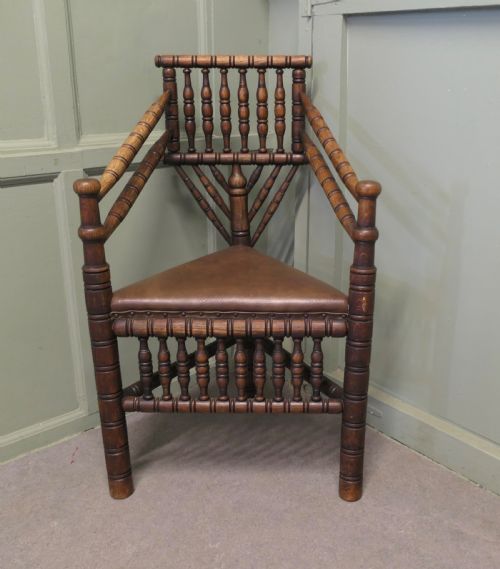
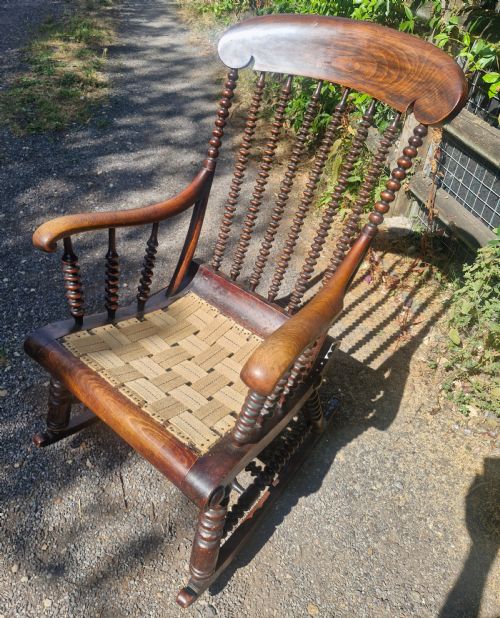
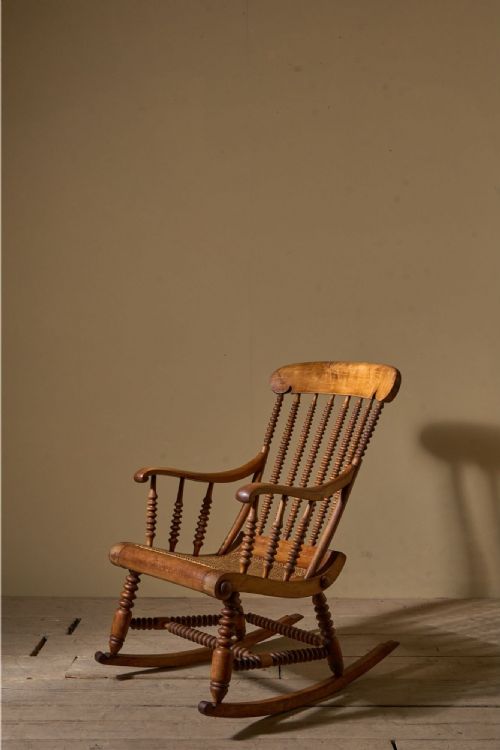
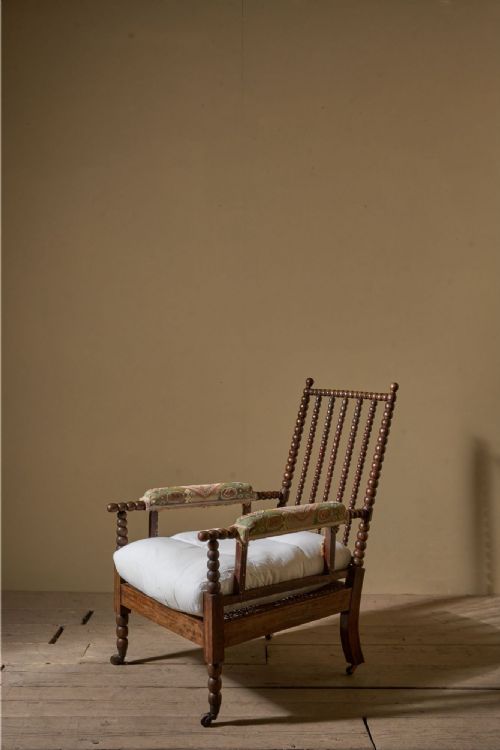
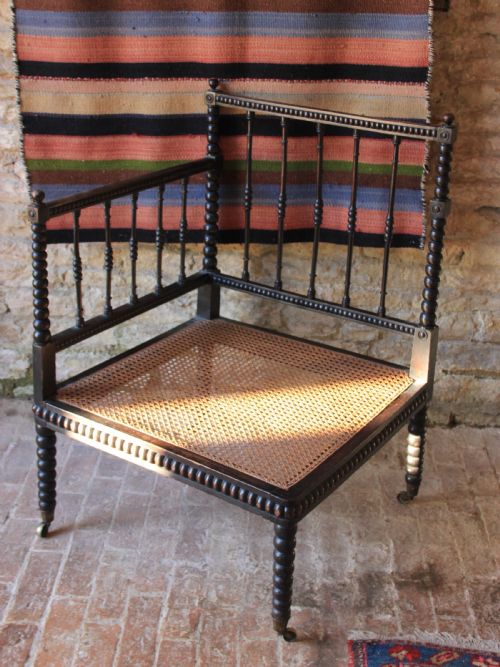
A victorian bobbin armchair draws the eye with its repetitive turned spool framing, echoing seventeenth-century joinery styles revived during the nineteenth century. These seating pieces appear most frequently in forms such as open armchairs, rocking chairs, and corner chairs across this page.
Makers produced these chairs in various woods including oak, walnut, beech, and birch, often finishing them with ebonising or simulated rosewood. Vernacular and country house examples sit alongside Gothic Revival and Arts and Crafts variations.
The profile relies on cylindrical turnings resembling spools or bobbins threaded along the uprights, stretchers, and arms. Regional variations span English styles and Scottish vernacular interpretations.
Materials and construction
Woodturners shaped individual components on a lathe to create the characteristic series of rounded bobbin modules before joining the frame with traditional pegging. Oak, walnut, and beech formed the structural core, sometimes stained or ebonised to imitate costlier exotic timbers.
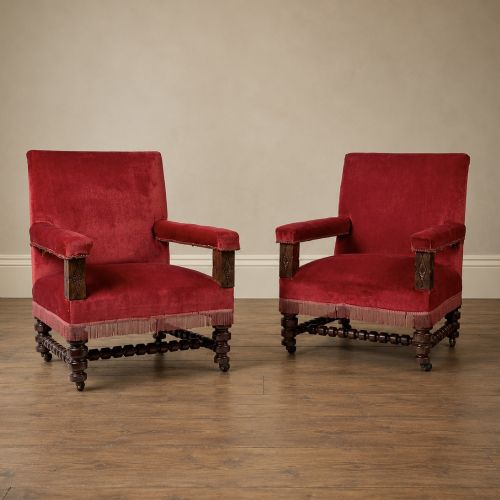
Seating surfaces combined rigid wooden panels with woven cane, or accommodated loose cushions upholstered in leather, velvet, and various fabrics. Metal elements such as brass occasionally appeared in castors or structural fixings.
Several miniature versions appear designed specifically for children, proving that Victorians believed toddlers deserved proper turnery too.
Evaluating craftsmanship
Quality rests primarily in the precision of the lathe work and the uniformity of the turned bobbins across the frame. Crisp profiles and tight joinery separate superior vernacular pieces from simpler utilitarian seating.
The choice of primary timber influences desirability, with dense hardwoods like oak and walnut holding up better than softer woods over generations of use. Original upholstery materials and surviving cane work also elevate a piece.
The Victorian Bobbin Armchair Glossary
- Bobbin turned
- A decorative furniture technique using a lathe to carve a series of rounded, spool-like shapes along a length of wood. This distinctive profile defines the entire aesthetic of these chairs.
- Turners chair
- A heavy wooden armchair constructed almost entirely from turned spindles and posts. These forms draw on historic seventeenth-century traditions revived during the Victorian era.
- Ebonised
- Wood treated with a dark stain or finish to imitate ebony. This treatment gives the timber a sleek, dark surface popular in nineteenth-century design.
- Vernacular
- Regional furniture made by local craftsmen for everyday use rather than following strict high-style metropolitan fashions. These pieces often display practical local traditions and sturdy construction.
- Cane
- Woven plant material used to form resilient seat and back panels. It offers a lightweight, breathable surface supported by the rigid wooden frame.
Victorian Bobbin Armchair: Frequently Asked Questions
What is a bobbin armchair?
A bobbin armchair is a nineteenth-century seating piece characterised by frames shaped on a lathe into repetitive spool-like forms. These chairs draw heavily on earlier seventeenth-century turnery revivals.
They appear in various formats including open armchairs, rockers, and corner seats, utilising woods like oak, walnut, and ebonised beech.
How do I style a bobbin chair?
The strong linear pattern of turned bobbins works well as a sculptural accent in both traditional and contemporary interiors. Pair an armchair with plain walls to let the wooden framing stand out.
Adding a simple cushion in velvet or leather introduces texture while maintaining the visual balance of the seating piece.
Are bobbin chairs comfortable?
Comfort depends largely on the specific design and whether the seat incorporates upholstery or cane webbing. Many examples feature generous proportions and supportive armrests designed for everyday relaxation.
Adding fitted cushions to wooden or cane seats enhances softness while preserving the historic character of the frame.
How old are these chairs?
The pieces seen here predominantly date from the nineteenth century, spanning the Victorian era up to around nineteen hundred. Later revival pieces also emerge from the early twentieth century.
Maker techniques and timber choices help indicate the precise period of manufacture within this timeframe.