


Vintage Bobbin Turned Seat
These vintage bobbin turned seat designs offer sturdy spindle-moulded frames that bring distinct historic character and turned wooden geometry to any room.
Vintage Bobbin Turned Seat
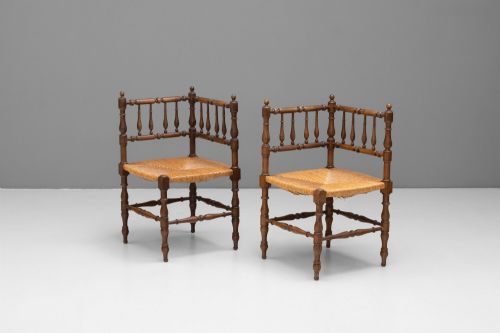
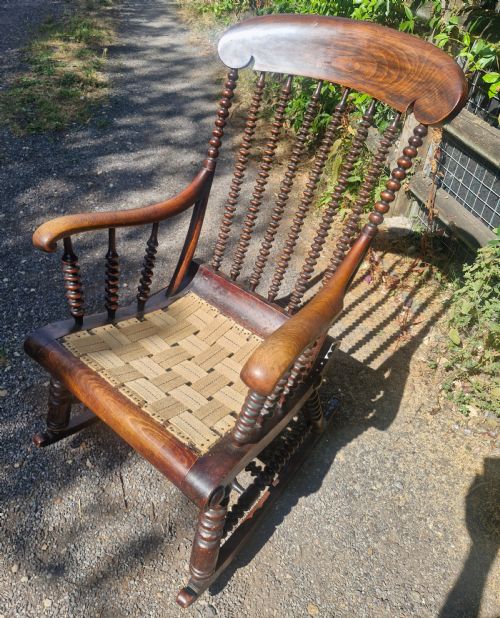
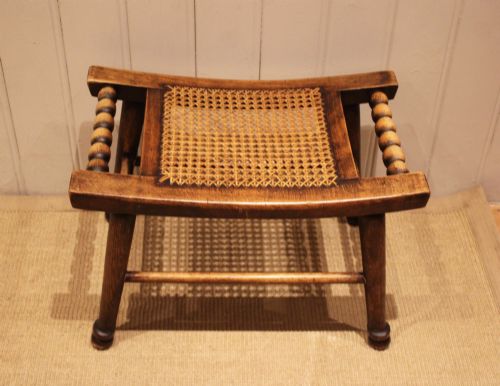
A vintage bobbin turned seat encompasses a variety of chairs and stools distinguished by circular wooden turnings that resemble a string of bobbins or spools. The selection ranges from Victorian armchairs and rocking chairs to dining chairs, corner chairs, and dressing table stools.
Most examples originate from the nineteenth century, including Victorian and Regency periods, alongside pieces attributed to revivalist styles such as Gothic Revival, Saxon Revival, and Rustic Farmhouse. These items often feature low profiles, elbow rests, or open armrests suited for parlour or bedroom placement.
Buyers will encounter functional variants like cane seat stools, rush-bottomed or webbed versions, and upholstered pieces covered in velvet or tweed linen. Forms vary from single side chairs to matched pairs and small dining sets.
How they were made
Frames are constructed using turned wood techniques on timbers such as oak, beech, rosewood, and stained wood, shaping repetitive spool profiles along the legs, stretchers, and backrests. Joinery relies on traditional pegged or dowelled construction to secure the intersecting turned spindles.
Seats incorporate woven materials including cane, rush, and woven webbing, or feature drop-in and fixed upholstery pads finished in leather, velvet, or tweed linen. Additional structural stability is provided by brass fittings where applicable on specific desk or library models.
Some nineteenth-century makers marketed these spindle-heavy seats under the romantic banner of Old Saxon chairs to capture Victorian imaginations.
What varies in quality
Quality rests in the precision and uniformity of the spindle turnings across the frame, where crisply carved spool sections denote higher craftsmanship than simplified lathe work. The choice of dense hardwood timbers like oak and rosewood also elevates the durability and visual depth of the piece.
The integrity of the seating substrate defines the standard of preservation, distinguishing tightly woven cane or intact rush from replacement webbing. Original upholstery materials and well-maintained frame joints further elevate the standing of individual chairs and stools.
The Vintage Bobbin Turned Seat Glossary
- Bobbin turning
- A form of woodturning that creates a series of rounded, spool-like shapes along the length of a furniture leg or stretcher. This technique was popular during the seventeenth century and revived extensively in the Victorian era.
- Corner chair
- A chair designed to fit into the corner of a room, typically featuring a square seat set diagonally with a curved backrest supported by multiple vertical balusters or bobbin turned spindles.
- Cane seat
- A seating surface woven from peeled rattan strips in an open mesh pattern. It offers lightweight flexibility and visual transparency to wooden chair frames.
- Turner's chair
- A sturdy, heavy armchair constructed entirely from turned wooden members and spindles, often associated with sixteenth-century vernacular traditions and later nineteenth-century Saxon revivals.
- Elbow seat
- A traditional term for an armchair with low armrests designed to support the elbows. These seats frequently appear in nineteenth-century country and revivalist furniture.
Vintage Bobbin Turned Seat: Frequently Asked Questions
How do I style a bobbin turned chair?
These chairs work well as accent pieces in living rooms or bedrooms, where their distinctive turned frames provide textural contrast against plain walls. Pair an open armchair with a simple side table to highlight the spindle work.
Because many examples have compact proportions, they fit easily into tighter spaces such as hallways or dressing areas without overwhelming the room.
Are these chairs comfortable for daily use?
Comfort varies depending on whether the seat is wooden, caned, or upholstered with a cushion. Many historic models were designed for upright sitting in parlours or studies rather than lounging.
Adding a loose cushion or pairing a cane seat stool with a textile pad can improve everyday usability while preserving the historic framework.
How do I care for cane seats?
Cane webbing requires occasional light dusting and should be kept away from direct heat sources that can dry out the natural rattan fibres. Wiping the cane gently with a damp sponge helps maintain its elasticity.
Avoid placing heavy weights on aged cane seats to prevent the woven strands from stretching or snapping.
How can I tell the period of a turned chair?
Dating relies on observing the timber types, turning crispness, and structural joinery methods used in the frame. Nineteenth-century Victorian and revival pieces often combine machine-assisted turning with traditional pegged joinery.
Comparing the chair style, such as Gothic or Saxon revival motifs, helps narrow down the era of manufacture alongside any surviving upholstery remnants.