



Woven Seat Rocking Chair
A woven seat rocking chair brings tactile country comfort and vernacular charm to any room through natural seating materials and gentle motion.
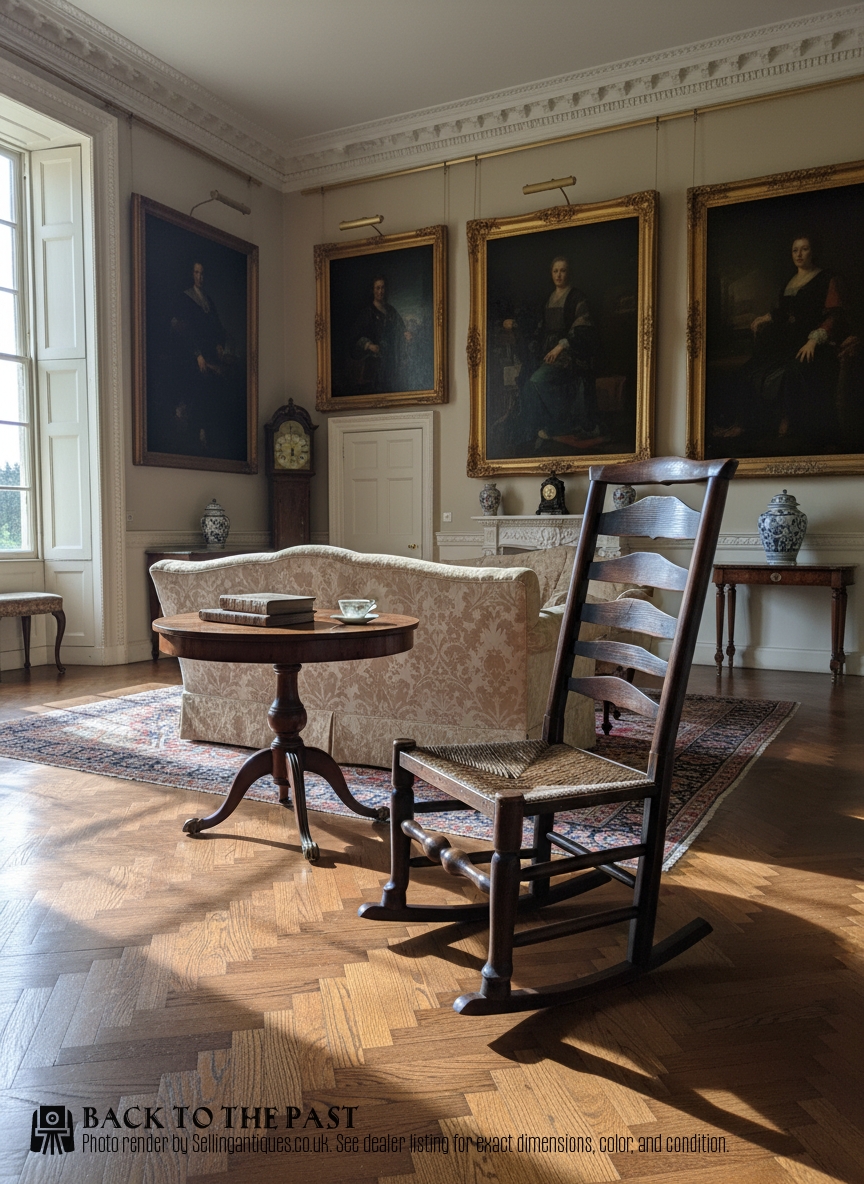
Woven Seat Rocking Chair
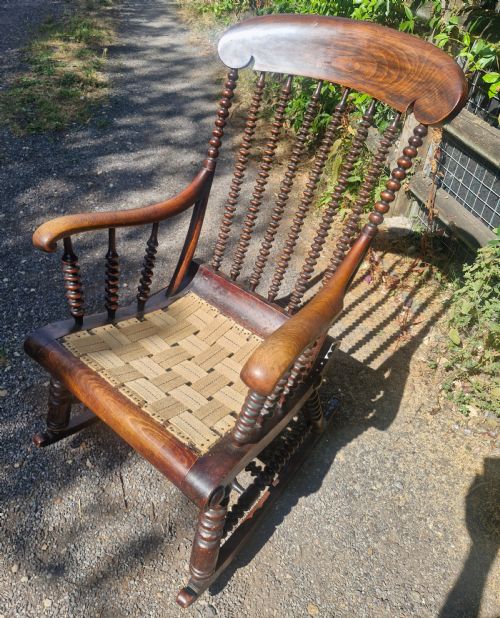
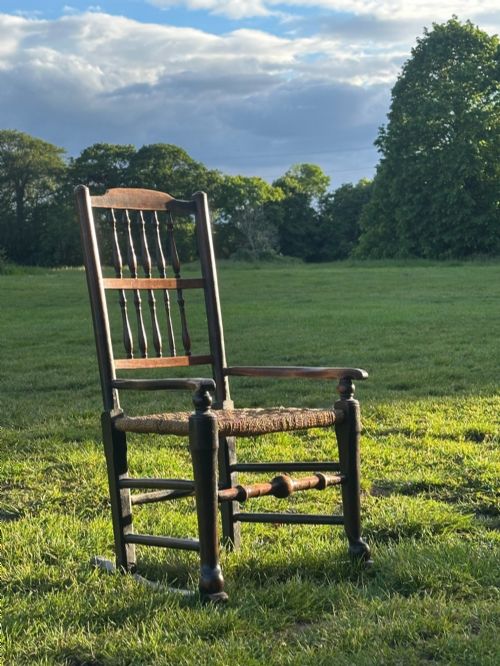
A woven seat rocking chair combines traditional timber frames with flexible natural cordage or plant fibres to create a resilient seat. These pieces span the eighteenth, nineteenth, and early twentieth centuries, reflecting rural craftsmanship and domestic utility across various regional styles.
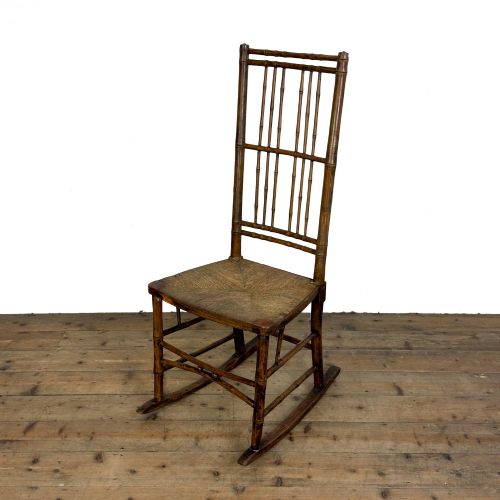
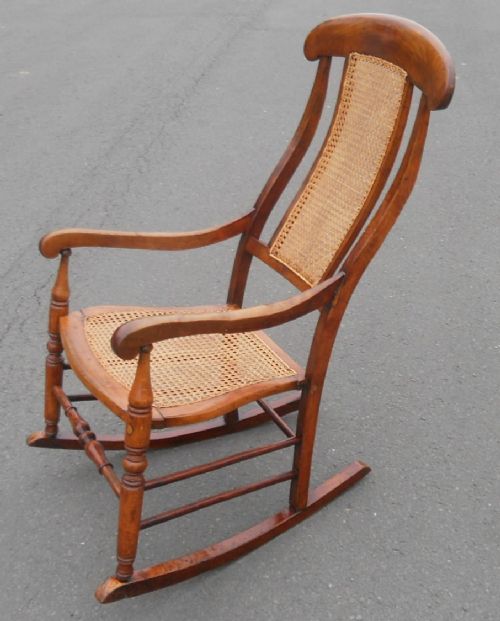
Buyers encounter numerous vernacular forms on this page, ranging from Lancashire and Cheshire elm models to American primitive rockers and Victorian country designs. Child-sized versions and ladder-back chairs with rush or cane surfaces appear frequently alongside bentwood and faux bamboo adaptations.
How they were made
Local timber such as oak, elm, beech, ash, and mahogany forms the rigid structural framework of these chairs. Woodworkers turned spindles, steamed bentwood, or shaped ladder backs using traditional joinery methods suited to domestic workshops.
The seating areas utilise flexible organic materials including rush, cane, seagrass, and woven webbing. Craftspeople laced these fibres tightly across the chair frames to distribute weight and provide durable, springy support for daily use.
Current listings demonstrate a broad chronological spread, incorporating rush, cane, seagrass, and woven webbing across elm, oak, beech, and mahogany frames.
What varies in quality
The integrity of the timber framing and the tightness of the woven seating surface determine the standard of each piece. Superior examples maintain sturdy structural joints and uniformly laced natural fibres without excessive sagging or replacement material.
Stylistic refinement also separates everyday utility items from more ambitious regional pieces. Elegant turnings, balanced proportions, and well-preserved decorative details elevate the standing of a rocking chair within its respective period.
The Woven Seat Rocking Chair Glossary
- Rush
- A wetland plant material twisted into cords and woven tightly to form durable, flexible chair seats. This traditional technique provides a sturdy and comfortable surface for vernacular seating.
- Cane
- Strips derived from the outer bark of rattan palms, woven into open patterns for chair seats and backs. It offers a lightweight yet resilient finish common in Victorian and Edwardian furniture.
- Ladder Back
- A chair back featuring multiple horizontal wooden rails between two upright posts. This traditional form often accommodates woven rush or seagrass seating.
- Bentwood
- Wood softened by steam and bent into curved structural components. This technique allowed manufacturers to produce fluid, organic shapes without traditional joined corners.
- Vernacular
- Everyday objects built by local craftspeople using regional traditions and readily available materials. These pieces prioritise functional utility over high-style academic design.
Woven Seat Rocking Chair: Frequently Asked Questions
What woods were used for these rockers?
Makers utilised native timbers such as oak, elm, beech, and ash, along with occasional mahogany or stained wood frames. These hardwoods provided the necessary structural strength for continuous movement and daily domestic use.
Lighter woods like beech appear frequently in later Victorian designs, while earlier eighteenth-century examples often rely on sturdy regional timbers like elm and ash.
How do I identify a Victorian rocking chair?
Victorian rocking chairs often feature distinctive stylistic variations such as cane seating, faux bamboo turnings, or heavier beech and stained wood frames. These pieces reflect the eclectic design movements of the nineteenth century.
Comparing the turned spindles and seat materials against established period characteristics helps distinguish mid-nineteenth-century examples from earlier country vernacular forms.
Are child rocking chairs common?
Smaller rocking chairs intended for children appear across several periods, including early nineteenth-century examples. These scaled-down pieces mirror the full-sized vernacular designs of their respective eras.
Scaled versions often feature the same timber frames and woven rush or cane seats as adult chairs, adapted for younger occupants in domestic settings.