


Rustic Oak Rocking Chair
A rustic oak rocking chair brings vernacular character and steady movement to a room, offering tactile wood and traditional joinery.
Rustic Oak Rocking Chair
A rustic oak rocking chair combines vernacular domestic utility with curved rockers for gentle movement, spanning periods from the eighteenth century through the Victorian era.
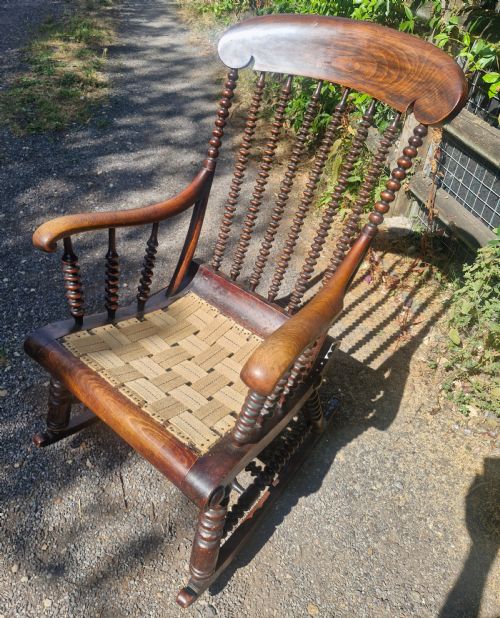
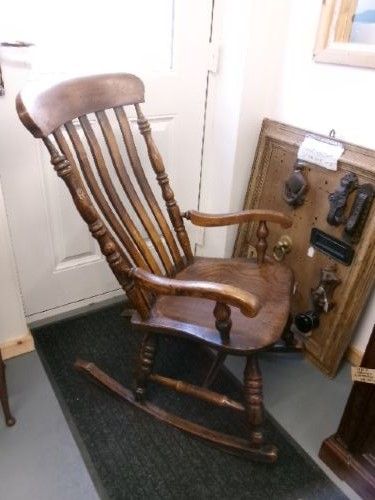
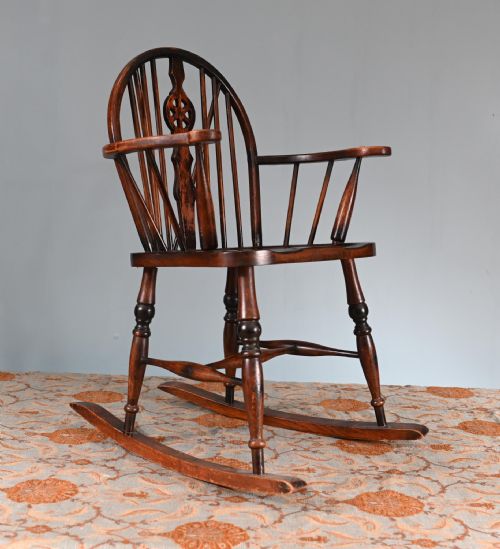
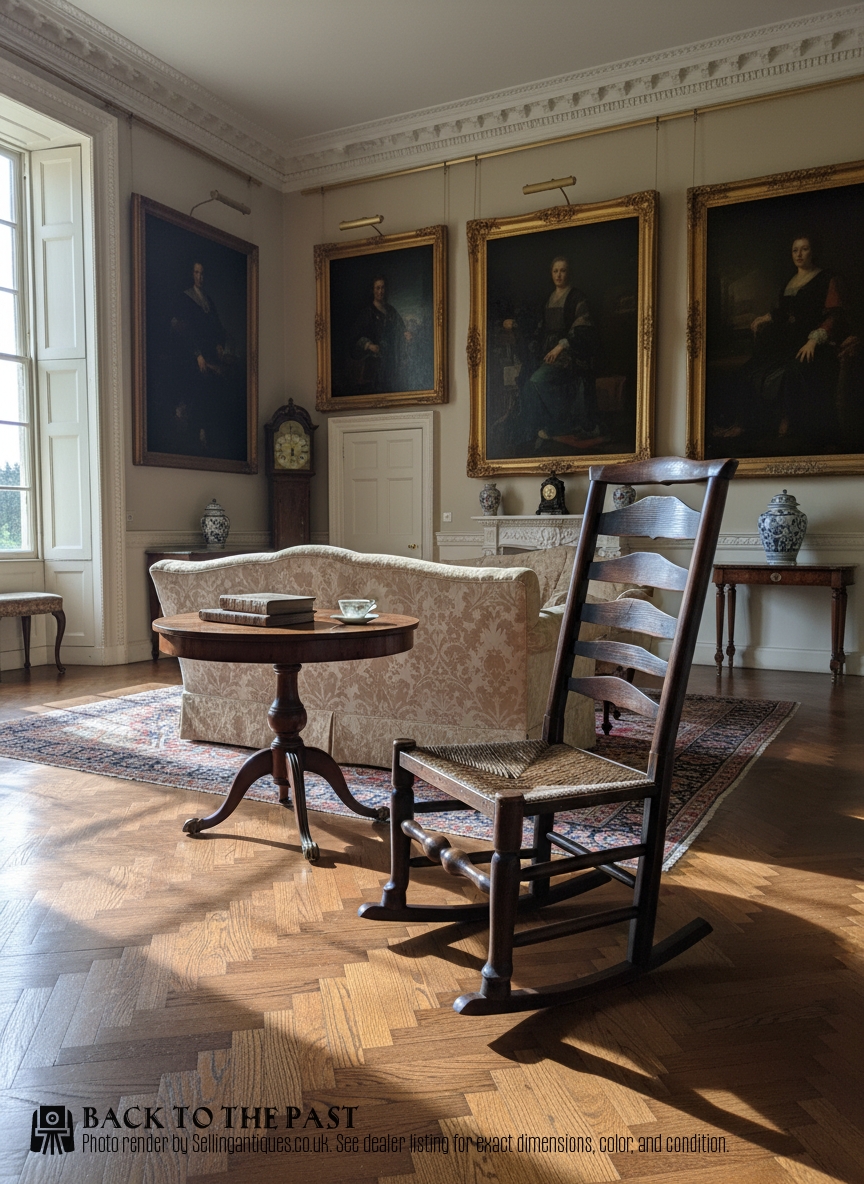
Buyers encounter regional English and Scottish variations, including ladder back, spindle back, wheelback Windsor forms, and bobbin framed designs.
Materials and construction methods
Makers utilised solid timbers including oak, elm, and beech, frequently combining woods within a single vernacular frame.
Seating areas often incorporate woven rush or woven webbing to provide flexible support within the wooden structure.
Listings span periods from the seventeenth century to nineteen thirty, featuring oak, elm, beech, and rush across diverse regional styles.
Assessing build and character
Quality rests in the integrity of the vernacular frame and the proportion of the spindle or ladder back construction.
The wear on the oak surface and the patination of the timber distinguish everyday workshop production from more unusual regional survivals.
The Rustic Oak Rocking Chair Glossary
- Vernacular
- Domestic furniture built by regional craftsmen without adherence to formal metropolitan pattern books. These pieces reflect local traditions and available materials.
- Wheelback
- A Windsor chair style featuring a pierced wooden splat shaped like a cartwheel. It provides central back support.
- Bobbin framed
- Furniture constructed using turned wooden components resembling reels or bobbins stacked end to end. This decorative turning appears on nineteenth century examples.
- Ladder back
- A chair back formed of horizontal arched slats resembling the rungs of a ladder. It is a traditional vernacular format.
Rustic Oak Rocking Chair: Frequently Asked Questions
What periods do these rockers span?
The pieces range from seventeenth and eighteenth century country forms through Regency and Victorian eras up to nineteen thirty.
Specific dates on this page include eighteen hundred, eighteen fifty, and eighteen sixty.
Which regional styles appear here?
Listings include English Country, Victorian Country, Scottish Vernacular, and Welsh Country styles.
Each region utilised local woods and traditional construction techniques suited to rural homes.
What wood types were used?
Construction primarily relies on solid oak, elm, and beech, sometimes combined with stained wood and hardwood.
Seating surfaces occasionally feature rush or woven webbing.
Are smaller rocking chairs available?
The selection includes childs rocking chairs alongside standard armchairs.
One notable regional form is a childs lambing chair mounted upon rockers.