


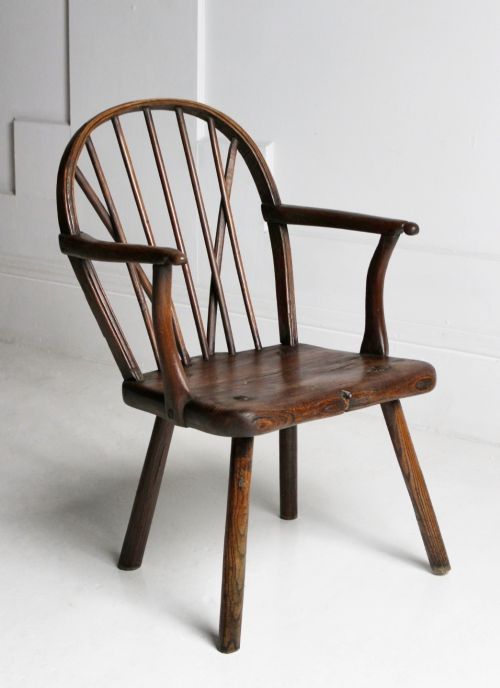


Primitive Country Chair
A primitive country chair offers honest regional craft, combining practical local timbers with vernacular design for everyday utility.
Primitive Country Chair
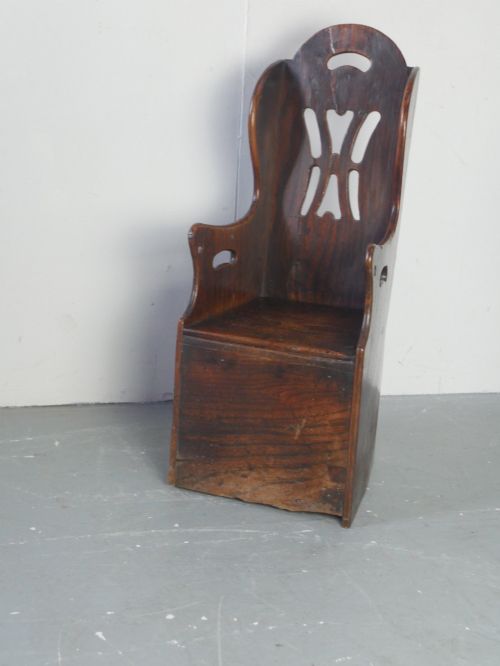
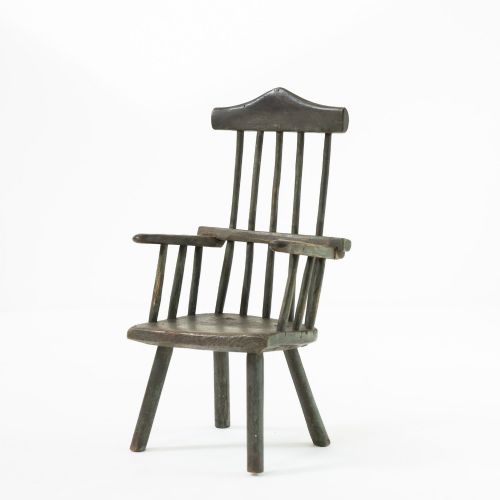
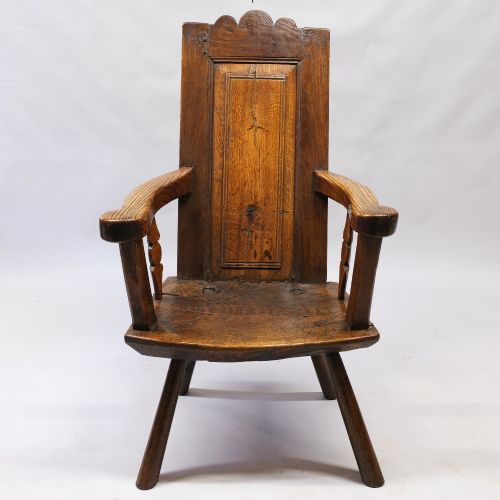
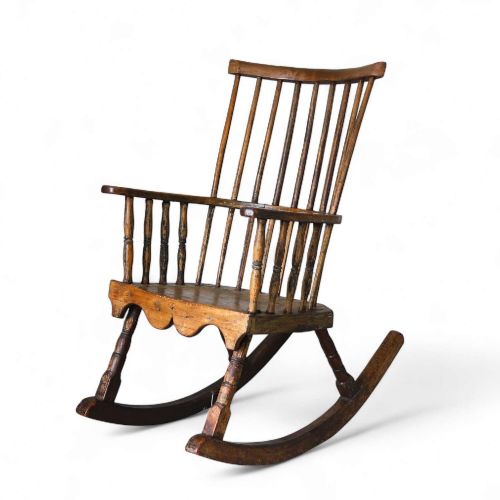
A primitive country chair is a vernacular seating form produced by regional makers using local timber rather than urban pattern books. Buyers searching for a primitive country chair find robust armchairs, Windsor forms, stick backs, and children's variants dating from the eighteenth and nineteenth centuries.
Makers often relied on simple construction methods, pairing solid plank seats with spindle legs and bentwood backs. These chairs survive as functional sculptures that reflect rural life across different centuries.
How they were made
Constructed primarily from native woods, these chairs combine elm for strong, resilient seats with ash, oak, yew, and fruitwood for spindles and bent components. Craftsmen selected each timber for its specific structural property, using dense hardwoods where stress was highest.
Makers shaped components using drawknives, spokeshaves, and adzes, often leaving tool marks visible on shaped plank seats and dug-out forms. Parts were joined through traditional boring and wedging techniques without complex metal fixings.
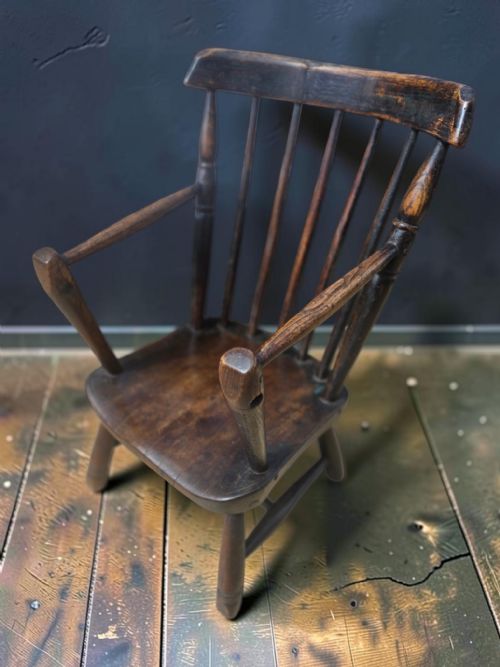
Several miniature child-sized high chairs and armchairs survive, built with the exact same robust timber techniques as adult versions.
What varies in quality
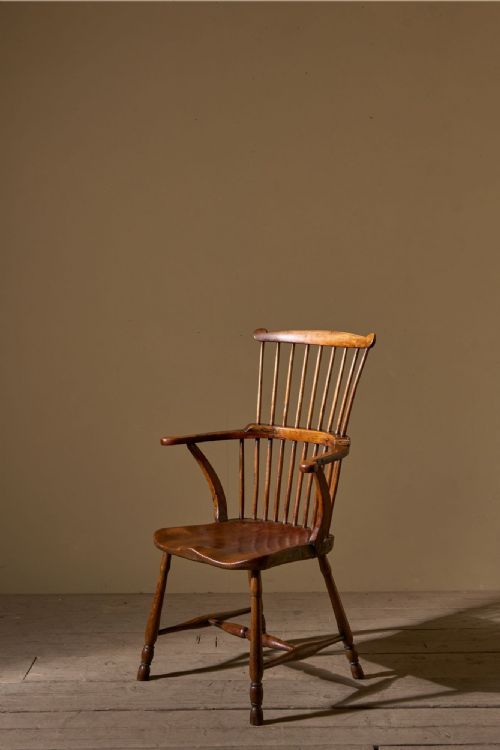
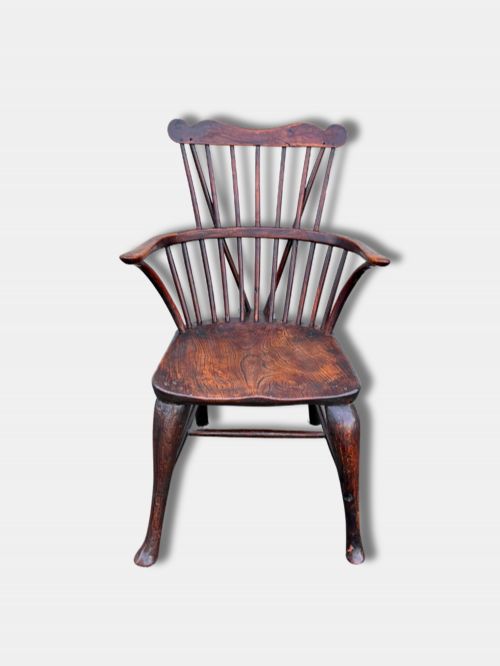
Quality rests upon the harmony of proportions, the integrity of the timber selection, and the comfort of the vernacular design. A well-balanced comb-back or stick chair demonstrates deliberate planning by a maker who understood how different woods react over time.
Surface character and originality heavily influence the standing of a piece. Retained original paint, undisturbed patination, and minimal structural replacement elevate a chair above examples with heavy modern intervention.
The Primitive Country Chair Glossary
- Comb-back
- A Windsor chair variation where the top rail resembles the teeth of a comb, extending the vertical spindles upwards. This style provides additional back support and often signals regional Welsh or English manufacture.
- Stick back
- A chair construction method where turned or cleft spindles are inserted directly into a solid wooden seat. It represents a straightforward vernacular approach to seating.
- Vernacular
- Architecture or furniture designed by local makers for local needs, utilising regional materials without reference to academic classical styles. Such pieces embody the traditions of specific communities.
- Dug-out
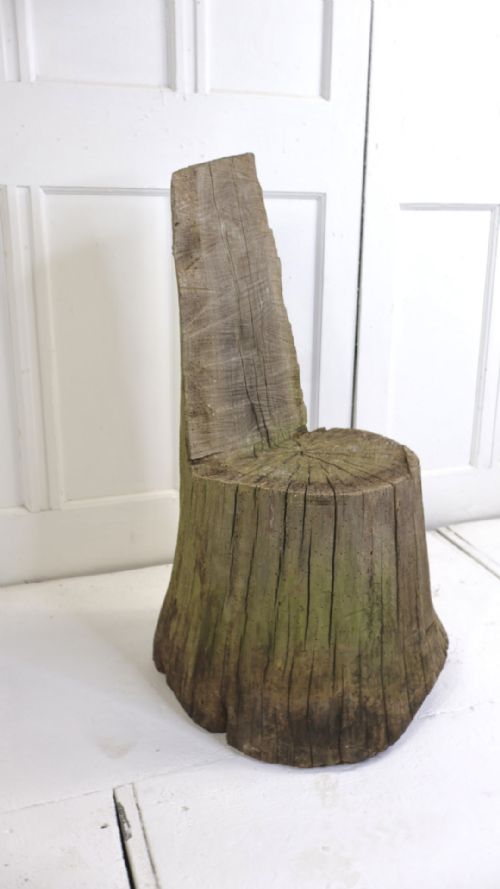
- A seating form carved entirely from a single solid block of timber, typically pine or elm. This ancient technique produces heavy, sculptural chairs with deep seats.
- Windsor
- A chair type featuring a solid wooden seat into which the legs and back spindles are independently tenoned. These pieces rely on a sturdy plank base for structural stability.
Primitive Country Chair: Frequently Asked Questions
What is a primitive country chair?
A primitive country chair is a piece of vernacular seating made by rural craftsmen using local timber for everyday domestic use.
These chairs bypass formal urban styles in favour of practical construction, sturdy plank seats, and regional stick or Windsor framing.
How do I date an old country chair?
Dating relies on observing tool marks, timber combinations, assembly methods, and regional design traits recorded in the structure.
Eighteenth-century examples often display broader plank seats and hand-cleaved components, while later nineteenth-century pieces may show more machine-turned elements.
Where were these chairs made?
Makers produced these chairs across rural workshops in England, Wales, Ireland, and Scandinavia, utilising whatever native trees grew nearby.
Regional preferences dictated whether a maker built a low stick-back, a comb-back Windsor, or a dug-out pine form.
How should I live with one?
These chairs fit well into modern interiors when placed where their sculptural timber grain and simple lines can be appreciated.
Maintain them by avoiding excessive heat fluctuations and keeping humidity stable to protect historic wood and original surfaces.