


Antique Nursing Chair Rocker
These antique nursing chair rocker pieces combine low seating with a gentle motion, offering comfortable support for domestic life.
Antique Nursing Chair Rocker
An antique nursing chair rocker serves as a low-seated rocking chair designed for comfort near the hearth or nursery. The pieces on this page span the eighteenth century through the Edwardian period, capturing both country workshop traditions and formal parlour designs.
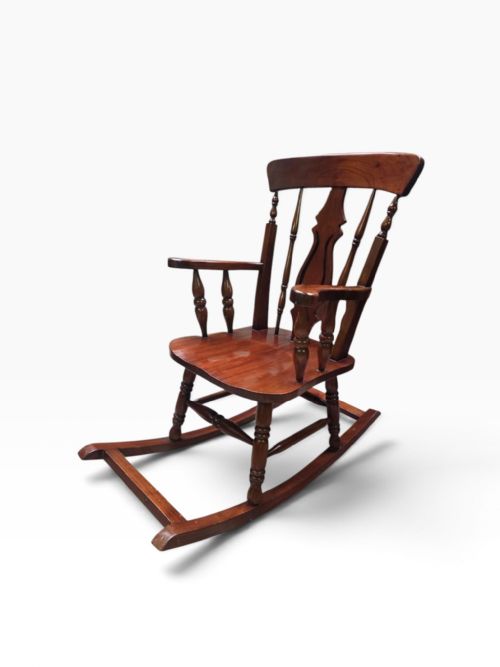
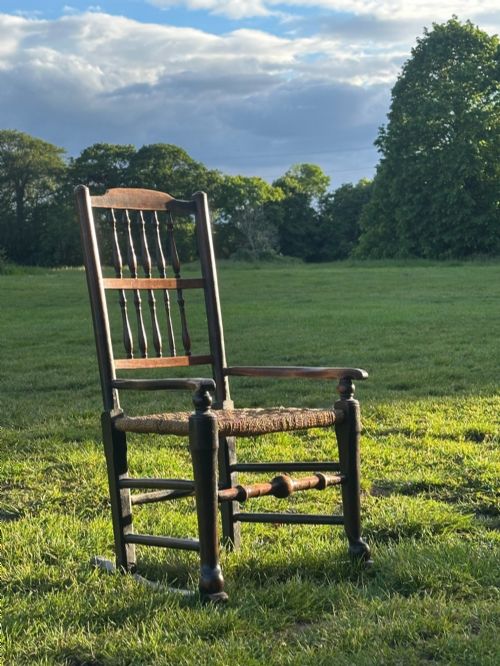
Most examples found here date from the Victorian and Edwardian eras, utilising traditional timbers such as mahogany, oak, and beech. Forms range from turned bobbin frames and ladder backs to windsor styles and low upholstered seating.
How they were made
Cabinet makers and regional joiners utilised solid hardwoods like mahogany, oak, elm, and ash to build sturdy frames capable of withstanding constant motion. Turned components, such as bobbin framing and spindle backs, required precise lathe work by hand.
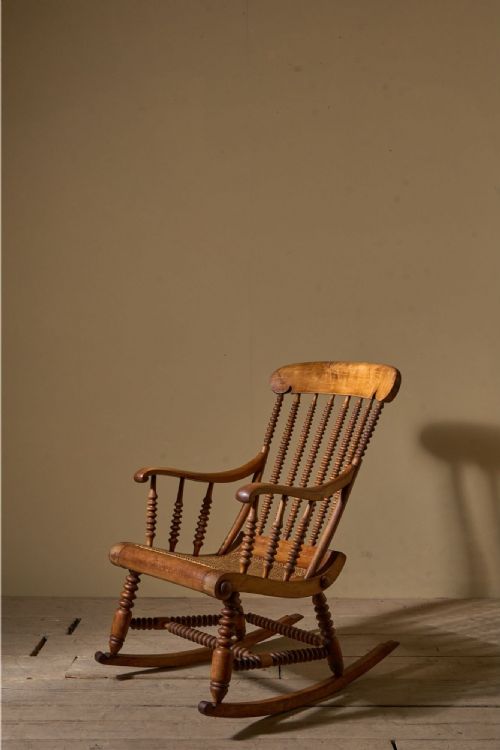
Seating surfaces vary from woven cane and smooth leather to button-backed upholstery and solid timber planks. Frames often feature traditional joinery combined with steam-bent elements to shape the curved rockers and crest rails.
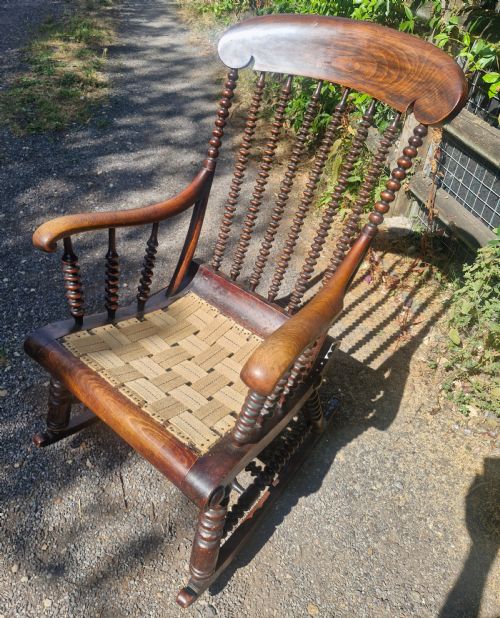
Bobbin-turned frames bring an irresistible tactile charm to a room, practically begging visitors to run their fingers along every spool.
What varies in quality
The distinction between standard and superior pieces lies in the crispness of the turning and the selection of timber. Finer chairs display well-figured mahogany or carefully matched regional woods like elm and ash.
Structural integrity of the rocker base dictates the longevity of the piece, where even wear on the runners and tight joints separate master craftsmanship from simple domestic utility.
The Antique Nursing Chair Rocker Glossary
- Bobbin turned
- A style of furniture leg and stretcher shaped on a lathe to resemble a series of wooden bobbins or spools threaded together. This decorative turning technique appears frequently on nineteenth century frames.
- Windsor
- A traditional wooden chair construction method where individual spindles and legs are fitted directly into a solid sculpted seat. These sturdy pieces often incorporate steam-bent back bows.
- Ladder back
- A chair back featuring several horizontal curved wooden slats arranged vertically between the rear upright posts. This traditional vernacular design provides robust lumbar support.
- Cane seated
- A seating surface woven from split rattan or cane material to form a light, resilient mesh pattern. This technique offers breathable flexibility for everyday use.
Antique Nursing Chair Rocker: Frequently Asked Questions
What is an antique nursing chair rocker?
An antique nursing chair rocker is a low-seated rocking chair originally designed for comfort during infant feeding or quiet fireside tasks. Their reduced height allows the sitter to rest close to the ground with stability.
These pieces combine functional domestic utility with period craftsmanship, utilising timbers such as mahogany, oak, and beech across Victorian and Edwardian iterations.
How do I identify the period of a rocking chair?
Period identification relies upon observing timber choices, turning styles, and upholstery methods. Eighteenth century examples often feature regional timbers like elm and ash, whereas Victorian and Edwardian pieces frequently showcase mahogany, walnut, or beech.
Construction details such as bobbin turning, ladder backs, and cane inserts further help situate a piece within its manufacturing era.
What materials were used to make them?
Maker workshops utilised a range of native and imported hardwoods to build these frames. Common structural timbers include mahogany, oak, hardwood, elm, ash, and beech.
Seats were finished according to the intended use and style, incorporating leather, cane panels, button-backed fabric, or solid wooden planks.
How should I care for a vintage rocking chair?
Care involves maintaining stable indoor humidity levels to prevent the timber and glue joints from drying out or splitting. Regular dusting with a soft cloth preserves the polished surface of hardwoods like mahogany and walnut.
For cane or upholstered seats, gentle cleaning avoids putting excessive strain on the historic weaves and padding materials.