
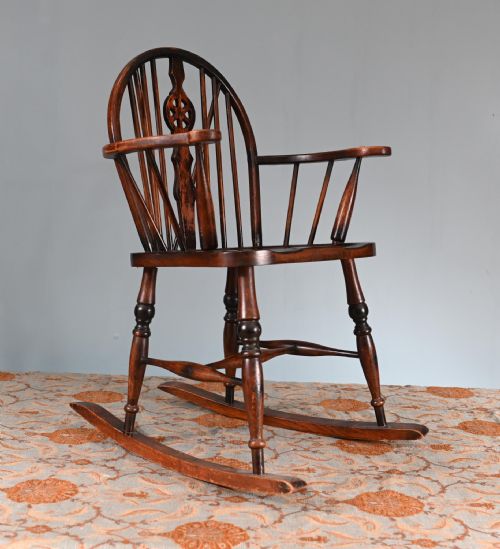


Traditional Country Rocking Chair
A traditional country rocking chair brings vernacular comfort to a fireside, shaped by local makers from sturdy native timbers.
Traditional Country Rocking Chair
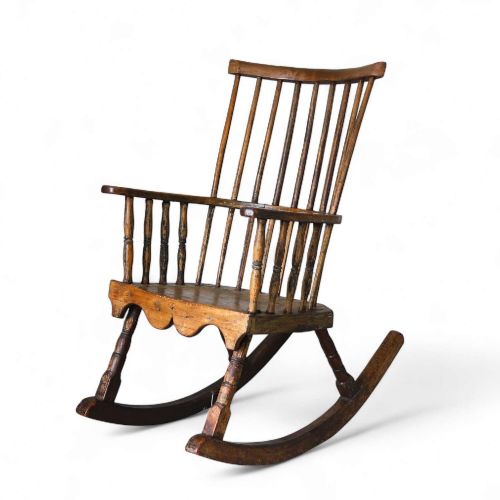
When searching for a traditional country rocking chair, you encounter sturdy vernacular seating designed for domestic comfort. These chairs originate from various regional workshops spanning the eighteenth and nineteenth centuries.
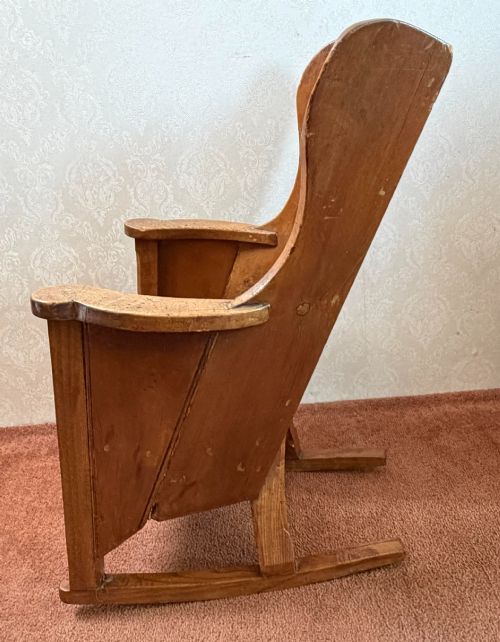
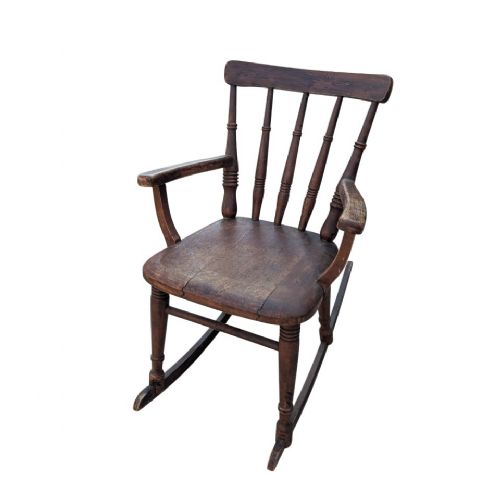
Smaller child-sized rocking chairs appear frequently alongside full-scale armchairs. Elm, ash, and beech form the primary structure of these domestic seats.
How they were made
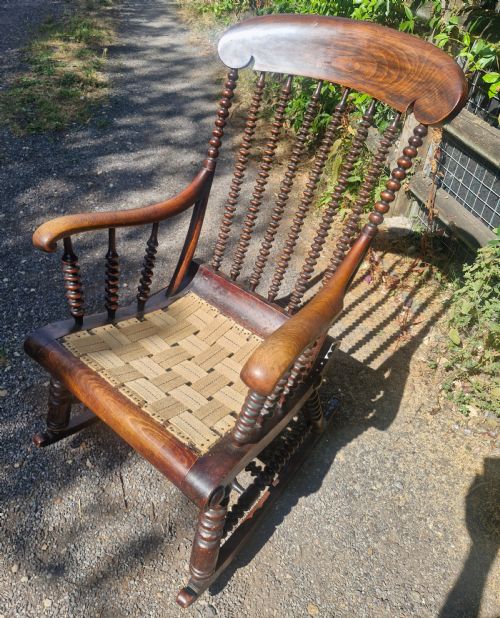
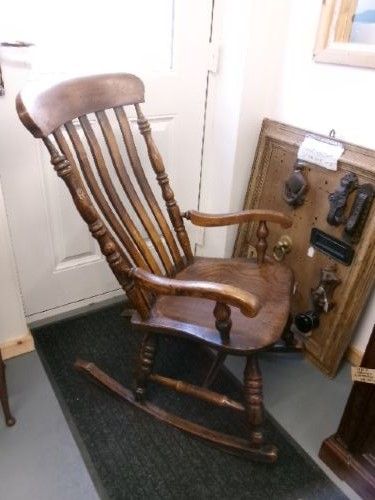
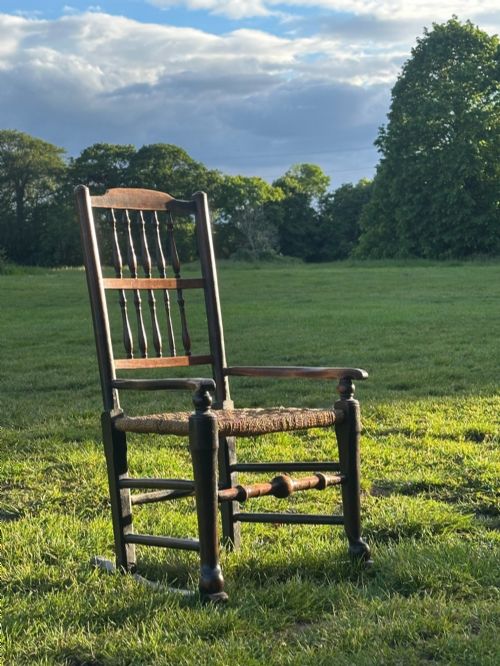
Joiners and country chair makers utilised native hardwoods like elm, ash, and beech for the frames. Seats were often shaped from solid elm or woven from rush, cane, and sea grass.
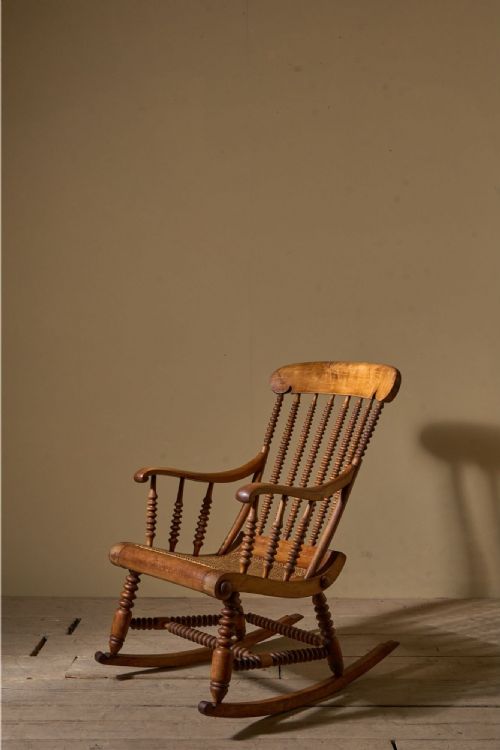
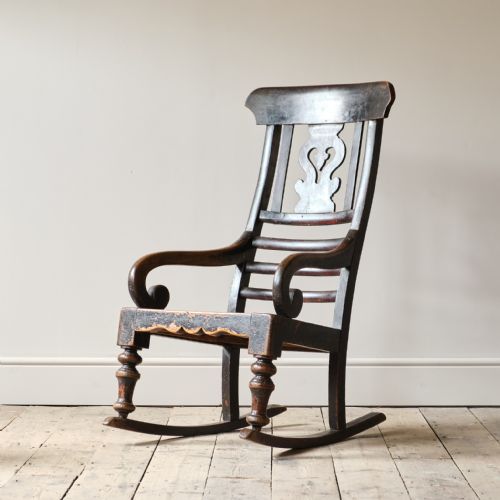
Turned components such as spindles and bobbin frames required a lathe, while steam bending shaped the curved Windsor bows. Selected examples retain original paint finishes or ebonised surfaces applied over the wood.
Several miniature child-sized rocking chairs survive, proving that eighteenth-century toddlers took their fireside relaxation just as seriously as the adults.
What varies in quality
Quality rests upon the integrity of the timber and the balance of the proportions. Finer examples display harmonious turning on the spindles and substantial carved seats rather than hurried construction.
The survival of original surfaces, including early paint or polish, elevates a piece. Subtle regional details in the crest rails and arm supports distinguish standard workshop production from accomplished vernacular artistry.
The Traditional Country Rocking Chair Glossary
- Windsor chair
- A chair built with a solid wooden seat into which the legs and back spindles are directly fitted. This construction provides robust structural strength.
- Ladder back
- A chair back constructed with horizontal slats between two upright posts. This traditional form appears frequently in vernacular seating.
- Comb-back
- A Windsor chair variation where the top rail resembles a traditional hair comb. Vertical spindles rise through a low arm bow to meet this crest.
- Bobbin turning
- A method of lathe work that creates a series of rounded spheres resembling bobbins along a stretch of wood. It provides decorative texture to chair legs and frames.
- Vernacular
- Objects made by local craftsmen following regional traditions rather than formal architectural blueprints. These pieces prioritise practical utility and local materials.
Traditional Country Rocking Chair: Frequently Asked Questions
How do I date an old rocking chair?
Dating relies on examining the construction methods, tool marks, and wood species used in the frame. Hand-turned spindles and regional design traits often point to specific decades within the eighteenth and nineteenth centuries.
Changes in fastener types and the wear patterns on the rocker feet also help establish the approximate age of the piece.
Are these chairs comfortable for daily use?
Most traditional country rocking chairs were built with ergonomic considerations for domestic fireside use. Solid contoured wooden seats and supportive high backs offer a stable sit.
Adding a loose cushion can increase comfort for prolonged sitting while preserving the original seat surface underneath.
What woods were commonly used?
Makers selected resilient native timbers suited to bending and weight-bearing loads. Elm was frequently chosen for solid saddle seats due to its resistance to splitting.
Ash, beech, and oak provided strong frames for the spindles, legs, and steam-bent bows.
How do I care for original paint finishes?
Preserving original paint requires gentle dusting with a dry microfibre cloth to remove surface grit. Avoid harsh chemical cleaners, moisture, and direct sunlight that can cause the historic finish to flake.
Applying microcrystalline wax can protect fragile painted or ebonised surfaces when handled carefully.