
Dark Wood Bedroom Storage
Dark wood bedroom storage comprises substantial timber furniture designed to hold garments, built across centuries from Georgian times through to the Edwardian era.
Dark Wood Bedroom Storage
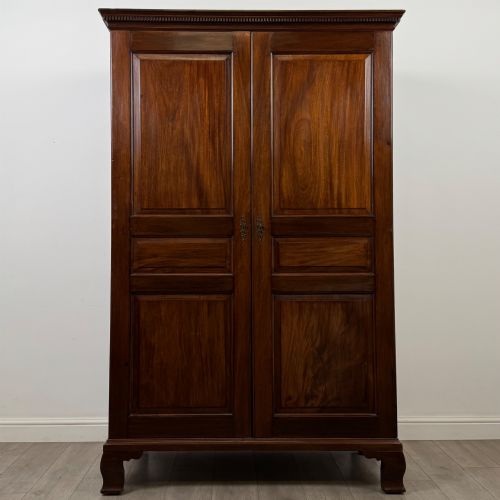
Dark wood bedroom storage centres on traditional pieces designed to hold apparel, principally chests of drawers, linen presses, wardrobes, and bedside cabinets. These items span periods from the seventeenth-century Charles II era through the Georgian, Regency, and Victorian epochs, alongside Edwardian and later reproductions.
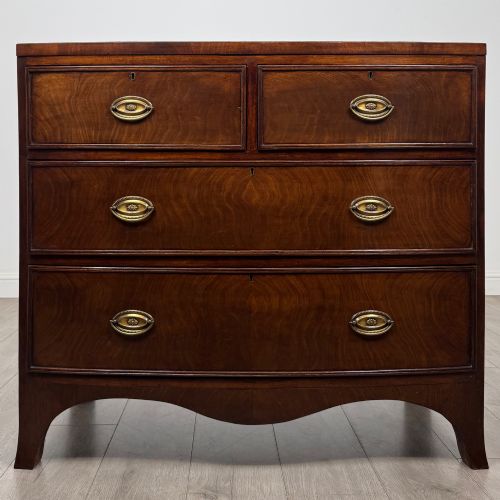
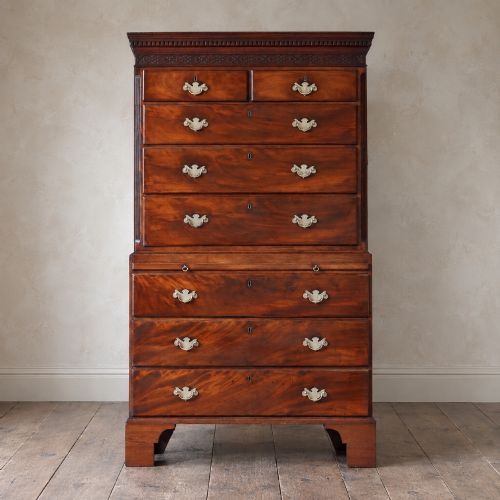
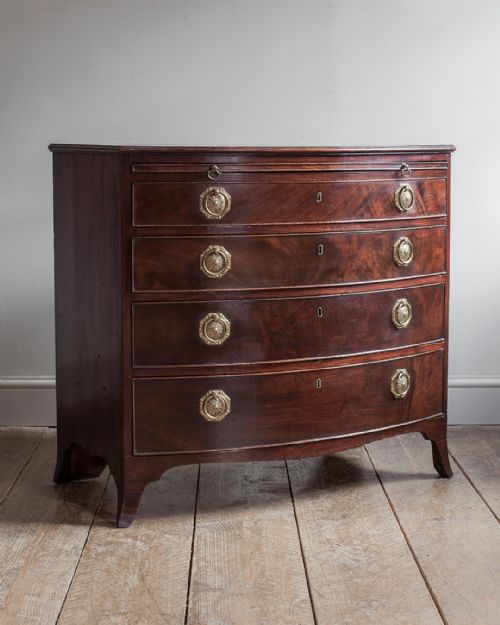
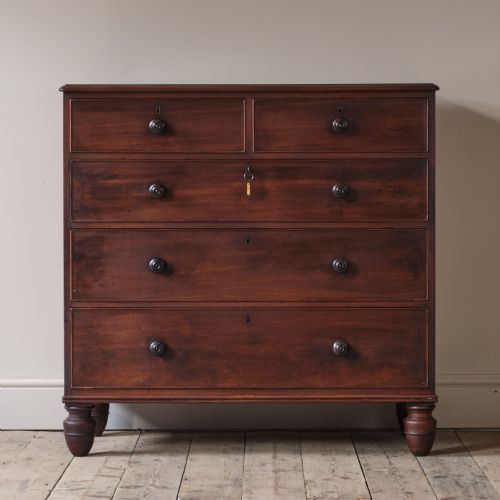
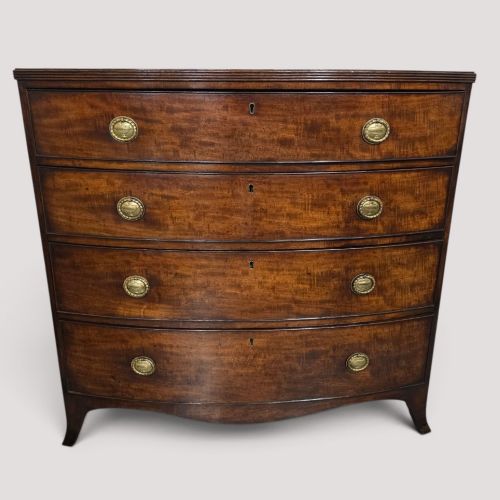
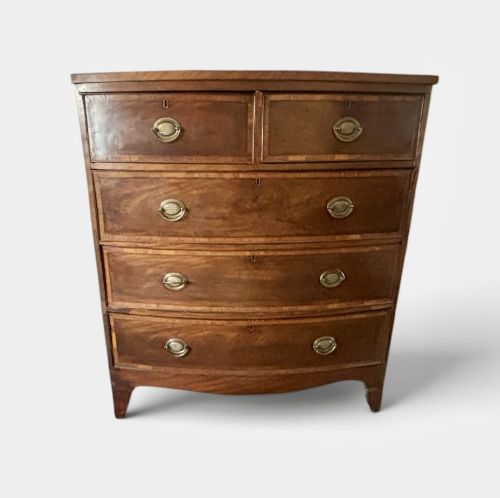
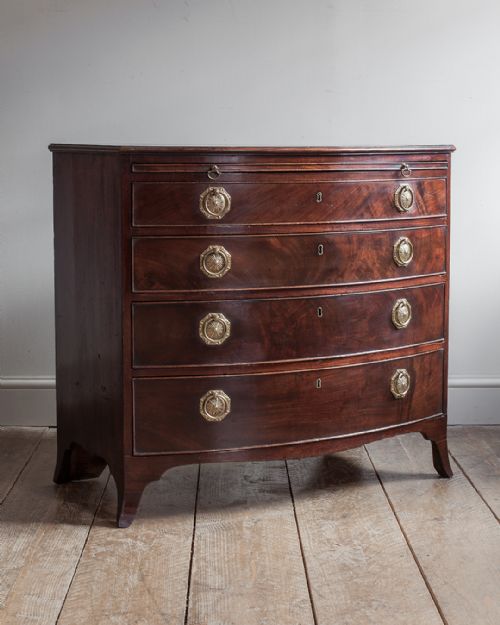
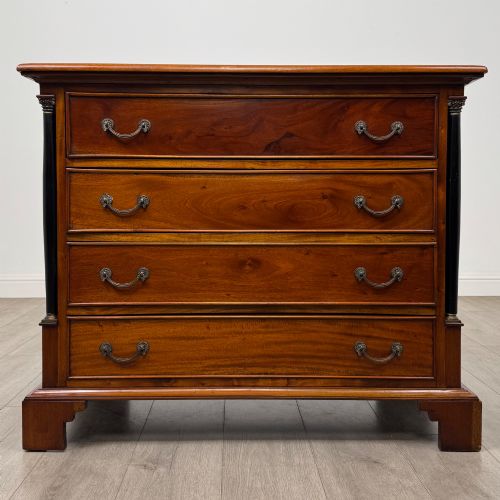
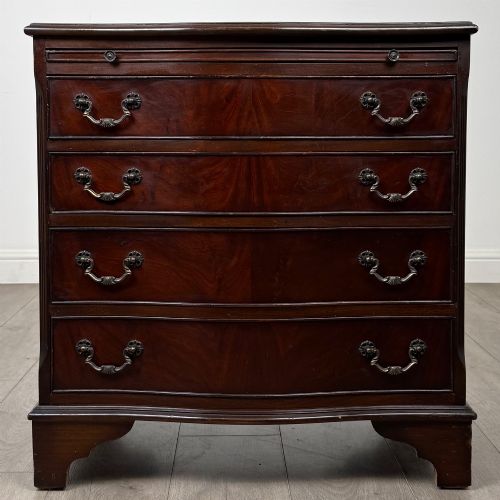
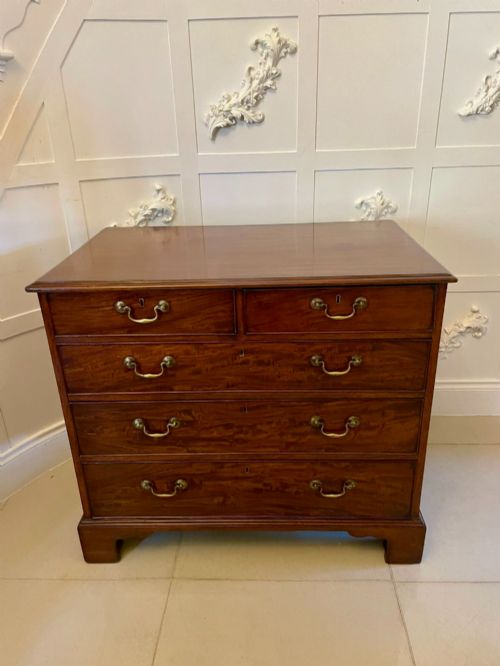
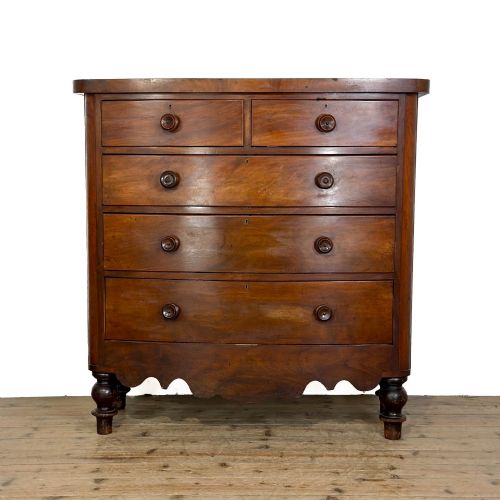
The selection encountered most frequently relies on mahogany and oak timber bodies built into chests of drawers, often featuring bow fronts, serpentine shapes, or tallboy configurations. Buyers also find larger fitted linen presses and matched pairs of bedside cabinets originating from the eighteenth and nineteenth centuries.
Materials and construction methods
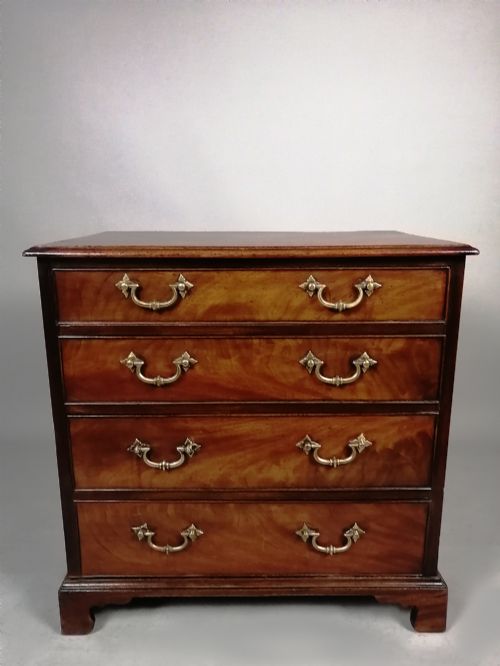
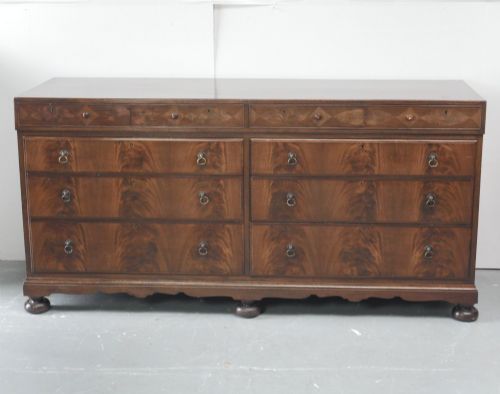
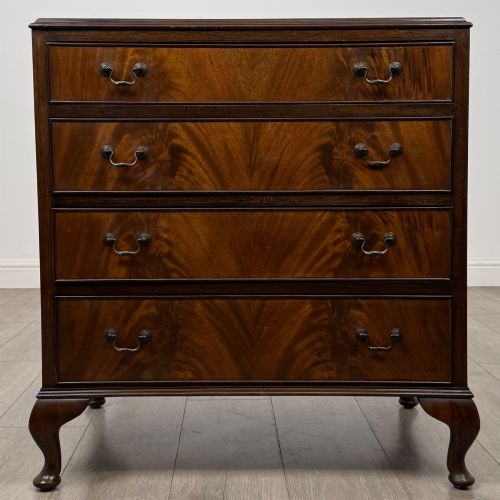
Makers utilised dense timbers, predominantly mahogany, oak, and occasionally rosewood, often pairing primary woods with secondary pine carcass elements. Flame mahogany and figured mahogany veneers provided decorative surface patterns across drawer fronts, while satinwood and boxwood served for contrasting stringing and banding details.
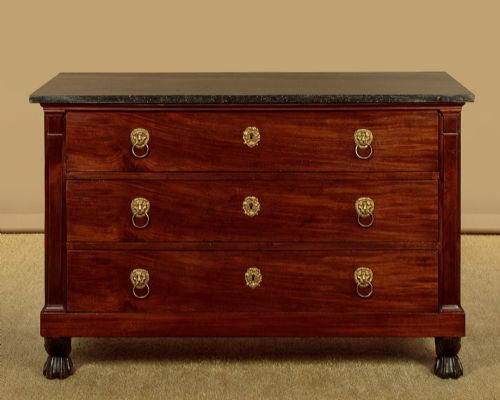
Joinery methods relied on traditional tongue-and-groove boards alongside hand-cut dovetails for drawer construction. Brass hardware, including handles and escutcheons, complemented the dark timber surfaces, whilst marble occasionally appeared on top surfaces of specific cabinets.
A brushing slide offered Georgian gentlemen a clean timber shelf to fold neckties without soiling the bed linens.
Judging the quality of construction
The standard of dark wood bedroom storage depends largely on timber selection and the precision of the cabinetmaker's joinery. Finely figured mahogany veneers and matched grain patterns across successive drawer fronts distinguish superior pieces from utilitarian alternatives.
Structural integrity relies on the tightness of dovetail joints, the smooth movement of drawers within their tracks, and the originality of brass hardware and internal slides. Regional variations, such as specific Channel Islands or Scottish workshop traditions, introduce distinct proportions and timber choices that influence desirability.
Whytock and Reid·T and G Seddon
The Dark Wood Bedroom Storage Glossary
- Bow front
- A convex curved cabinet or chest front that projects outward in the centre. This shape gained popularity during the Georgian and Regency periods.
- Linen press
- A tall piece of furniture featuring upper doors enclosing sliding trays for textiles, positioned above a base of multiple drawers. These pieces served to store household linens and garments.
- Tallboy
- A tall chest on chest where one chest sits directly upon another, maximising vertical storage capacity. They frequently date from the Georgian era.
- Serpentine
- A furniture front characterised by a concave central section flanked by two convex ends, creating an undulating profile. It requires advanced woodworking skill to execute properly.
- Brushing slide
- A pull-out shelf integrated into the upper section of a chest of drawers or linen press. It provided a temporary surface for folding garments.
Dark Wood Bedroom Storage: Frequently Asked Questions
What is dark wood bedroom storage?
Dark wood bedroom storage encompasses traditional furniture pieces made from dense timbers like mahogany, oak, and rosewood intended for clothing and linen organisation.
These items range from compact bedside cabinets and chests of drawers to tall linen presses and wardrobes spanning the seventeenth to the early twentieth centuries.
What is the difference between a tallboy and a chest on chest?
A tallboy generally refers to a tall single-section chest or a chest on chest configuration designed to increase vertical storage space. These pieces combine multiple graduated drawers in a stacked format.
They appear frequently in Georgian mahogany and provide substantial capacity while occupying a relatively compact floor footprint.
How do I care for antique dark wood furniture?
Maintain antique dark wood by placing pieces away from direct sunlight and steady heat sources to prevent timber splitting or veneer lifting. Regular dusting with a soft, dry cloth preserves the polished surface.
Avoid silicone-based sprays and excess moisture, opting instead for traditional beeswax applied sparingly when the timber appears dry.