




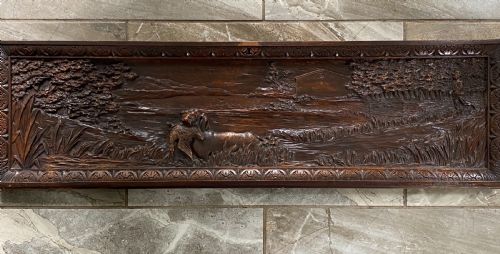
Dark Walnut Relief
Dark walnut relief pieces bring rich, shadowed depth and intricate hand-carved history directly to your walls and interiors.
Dark Walnut Relief
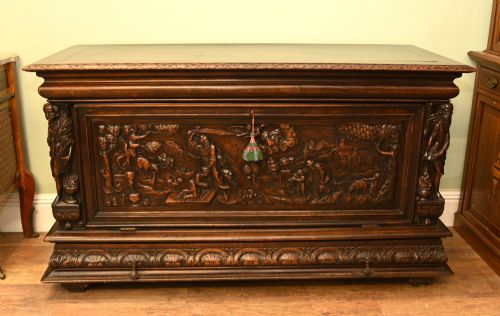
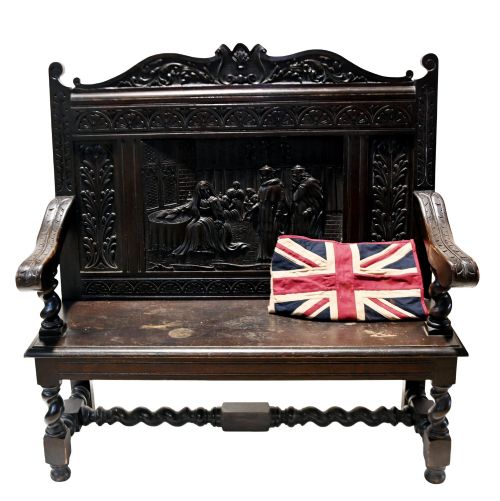
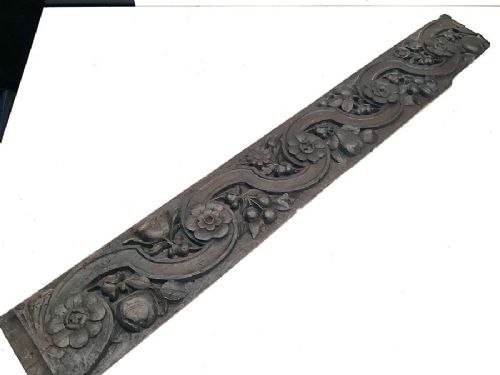
When you search for dark walnut relief, you find architectural fragments, wall plaques, and carved panels that span from the sixteenth century through the Victorian era. These sculptural wooden works range from English Tudor panels and French Renaissance revival pieces to Black Forest hunting scenes.
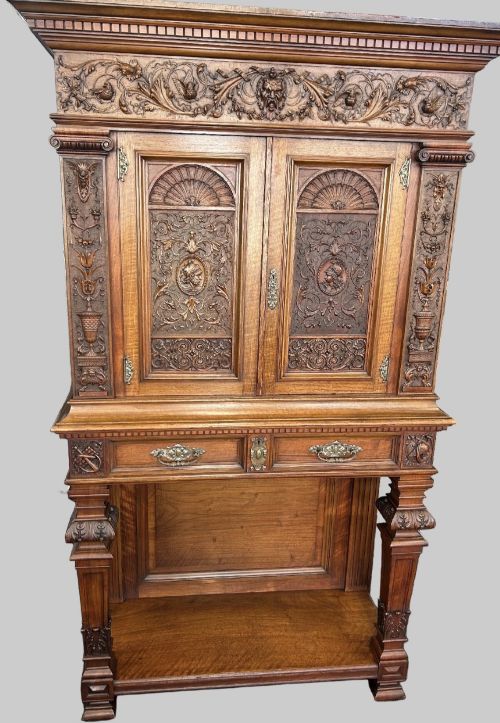
The objects on this page vary from large cabinets on stands and armorial panels to smaller picture frames and gingerbread moulds. Many pieces showcase deep figurative carving, depicting religious scenes, mythological termes, and rustic animal motifs rendered in timber.
How they were made
The makers of these items worked primarily in walnut, oak, and fruitwood, selecting dense timber that could hold fine, crisp lines under hand-carving chisels. Artisans frequently utilised relief techniques to build dramatic depth, layering figures against dark backgrounds.
Surfaces were often left in natural polished wood or treated with traditional oils to accentuate the rich grain. Some continental workshops combined structural elements of metal with carved timber cabinetry and architectural salvage.
Dark Walnut Relief Retail Price Guide 2026
Typical asking prices for dark walnut relief among the pieces listed under this phrase on Sellingantiques today, from the lower quarter to the upper quarter. They describe what is for sale here now, not the wider market.
One extraordinary nineteenth-century survival on this page is a giant wooden gingerbread mould depicting a man riding a horse.
What varies in quality
Quality in dark walnut relief rests upon the anatomical precision and spatial depth achieved by the carver. Superior pieces display crisp undercut details and expressive human or animal forms, whereas lesser works appear flat and rigid.
The integrity of the timber and the preservation of the original surface patination also distinguish finer examples. Pieces attributed to named workshops or distinct revival periods often show a higher standard of sculptural composition.
Hugues Sambin
The Dark Walnut Relief Glossary
- Relief
- A sculptural technique where the sculpted elements remain attached to a solid background of the same material. High relief projects boldly from the surface, creating strong shadows.
- Terme
- A pillar or pedestal tapering downward, topped by a bust or upper half of a human figure. These often appear in Renaissance revival architectural woodwork.
- Armorial panel
- A carved wooden display showing a coat of arms or family crest. These items were traditionally used to denote lineage and status in historic interiors.
Dark Walnut Relief: Frequently Asked Questions
How do I hang a heavy carved panel?
Heavy wooden panels require robust wall fixings anchored directly into structural studs or masonry to support the substantial weight of the timber.
Professional mirror plates or hidden French cleats are commonly utilised to keep large wall reliefs secure and flush against the surface.
Are these panels from historic buildings?
Many pieces originate as architectural salvage taken from period properties, chateaux, and ecclesiastical settings during renovations. Others were created specifically as decorative wall plaques or furniture components during the nineteenth-century revival movements.
Examining the reverse side and joinery often reveals whether a panel was integrated into a larger structure or made as a standalone artwork.
How do I clean dark walnut carvings?
Dust the deep recesses of the carving regularly with a soft, dry bristle brush to prevent particle buildup in the intricate grain. Avoid using liquid polishes, damp cloths, or modern chemical cleaners, as excess moisture damages aged timber and historic finishes.
What is the difference between Tudor and Renaissance revival?
Original Tudor work dates from the sixteenth century, characterised by geometric strapwork and robust, direct English craftsmanship. Renaissance revival pieces date primarily from the nineteenth century, drawing heavily on classical continental motifs, mythological figures, and elaborate architectural symmetry.