



Dark Walnut Marble Table
A dark walnut marble table brings together rich timber and cool stone, offering a sturdy surface for a hallway, bedroom or reception room.
Dark Walnut Marble Table
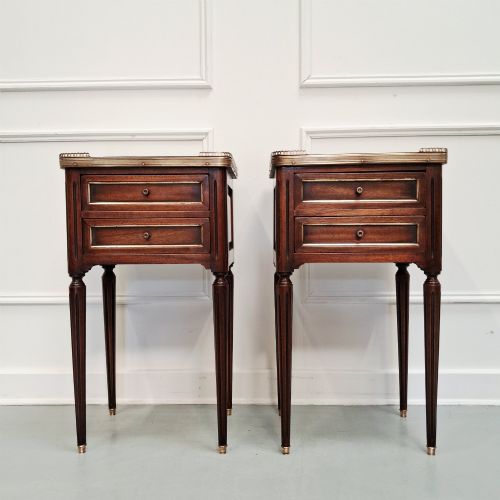
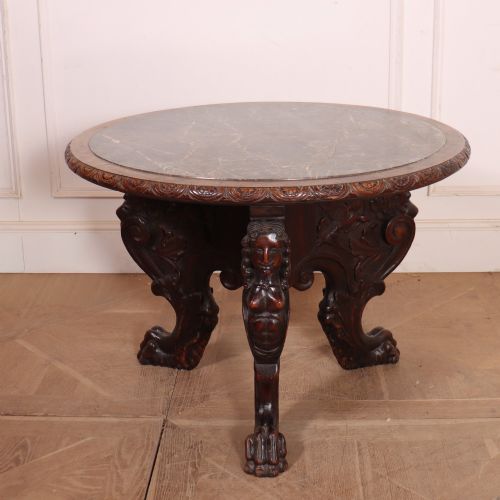
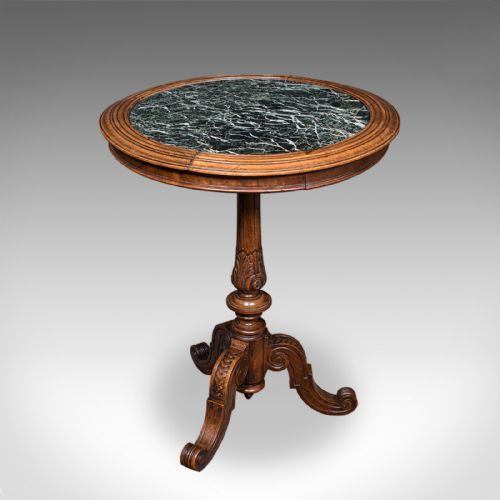
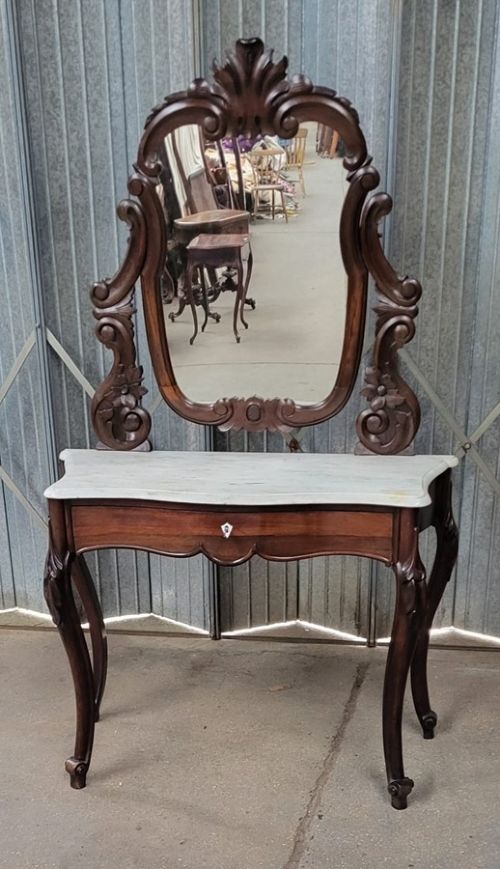
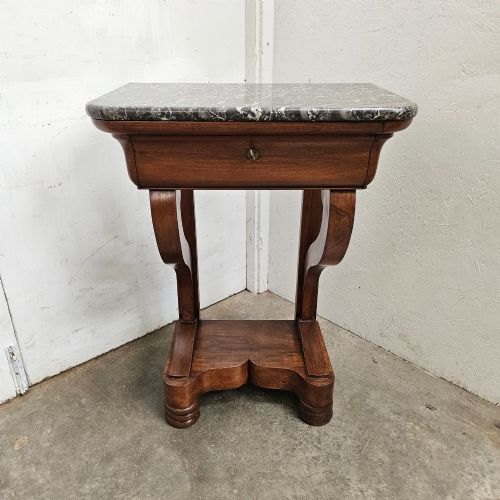
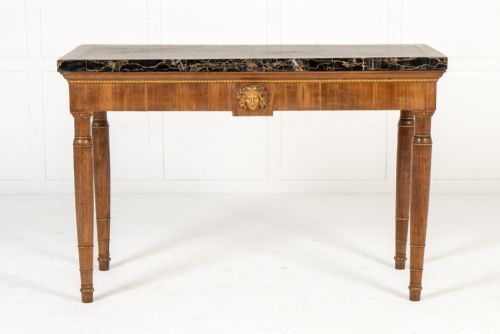
When you search for a dark walnut marble table, you encounter a selection spanning the nineteenth century, including Victorian, Edwardian, and eighteenth-century examples. The pieces range from grand console tables and coffee tables to bedside cabinets, side tables, and dressing tables.
Italian, French, and English workshops created these forms, adopting styles such as Rococo Revival, Louis Philippe, Baroque, and Italian Neoclassical. Console tables and bedside cabinets appear most frequently on this page, often featuring carved wood details alongside their stone tops.
Makers utilised dark walnut timber for its deep grain and rich colour, pairing it with inset marble surfaces for practical utility and decorative effect. These items served functional roles in period homes, functioning as serving surfaces, nightstands, or decorative display pieces.
Assessing Quality and Execution
The sophistication of the timber carving distinguishes finer examples from simpler production, particularly where deep relief work and figurative elements appear on the walnut frame. Pierced carving and balanced proportions indicate skilled workmanship in console tables and side stands.
The selection and fitting of the marble top also dictate grade, with matched veining and intricate stone inlay representing higher standards of manufacture. Parquetry veneer work and the integration of secondary materials like brass or ormolu reflect greater labour investment during the nineteenth century.
Dark Walnut Marble Table Retail Price Guide 2026
Typical asking prices for dark walnut marble table among the pieces listed under this phrase on Sellingantiques today, from the lower quarter to the upper quarter. They describe what is for sale here now, not the wider market.
Listings feature items from the eighteenth, nineteenth, and early twentieth centuries, incorporating Victorian, Edwardian, and continental European periods.
The Dark Walnut Marble Table Glossary
- Console table
- A table designed to stand against a wall, frequently secured with brackets or resting on front legs. These items often feature decorative carved aprons and marble tops.
- Pietra Dura
- An artistic technique using cut and fitted polished coloured stones to create geometric or pictorial designs. This work appears on tabletop surfaces.
- Parquetry
- Geometric wood veneer mosaic work arranged in patterns on furniture surfaces. It demonstrates precise carpentry skills.
- Ormolu
- Gilded bronze mounts applied to furniture for decoration. Workshops employed this technique extensively on French pieces.
- Serpentine front
- A furniture front curved with a convex centre flanked by concave ends. This contour adds movement to case pieces and tables.
Dark Walnut Marble Table: Frequently Asked Questions
Where should I place a console table?
A console table fits neatly against a hallway wall or beneath a mirror in a reception room. Its shallow depth ensures it does not obstruct pathways while providing a display surface.
Pairs of these tables work well flanking a fireplace or framing a grand doorway in larger spaces.
How do I clean a marble top?
Wipe the marble surface regularly using a soft cloth dampened with warm water and a mild, neutral soap. Avoid acidic cleaners, vinegar, or harsh chemicals that can etch the stone.
Dry the surface thoroughly after cleaning to maintain the polish and prevent water marks from settling into the porous material.
What is a bedside cabinet used for?
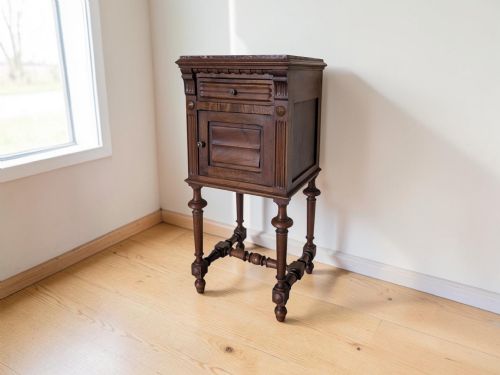
A bedside cabinet provides enclosed storage next to a bed for night-time essentials, holding books, lighting, and personal items. The marble top offers a durable, wipe-clean surface for drinking glasses.
Many period examples feature a single drawer above a small cupboard door to keep surfaces tidy.
How do I identify Victorian furniture?
Victorian pieces often display heavier proportions and borrow historical styles like Gothic, Rococo Revival, or Italian Neoclassical. Walnut, mahogany, and carved wood elements dominate this period's output.
Construction methods transition during this era from hand craftsmanship towards early industrial techniques, visible in the joints and internal drawer linings.