

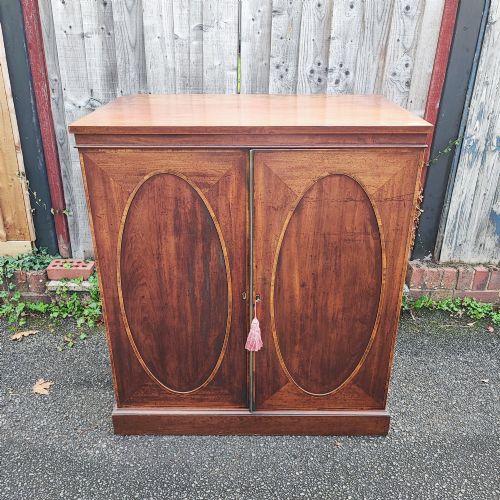
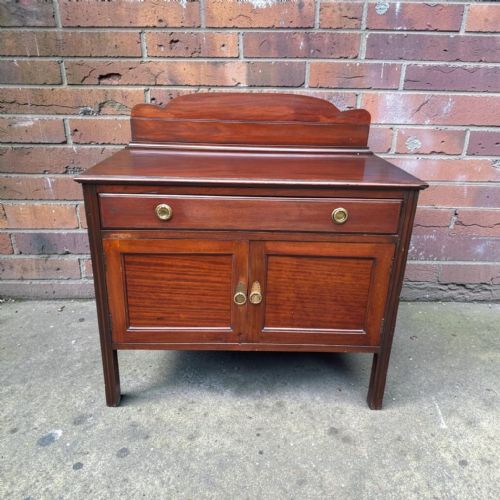
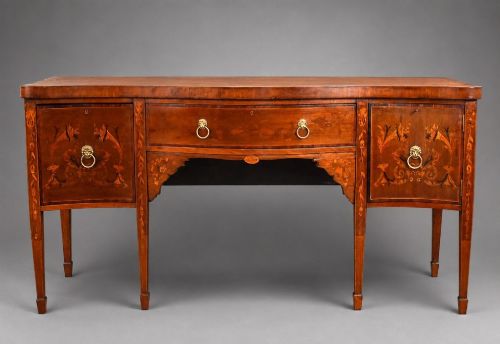


Dark Timber Credenza Cabinet
A dark timber credenza cabinet brings substantial presence to a room, offering deep tones and ample storage through centuries of craftsmanship.
Dark Timber Credenza Cabinet
When you search for a dark timber credenza cabinet, you examine a selection of robust storage furniture primarily drawn from the nineteenth century. These forms encompass sideboards, side cabinets, bookcases, and chiffoniers, reflecting varied domestic utilities from the Victorian and Edwardian eras.
The assortment on this page leans heavily toward nineteenth-century origins, featuring substantial mahogany, rosewood, and teak builds. Pieces range from grand pedestal sideboards to refined side cabinets, with occasional regional interpretations including Anglo-Indian padauk and Italian walnut constructions.
Buyers frequently encounter formal dining room sideboards alongside smaller side cabinets suited for living spaces. The selection captures diverse historical revivals, moving from restrained Regency lines to elaborate Victorian Rococo and Renaissance revivals.
How they were made
Cabinet makers utilised dense tropical hardwoods, selecting solid mahogany, rosewood, and teak for structural integrity and rich natural colour. Flame mahogany veneer provided striking figured surfaces on primary panels, while contrasting timbers added depth.
Decoration relied on skilled hand techniques such as intricate marquetry inlay, delicate brass mounts, and deep relief carving. Glass doors and mirrored backs appeared on later cabinet forms to lighten the visual weight of the heavy timber frames.
Dark Timber Credenza Cabinet Retail Price Guide 2026
Typical asking prices for dark timber credenza cabinet among the pieces listed under this phrase on Sellingantiques today, from the lower quarter to the upper quarter. They describe what is for sale here now, not the wider market.
Several cabinets harbour secret cellarets designed originally to keep the family port securely locked away from thirsty footmen.
What varies in quality
Quality rests upon the selection of the timber and the precision of the veneer work, where book-matched flame mahogany demonstrates superior material choice. Finer examples display crisp, hand-carved details and seamless marquetry inlay rather than mechanical stamping.
Internal construction and secondary woods reveal the maker's dedication, distinguishing bespoke cabinet work from mass production. The integration of quality brass hardware and well-fitted glass doors further elevates the standing of individual pieces.
The Dark Timber Credenza Cabinet Glossary
- Credenza
- A sideboard or cabinet used historically for storing and serving food, evolving into a display piece.
- Flame Mahogany Veneer
- A thin slice of wood cut from a mahogany fork, showing a distinctive flamelike pattern.
- Marquetry Inlay
- Decorative patterns created by fitting contrasting pieces of wood veneer into a prepared surface.
- Chiffonier
- A low sideboard or cabinet featuring shelves or a small superstructure, popular during the nineteenth century.
- Pedestal Sideboard
- A heavy dining room sideboard supported by two distinct pedestal bases, often containing cellarets.
Dark Timber Credenza Cabinet: Frequently Asked Questions
Where should I place a dark timber credenza cabinet?
These substantial cabinets anchor a dining room or spacious hallway, providing a surface for serving and enclosed storage below.
In a living room, a side cabinet functions effectively as a focal point, holding books or display items while warming the room with rich timber tones.
How do I care for antique mahogany and rosewood?
Protect the timber by avoiding direct sunlight and maintaining stable room humidity to prevent veneer lifting or wood splitting.
Apply a traditional wax polish sparingly and buff with a soft cloth to maintain the natural lustre of the polished surface.
What is the difference between a sideboard and a chiffonier?
Sideboards were traditionally larger pieces designed for dining rooms, featuring cupboards and drawers for storing plate and linen.
Chiffoniers are typically more compact nineteenth-century pieces that often include an elevated shelf or mirror back for display.
How do I identify a Victorian piece?
Victorian cabinets often display heavier proportions and darker finishes, frequently utilising mahogany, rosewood, or walnut.
Stylistic markers range from restrained classical revivals to ornate carving reflecting the Victorian Rococo and Renaissance revival movements.