

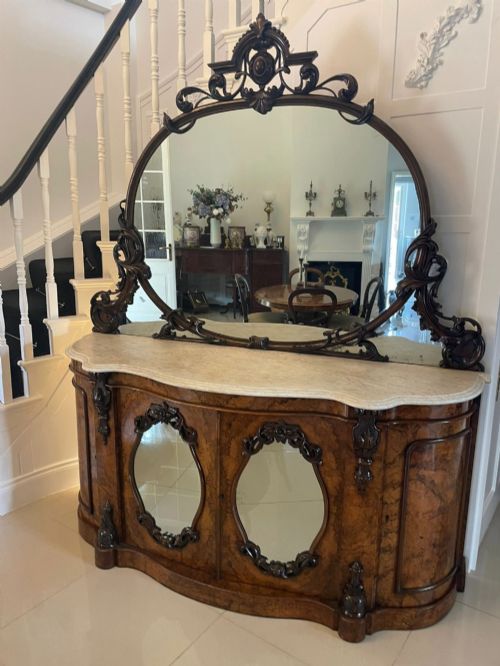
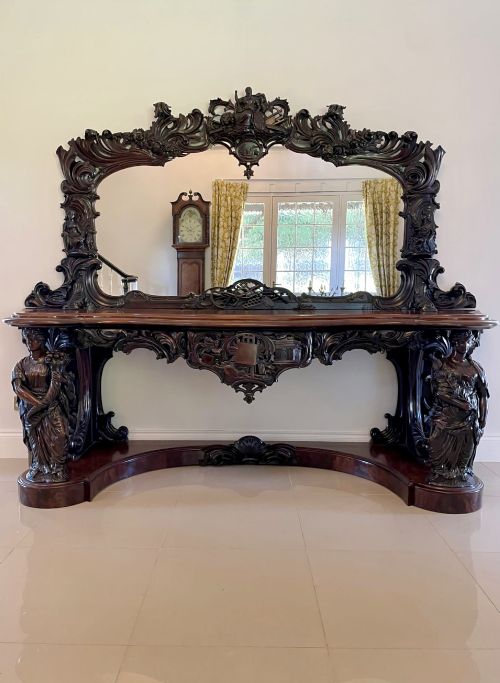
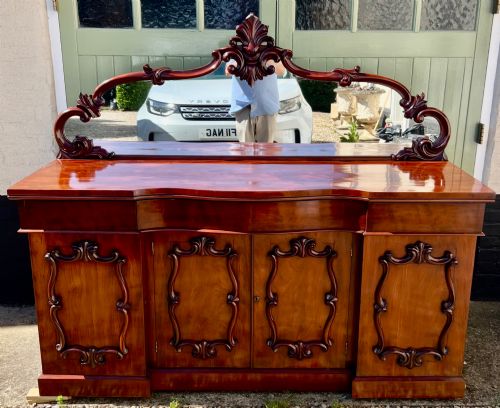


Victorian Rococo Carved Sideboard
A victorian rococo carved sideboard brings sculptural flourish and rich timber to a room, offering both display space and grand storage.
Victorian Rococo Carved Sideboard
When you search for a victorian rococo carved sideboard, you are looking at substantial nineteenth century timber furniture designed with flamboyant scrollwork and naturalistic curves. These pieces span the broader Victorian era, drawing heavily on the revived French taste of the mid nineteenth century.
On this page, the form most frequently appears as a burr walnut or mahogany credenza and mirror back sideboard. These large statement items combine polished cabinetwork with heavy carved decoration and occasionally marble tops.
The selection ranges from simpler two door side cabinets to grand mirror back consoles and serpentine credenzas. Each piece demonstrates the heavy timber construction typical of nineteenth century British workshops.
Materials and Construction
Cabinetmakers built these pieces using solid timbers such as mahogany and walnut, frequently applying burr walnut or flame mahogany veneers to large flat surfaces. Rich figuring in the wood grain provided visual depth beneath the polished finish.
Ornate carving defined the rococo revival style, applied to frames, mirror surrounds and structural supports by hand. Fitted glass, inset marble tops and brass hardware completed the construction of these substantial credenzas and sideboards.
Victorian Rococo Carved Sideboard Retail Price Guide 2026
Typical asking prices for victorian rococo carved sideboard among the pieces listed under this phrase on Sellingantiques today, from the lower quarter to the upper quarter. They describe what is for sale here now, not the wider market.
Listings feature items from the mid nineteenth century onwards, utilising mahogany, burr walnut, and inset marble tops.
Assessing Quality
The standard of timber selection marks the difference between basic utility and exhibition pieces, with highly figured burr walnut and flame mahogany commanding attention. Rich grain patterns and symmetrical veneer matching show superior cabinetwork.
Carving depth and execution separate finer examples from routine production. Crisp, deep relief work on the scrollwork and foliage indicates a more skilled hand than shallow, mechanical shaping.
The Victorian Rococo Carved Sideboard Glossary
- Credenza
- A low cabinet or sideboard, frequently fitted with glass doors and used for display. These pieces often feature serpentine fronts and elaborate mirror backs.
- Serpentine
- A furniture front curved with a convex centre flanked by concave sides. This undulating shape adds visual movement to heavy timber cabinets.
- Burr Walnut
- Timber taken from the warted growths of walnut trees, yielding highly decorative swirling grain patterns. Cabinetmakers sliced this wood into thin veneers for decorative surfaces.
- Mirror Back
- An upright wooden frame holding a glass mirror attached to the rear of a sideboard or console table. This addition reflected light and displayed decorative objects from behind.
Victorian Rococo Carved Sideboard: Frequently Asked Questions
What is a rococo sideboard?
A rococo sideboard is a nineteenth century storage piece characterised by asymmetric scrolls, naturalistic foliage, and curved outlines. These designs revive the eighteenth century French taste for flowing, organic ornament.
Craftsmen applied these carved motifs heavily to walnut and mahogany frames, often incorporating large mirrors and marble tops into the overall design.
Where should I place a credenza?
These large cabinets suit principal reception rooms or dining spaces where their substantial proportions can anchor a wall. They provide functional surface space while serving as decorative focal points.
Peculiar to the Victorian period, mirror back versions look best against a solid wall with adequate clearance to appreciate the carved details.
How do I care for walnut veneer?
Polished timber surfaces require simple dusting with a dry, soft cloth to prevent abrasive particles from scratching the finish. Avoid direct sunlight and extreme temperature shifts to protect the veneer from splitting.
Applying traditional wax polish occasionally will nourish the wood and maintain the deep sheen characteristic of nineteenth century furniture.
Are marble tops original?
Many nineteenth century credenzas and console tables feature fitted marble tops designed to handle heavy use and display items safely. These stone slabs were selected to complement the dark tones of mahogany and walnut.
Checking the underside and edges helps confirm whether the marble sits naturally within the original wooden rebate.