
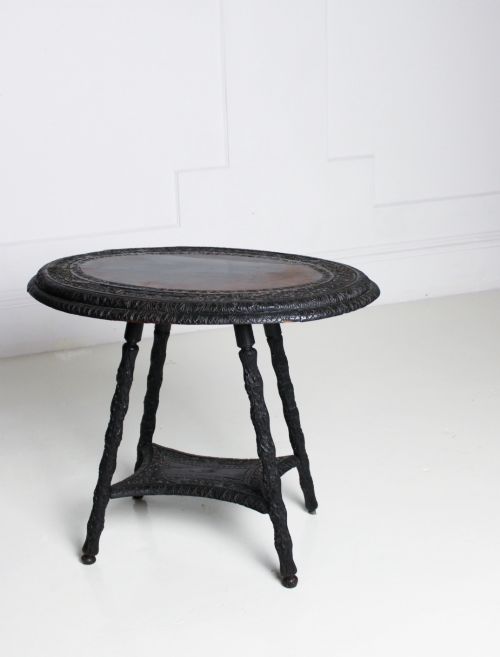
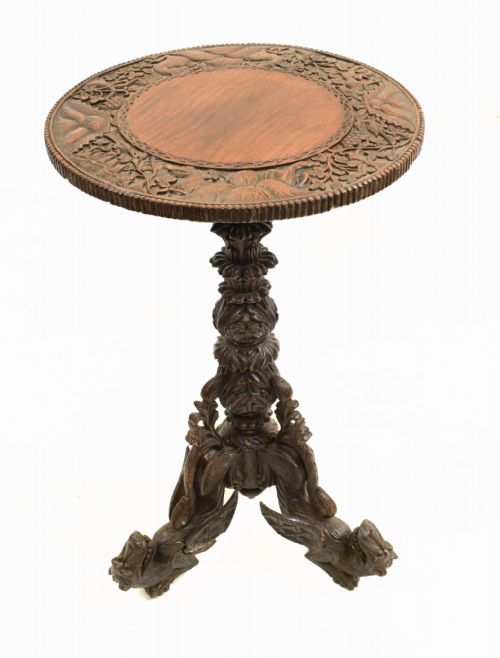


Dark Teak Accent Table
A dark teak accent table brings dense colonial grain and deep carving into a room, offering a sturdy surface with distinct regional character.
Dark Teak Accent Table
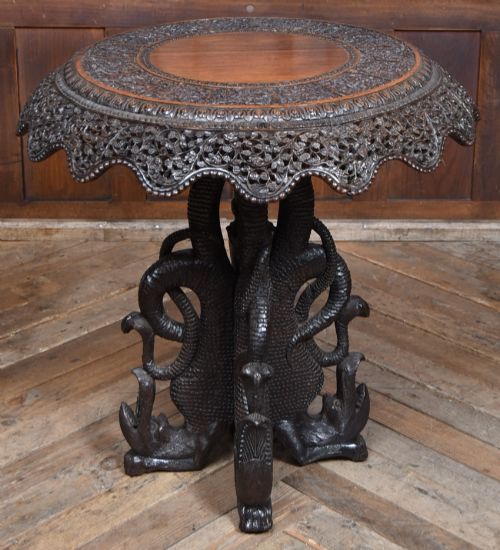
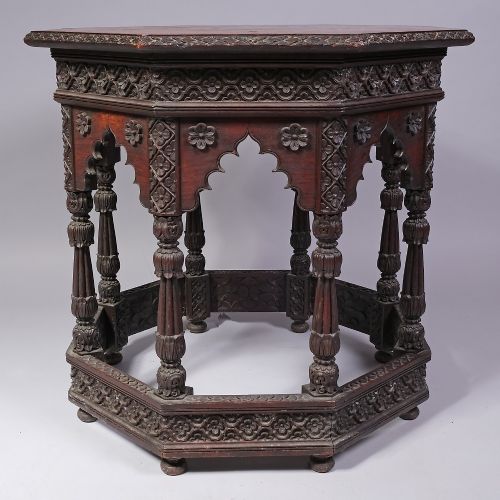
A dark teak accent table unites British colonial design with South and Southeast Asian craftsmanship, spanning side tables, occasional tables, nesting sets, and centre tables. You will frequently encounter octagonal, circular, and elephant-supported forms originating from nineteenth-century India and Burma.
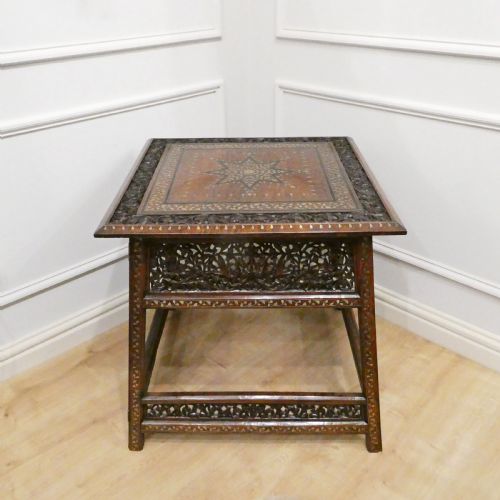
The selection ranges from folding occasional pieces to heavy two-tier side stands. Pieces from the Hoshiarpur region and the Bombay Presidency appear regularly alongside Burmese carvings.
Makers produced these works for export and colonial homes, combining traditional local motifs with forms suited to Western drawing rooms. The resulting tables vary from simple folding stands to heavily carved pedestal and tripod designs.
Materials and Construction
Construction relies primarily on dense hardwoods such as teak and rosewood, chosen for their weight and dark natural tone. Artisans combined solid timber frames with intricate hand-carved surfaces, often incorporating contrasting materials directly into the wood.
Inlay work utilises brass wire, bone, and bone inlay to map geometric patterns or floral scrolls across the tabletops. Folding mechanisms and tilt-top hinges demonstrate practical engineering alongside ornate exterior decoration.
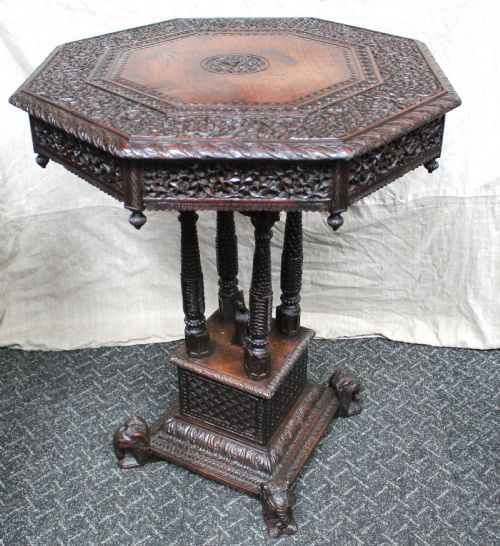
Several tables rely on carved elephants to hold up your evening tea.
Assessing Craftsmanship
Quality rests on the depth and crispness of the carved relief work, where sharper floral and animal details indicate superior hand-tooling. The integration of brass or bone inlay distinguishes finer pieces from simpler carved variants.
Structural integrity depends on the density of the teak and the precision of folding joints or pedestal mounts. Tables retaining a rich, unblemished dark grain exhibit better material selection and preservation.
The Dark Teak Accent Table Glossary
- Anglo-Indian
- Furniture made in India during the British colonial period for both local British residents and export. It fuses British furniture forms with traditional Indian carving techniques.
- Hoshiarpur
- A district in Punjab known for intricate woodworking traditions. Artisans there specialised in dense geometric bone and brass inlay on dark timber bases.
- Tilt-top
- A tabletop mounted on a hinge mechanism that allows the surface to fold vertical when not in use. This design saved space in nineteenth-century domestic interiors.
- Octagonal
- Having eight sides. This geometric tabletop shape appears frequently on Indian pedestal and side tables.
- Tripod
- A three-legged support structure. These bases often feature carved animal or pedestal configurations.
Dark Teak Accent Table: Frequently Asked Questions
Where were these tables made?
These pieces originated primarily in workshops across India and Burma during the nineteenth and early twentieth centuries.
Craftsmen produced them for colonial administrators, local elites, and the European export market, adapting traditional regional motifs for British homes.
What is an elephant table?
An elephant table is a low occasional piece featuring legs or supports carved in the likeness of elephants.
These whimsical supports often carry an octagonal or circular tabletop decorated with deep foliate carving.
How do I care for dark teak?
Maintain the dark wood by dusting with a dry cloth and avoiding direct sunlight.
Apply natural beeswax occasionally to nourish the grain without buildup.
Are folding tables sturdy?
Folding and occasional tables utilise hinged lattice frames designed for stability when open.
Careful alignment of the wooden pivots ensures the top remains level during daily use.