
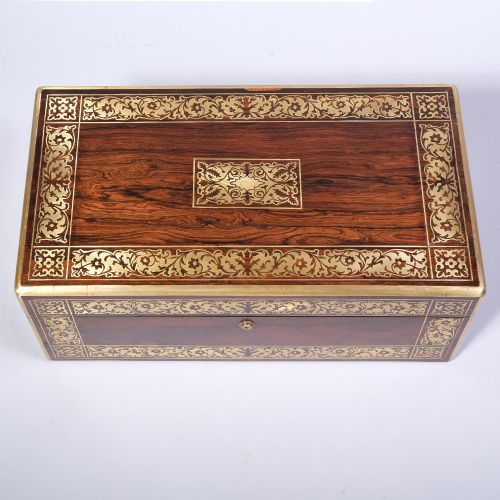
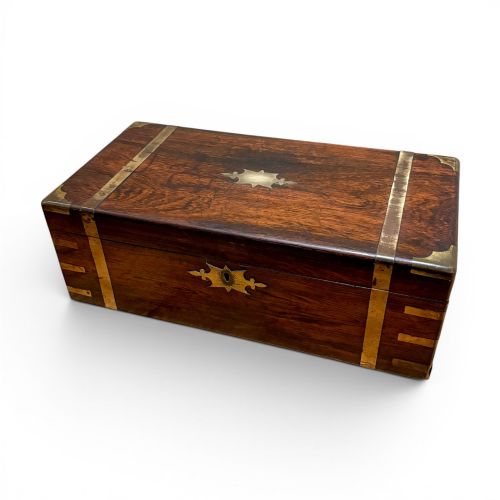
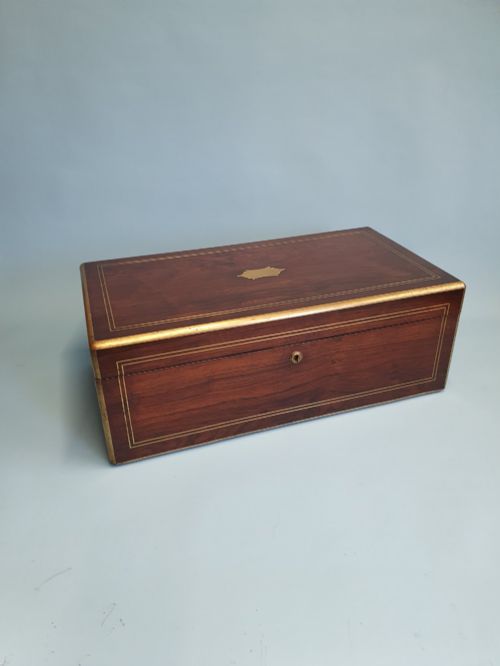


Dark Rosewood Writing Box
A dark rosewood writing box is a portable desk or document case built for correspondence, and you want one for its rich timber and period craftsmanship.
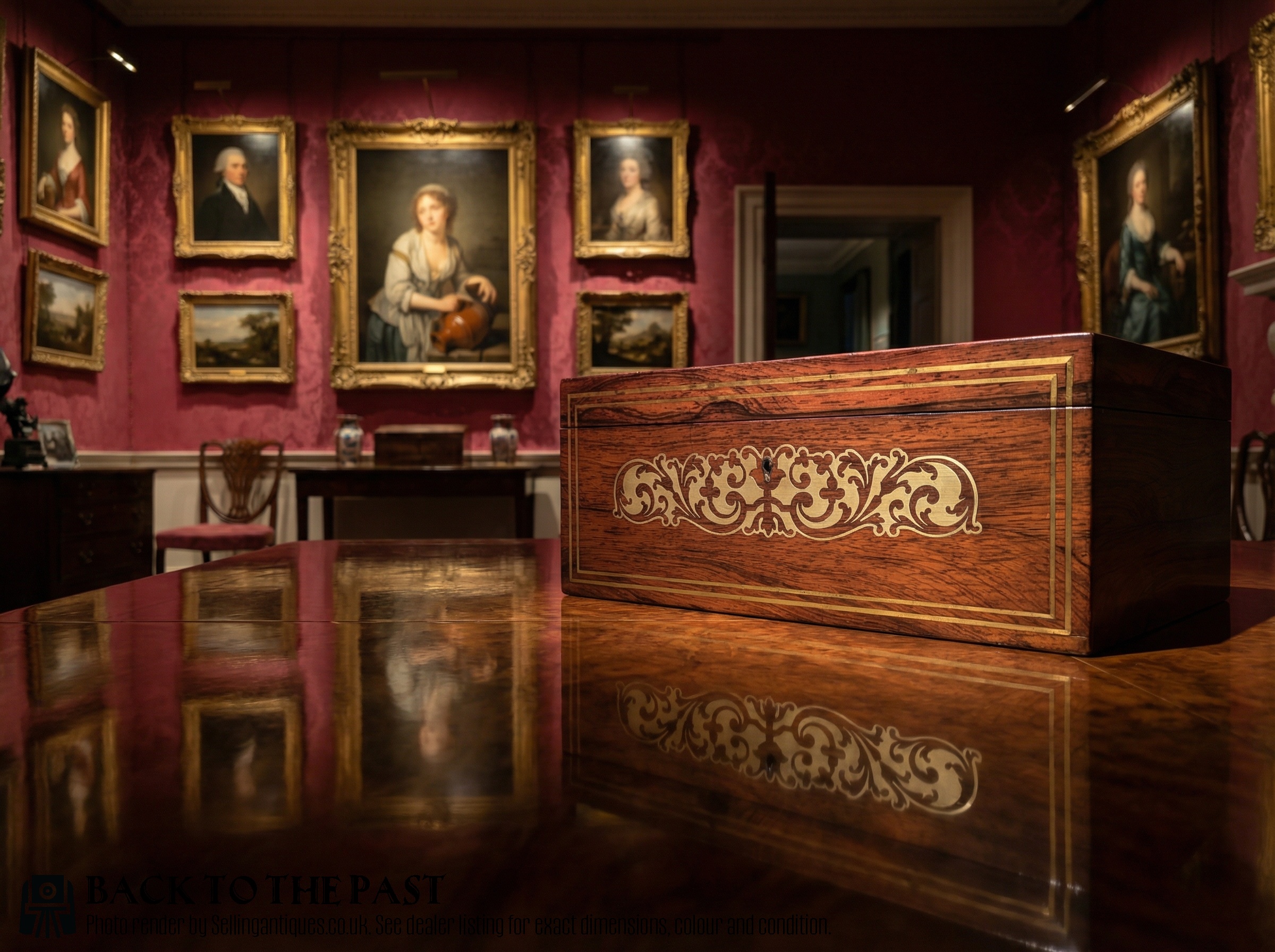
Dark Rosewood Writing Box
A dark rosewood writing box is a portable desk designed for holding paper, ink and letters during the Georgian, Regency and Victorian periods. Buyers encounter various forms on this page, ranging from standard slopes to campaign boxes and larger document cases.
The pieces appearing here span the nineteenth century, including specific decades such as the eighteen-fifties, eighteen-sixties and eighteen-eighties. Styles reflect the prevailing tastes of the era, moving from Georgian and Regency austerity to ornate Victorian and Napoleon III interpretations.
Many examples function as slope desks that fold open to reveal a slanted writing surface lined with leather or velvet. Others serve as stationary boxes, document chests or fitted travelling cases with compartments for inkwells and pens.
How they were made
Cabinet makers built these boxes using dense rosewood timbers over robust foundational woods, often incorporating brass binding or brass inlay to reinforce corners and edges. Surface decoration also relies on contrasting boxwood inlay, mother-of-pearl accents and delicate marquetry.
Internal layouts require careful joinery to create secret drawers, pen trays and lidded compartments within a compact carcass. Metal hinges, campaign mounts and flush handles ensure the exterior remains smooth and durable for travel.
Some boxes hide secret drawers behind false partitions, daring you to find where the old letters vanished.
What varies in quality
The refinement of the brass inlay and the precision of the boxwood stringing set superior examples apart from standard workshop output. Subtle details in the grain pattern and the depth of the dark rosewood colour dictate visual appeal.
Internal complexity also separates grades, with finer boxes featuring secret drawers, clever locking mechanisms and fitted leather slopes. The integrity of the original construction and the survival of fitted interior compartments determine the standing of each piece.
The Dark Rosewood Writing Box Glossary
- Writing slope
- A portable box that opens on a hinge to reveal an angled writing plane. These surfaces often lift to access storage compartments beneath.
- Brass bound
- A method of reinforcing box corners and edges with flush brass strips and corner pieces. This technique provided extra durability for travel.
- Campaign box
- A sturdy portable chest or desk designed for military officers and travellers on the move. Such pieces typically feature recessed brass handles and robust locks.
- Secret drawers
- Concealed compartments hidden behind false panels or activated by internal latches. Makers used these to store valuables and sensitive correspondence.
- Marquetry
- The art of applying decorative veneer pieces in geometric or pictorial patterns onto the wooden surface. This technique highlights the skill of the cabinet maker.
Dark Rosewood Writing Box: Frequently Asked Questions
What is a dark rosewood writing box?
A dark rosewood writing box is a portable nineteenth-century desk designed for holding correspondence, paper and writing implements. These cases open to provide a firm surface for writing while travelling or at home.
Craftsmen utilised dense rosewood timber combined with brass mounts, boxwood inlay and mother-of-pearl. They remain popular decorative and functional objects for collectors of period woodwork.
How were campaign writing boxes used?
Campaign writing boxes served officers and travellers who needed a mobile desk during journeys. The sturdy construction and brass binding protected the contents from rough handling.
Inside, users found dedicated spaces for inkwells, nibs and folded stationery. Secret compartments offered secure storage for private documents.
How do I date a rosewood writing box?
Dating relies on stylistic clues, hardware and construction methods associated with Georgian, Regency and Victorian periods. Regency examples often feature clean brass banding, while Victorian versions incorporate richer marquetry and varied internal layouts.
Makers changed decorative preferences over the nineteenth century, shifting from restrained classical lines to more ornate embellishments by eighteen-sixty. Examining the hinges, locks and secondary woods helps narrow the timeframe.
Do these boxes come with working keys?
Many surviving writing boxes retain their original locks and include a working key. However, period locks can be temperamental due to age and wear.
Locks and escutcheons varied from simple brass plates to complex mechanisms requiring specific keys. When present, a working key adds to the completeness of the object.