



Dark Rosewood Tea Box
Dark rosewood tea box pieces are dense timber containers with rich grain patterns designed to store and preserve precious loose leaves.
Dark Rosewood Tea Box
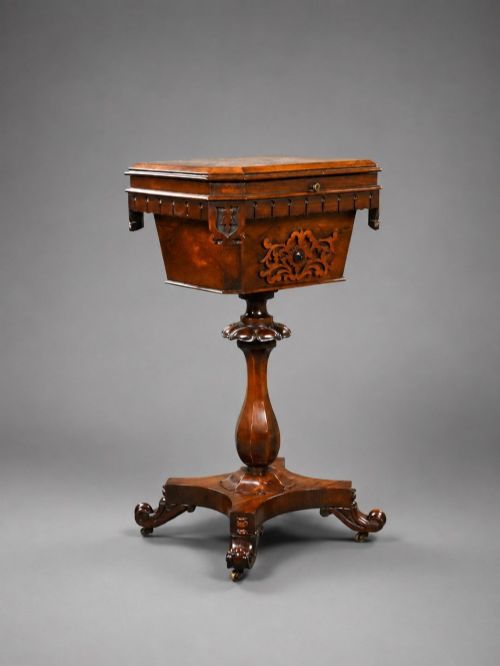
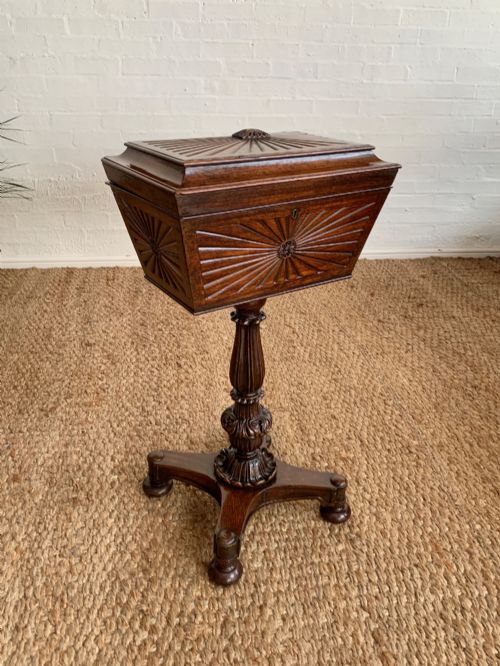
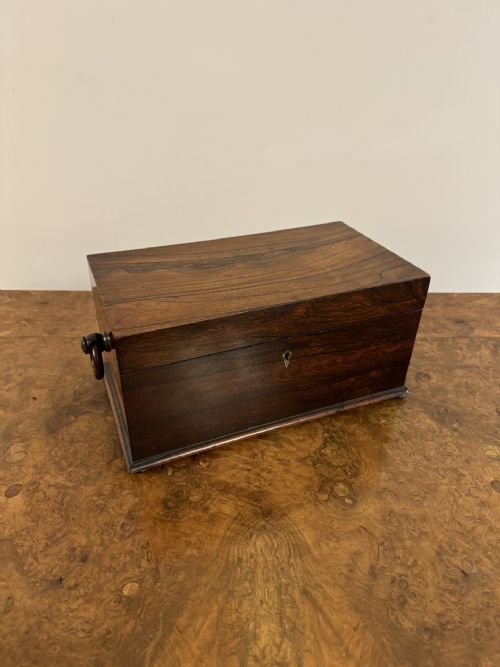
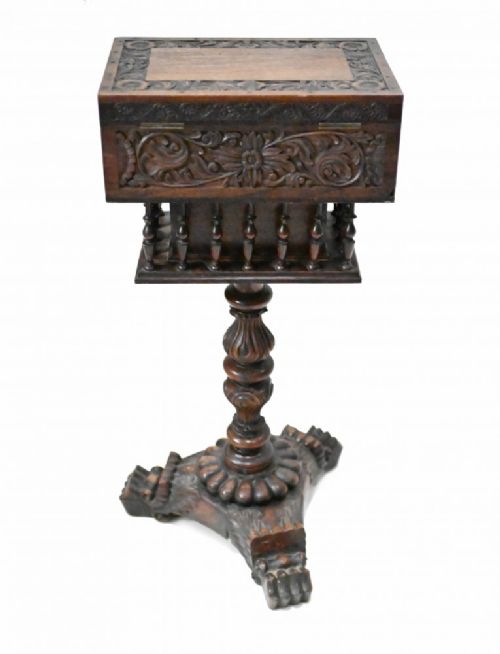
A dark rosewood tea box appears in forms ranging from compact tabletop caddies to substantial freestanding teapoys supported on stands. These items emerge chiefly from the Georgian, Regency, William IV and Victorian periods.
The buyer meets sarcophagus shapes, rectangular chests and miniature sideboard forms resting on carved feet or pillar bases. Many examples incorporate fitted interior compartments alongside glass mixing bowls.
Makers shaped these containers during the nineteenth century using dense tropical timber complemented by contrasting stringing and decorative metalwork. The resulting objects served affluent households as both functional storage and elegant parlour furnishings.
How they were made
Cabinetmakers constructed these pieces primarily from solid rosewood or applied dense rosewood veneers over secondary timbers. Workshops integrated brass inlay, boxwood stringing, bone elements and mixed wood veneers to delineate panels and lids.
Internal components frequently utilised secondary woods alongside fitted glass mixing bowls for diluting strong brews. Artisans secured structural corners with precise joints while mounting decorative elements such as lion mask handles or mother-of-pearl foliate motifs onto the exterior surfaces.
Listings feature pieces spanning the Georgian, Regency, William IV and Victorian eras, utilising rosewood alongside brass, bone, boxwood and glass.
What varies in quality
The standard of a dark rosewood tea box depends upon the depth of the timber's grain figure and the precision of its decorative embellishments. Superior pieces display intricate brass stringing, elaborate parquetry or delicate mosaic work executed without gaps or timber shrinkage.
Proportion and structural integrity distinguish finer examples from standard production items, particularly where complex sarcophagus curves or carved pillar supports are involved. Original interior fittings, functional locks and intact mixing bowls elevate the overall integrity of the piece.
The Dark Rosewood Tea Box Glossary
- Sarcophagus form
- A container design featuring a domed or stepped lid sloping outward toward a broader base, reminiscent of ancient monumental tombs. This shape became highly fashionable during the Regency period.
- Teapoy
- A pedestal table or large chest designed specifically to hold tea containers and facilitate the mixing process. These often stand on a central pillar with platform bases.
- Brass inlay
- The technique of embedding thin brass strips or decorative motifs flush into routed channels within the rosewood surface. It creates sharp geometric patterns across the lid and front panels.
- Tunbridge Ware
- Small wooden objects decorated with microscopic mosaic tiles arranged to form pictorial or geometric motifs. Makers assembled these tiny pieces of dyed and natural wood before applying them to the box exterior.
- Mixed wood inlay
- The combination of contrasting timbers such as satinwood and boxwood to create decorative bands and pictorial highlights. This technique frames the darker rosewood surfaces.
Dark Rosewood Tea Box: Frequently Asked Questions
How were these boxes used?
Households kept luxury tea locked securely inside these containers to protect expensive commodities from household staff and damp air.
Owners opened the caddy in the drawing room to measure leaves into a teapot while utilising the central glass bowl to dilute infusions.
How do I date a tea box?
Dating relies on observing structural proportions, decorative styles and construction methods associated with specific nineteenth-century design periods.
Georgian and Regency examples frequently display bold brass inlay and sarcophagus profiles, whereas Victorian versions often incorporate elaborate mosaic work or simpler rectangular forms.
How do I care for rosewood?
Maintain these wooden pieces by keeping them away from direct sunlight and sudden temperature shifts that cause timber shrinkage.
Apply a minimal amount of appropriate furniture wax occasionally to preserve the natural lustre of the dark grain.