

Dark Rosewood Chairs
Dark rosewood chairs are seating pieces rich in dense grain and deep tone, built to anchor formal rooms with substance.
Dark Rosewood Chairs
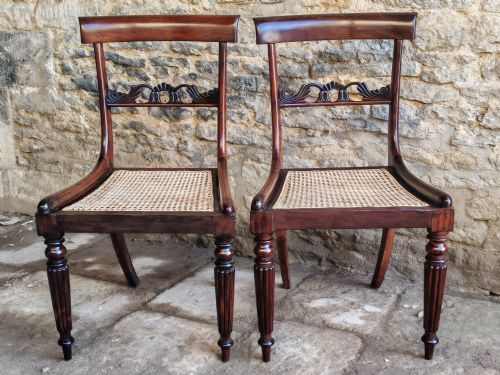
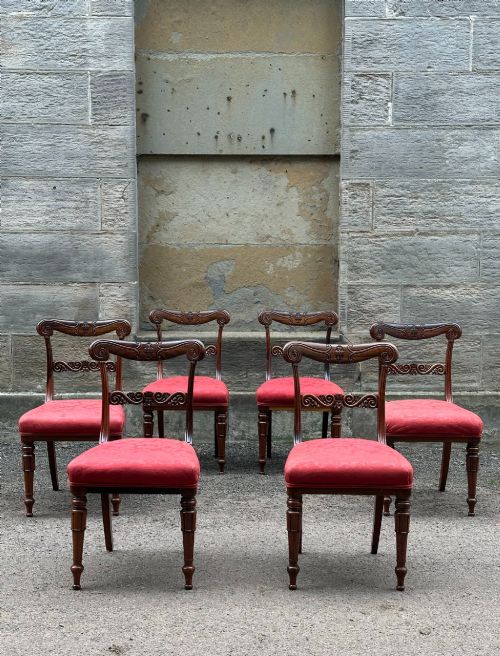
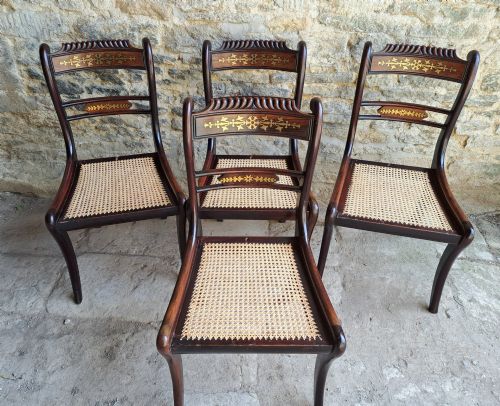
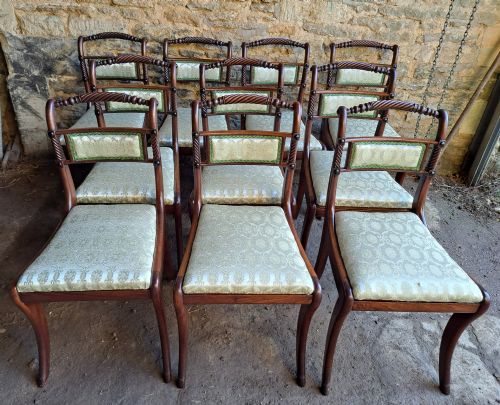
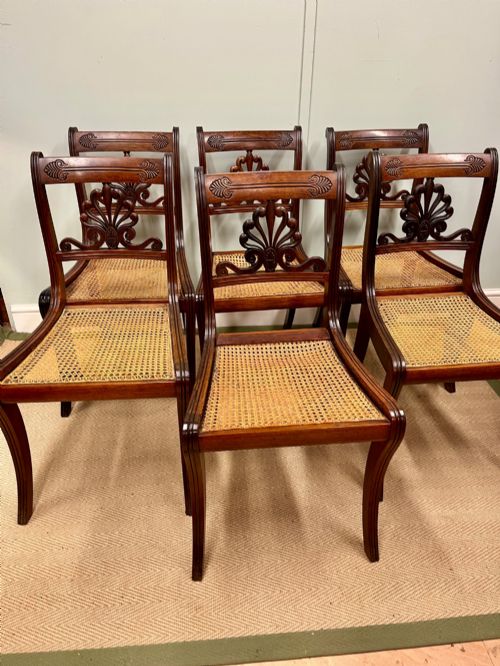
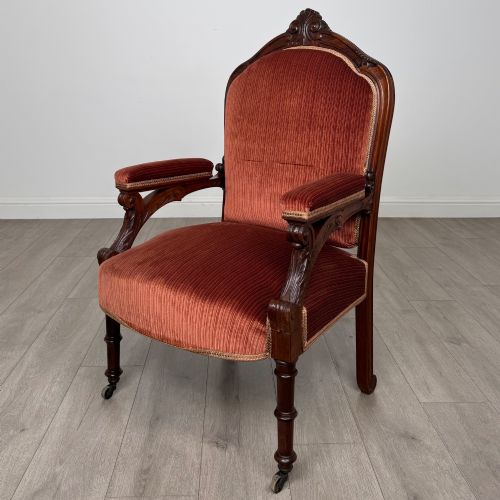
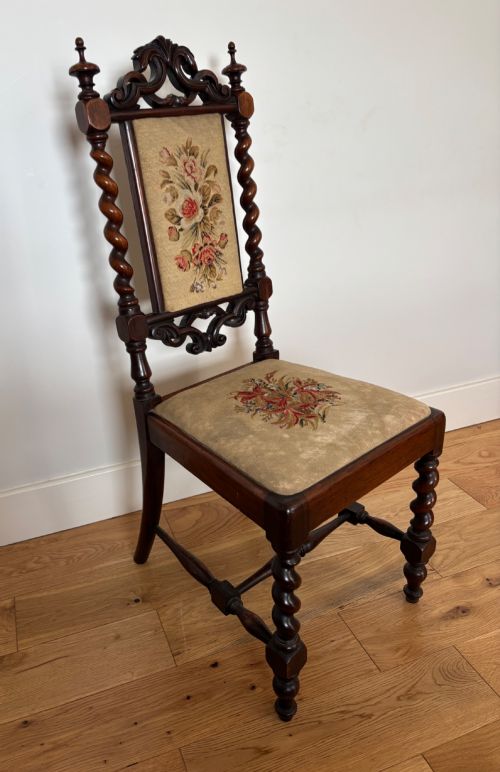
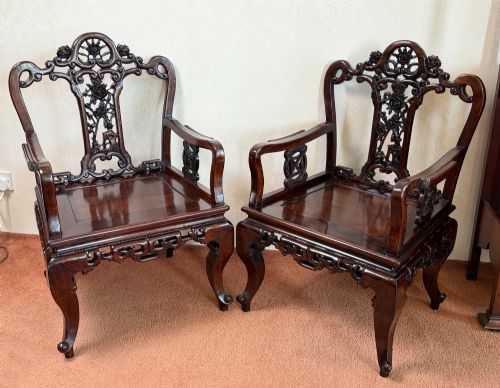
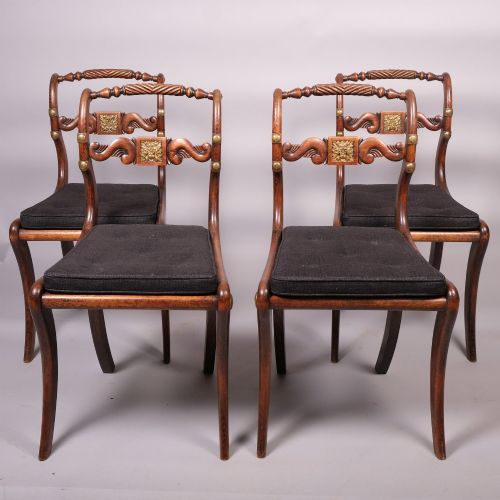
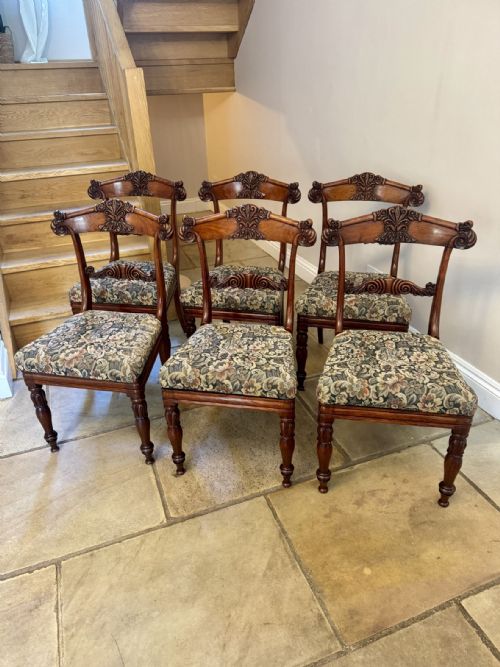
Dark rosewood chairs appear most frequently on this page as sets of dining chairs from the Regency and Victorian periods. Single armchairs, side chairs, and hall chairs also emerge alongside piano stools and settees.
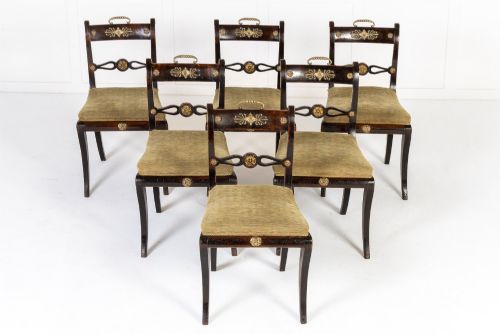
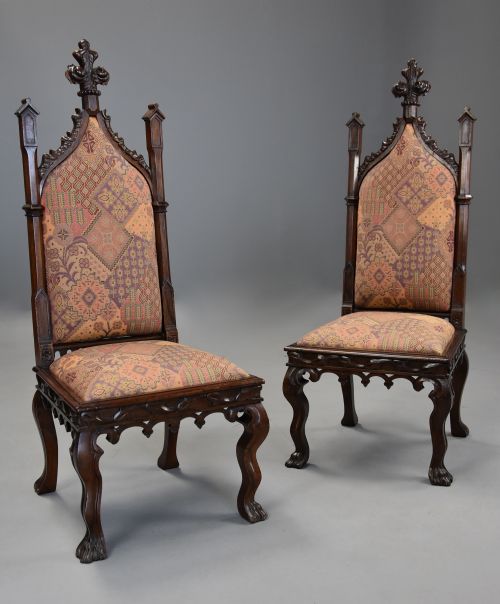
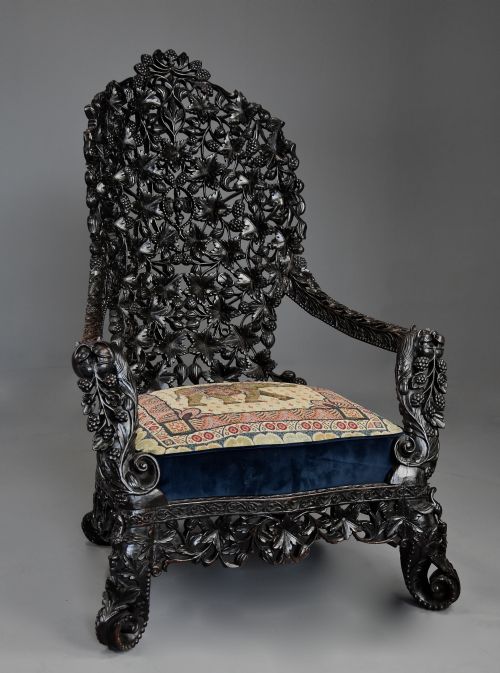
The styles span Regency, William IV, and Victorian Gothic Revival, as well as Chinese Export and Anglo-Indian Colonial designs. Makers from the nineteenth century shaped these dark timbers into both solid frames and simulated surfaces.
Buyers encounter everything from intimate sets of four to larger dining collections intended for substantial tables. Each piece reflects the formal seating requirements of nineteenth-century domestic interiors.
Materials and Construction Techniques
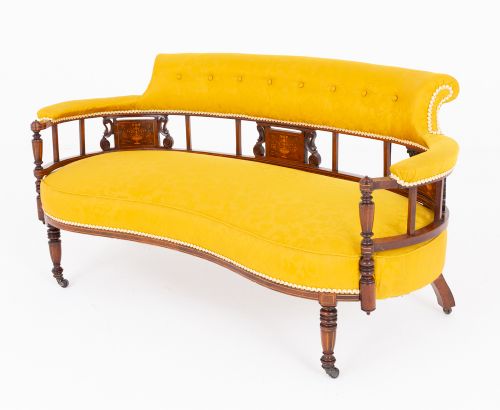
Workshops utilised dense rosewood alongside hardwood and simulated rosewood surfaces, often pairing the timber with brass inlay, marquetry, or intricate carving. Frames were constructed to support substantial upholstery in fabric, velvet, and textile.
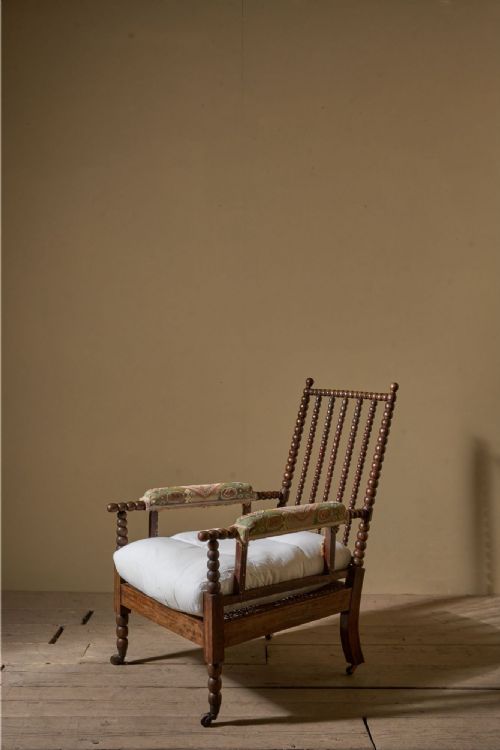
Seating portions frequently integrated cane work or traditional stuffing beneath top covers. Cabinetmakers shaped cabriole legs, high backs, and structural rails to balance the heavy visual weight of the wood.
A child's chair and a rise and fall piano stool prove that nineteenth-century households catered to seating at every height.
Distinctions in Execution
The hierarchy among these pieces rests upon the crispness of carved detail and the integrity of timber selection. Sets that retain uniform grain patterns across multiple chairs command greater visual cohesion than mixed groups.
The refinement of brass inlay, marquetry patterns, and joinery stability separate standard production from exceptional workshop output. High-grade examples maintain structural rigidity alongside well-preserved surface depth.
W A Willcocks·Gillows
The Dark Rosewood Chairs Glossary
- Rosewood
- A dense, heavily figured timber known for its deep colour and dark grain patterns. It polishes to a high sheen suitable for formal nineteenth-century furniture.
- Regency
- An English design period spanning the early nineteenth century. Furniture from this era often draws inspiration from classical antiquity.
- Gothic Revival
- A nineteenth-century style incorporating medieval architectural motifs. Chairs in this manner frequently display pointed arches and tracery.
- Caning
- A seating technique utilising woven plant material. It provides a flexible, breathable panel within the wooden frame.
- Marquetry
- The art of applying decorative veneer pieces to a structure. Craftsmen use various woods to create intricate pictorial patterns.
Dark Rosewood Chairs: Frequently Asked Questions
How do I date dark rosewood chairs?
Dating relies upon stylistic markers such as turned legs, carved crest rails, and upholstery methods. Regency pieces generally display cleaner classical lines, while Victorian examples introduce heavier carving and revival motifs.
Examination of the timber frame and construction techniques helps narrow the decade of production. Comparing the piece against documented nineteenth-century cabinetmaking styles confirms its approximate era.
Were these chairs used for dining?
Many of these pieces were specifically built as dining sets for formal nineteenth-century households. Larger groups provided matching seating around extended dining tables.
Side chairs and armchairs served dining functions, while smaller variants fulfilled roles as hall chairs or parlour seating. Their sturdy wooden frames ensured durability during daily domestic use.
What is simulated rosewood?
Simulated rosewood is a secondary timber painted or stained to mimic the distinct grain and dark colour of genuine rosewood. Cabinetmakers utilised this technique during periods when exotic hardwoods were costly or scarce.
Close inspection of the surface reveals the painted grain pattern rather than natural timber growth. This method allowed workshops to offer fashionable furniture at a different cost tier.
How do I care for rosewood furniture?
Maintaining these chairs involves keeping them away from direct sunlight and steady heat sources to prevent timber drying. Regular dusting with a soft, dry cloth preserves the polished surface.
Harsh chemical cleaners should be avoided in favour of traditional furniture wax applied sparingly. Maintaining stable room humidity protects both the wooden frames and the original upholstery.