

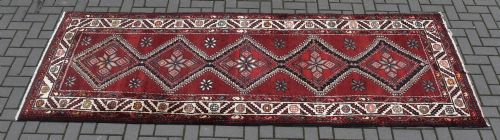

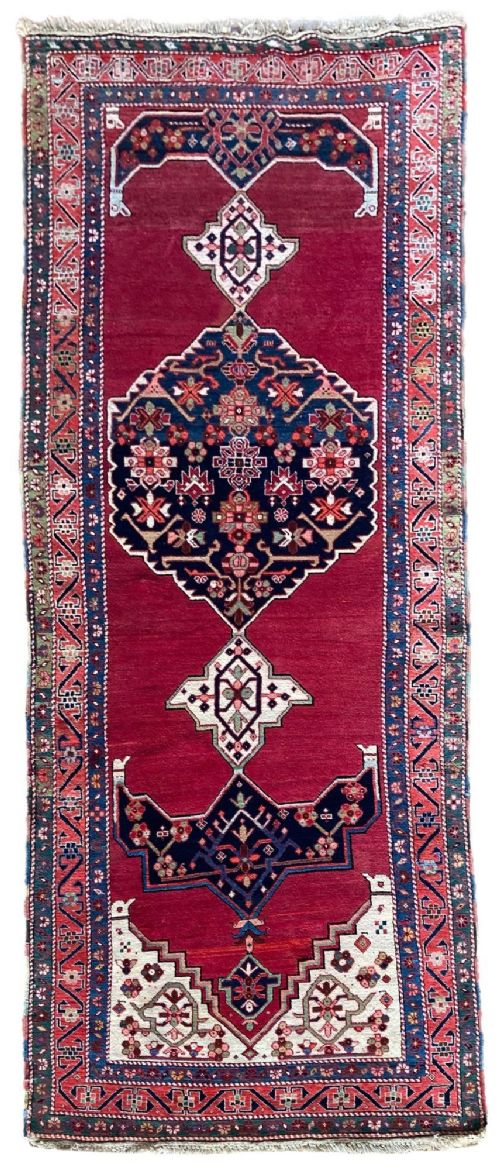


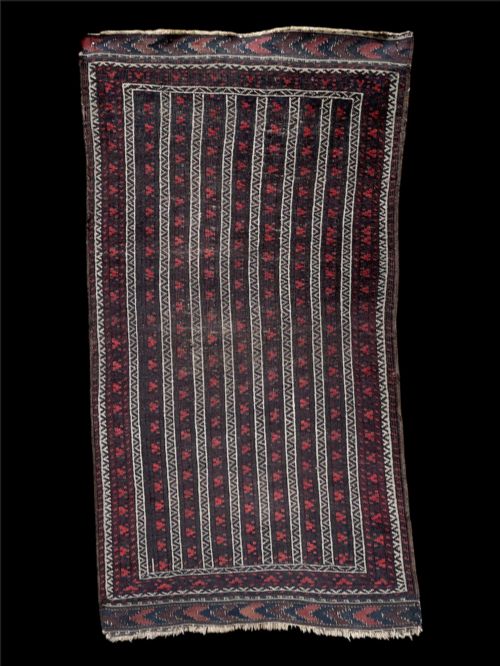

Dark Red Runner Rug
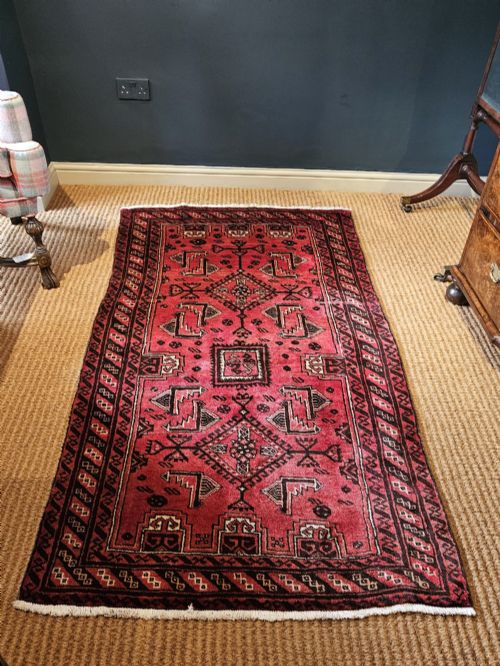
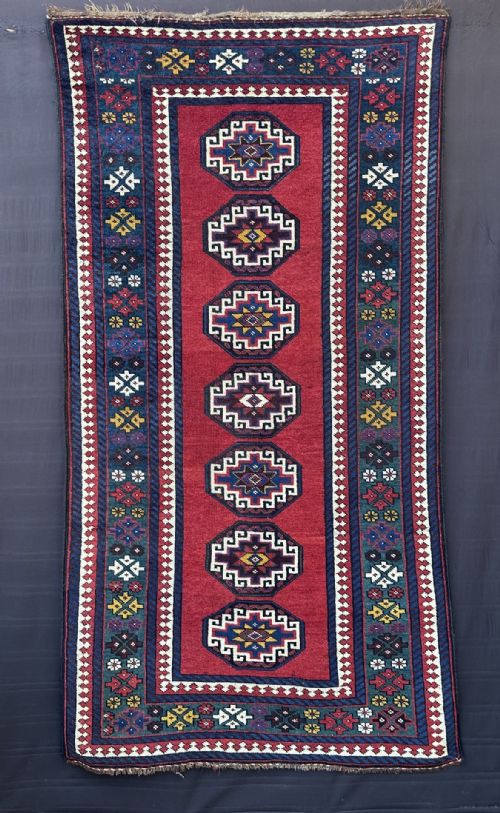
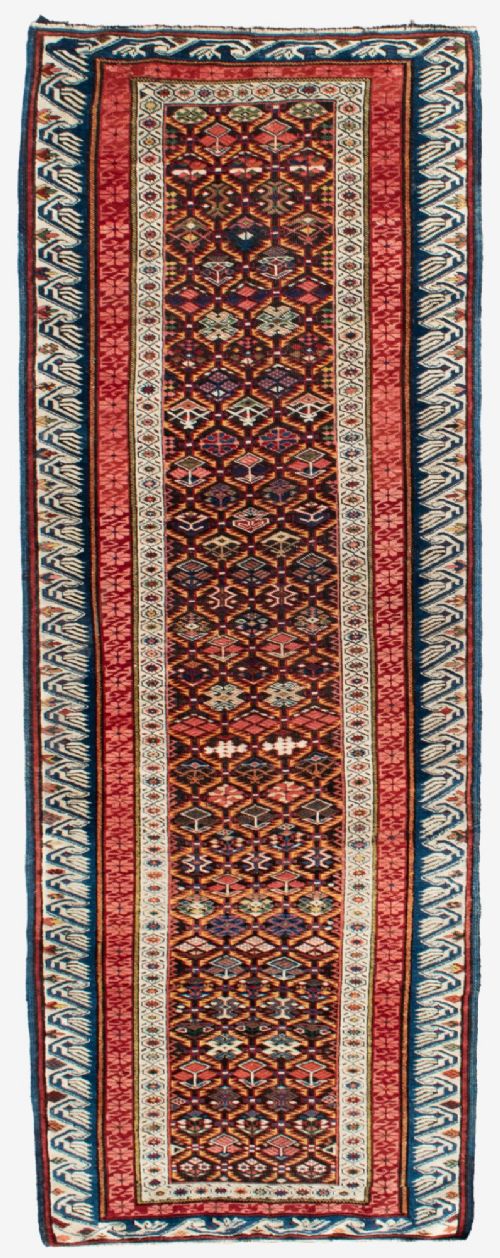
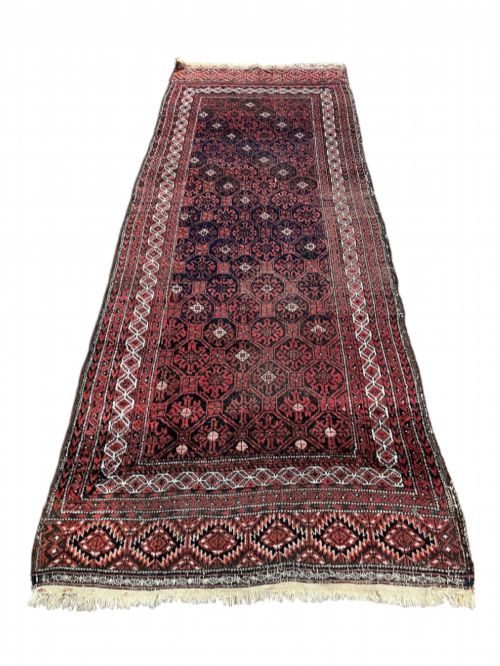
A dark red runner rug brings deep crimson tones and traditional tribal motifs into a hallway or corridor.
Dark Red Runner Rug
A dark red runner rug is a long, narrow textile designed for corridors, hallways, and passageways. The pieces found on this page span periods from the late nineteenth century through to the early twentieth century, originating from tribal and village workshops.
Most examples belong to tribal traditions such as Baluch, Afghan, Kurdish, and Persian village groups. These weavers utilised narrow formats to fit domestic spaces, creating linear compositions suited to heavy footfall.
Buyers seeking a dark red runner rug will encounter various traditional formats including Seychor, Yagcibedir, and Mushwani runners. These pieces rely on rich crimson and deep red grounds set against dark geometric field patterns.
How they were made
Weavers constructed these long carpets using hand-spun wool and pure wool foundations, often incorporating cotton for structural warp and weft threads. Goat hair occasionally appears in the outer corded selvages for added durability along the edges.
The characteristic dark red and deep crimson hues derive from natural dyes applied to hand-prepared wool. Skilled artisans knotted individual tufts by hand, producing dense pile surfaces designed to withstand decades of daily use.
Listings span periods from the eighteen-seventies through the nineteen-thirties, featuring wool, cotton, and natural dyes.
What varies in quality
Knot density and structural tightness dictate the resilience of the textile, separating tightly packed village weaves from looser village work. Finer knotting permits sharper rendering of intricate tribal motifs and geometric medallions.
The purity and saturation of the natural dyes influence the visual depth of the red ground over time. Uniformity in wool preparation and spinning consistency also determine how evenly the pile ages under traffic.
The Dark Red Runner Rug Glossary
- Runner
- A long, narrow carpet format specifically suited for hallways, corridors, and stairs. These pieces measure significantly longer than they are wide.
- Mihrab
- An architectural niche design often found in prayer rugs, representing a focal point for devotion. Tribal weavers frequently repeat this motif across the field.
- Selvage
- The reinforced outer edge of a rug formed by wrapping lateral weft threads around the outermost warps. This prevents the edges from fraying.
- Warp
- The stationary vertical threads stretched tightly on the loom that form the structural foundation of the textile. Weft threads pass horizontally between them.
- Natural Dyes
- Colourants extracted from plants, roots, and insects before the introduction of synthetic alternatives. These dyes yield rich, complex tones that develop a desirable patina.
Dark Red Runner Rug: Frequently Asked Questions
Where should I place a runner rug?
These narrow formats work best in high-traffic hallways, corridors, and long entryways where floorboards need protection. Their linear dimensions suit transitional spaces rather than wide open rooms.
Position the runner centrally to allow a uniform border of exposed floor on either side, enhancing the perspective of the hallway.
How do I clean a wool runner?
Gentle surface cleaning and regular vacuuming without a rotating power brush remove embedded dirt safely from the pile. Avoid harsh chemical detergents that strip natural oils from the wool.
Professional specialist cleaning is recommended for deep restoration to preserve the integrity of the natural dye foundations.
What materials make up these rugs?
Traditional tribal runners utilise hand-spun wool for the surface pile, providing resilience and warmth underfoot. Cotton and wool foundations supply structural support beneath the knots.
Some nomadic pieces incorporate goat hair along the selvages to reinforce the margins against heavy wear.
How can I identify tribal designs?
Tribal designs feature geometric motifs, repeated star octagons, and rectilinear lattice patterns rather than curved court styles. Weavers from groups such as the Baluch and Kurds relied on memory and traditional family patterns.
Distinctive colour palettes dominated by dark reds, indigos, and browns signal regional nomadic workshops.