
Dark Oak Wooden Dresser
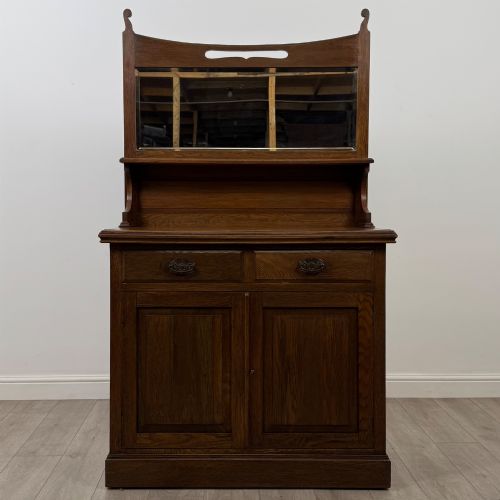
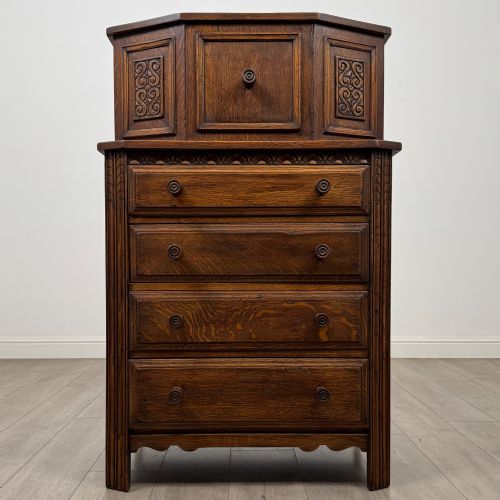
A dark oak wooden dresser brings substance to a room, offering deep grain and centuries of utility in one heavy piece.

Dark Oak Wooden Dresser
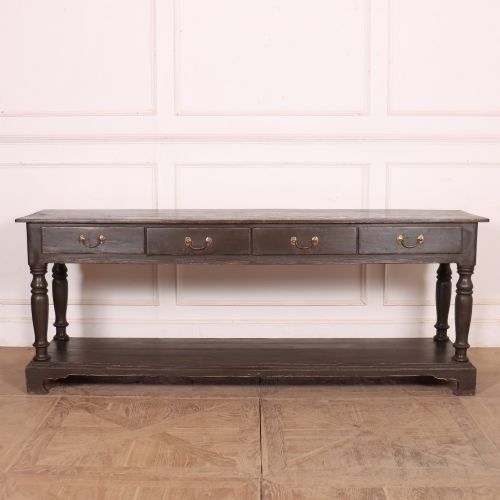
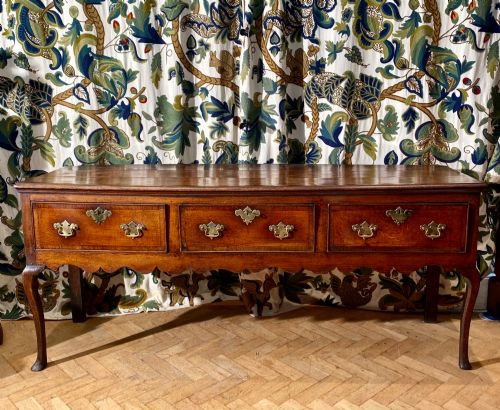
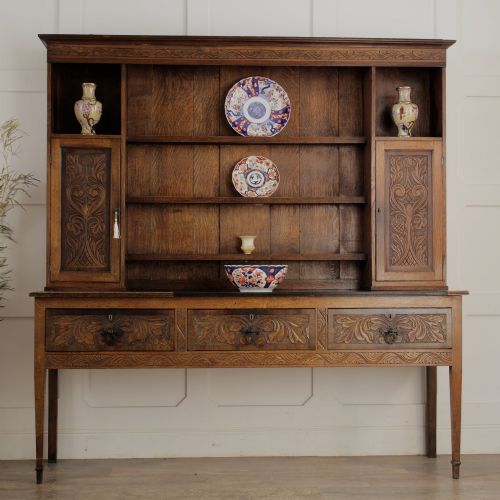
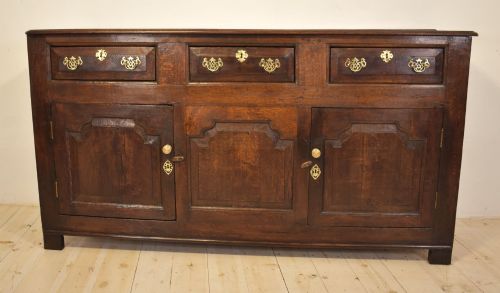
A dark oak wooden dresser anchors a dining space or kitchen with practical storage, originating from periods spanning the seventeenth century through to the Edwardian era. Buyers encounter forms ranging from simple potboard dresser bases to towering Welsh iterations equipped with plate racks.
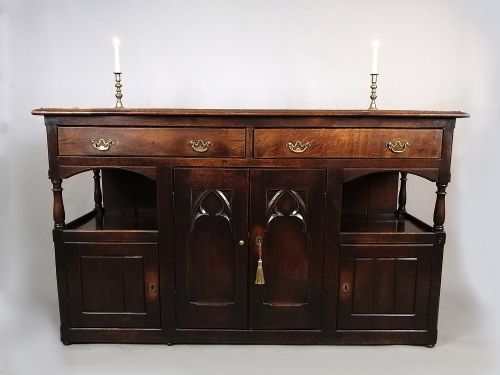
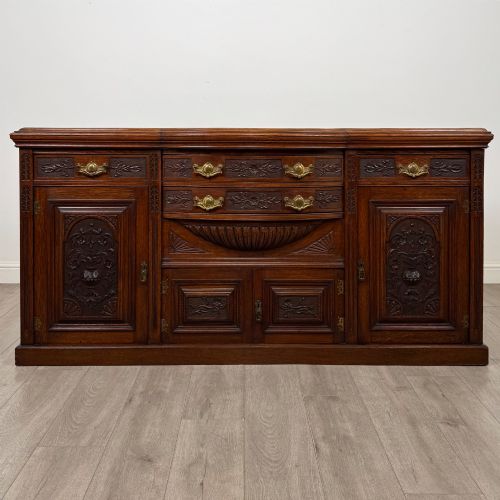
The selection encompasses Georgian country examples alongside revival styles like Jacobean and Gothic, each displaying the sturdy timber frames characteristic of British cabinetmaking. Sideboards and serving tables appear frequently alongside traditional multi-tier plate racks.
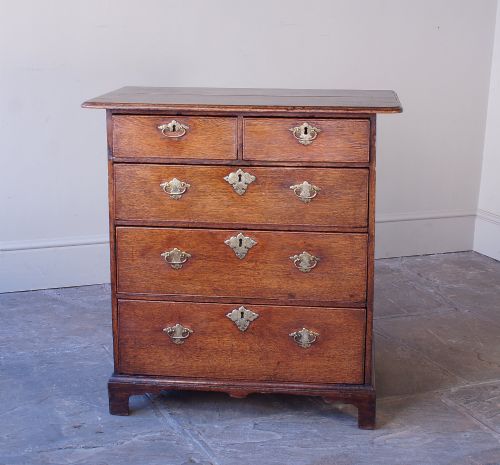
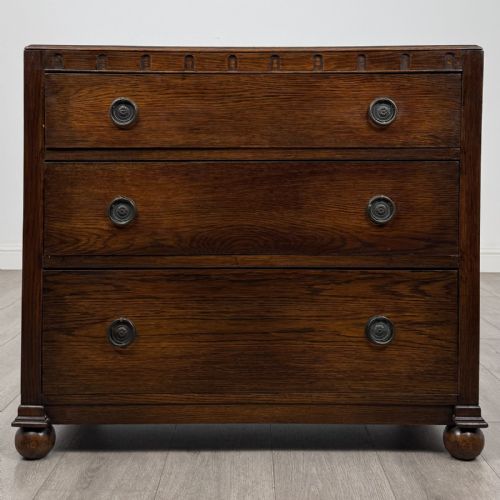
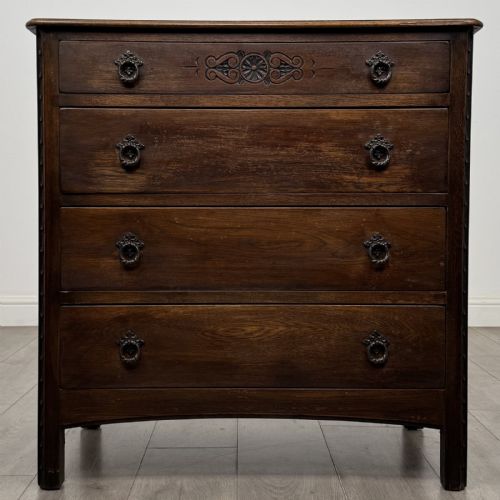
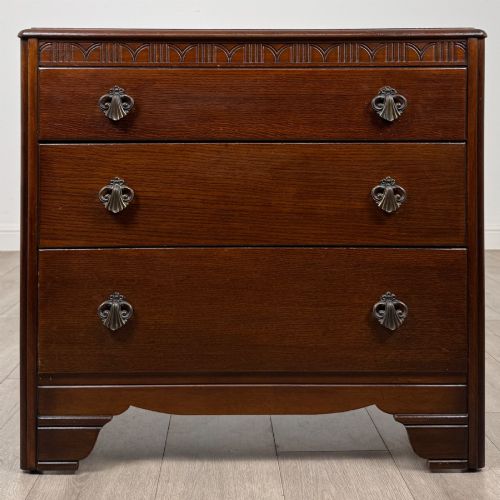
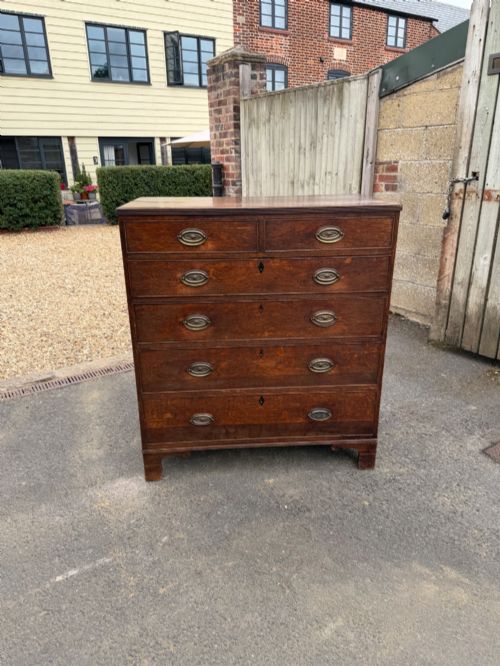
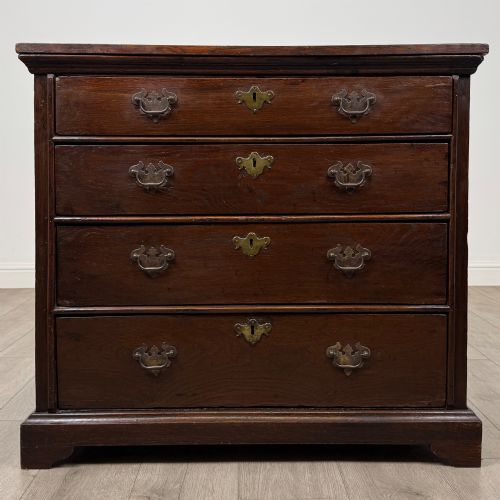
Earlier pieces from the eighteenth century focus on utility with planked tops and drawers, while later Victorian and Edwardian interpretations often introduce carved motifs and panel detailing. Every iteration relies on the dark patination of oak to define its visual weight.
How they were made
Cabinetmakers built these dressers using solid oak, occasionally integrating secondary timbers such as elm, fruitwood for inlay, and brass or iron for hardware handles and hinges. Construction relied on pegged joints and hand-cut dovetails that secured the heavy frames against daily wear.
Surfaces were shaped using planes and hand saws, leaving subtle tool marks across interior boards and drawer linings. Carved panels in Gothic Revival or Jacobean styles required chiselling directly into the dense timber.
Hidden pencil markings left by past carpenters occasionally surface inside eighteenth-century drawer boxes.
What varies in quality
The integrity of the timber and the depth of the natural patination distinguish standard production from exceptional examples. Pieces retaining original brass hardware, unreplaced potboards, and untouched backboards hold greater architectural honesty.
Proportion and scale dictate the visual success of the piece, with smaller country cupboards and well-balanced Georgian dresser bases commanding particular attention for their harmonious lines.
The Dark Oak Wooden Dresser Glossary
- Potboard
- An open lower shelf beneath a dresser base traditionally used for storing pots and heavy kitchen utensils. It provides structural stability to the legs.
- Plate rack
- The upper tiered shelving unit designed to display ceramic delftware plates upright. These structures attach directly to the dresser base.
- Crossbanding
- A decorative border technique where thin strips of veneer are laid perpendicular to the grain of the primary surface. Mahogany often forms this contrast on Georgian pieces.
- Geometric moulding
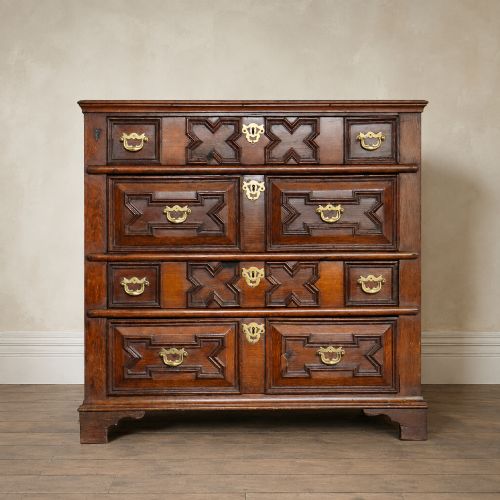
- Raised rectangular or intersecting geometric patterns applied to drawer fronts. This technique defined many early examples from the seventeenth and eighteenth centuries.
- Linenfold
- A carved panel motif resembling folded drapery or fabric. Edwardian cabinetmakers utilised this design on cupboard doors.
Dark Oak Wooden Dresser: Frequently Asked Questions
How do I style a dresser?
Pair the dark timber with neutral walls to let the grain and patination stand out in the room. Use the plate rack for displaying ceramic collections.
Store table linens or dining accessories within the drawers and lower cupboards for practical daily use.
Are these pieces made of solid oak?
Most traditional dressers utilise solid oak for the primary frame, structural supports, and drawer construction. Secondary woods occasionally appear in less visible areas like drawer linings.
Fruitwood inlays and brass hardware provide contrast against the dark primary timber.
How do I identify a Georgian dresser?
Georgian pieces often display clean proportions, hand-cut dovetails, and sometimes mahogany crossbanding on the drawer fronts. They may incorporate plate racks designed for displaying delftware.
Earlier examples feature heavy geometric mouldings and pegged joints.