
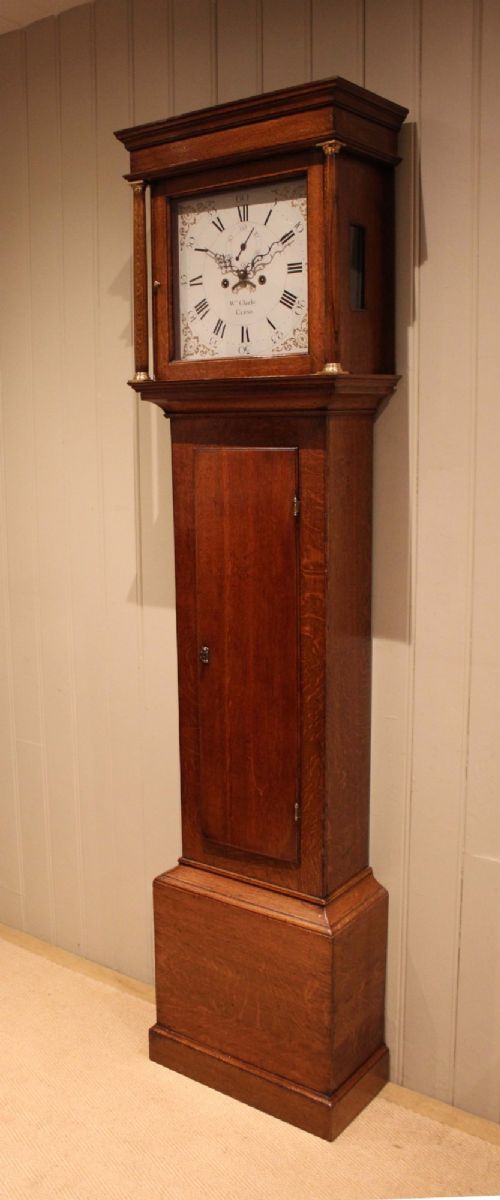
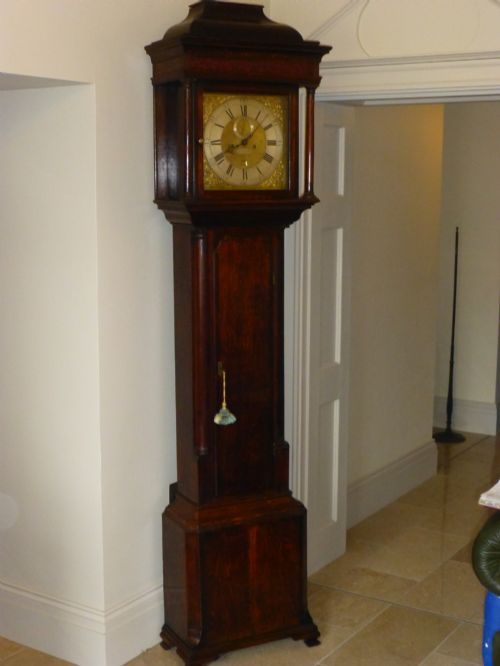
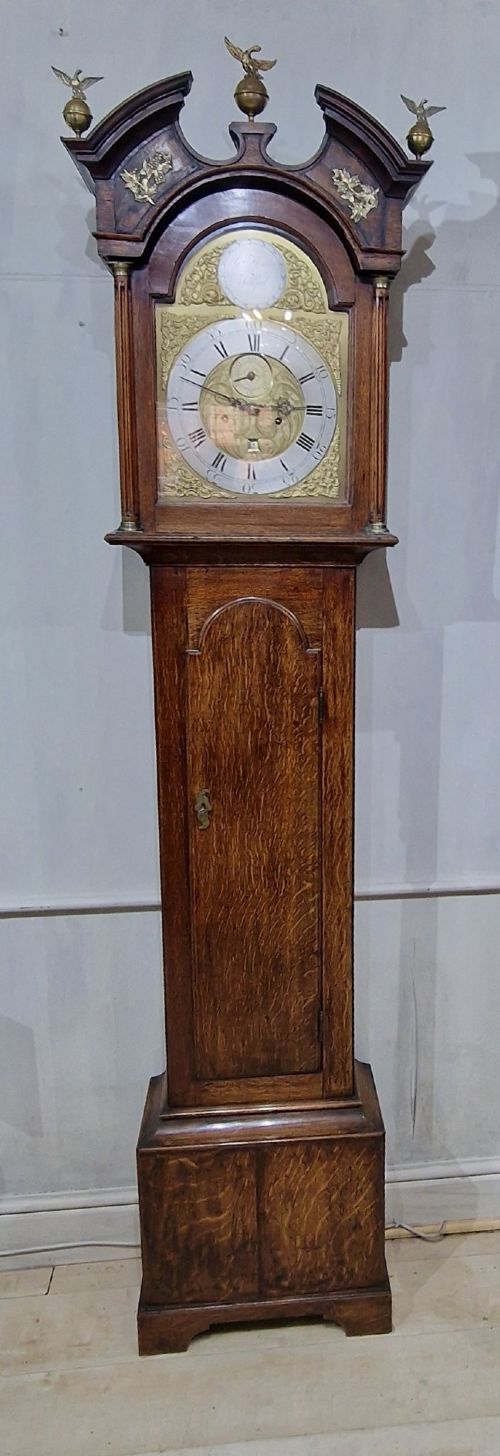
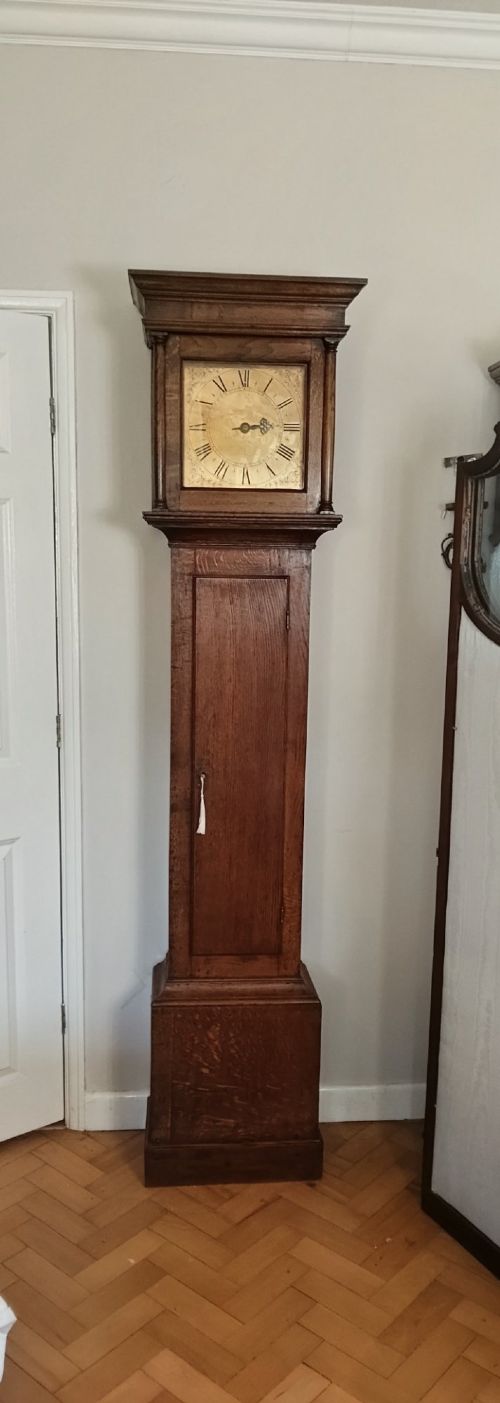
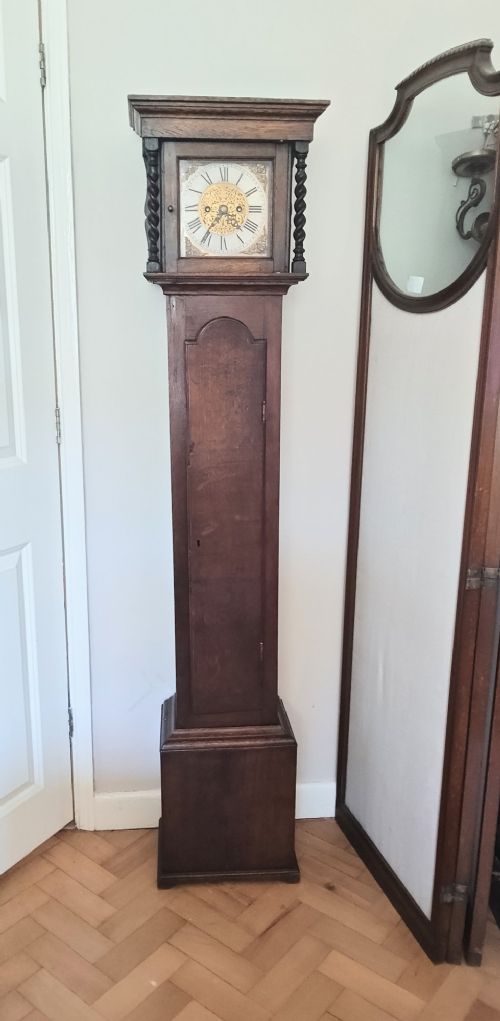
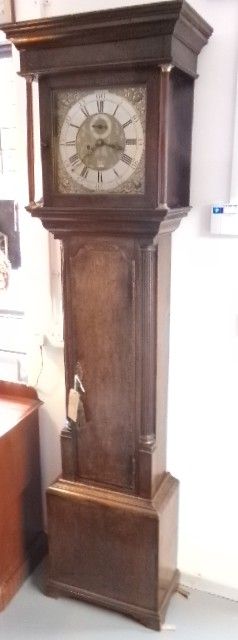
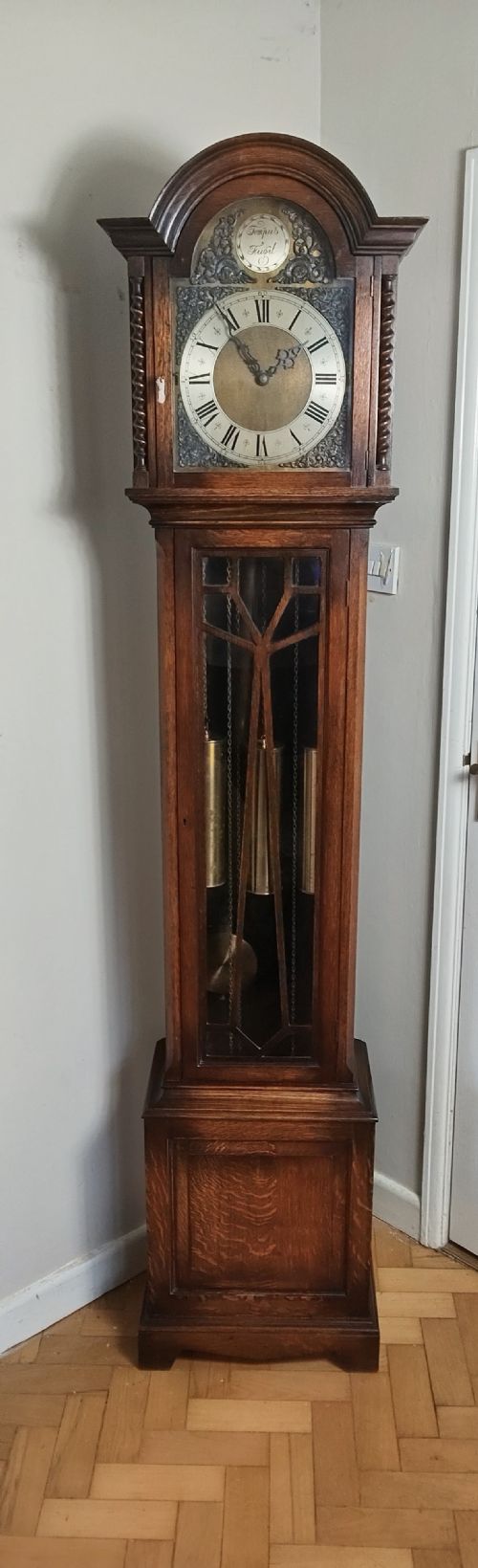
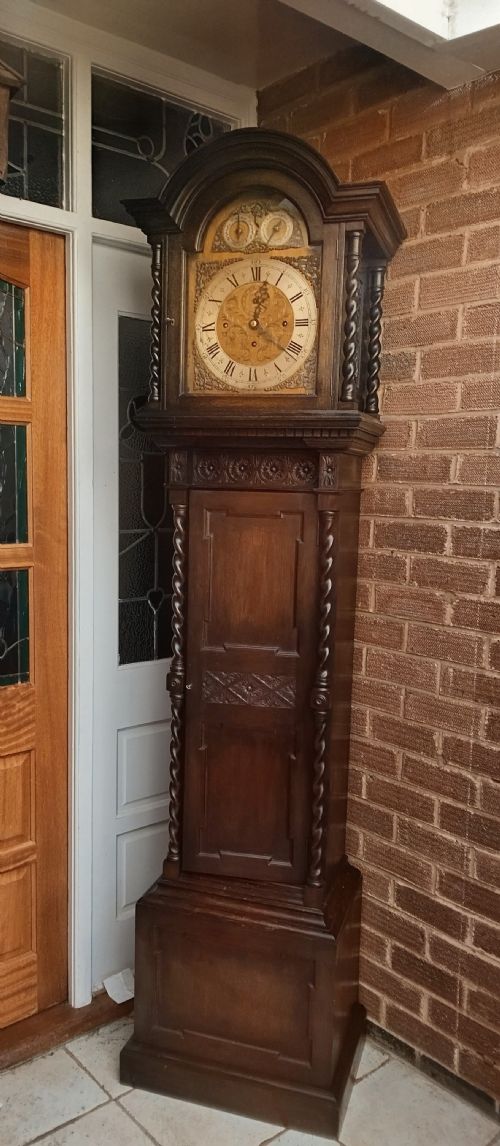
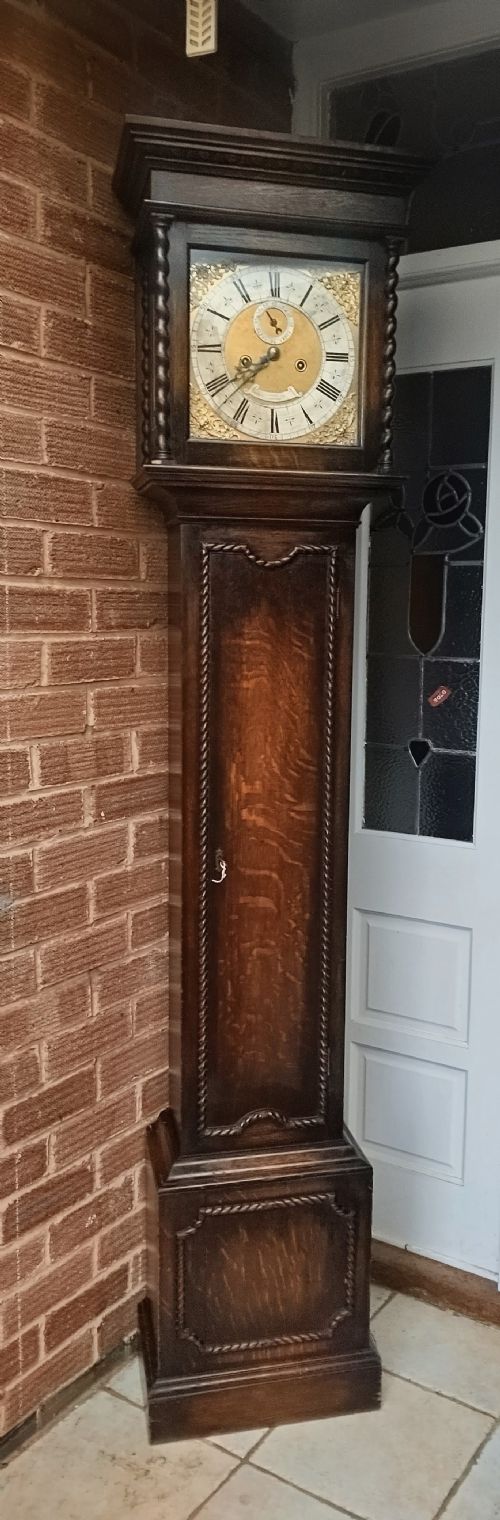


Dark Oak Standing Clock
A dark oak standing clock brings the steady rhythm of past centuries into a room, offering the deep warmth of aged timber alongside mechanical artistry.
Dark Oak Standing Clock
When you search for a dark oak standing clock, you encounter tall timepieces known variously as longcase, grandfather, or grandmother clocks spanning the Georgian, Victorian, and early twentieth-century periods. These vertical wooden cases house intricate movements designed to measure hours through pendulum swings and falling weights.
The examples most commonly met on this page date from the eighteenth century through to the interwar decades, reflecting diverse regional British cabinet-making traditions alongside continental workshop output. They range from modest proportions suited to smaller rooms down to grander musical and chiming versions built to command an entire hallway.
How they were made
Makers constructed these tall enclosures primarily using solid oak timber, frequently accented with walnut or mahogany crossbanding, and fitted glazed doors to protect the dial. Inside, brass movements, iron components, and painted or engraved metal faces were assembled by hand to regulate the weights and pendulums.
Cabinet-makers shaped the timber cases through traditional joinery, occasionally applying carved details or polished finishes to highlight the grain. Dials combined cast brass spandrels, silvered chapter rings, and delicate hands driven by brass gear trains.
Some standing clocks feature mechanical carillons programmed to chime multiple tunes, turning the quiet passing of hours into a miniature private concert.
What varies in quality
The refinement of the movement dictates much of the standing clock's standard, distinguishing basic time-only gear trains from complex mechanisms capable of playing multiple tunes or striking quarters. Higher tiers involve elaborate brass dials signed by accomplished regional horologists rather than anonymous factory output.
Cabinet construction also separates standard examples from superior pieces, particularly where timber selection, hand-carved ornamentation, and proportion show particular harmony. The crispness of dial engraving and the original integrity of the case establish the standing of each piece.
Richard Corless of Stockport·James Hendrie, Falkirk·Fisher Of Preston·Thomas Utting of Yarmouth·John Wylde, Nottingham·Richard Alexander, Devizes·John Salmon Nantwich·Grocott Holywell·Samuel Young Nantwich·Walker of Nantwich
The Dark Oak Standing Clock Glossary
- Longcase clock
- A tall pendulum clock enclosed in a wooden case that stands directly on the floor. These tall enclosures protect the weighted movement and pendulum from drafts.
- Grandmother clock
- A smaller, more compact version of the traditional longcase clock, typically produced during the Victorian or early twentieth century. They fit more easily into modern ceiling heights.
- Chapter ring
- The circular ring on a clock dial that bears the hour numerals. They are frequently made of silvered brass or painted metal.
- Spandrel
- The ornamental corner piece situated outside the circular chapter ring on a clock face. They often feature cast brass scrollwork or cherub motifs.
- Regulator
- A precision pendulum clock designed for high accuracy. They generally use weight-driven mechanisms of superior mechanical tolerance.
Dark Oak Standing Clock: Frequently Asked Questions
How do I wind a standing clock?
Winding involves using a small crank key to draw the suspended weights back up inside the waist of the case. Care must be taken not to over-wind the movement.
Different mechanisms require attention either daily, weekly, or at other intervals depending on the gear train configuration.
Where should I place a longcase clock?
These tall pieces require a stable, level floor away from direct sunlight, heating vents, and damp exterior walls. Securing the case to the wall prevents accidental tipping.
Placing the clock against a solid interior partition ensures the pendulum swings evenly without interference from floor vibrations.
How do I date an oak standing clock?
Dating relies on examining the dial style, case proportions, cabinet wood, and the signature of the maker inscribed on the face. Georgian examples feature square or arched brass dials, while later Victorian and twentieth-century versions display different decorative traits.
Cross-referencing the maker's recorded working dates helps narrow the timeline of the mechanism's construction.
What is the difference between a grandfather and grandmother clock?
The primary distinction lies in overall height and proportion, with grandmother clocks built on a significantly smaller scale. They emerged later to accommodate domestic spaces with lower ceilings.
Despite their reduced size, grandmother clocks often contain chiming or musical movements comparable to their taller counterparts.