

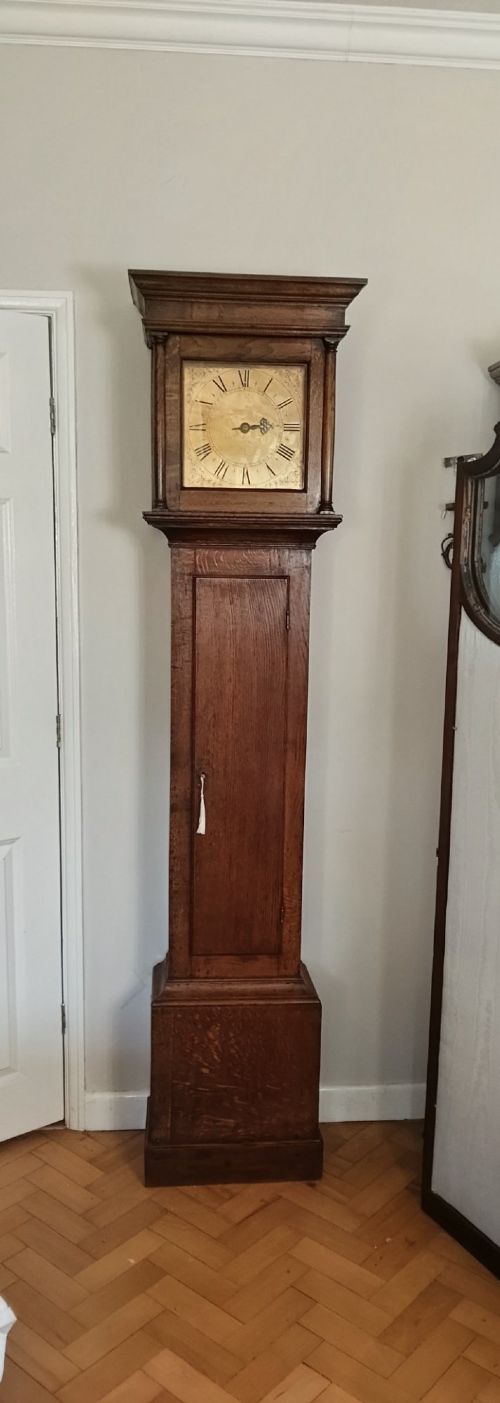
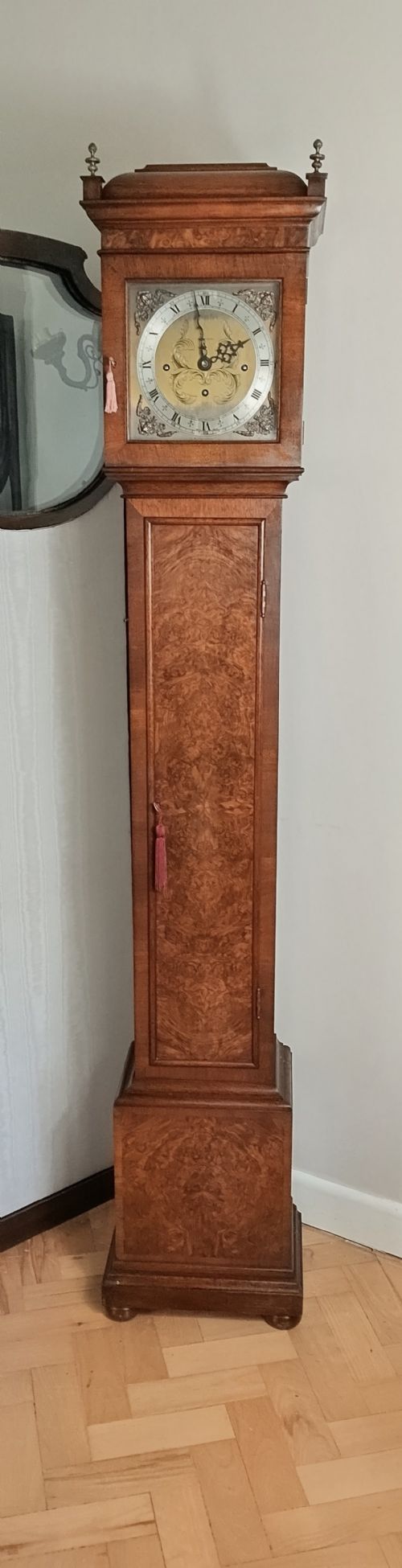
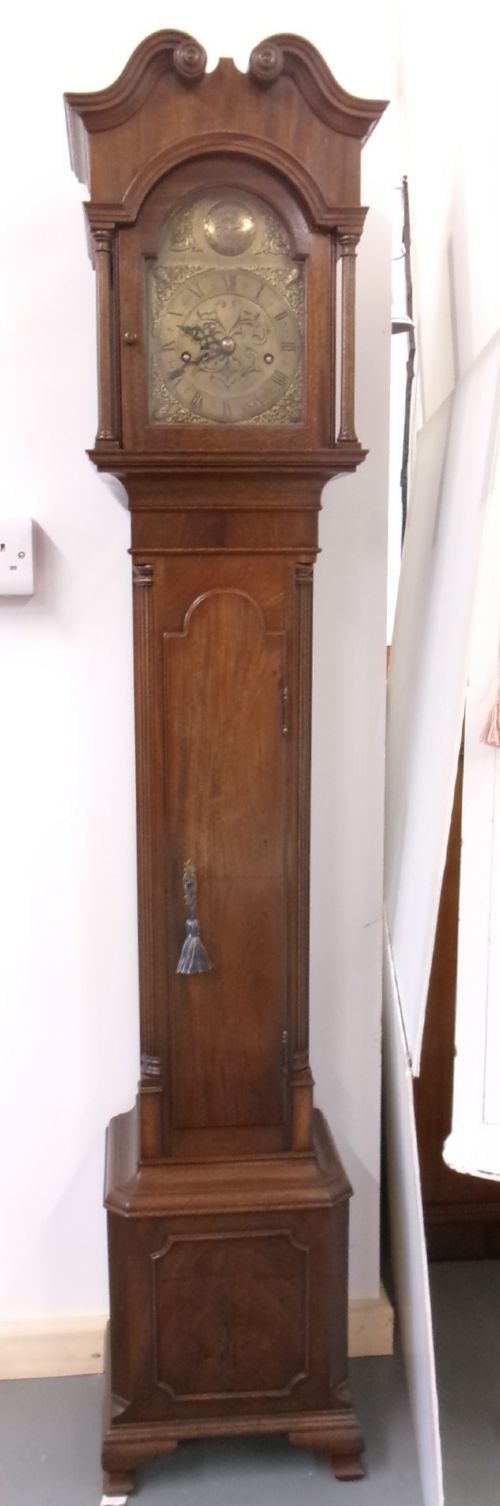


Vintage Mechanical Floor Clock
These vintage mechanical floor clock examples combine substantial cabinet work with weight-driven or spring-driven movements, bringing presence and timekeeping to a room.
Vintage Mechanical Floor Clock
A vintage mechanical floor clock spans tall grandfather, smaller grandmother, and granddaughter formats, appearing in styles from Georgian and Queen Anne to Art Deco, Edwardian, and Victorian. Most pieces on this page date from the 1930s or utilise earlier revivals, presenting architectural proportions in domestic settings.
The longcase form houses a pendulum and gear train within a tall wooden trunk, topped by a dial and hood. Buyers encounter both traditional English makers and continental production, such as Black Forest examples with patent movements.
How they were made
Cabinetmakers constructed the tall cases using native and exotic hardwoods such as oak, mahogany, walnut, and burr walnut, often applying quarter veneers to flat surfaces. Glass panels protected the dial and allowed a view of the swinging pendulum inside the trunk.
Movements incorporate brass and steel components, sometimes featuring tubular bells or musical chiming mechanisms to play multiple carillons and melodies. Dials range from brass chapter rings to painted or metal faces framed by wood hood structures.
Vintage Mechanical Floor Clock Retail Price Guide 2026
Typical asking prices for vintage mechanical floor clock among the pieces listed under this phrase on Sellingantiques today, from the lower quarter to the upper quarter. They describe what is for sale here now, not the wider market.
Some models manage to play four distinct carillons and melodies inside a single wooden case.
What varies in quality
Quality shows in the depth and figuring of the timber veneers, particularly on burr walnut and mahogany cases, alongside the crispness of mouldings and hood carvings. Better examples display balanced proportions between the dial, trunk, and base, whether built as tall grandfather clocks or scaled-down grandmother variants.
The sophistication of the internal movement dictates mechanical distinction, separating simple time-only gear trains from quarter-chiming or musical mechanisms with tubular bells. The integration of patent German or English movements within traditional wooden housings reflects workshop capability.
Elliott·Enfield
The Vintage Mechanical Floor Clock Glossary
- Grandfather clock
- A tall floor clock, typically exceeding six feet in height, housing a weight-driven mechanical movement and pendulum. This traditional form dominates larger domestic halls.
- Grandmother clock
- A smaller version of the longcase clock, usually standing between five and six feet tall. These pieces offer the presence of a floor clock in more modest proportions.
- Quarter chiming
- A mechanical capability that strikes the quarters of an hour on bells or gongs. Many vintage examples play specific musical melodies or carillons.
- Burr walnut
- A prized wood veneer showing intricate, swirling grain patterns formed from tree growths. It provides decorative richness to clock hoods and trunk doors.
- Fusee
- A conical pulley used in mechanical clocks to maintain even tension on the gear train as the mainspring unwinds. This device improves timekeeping accuracy across the power reserve.
Vintage Mechanical Floor Clock: Frequently Asked Questions
What is a grandmother clock?
A grandmother clock is a smaller, scaled-down version of the traditional grandfather longcase clock. It usually stands between five and six feet high, making it suitable for rooms with lower ceilings.
Despite the reduced stature, these clocks retain mechanical movements, pendulums, and fitted wooden cases. They provide the character of a floor clock without dominating smaller spaces.
Where should I place a floor clock?
Floor clocks require a stable, level surface against a solid wall to ensure the pendulum swings evenly. Hallways, living rooms, and landings are traditional locations where the case proportions suit the architecture.
Avoid placing mechanical clocks in areas prone to dampness, direct sunlight, or extreme temperature fluctuations, as wood and metal components react to environmental changes.
What powers these mechanical movements?
These clocks operate using mechanical movements powered by falling weights or wound mainsprings. A pendulum regulates the release of energy through the gear train, driving the hands around the dial.
Some examples include quarter-chiming mechanisms or musical carillons, which require separate trains and weights or springs to operate the bells.