
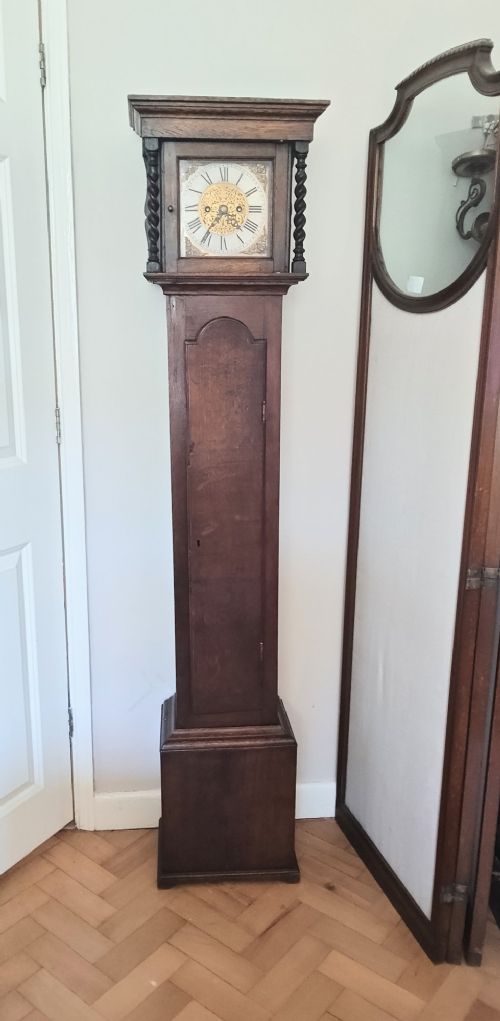

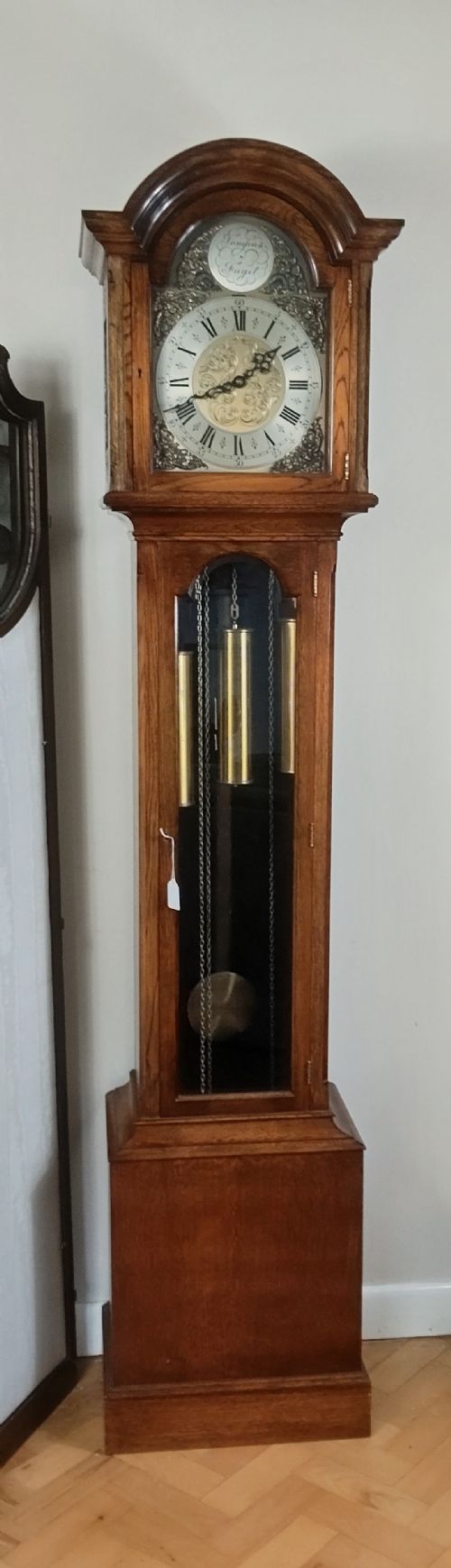
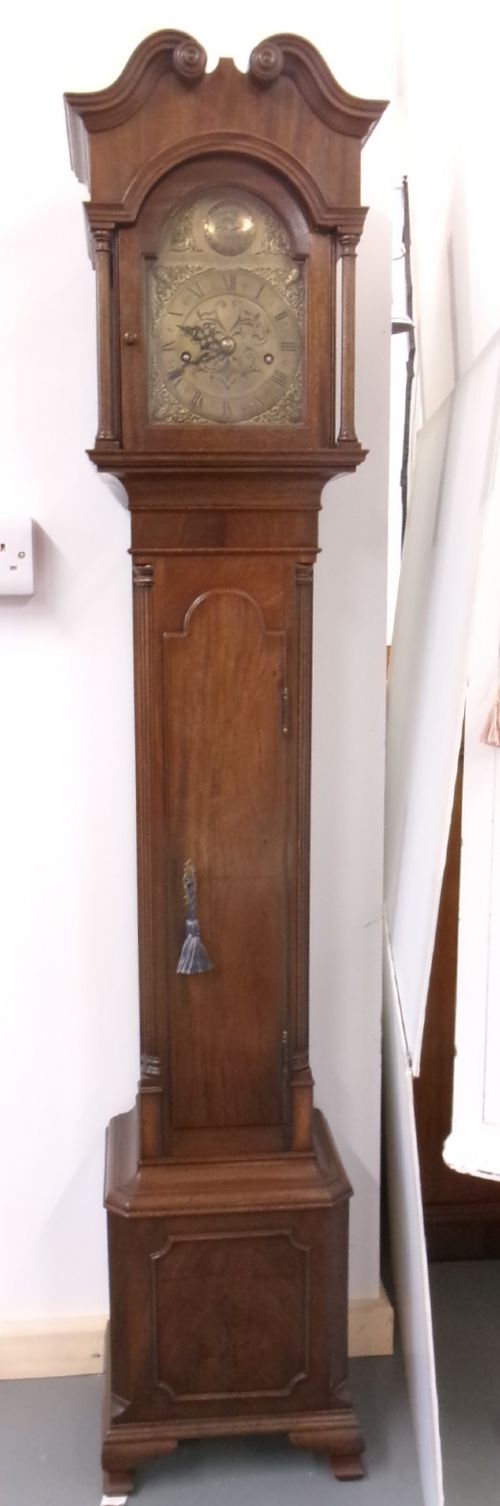
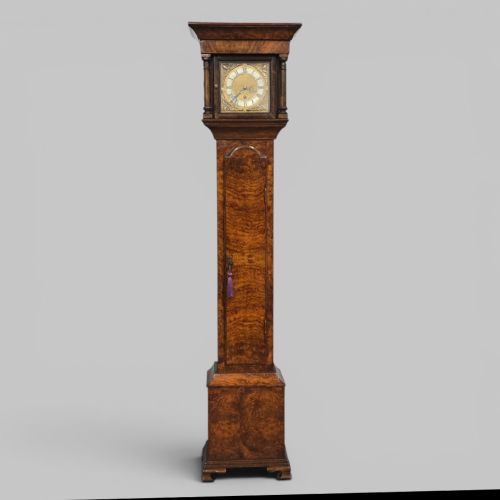


Small Dial Grandfather Clock
A small dial grandfather clock condenses the stately presence of a full-size longcase into compact proportions suited to modest rooms.
Small Dial Grandfather Clock
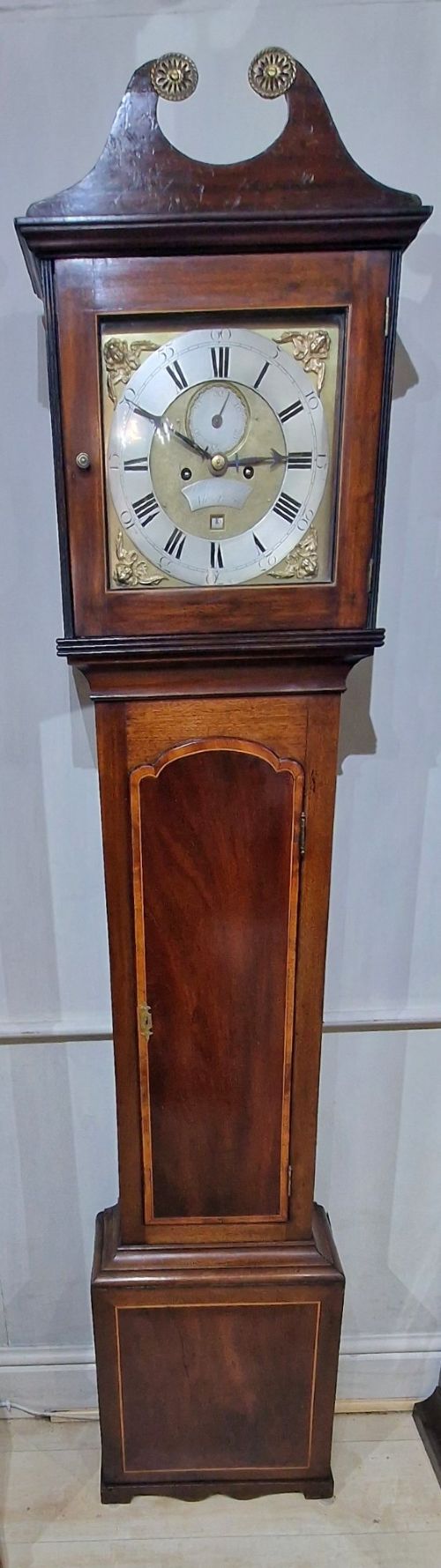
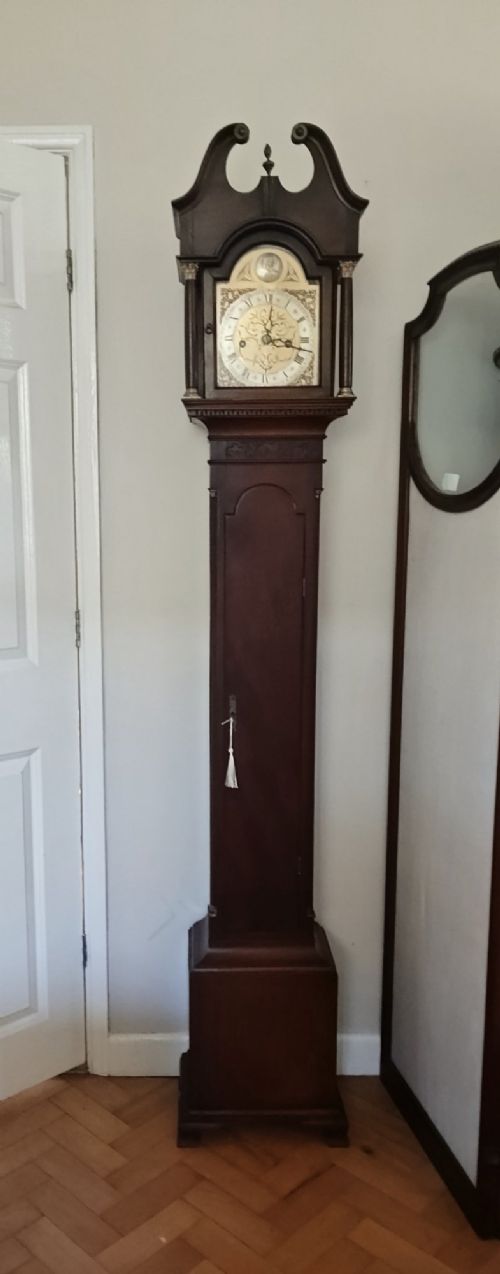
A small dial grandfather clock combines tall floor-standing cabinetry with a diminutive dial, spanning periods from the late seventeenth century through the Georgian era and into the Edwardian years.
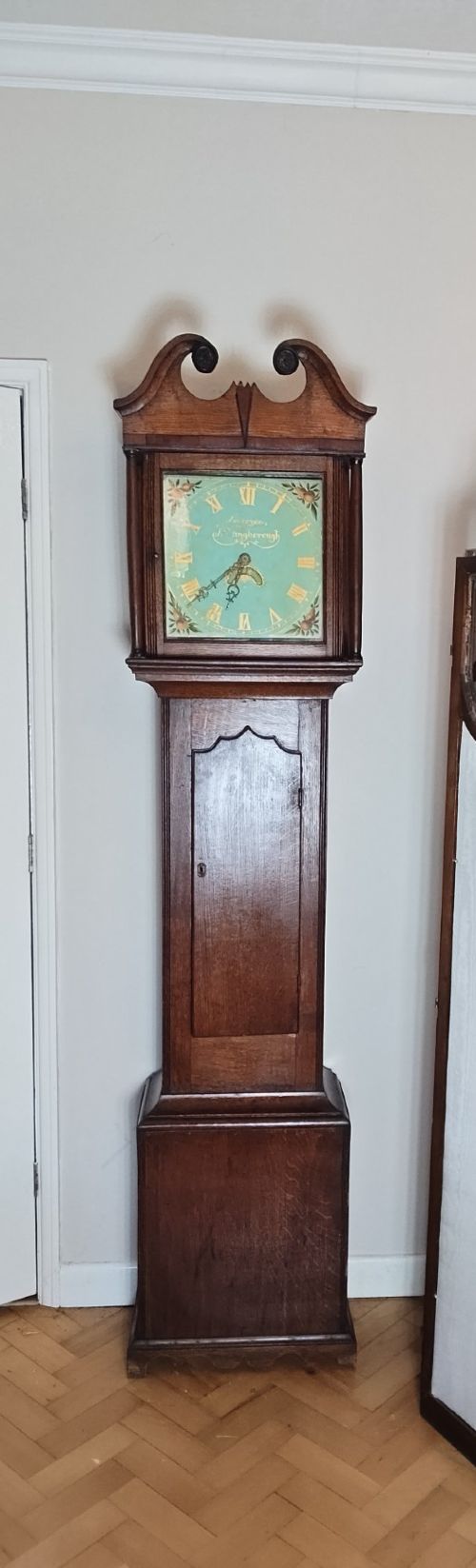
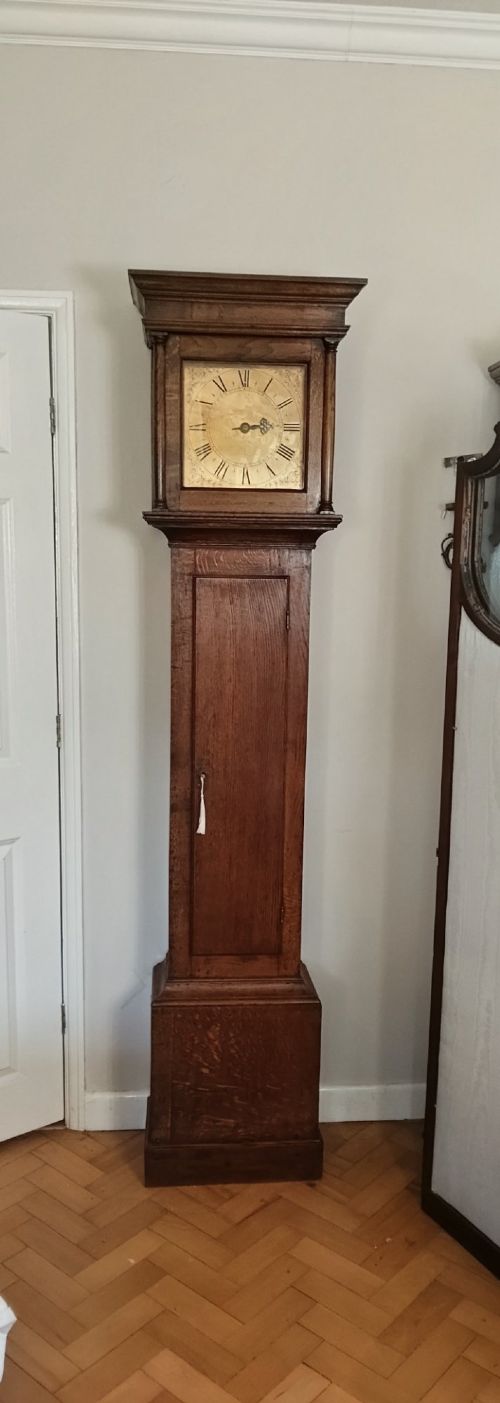
Georgian oak examples with square brass dials and compact proportions emerge most frequently on this page, alongside later Edwardian and mahogany variations.
How They Were Made
Cabinetmakers utilised sturdy native timbers like oak alongside imported hardwoods such as mahogany and walnut, frequently housing brass or painted clock faces behind glass dial doors.
Movements range from thirty-hour weight-driven mechanisms to eight-day systems, quarter-chiming gearboxes, and musical variations fitted with iron and metal components.
Some diminutive clocks feature tiny duck egg blue painted hoods that make even the most austere hallway look cheerful.
What Varies in Quality
The sophistication of the movement dictates the standing of the piece, moving from simple time-and-strike mechanisms to complex quarter-chiming or musical variations.
Cabinet execution separates standard production from superior work, seen in crisp dial engraving, refined timber figure in the mahogany or burr walnut cases, and slender proportions.
Nathaniel Pyne·Harrods·Dent of London·William Noke·John Welsh·Frederick Rowe·Rowning
The Small Dial Grandfather Clock Glossary
- Longcase clock
- A tall pendulum clock enclosed in a wooden case standing directly on the floor. These instruments are frequently termed grandfather or grandmother clocks depending on their height.
- Grandmother clock
- A smaller version of the traditional longcase clock, typically manufactured during the twentieth century or late Victorian period. They occupy less vertical space while retaining weight-driven or spring movements.
- Granddaughter clock
- A diminutive variant of the longcase clock, even smaller than a grandmother clock. These pieces offer compact floor-standing timekeeping.
- Fusee
- A conical pulley used in clock movements to maintain an even pull on the gear train as the mainspring unwinds. This device improves timekeeping accuracy across the running period.
- Quarter chiming
- A mechanism that sounds the time at each quarter hour using multiple gongs or bells. Such systems indicate a more complex internal movement.
Small Dial Grandfather Clock: Frequently Asked Questions
What is a small dial grandfather clock?
A small dial grandfather clock is a floor-standing timekeeper featuring a reduced dial size and narrower case than standard longcase clocks. They were built to fit rooms with lower ceilings or tighter wall spaces.
These pieces encompass regional 17th-century oak examples, Georgian mahogany items, and later Edwardian variations often referred to as grandmother clocks.
How do I tell a grandfather clock from a grandmother clock?
Grandfather clocks generally stand taller with larger dials, whereas grandmother and granddaughter clocks feature reduced overall heights and slender proportions. The terminology often overlaps across different periods.
Earlier pieces from the 17th and 18th centuries are typically called grandfather clocks, while 20th-century compact versions lean towards grandmother designations.
Where should I place a small longcase clock?
These clocks suit hallways, landings, or reception rooms where floor space is limited but vertical clearance allows a tall case. Their slim proportions let them anchor narrow wall spaces effectively.
Ensure the floor is level and stable so the pendulum swings freely without catching against the inside of the trunk.
How do I wind an eight day clock?
Eight-day clocks require winding via the dial holes using a matching crank key every week to keep the weights or springs tensioned. Care must be taken not to overwind the movement.
Consult the specific mechanical setup of the clock, as some feature twin or triple weight systems that require distinct winding sequences for time and chimes.