



Dark Oak Library Table
A dark oak library table brings deep, heavy timber and rich grain to a study, offering a robust workspace built to endure.
Identifying a dark oak library table
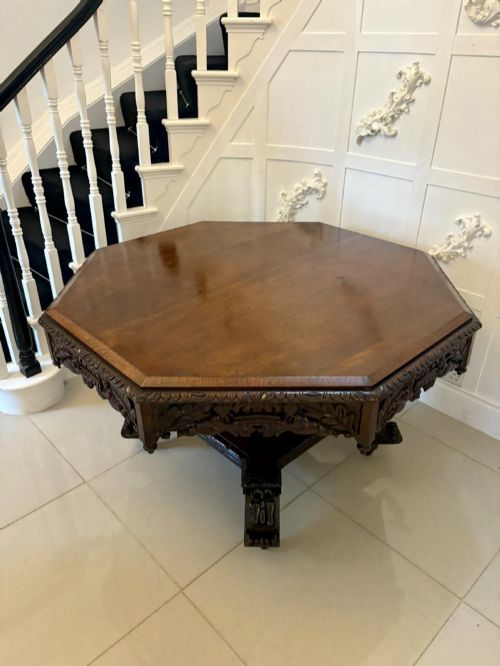
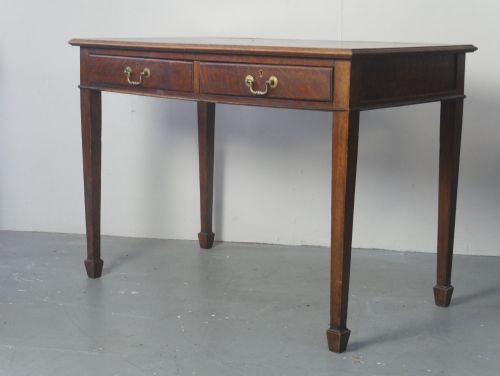
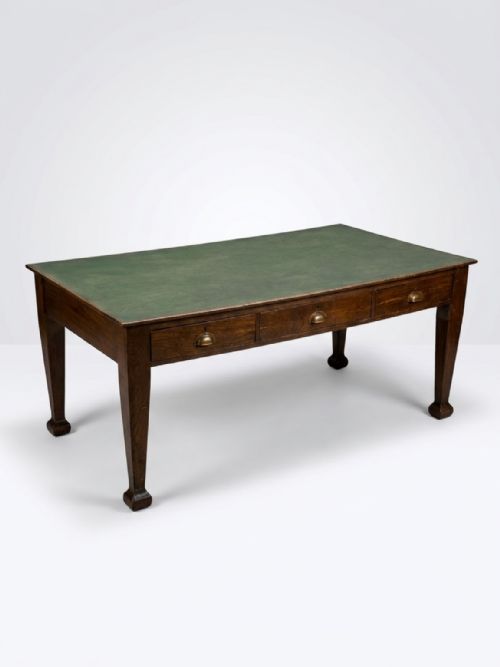
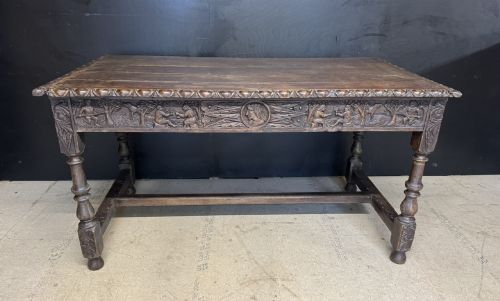
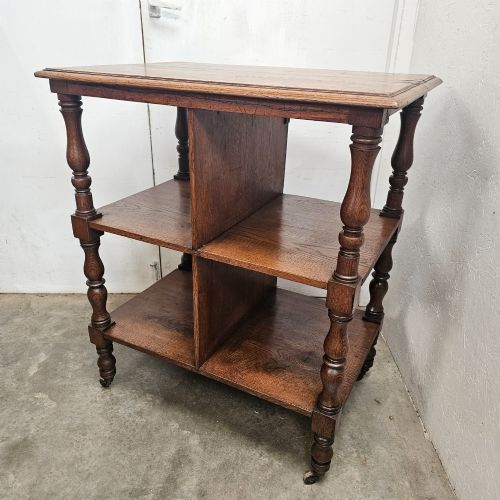
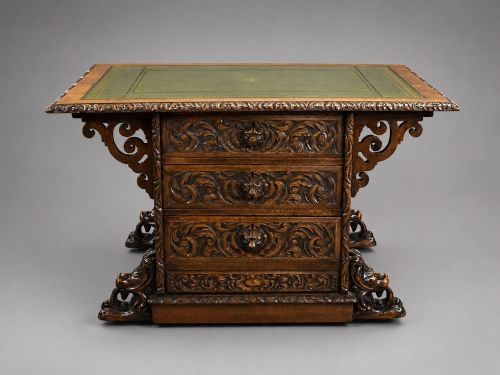
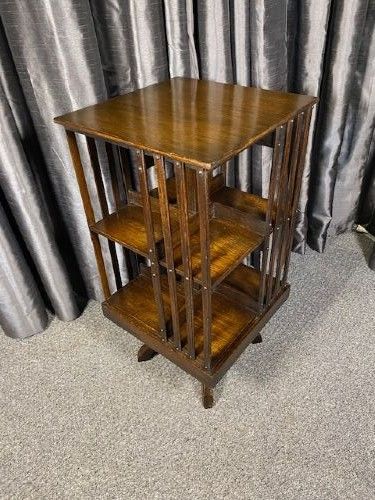
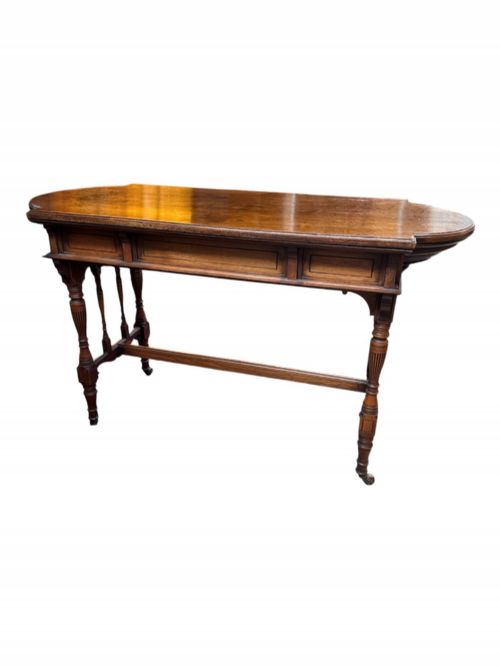
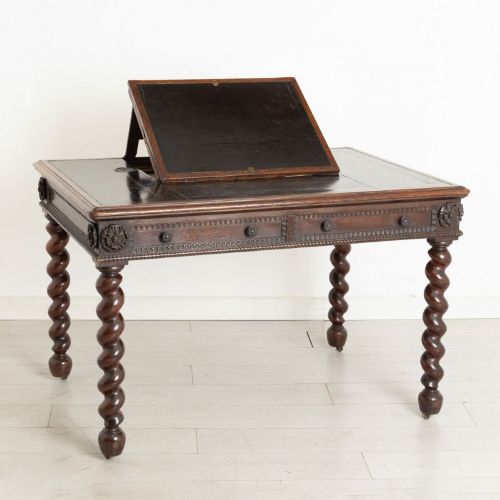
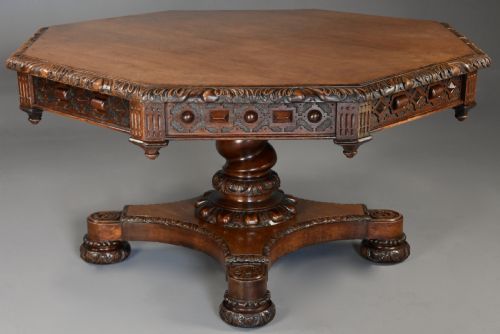
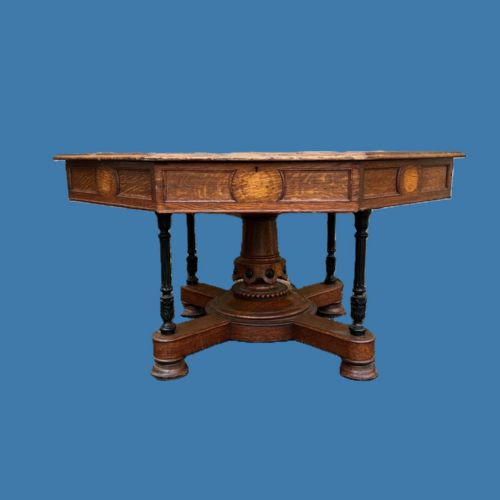
When you search for a dark oak library table, you encounter substantial writing furniture designed for heavy service. The pieces on this page span the Victorian period and the nineteenth century, showing influences from earlier Elizabethan and Jacobean styles. They function as desks, writing tables, library tables, and centre tables.
Most examples date from the Victorian era, particularly the mid to late nineteenth century, around eighteen fifty to eighteen sixty. These surfaces appear in significant proportions, carrying carved details and dark timber tones that anchor a room.
Makers drew on historic revivals, incorporating Jacobean Revival and Victorian Gothic Revival motifs into the heavy oak frames. A buyer finds sturdy rectangular forms suited to traditional studies and large reception rooms.
Materials and construction
Construction relies entirely upon solid oak, selected for its density and strong grain pattern. Workshops utilised traditional joinery techniques to support the large proportions demanded by libraries and studies.
Makers integrated contrasting materials where function required them, incorporating brass fittings and leather inset writing surfaces into the dark timber frameworks.
Retail Price Guide 2026
Typical UK retail prices for dark oak library table, calculated from the Sellingantiques database of over a million retail prices indexed since 2003. This retail price guide relies exclusively on Sellingantiques data; no external sources or auction records are used, so the figures do not describe the wider market.
Materials appearing across the current selection are strictly limited to oak, brass, and leather.
Assessing quality and finish
The distinction between standard and superior pieces rests on the depth and crispness of the carving upon the oak. Richly carved surfaces show deliberate handwork rather than mechanical repetition, elevating the presence of the furniture.
Proportion and the integration of secondary materials like leather and brass dictate the visual balance of the table. Better examples maintain architectural harmony across their large scale without appearing heavy or clumsy.
The Dark Oak Library Table Glossary
- Jacobean Revival
- A nineteenth-century design movement that reinterprets seventeenth-century English motifs. It brings geometric panels, strapwork, and heavy turning to Victorian furniture.
- Library table
- A large freestanding table designed for a study or library, finished on all sides so it can stand in the centre of a room.
- Centre table
- A piece finished equally on every side for placement in the middle of a space rather than against a wall. These function as display or occasional tables in grand interiors.
- Victorian Gothic Revival
- A style drawing inspiration from medieval architecture and design, translated into nineteenth-century domestic furnishings. It utilises pointed arches, trefoils, and deep relief carving.
Frequently Asked Questions
Where should I place a library table?
These large tables sit naturally in the middle of a study or home office where they can be viewed from all sides.
Their finished backs and substantial proportions allow them to anchor a room as a central workspace or writing desk.
How do I care for dark oak?
Maintain the timber by dusting regularly with a dry cloth and avoiding direct sunlight that fades the dark finish.
Apply a traditional beeswax occasionally to nourish the grain and protect the surface from drying out.
What is a centre table?
A centre table is constructed to stand away from walls, with detailed workmanship on every side.
Victorian makers designed these pieces to hold books and lamps while remaining accessible from any direction.
How do I spot a revival style?
Revival furniture borrows specific decorative vocabulary from earlier centuries, such as Elizabethan strapwork or Jacobean turning.
Nineteenth-century makers combined these historic motifs with contemporary Victorian construction methods and proportions.