

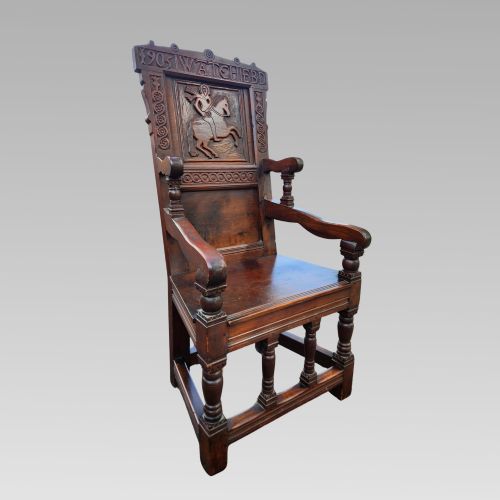
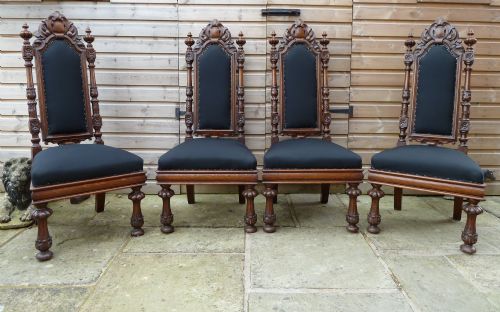
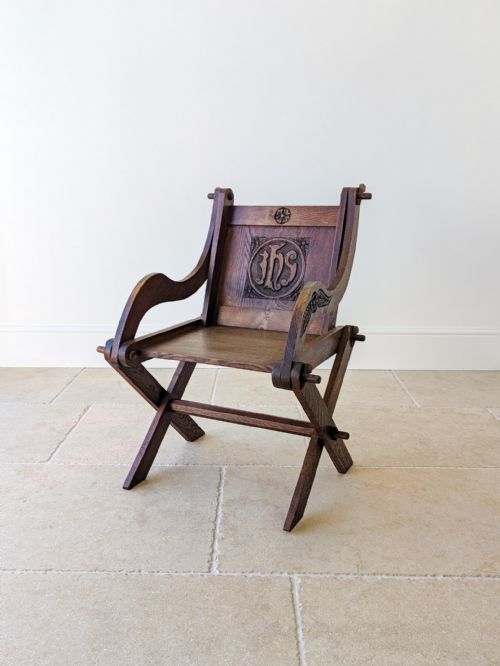
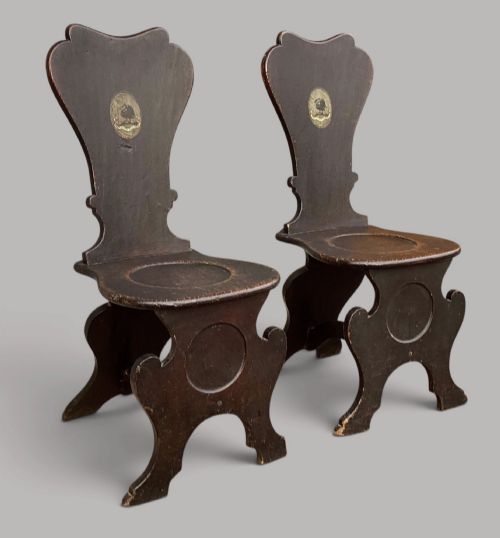

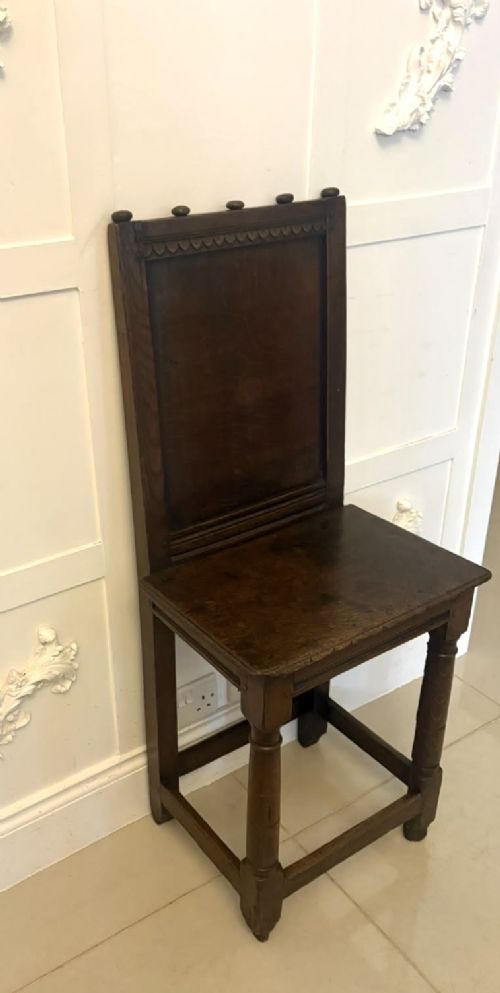
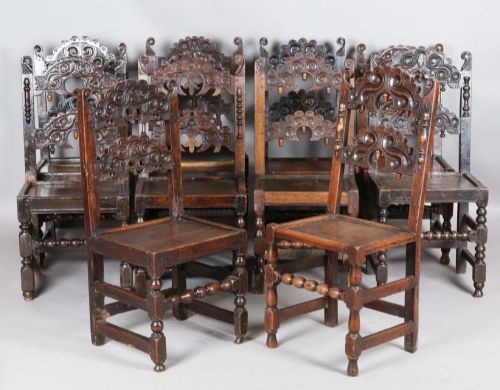
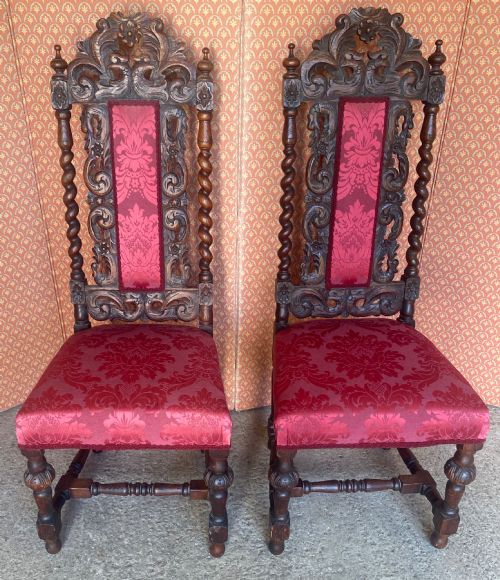
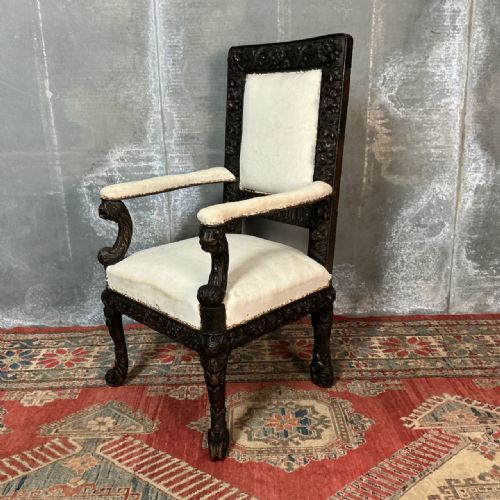
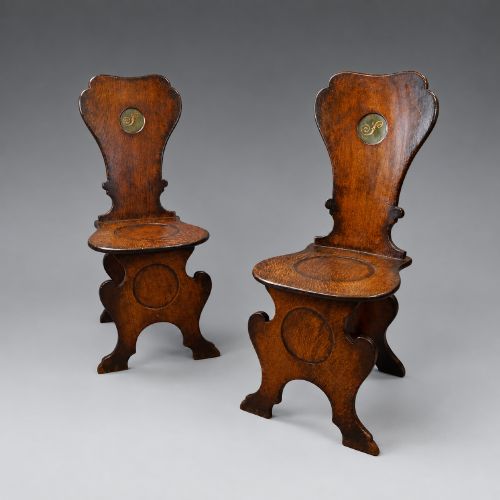
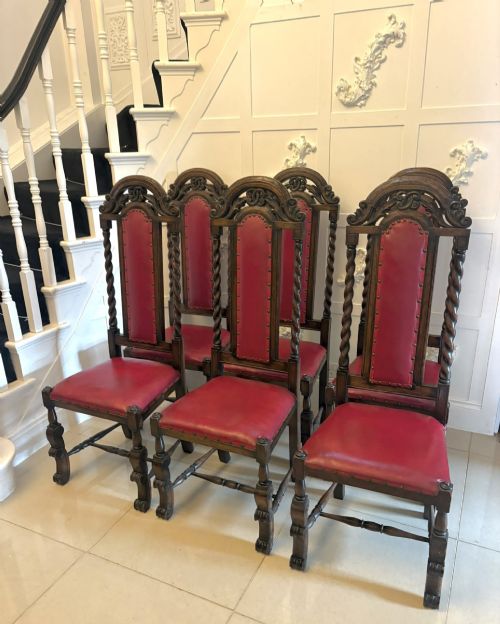
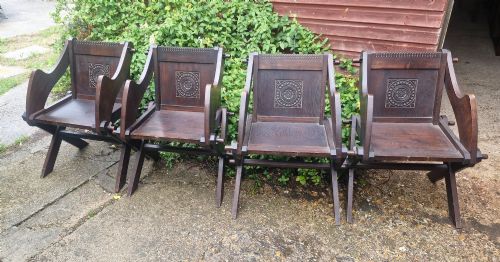
Dark Oak Hall Chair
These dark oak hall chair pieces offer sturdy timber construction and historic forms, making them a practical choice for any entryway.
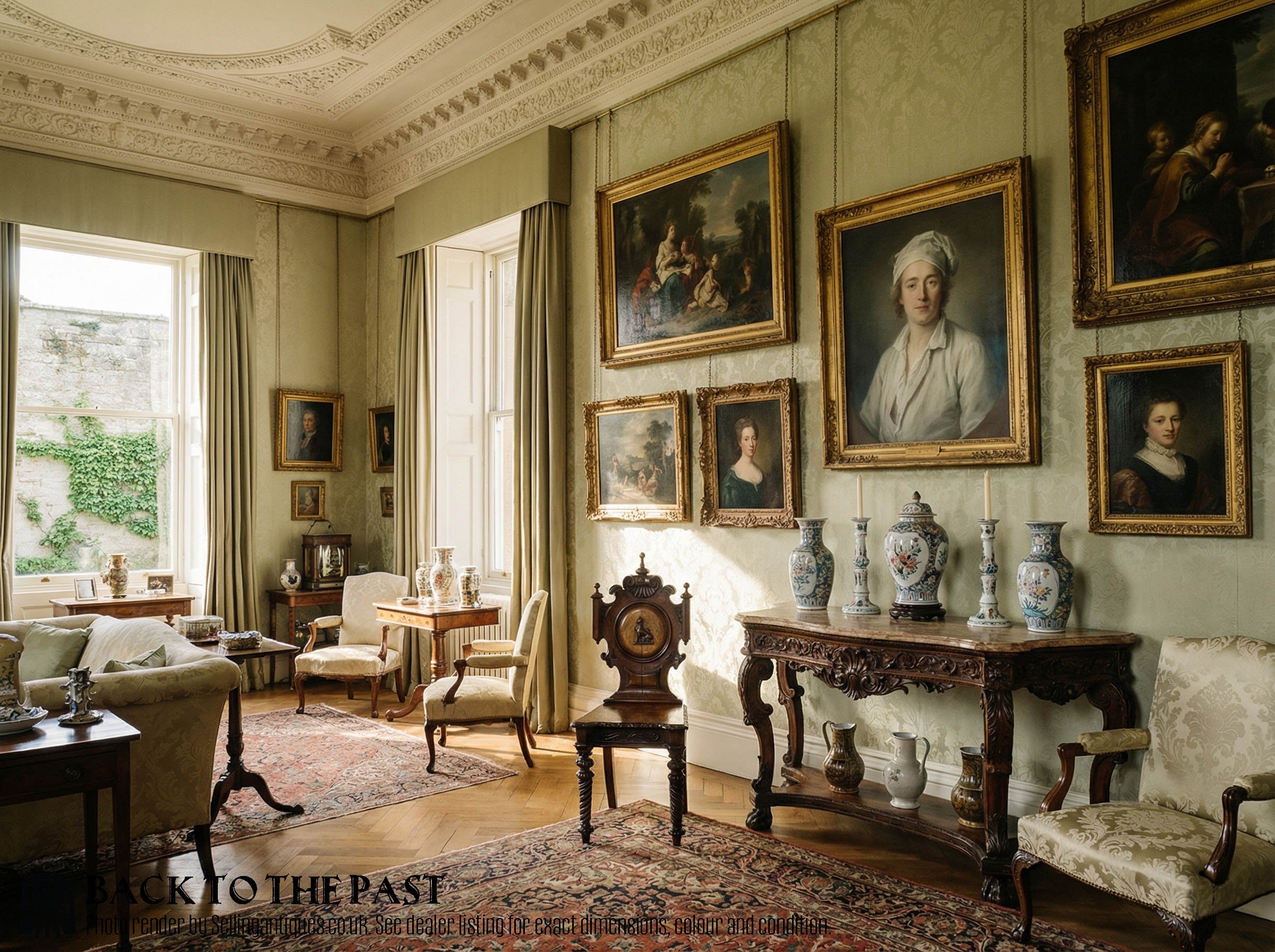
Dark Oak Hall Chair
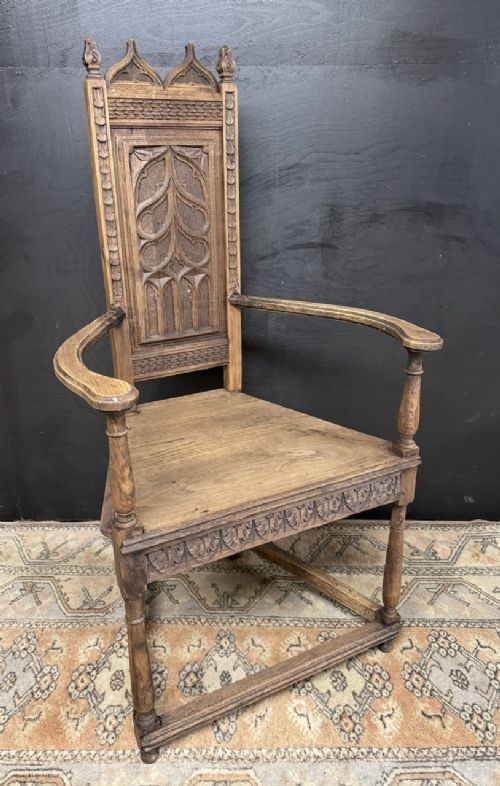
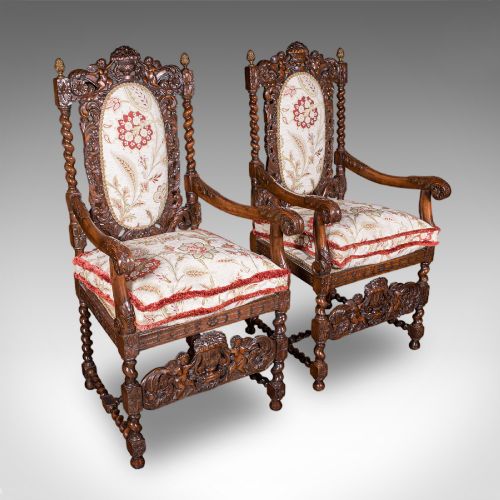
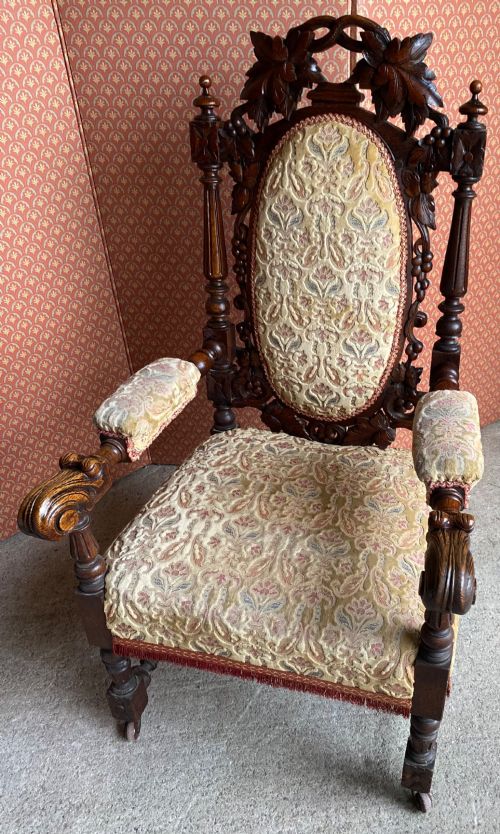
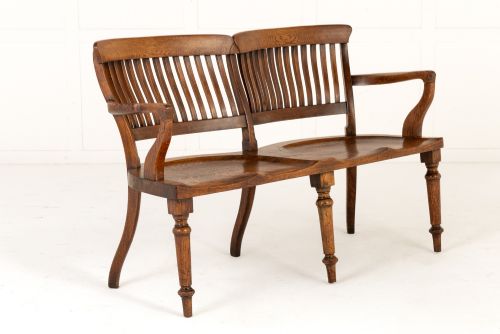
A dark oak hall chair is a sturdy timber seat designed for an entranceway, hallway, or passage, often taking the form of a side chair, armchair, or hall seat. Buyers seeking this phrase encounter pieces ranging from the 17th century through the Victorian period and into the early 20th century.
The inventory includes regional and revival designs such as wainscot chairs, sgabello forms, and Gothic Revival seating. Many examples display carved details, panelled backs, or upholstered elements like leather, fabric, and velvet.
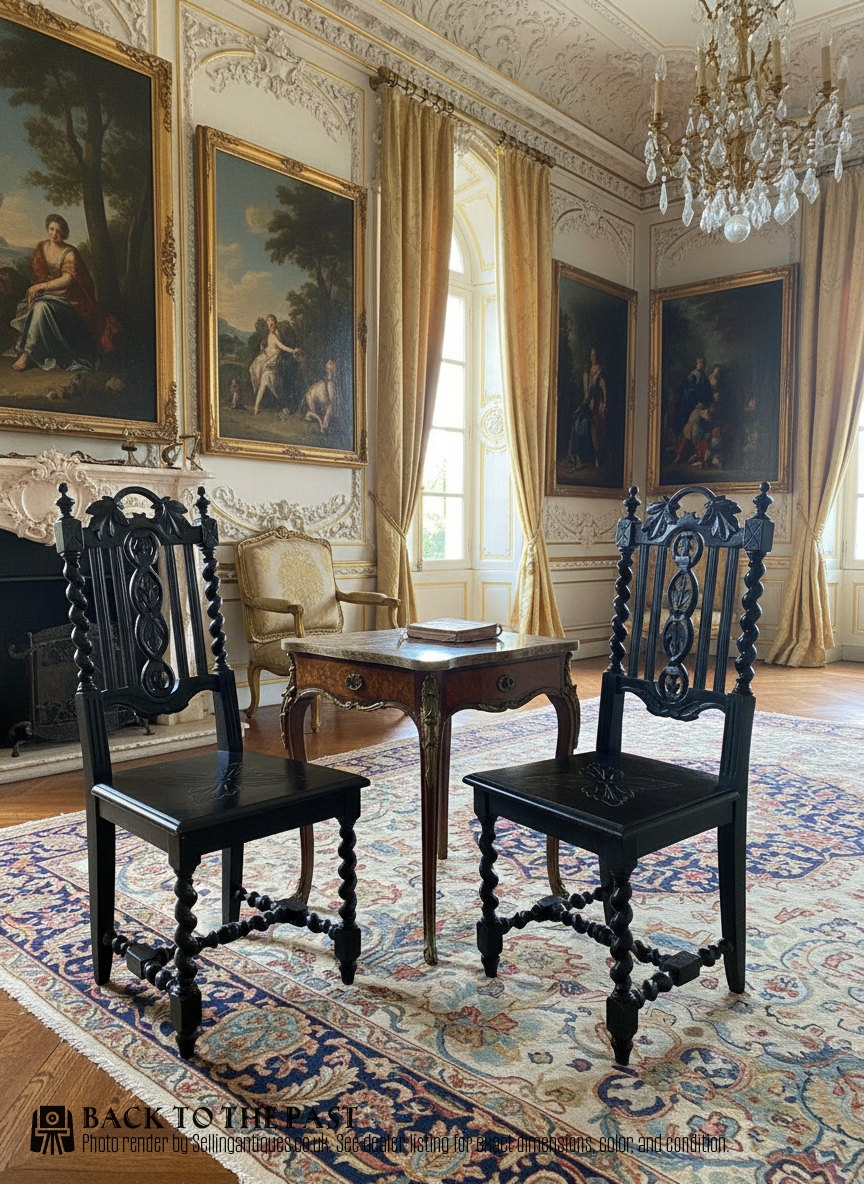
Materials and construction
These items rely primarily on solid timber, specifically oak, shaped through traditional joinery methods such as mortise and tenon. Carving, paint, and turned elements appear across various periods to ornament the structural wood.
Secondary materials such as brass, leather, and woven textiles supplement the timber frames, providing upholstery and hardware where specified by the design.
Dark Oak Hall Chair Retail Price Guide 2026
Typical asking prices for dark oak hall chair among the pieces listed under this phrase on Sellingantiques today, from the lower quarter to the upper quarter. They describe what is for sale here now, not the wider market.
Listings span from the 17th century to the 1930s, featuring oak timber alongside fabric, leather, and brass elements.
Gradations in execution
The quality of a dark oak hall chair depends on the depth and crispness of the carved ornamentation, the integrity of the timber joints, and the survival of original surfaces. Pieces with well-defined proportions and authentic period construction stand apart from later revivals or heavily altered examples.
The choice of secondary materials, from high-grade leather to standard fabric, also influences the overall standard of the finished seat.
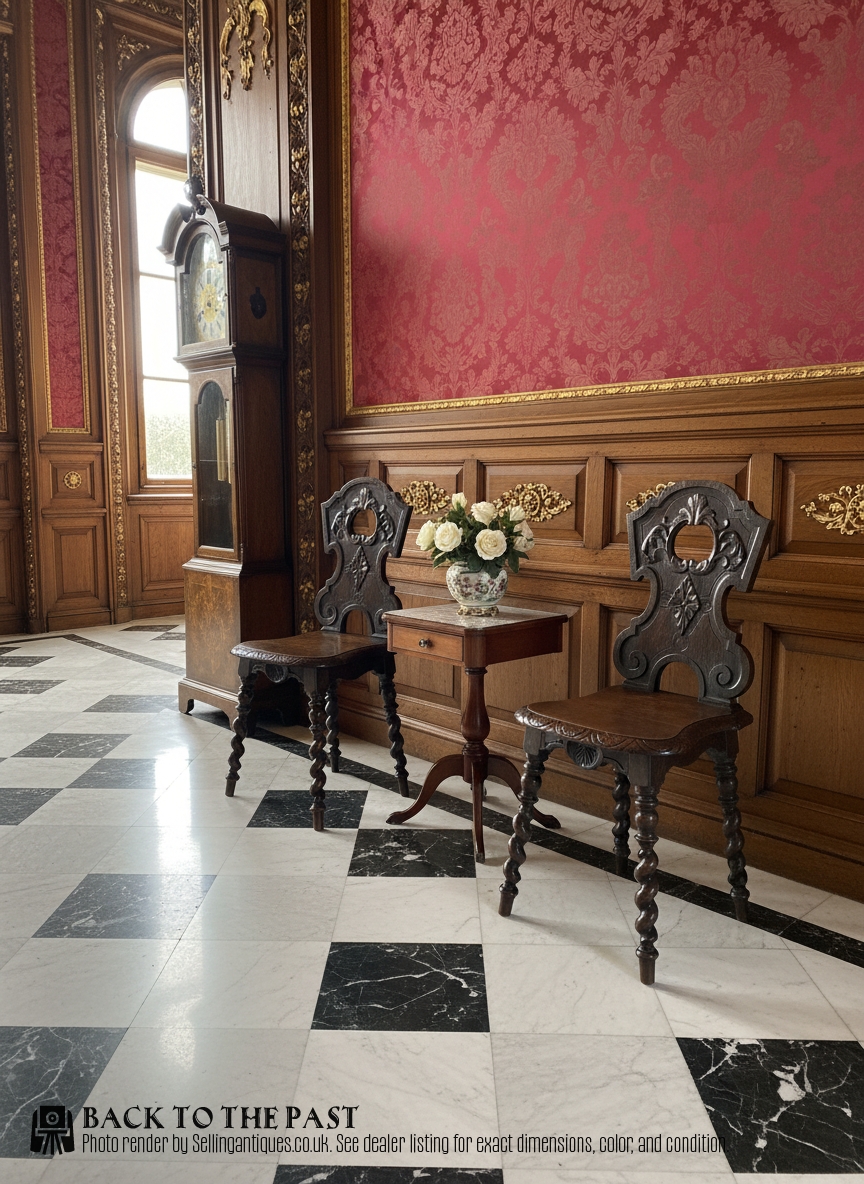
Liberty & Co
The Dark Oak Hall Chair Glossary
- Wainscot chair
- An early wooden armchair constructed primarily from oak with panelled backs. These sturdy seats date frequently to the 17th century.
- Sgabello
- A type of Renaissance chair featuring a wooden seat supported by carved side boards rather than conventional legs. These are often associated with hallway or occasional use.
- Jacobean Revival
- A style popular during the 19th century that mimics the heavy ornamentation and dark finishes of early 17th-century English furniture.
- Gothic Revival
- An architectural and decorative style utilising pointed arches, tracery, and medieval motifs. It appears frequently on 19th-century church and hall chairs.
Dark Oak Hall Chair: Frequently Asked Questions
Where did people put hall chairs?
These chairs stood in entrance halls, corridors, and reception rooms where guests waited briefly.
Their upright backs and solid timber construction suited formal spaces rather than long periods of sitting.
How do I identify a 17th-century chair?
Early pieces display mortise and tenon joinery secured with wooden pegs, alongside heavy oak timbers and hand-carved panels.
Revival pieces from later centuries often copy these motifs but reveal machine-cut marks or lighter framing.
What is a wainscot chair?
A wainscot chair is a heavy wooden armchair featuring a solid panelled back and box-like seat construction.
This form predates upholstered armchairs and relies entirely on carved woodwork for decoration.
How do I care for dark oak?
Maintain the timber by keeping it away from direct heat sources and sudden humidity changes that cause wood to split.
Apply a microcrystalline wax periodically to nourish the surface and preserve the dark finish.