
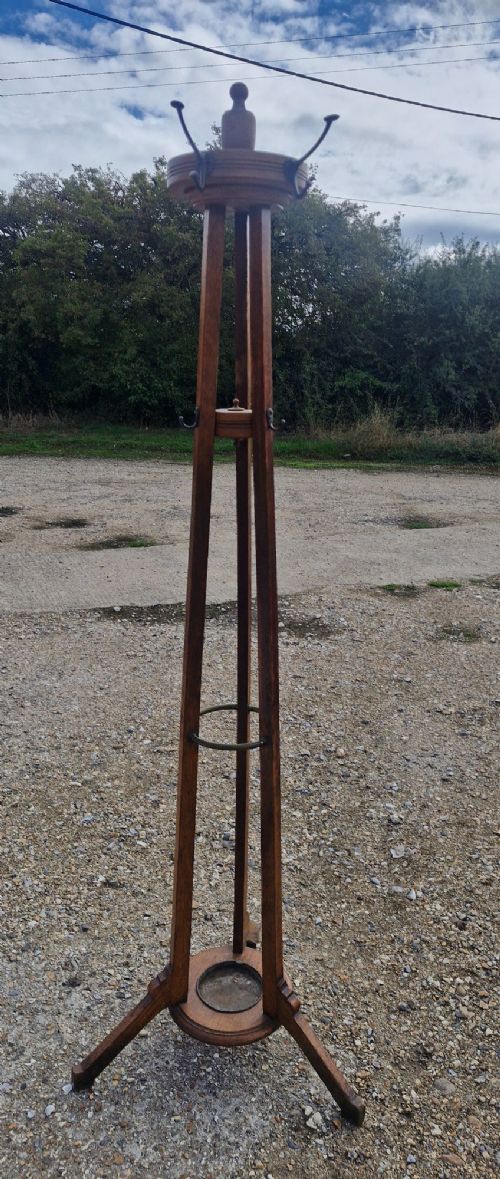
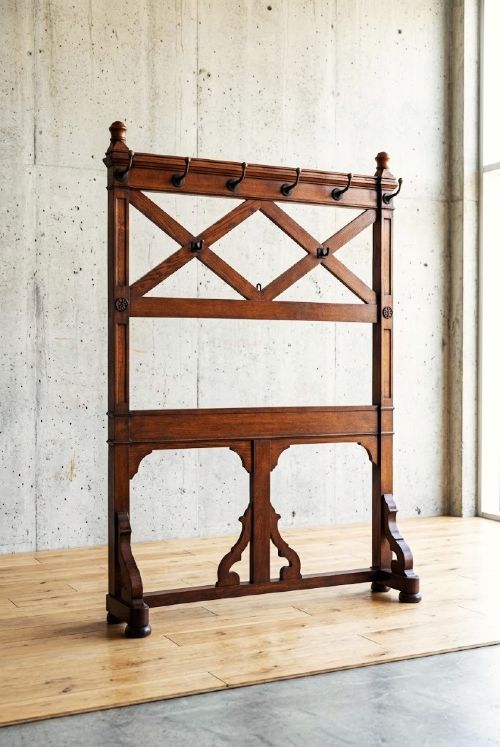

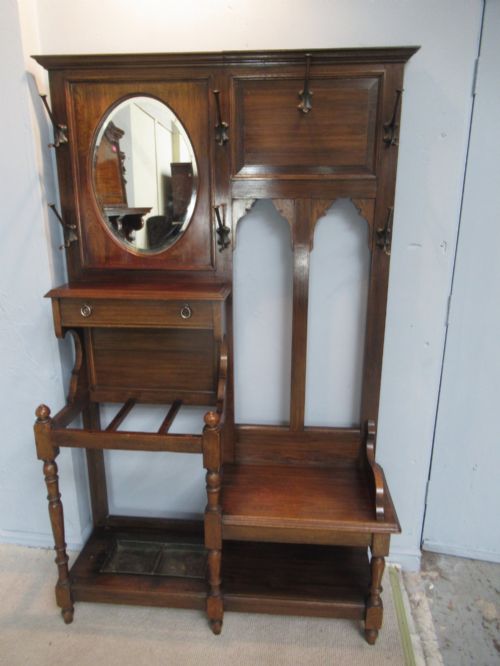
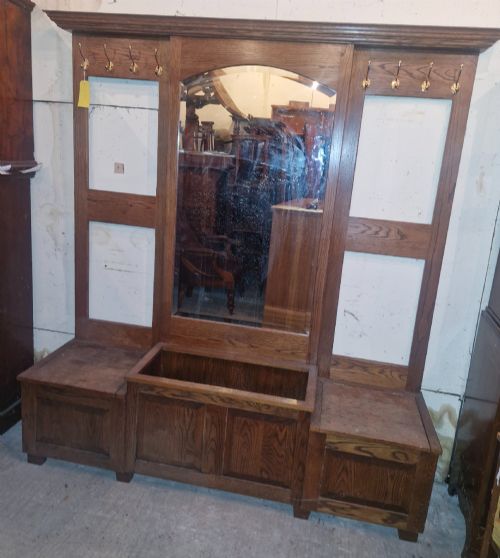




Dark Oak Coat Tree
A dark oak coat tree organises your hallway with the robust presence and honest grain that define Victorian and Edwardian joinery.
Dark Oak Coat Tree
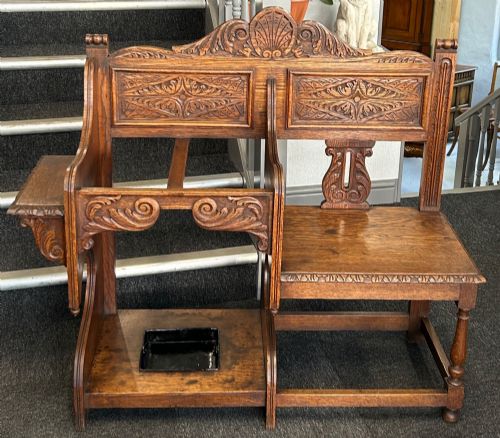
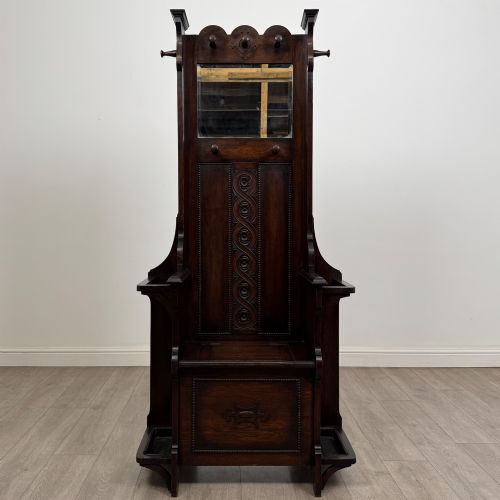
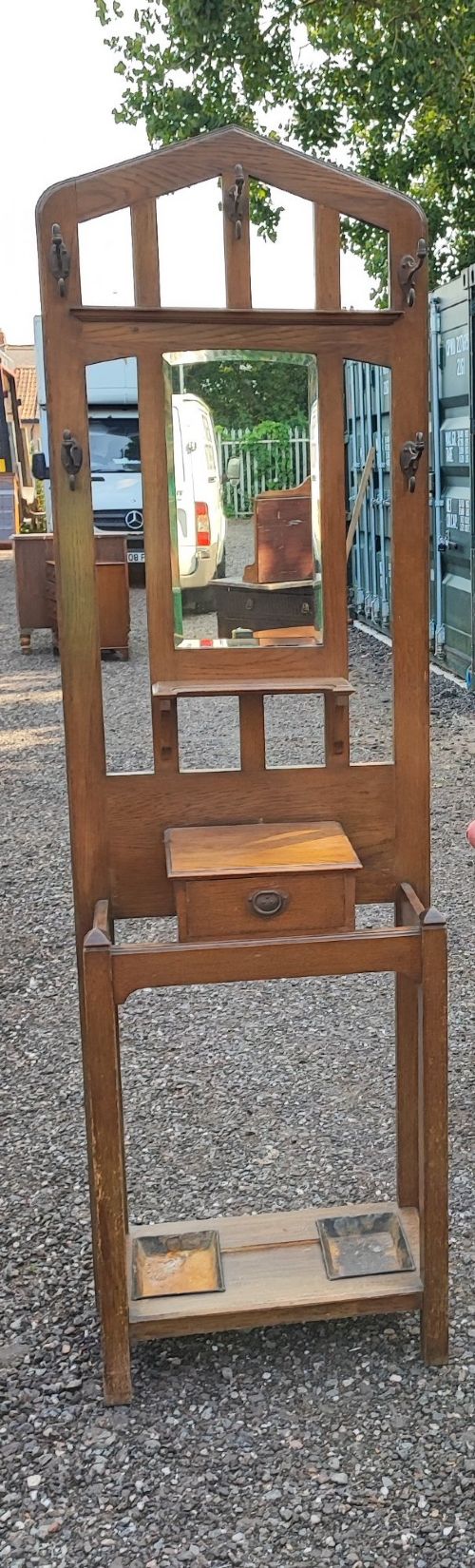
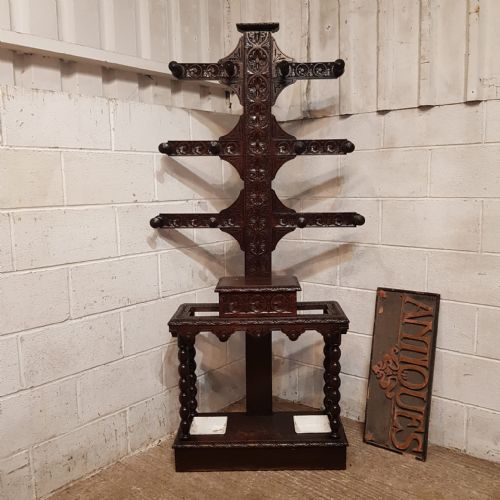
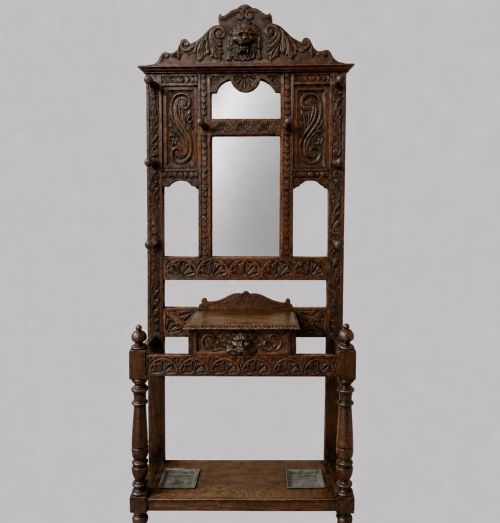
A dark oak coat tree functions as a practical hall stand, coat stand, or hall seat designed to manage outerwear and walking gear near the entrance. These pieces combine vertical pegs, mirrors, and umbrella wells into a single heavy piece of hall furniture.
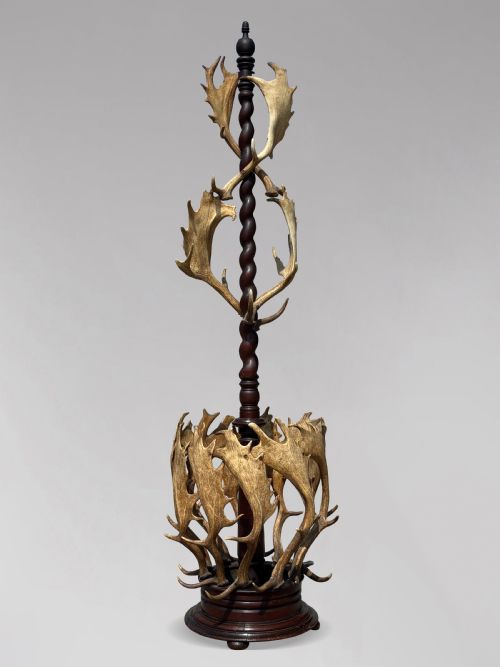
You will most frequently meet Victorian and Edwardian examples made from solid or carved oak, often featuring umbrella racks with metal drip pans and central mirrors. The forms range from revolving hat and coat stands to large hall seats with carved panels.
The phrase dark oak coat tree encompasses various regional interpretations, including Arts and Crafts designs, Gothic Revival pieces in the manner of Pugin, and elaborate Black Forest carvings involving animals or Green Man motifs.
Materials and Construction Methods
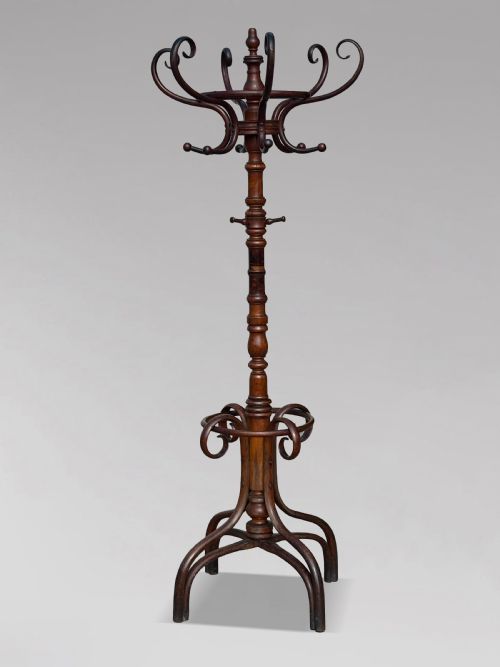
Makers utilised solid oak, carved wood, and bentwood alongside functional additions of brass, iron, cast iron, and glass. Structural durability relies on substantial timber frames capable of supporting heavy winter coats and damp umbrellas without tipping.
Surface ornamentation often involves deep relief carving, fretted woodwork, and applied mirrors, while metal components such as brass hooks and cast iron drip trays provide utility. Selected examples incorporate natural elements like cow horn and antlers into the wooden framework.
The construction balances decorative ambition with structural support, utilising pegged joints and heavy backboards to anchor the projecting coat hooks and umbrella sections safely.
A carved wooden bear or fox might stand guard by your umbrella tray.
Assessing Craftsmanship and Detail
Quality reveals itself in the depth and clarity of the carved decoration, separating simple turned timber from intricate Green Man motifs, Black Forest animal figures, or Flemish architectural panels. The ambition of the design and the crispness of the chisel work dictate the standing of the piece.
The choice of secondary materials marks another distinction, where heavy cast iron drip pans, bevelled mirror glass, and substantial brass or iron hardware outlast simpler tin and wire fittings. Integral structural integrity, particularly in the stability of the base and the attachment of coat hooks, ensures the piece performs its daily function reliably.
J Parker of Woodstock·Fischel
The Dark Oak Coat Tree Glossary
- Hall stand
- A piece of hallway furniture combining coat hooks, a mirror, and umbrella storage, often incorporating a small bench or glove box. These items anchored the entrance of period homes.
- Green Man
- A sculptural architectural motif depicting a human face emerging from or entwined with foliage and vines. It appears frequently in Victorian carved oak furniture.
- Gothic Revival
- An architectural and decorative style drawing inspiration from medieval forms, characterised by pointed arches, heavy tracery, and structural gravity. This aesthetic shaped much mid-nineteenth-century joinery.
- Arts and Crafts
- A design movement prioritising traditional craftsmanship, visible construction methods, and simple forms over mass-produced ornamentation. Pieces from this tradition emphasise honest materials.
- Black Forest
- A style of wood carving originating in Switzerland and Germany, noted for highly realistic depictions of animals, foliage, and naturalistic tree forms. Bears and foxes are common subjects in these compositions.
Dark Oak Coat Tree: Frequently Asked Questions
What is the difference between a coat tree and a hall stand?
A coat tree typically refers to a vertical post with projecting pegs for hanging hats and coats from multiple angles. A hall stand is a broader piece of furniture that often includes a mirror, glove box, umbrella wells, and sometimes a seat.
While both serve the entrance hall, hall stands provide a more architectural backdrop with integrated storage rather than just a hanging post.
How do I date a dark oak coat tree?
Dating relies on stylistic clues and construction methods, moving from the heavy architectural revival styles of the mid-nineteenth century to cleaner Arts and Crafts lines around nineteen ten. Victorian pieces often display elaborate carved motifs like the Green Man, while Edwardian versions can be lighter in proportion.
Hardware types, mirror bevelling, and the presence of maker labels or registry marks also help narrow down the period of manufacture.
Are these pieces stable enough for heavy coats?
Period coat trees and hall stands were built from dense oak and designed to bear the weight of heavy wool coats and wet winter gear. Many incorporate wide footprints, heavy cast iron drip pans at the base, or wall-anchoring elements to maintain balance.
Checking the tightness of the joints and the security of the individual hooks ensures the piece handles everyday domestic use without tipping.
How do I care for dark oak hall furniture?
Maintenance requires occasional dusting with a soft cloth and the application of a traditional beeswax to nourish the dry oak grain. Avoid placing damp items directly onto unsealed wooden surfaces by ensuring the metal or ceramic drip trays are properly positioned in the umbrella wells.
Keeping the furniture away from direct heat sources prevents the solid timber from splitting over time.