
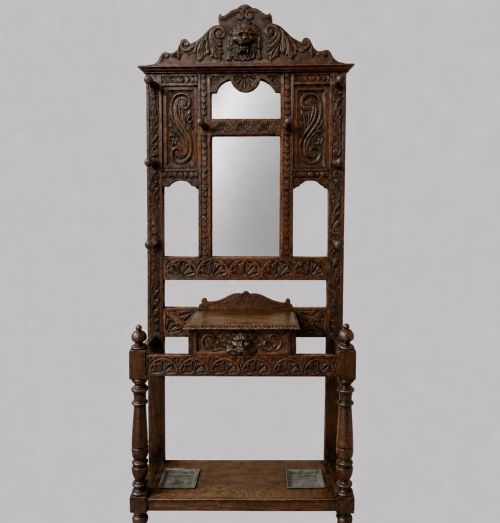


Victorian Carved Hall Tree
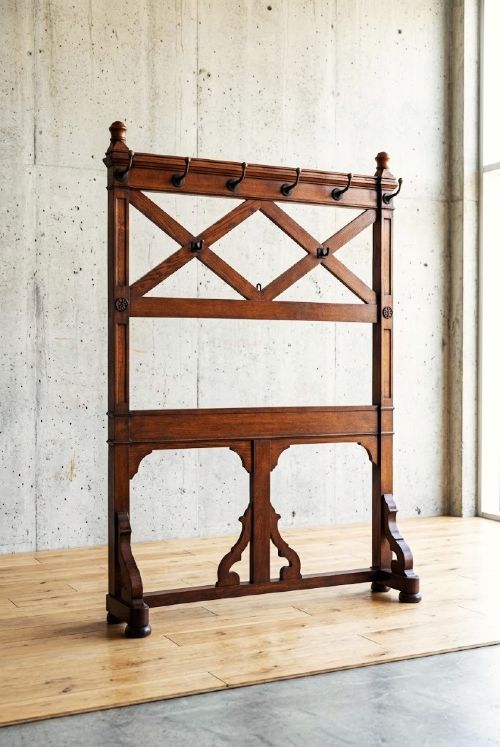
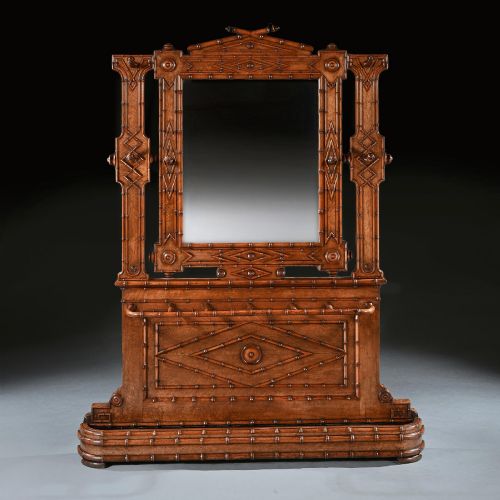
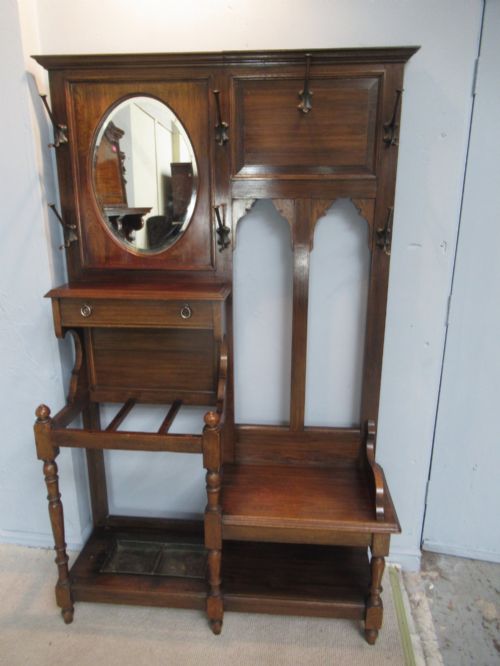
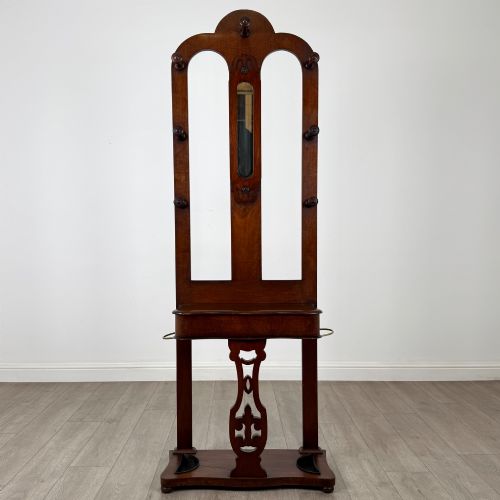
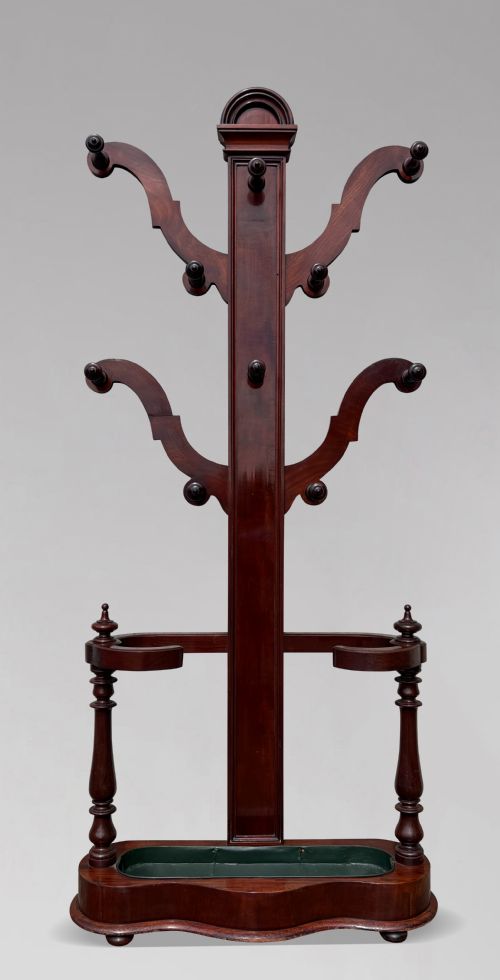
A victorian carved hall tree greets visitors with deep timber and forged metal, offering an architectural anchor for hats, coats, and sticks.
Victorian Carved Hall Tree
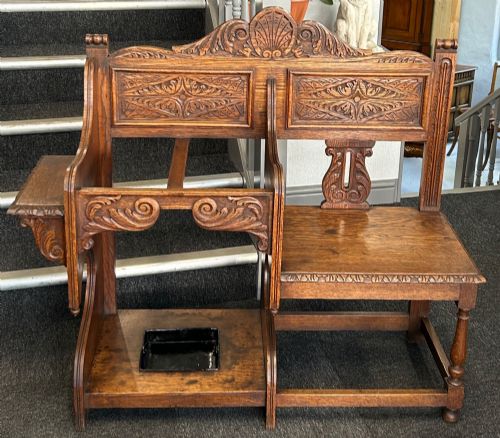
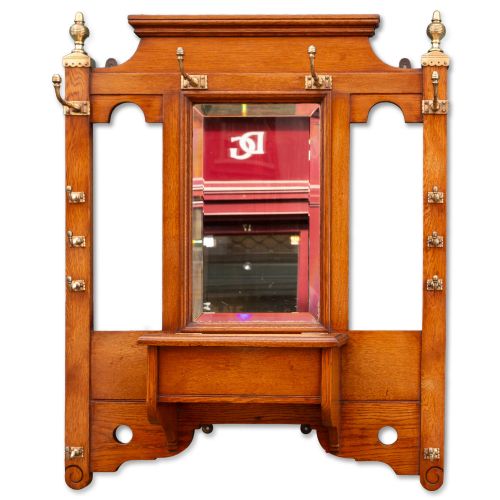
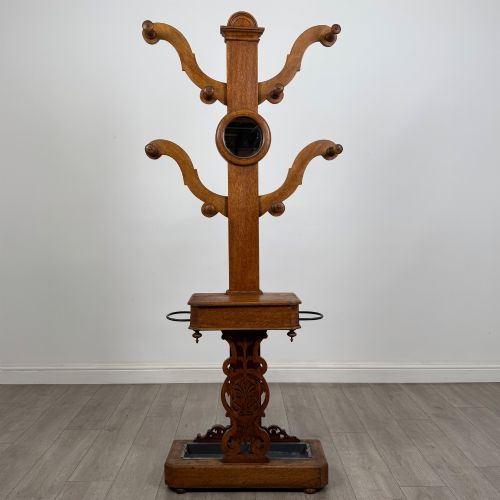
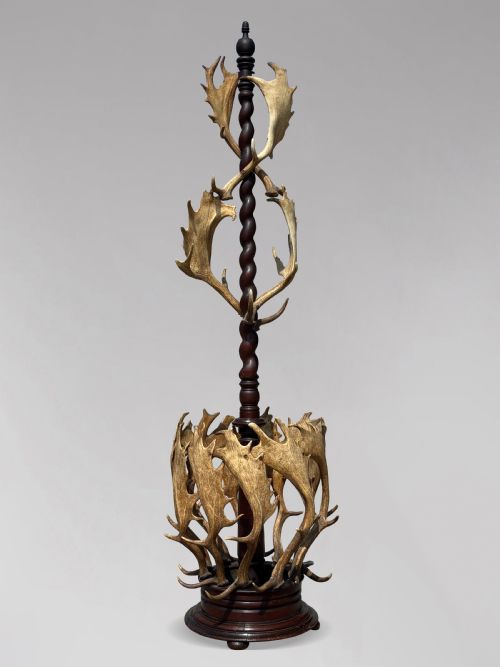
A victorian carved hall tree serves as a functional entranceway statement piece, combining hanging hooks, umbrella wells, and frequently a central mirror. The examples found here span the broader nineteenth century through the early twentieth century, taking forms such as hall stands, hall seats, and wall-mounted coat racks.
Oak and mahogany dominate the offerings, often enriched with detailed carving that ranges from Gothic Revival motifs to whimsical Black Forest animal figures. Buyers will encounter substantial vertical frames designed to stand against an entryway wall, providing a dedicated space for outdoor garments.
How they were made
Cabinetmakers utilised solid timbers like oak, walnut, and mahogany, shaping them with deep relief carvings and turning structural columns. Metal components, including brass hooks and iron drip pans, were integrated to handle wet umbrellas and heavy coats.
Many iterations incorporate bevelled mirror plates secured within carved wooden frames, alongside inset marble shelves designed to resist moisture from walking sticks and damp parcels.
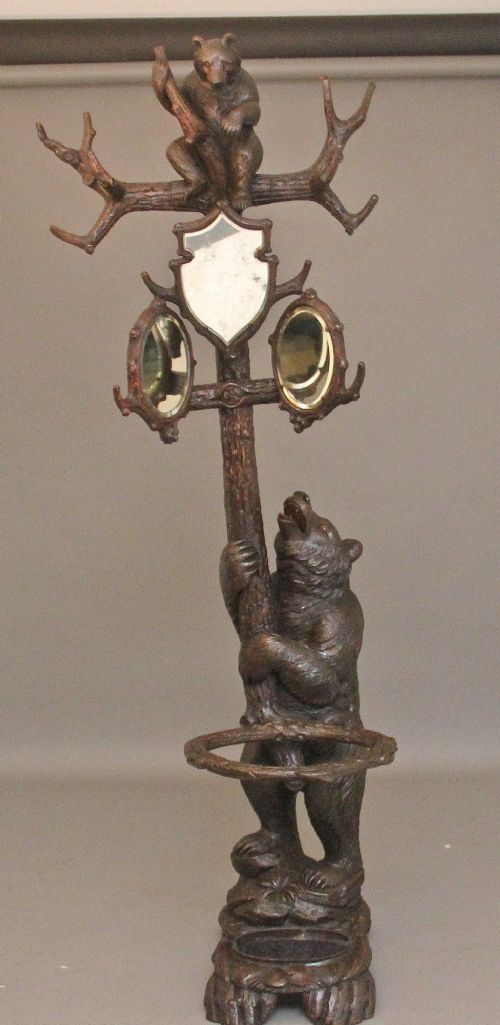
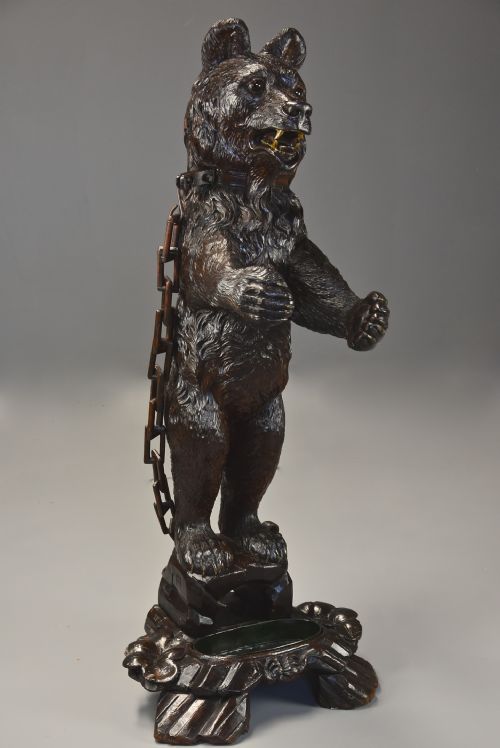
Carved bears keep a permanent vigil by the front door, offering tree branches to hold damp coats and walking sticks.
What varies in quality
The depth and crispness of the carving dictate much of the distinction between pieces, particularly in naturalistic motifs like foliage, animals, or Greenman masks. Finer examples display meticulous hand-tooling with fully articulated figures and balanced proportions.
Structural complexity also elevates certain works, such as those featuring integrated seats, multiple tier levels, and substantial mirrors rather than simpler wall-mounted alternatives.
J. Parker of Woodstock·William Whiteley
The Victorian Carved Hall Tree Glossary
- Hall stand
- A tall entryway furniture piece combining coat hooks, a mirror, and a base for umbrellas. It stands directly on the floor against a wall.
- Greenman
- A sculptural architectural ornament depicting a human face disgorged from foliage. It appears frequently on carved oak furniture from the later nineteenth century.
- Black Forest
- A style of wood carving originating from Switzerland and Germany, noted for realistic representations of bears and forest animals. These pieces often take the form of hall stands with integrated coat pegs.
- Gothic Revival
- An architectural and decorative style drawing on medieval forms, characterised by pointed arches, heavy tracery, and solid oak construction. This aesthetic heavily influenced mid-nineteenth-century hall furniture.
- Japonisme
- The study of Japanese art and design that influenced Western decorative arts during the late nineteenth century. It appears in unusual bamboo-turned frames and simplified forms.
Victorian Carved Hall Tree: Frequently Asked Questions
What is a hall tree?
A hall tree is a tall piece of furniture placed in an entrance hallway to hold outdoor garments, hats, and walking sticks. It typically combines upright wooden panels, brass hooks, a mirror, and a lower drip tray for umbrellas.
Many versions also include a bench seat or a small shelf for everyday items. They became prominent in grand nineteenth-century homes to keep the hallway organised.
How do I live with a hall tree?
Position the piece against a sturdy hallway wall where its vertical height can be appreciated without crowding the room. Use the brass hooks for daily coats and hats while keeping the umbrella wells functional for wet weather.
Ensure the piece is anchored securely if it carries heavy winter garments or lacks a wide base. Regular dusting of the carved details keeps the timber finish in good condition.
How do I spot a Gothic Revival piece?
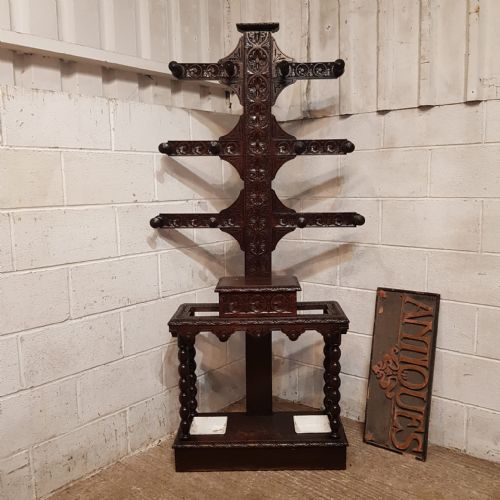
Gothic Revival pieces display architectural elements such as pointed arches, quatrefoils, and heavy structural timber. They rely on solid oak and solemn proportions that echo medieval church design.
Makers often employed Pugin-inspired motifs to create an imposing and formal entranceway presence.
What are Black Forest hall stands?
Black Forest hall stands feature elaborate, lifelike carvings of animals, most notably bears, integrated into the wooden structure. The animals often hold branches that serve as coat hooks or stand guard beside umbrella wells.
Originating from European mountain regions, these pieces offer a dramatic and whimsical alternative to standard architectural timber stands.