
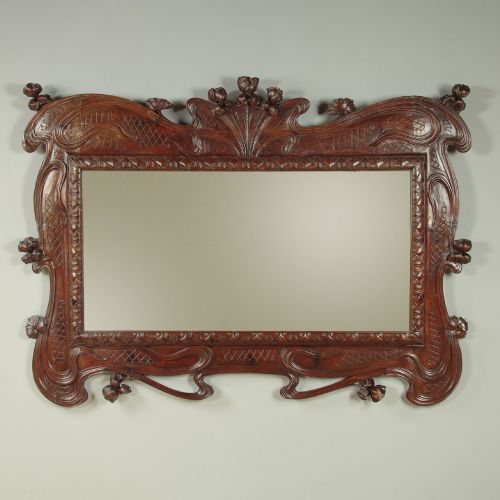
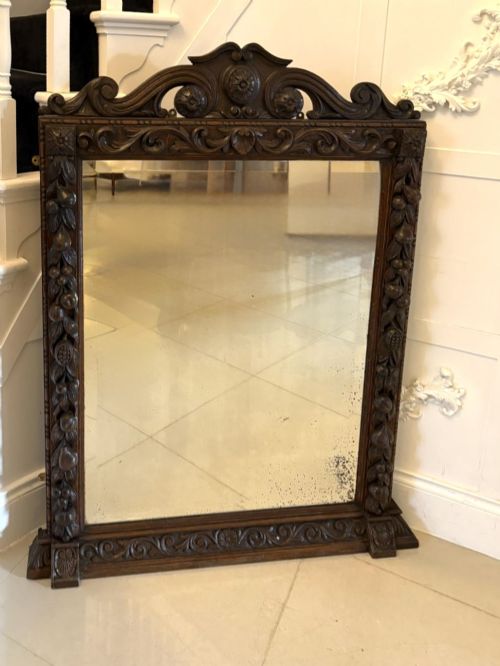

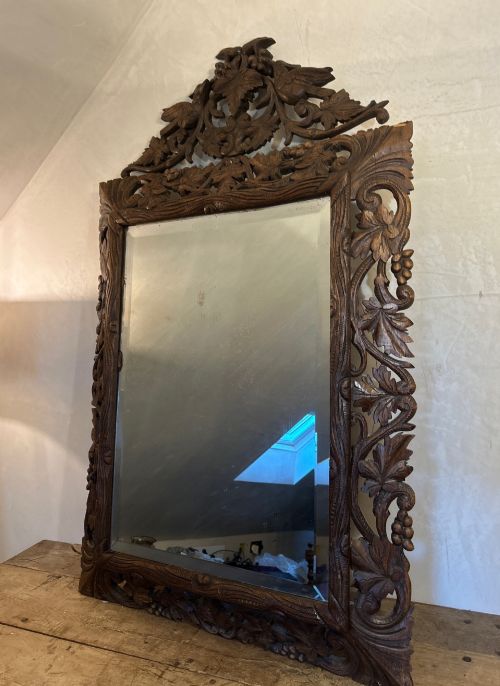
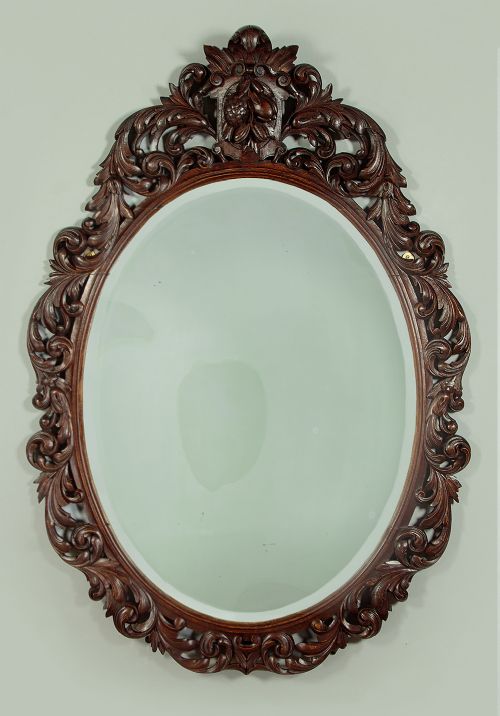
Dark Oak Carved Mirror
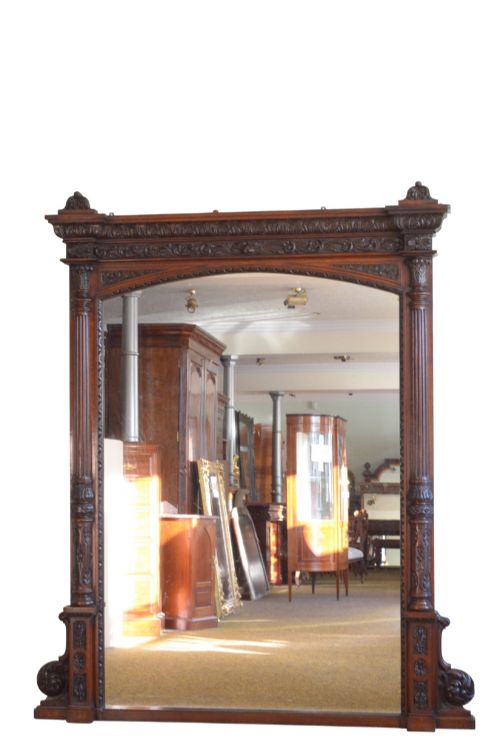
A dark oak carved mirror brings heavy timber grain and deep relief work into a hallway or overmantel.
Dark Oak Carved Mirror
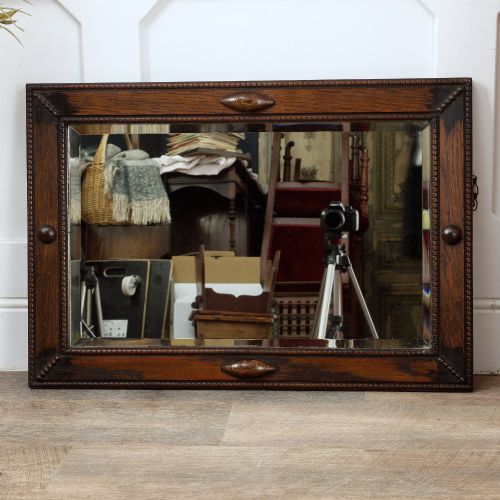
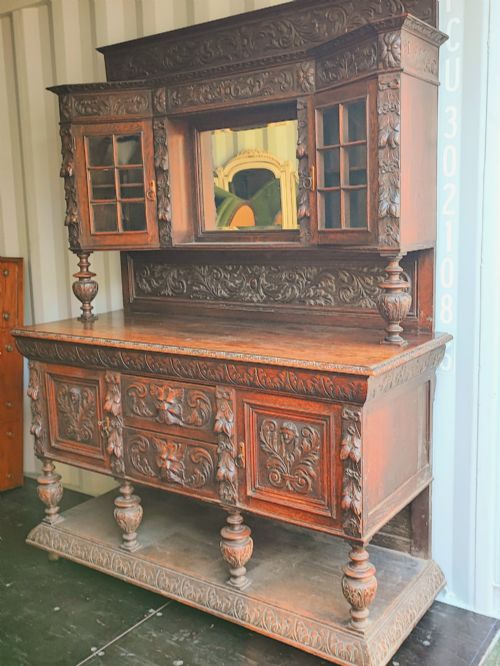
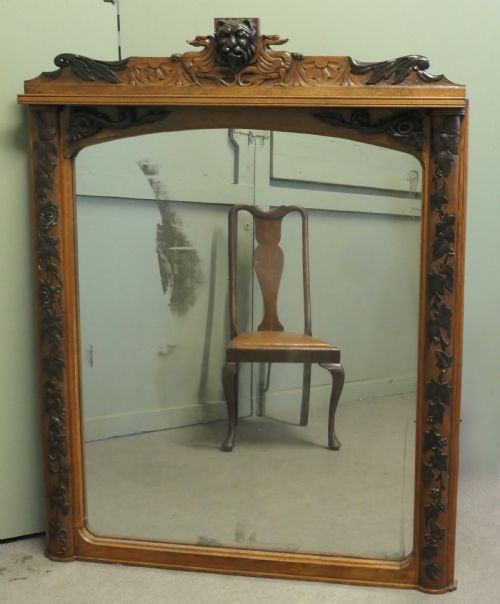
A dark oak carved mirror is a sturdy wall or overmantel piece defined by substantial timber frames and sculpted ornamentation. These items appear primarily from the Victorian, Edwardian, and early twentieth-century periods, alongside revivals spanning Jacobean, Gothic, and French Renaissance tastes.
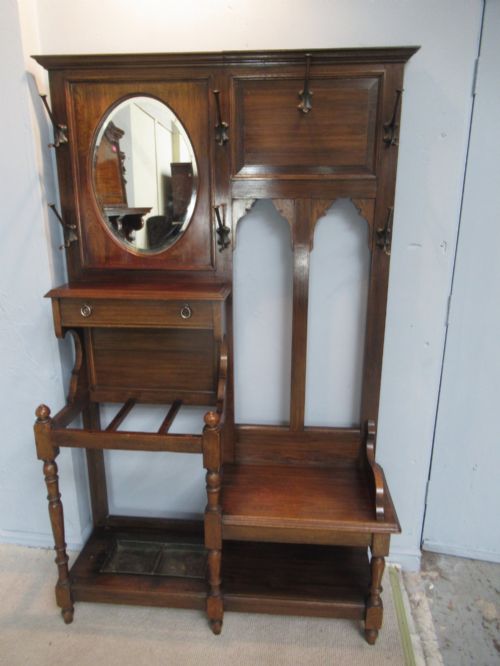
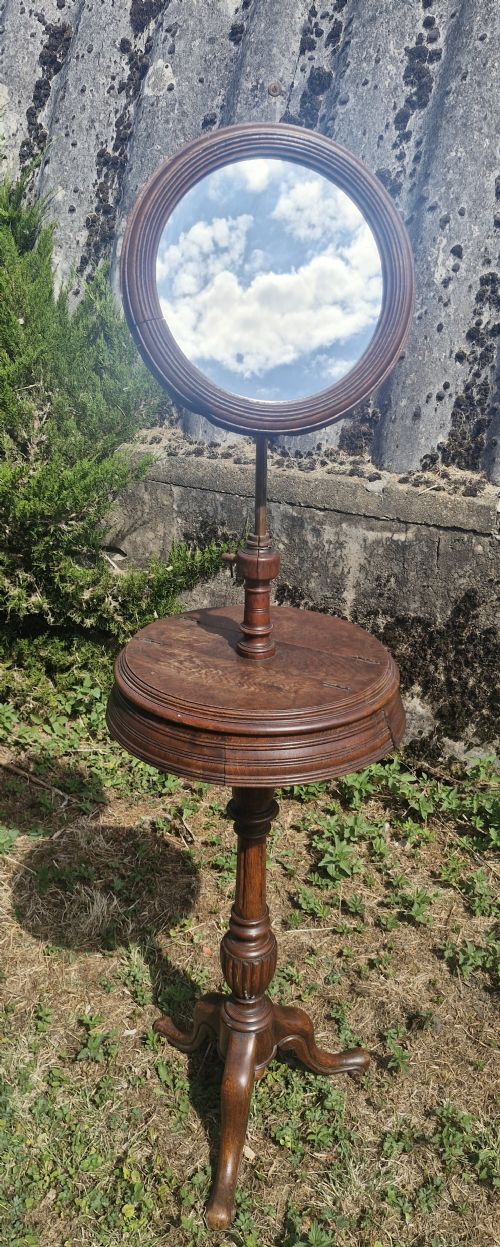
You will encounter wall mirrors, large overmantels, and hall stands incorporating mirror plates within heavy timber structures. The timber typically displays a deep, dark brown patina acquired through age and finishing techniques.
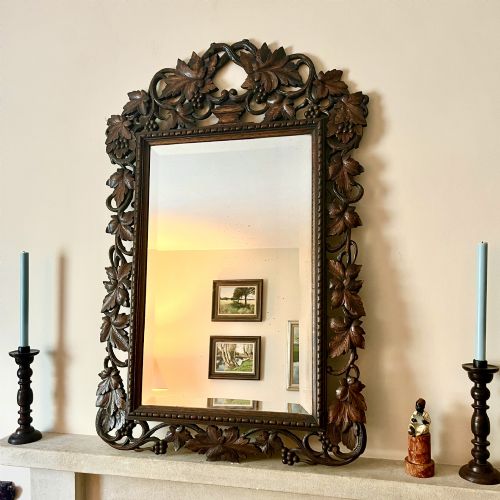
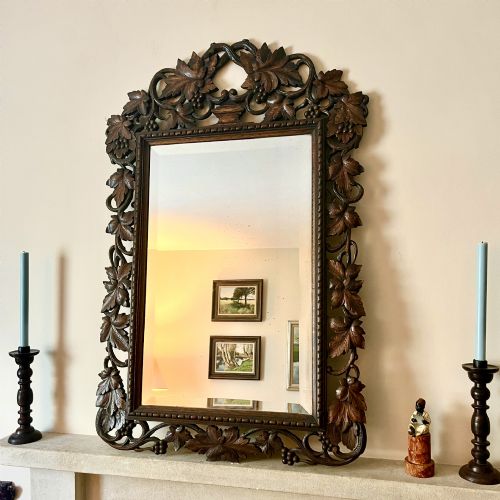
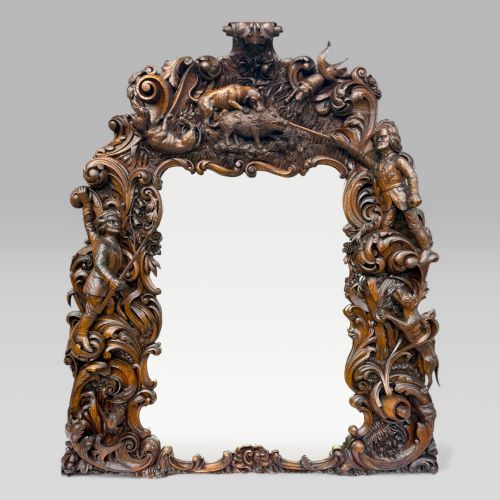
The decorative schemes frequently employ vegetal motifs, animals, or figural details such as Green Man masks. Forms range from simple oval wall frames to grand hunting lodge overmantels with intricate crests.
How they were made
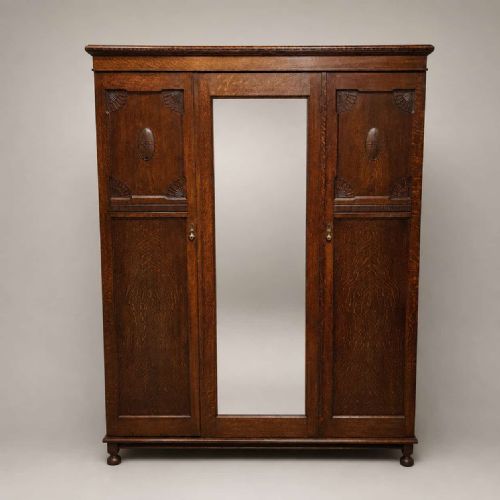
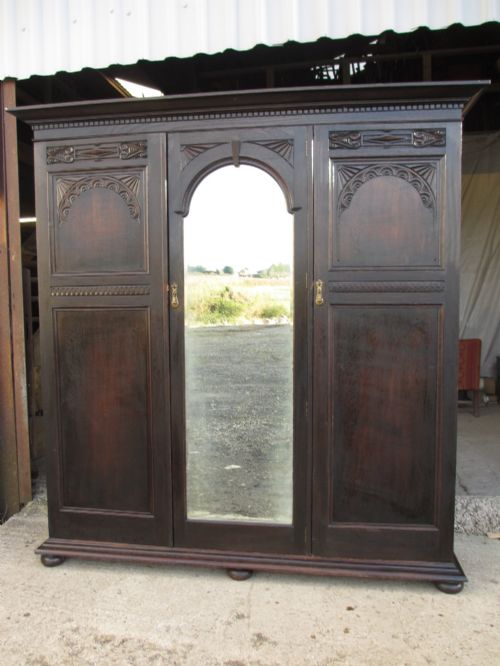
Craftsmen shaped these objects using solid oak timber, frequently accented with brass or metal hardware for coat hooks, candle sconces, or structural brackets. The glass components include flat mirror plates and bevelled mirror glass secured into rebates behind the wooden frame.
Carving was executed by hand directly into the dense oak, producing high-relief panels, applied mouldings, and pierced foliate scrolls. Joinery relied on traditional mortise and tenon methods to support the considerable weight of the solid wood and glass.
One exceptional hunting lodge overmantel brings the watchful gaze of the King of Bavaria straight into your hallway.
What varies in quality
Quality rests in the depth and crispness of the wood carving, where deeply undercut foliage and expressive figural work distinguish superior examples from mechanical or shallow stamped decoration. The choice of timber grain and the thickness of the solid oak frame also set finer pieces apart.
The integrity of the mirror glass matters significantly, with bevelled edges and minimal silvering degradation indicating higher manufacture standards. Structural proportions and the harmony of the Revival style applied to the frame dictate overall aesthetic success.
The Dark Oak Carved Mirror Glossary
- Overmantel mirror
- A large mirror designed to hang specifically on the wall above a fireplace mantelpiece. These pieces often feature extensive carved architectural crests.
- Green Man
- A sculptural motif depicting a human face emerging from or entwined with foliage and vines. It appears frequently on nineteenth-century oak furniture and architectural woodwork.
- Bevelled glass
- Mirror glass featuring an angled, polished edge that catches the light. This technique adds depth and refinement to the framed assembly.
- Jacobean Revival
- A style popular during the nineteenth century that imitates seventeenth-century English furniture. It utilises dark oak, geometric moulding, and strapwork carving.
- Hall stand
- A multi-functional hall piece combining a mirror, coat hooks, umbrella wells, and sometimes a small bench. They are typically constructed from solid carved oak.
Dark Oak Carved Mirror: Frequently Asked Questions
Where should I hang a heavy oak mirror?
Hang these substantial pieces on structural masonry walls or directly into timber studwork using heavy-duty fixings. The weight of solid oak and glass demands secure wall anchors.
Position them in reception rooms or hallways where the dark timber contrasts effectively against lighter wall colours.
How do I clean carved oak frames?
Dust the deep recesses of the carving regularly with a soft, dry brush to prevent dirt accumulation. Avoid harsh chemical polishes that can soften the dark patina of the timber.
Apply a microcrystalline wax sparingly once a year to nourish the oak surface and maintain its soft sheen.
How do I identify a Victorian Gothic mirror?
Look for architectural elements such as pointed arches, trefoils, and heavy geometric mouldings executed in dark oak. These designs draw inspiration from medieval ecclesiastical architecture.
The carving often includes heraldic motifs, pointed tracery, and robust proportions suited to nineteenth-century revival interiors.
Can I replace the mirror glass?
Original mirror glass often exhibits foxing and age spots which contribute to the antique character of the piece. Replacing it is possible by removing the backboards, though original plates are generally preferred by collectors.
If replacement is necessary, select silvered glass with a sympathetic thickness and edge finish to match the period of the frame.