
Dark Oak Buffet
A dark oak buffet is a heavy timber server built to hold dining room service, offering deep colour and sturdy storage for everyday rooms.
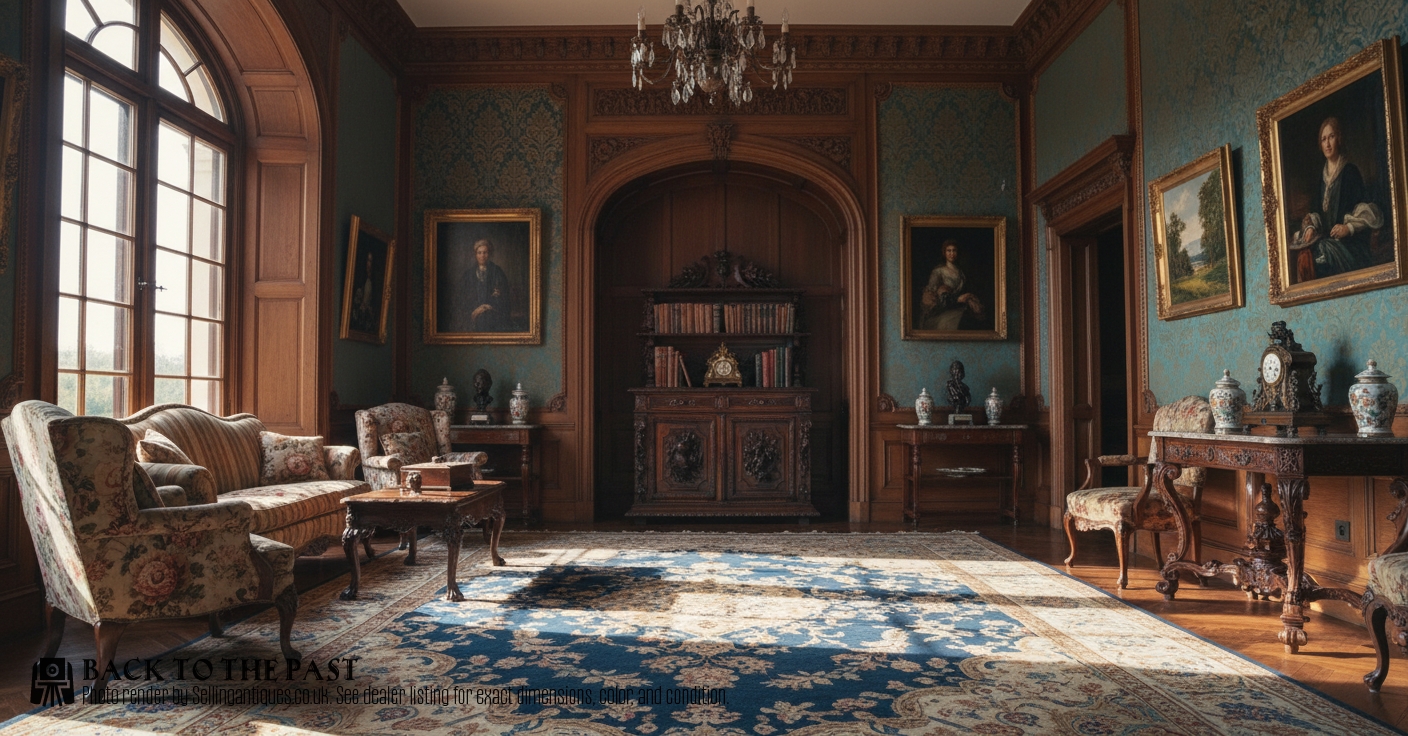
Dark Oak Buffet
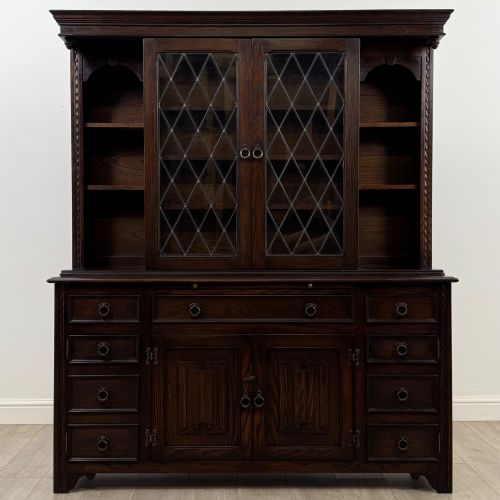
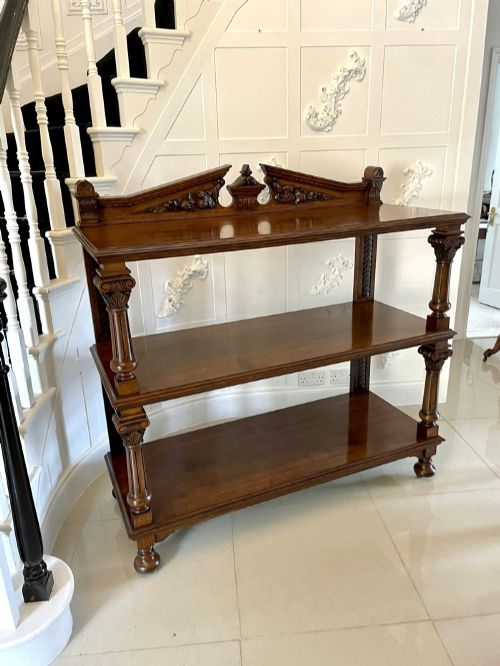
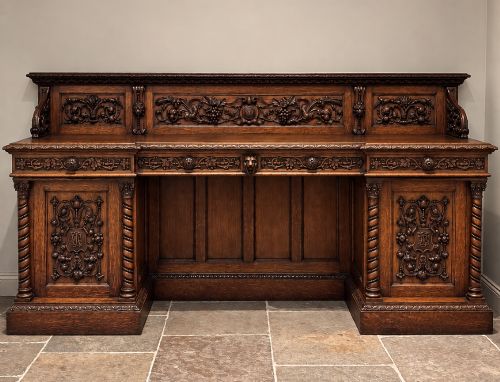
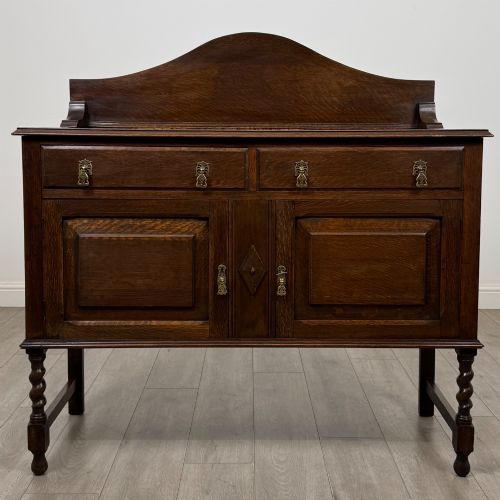
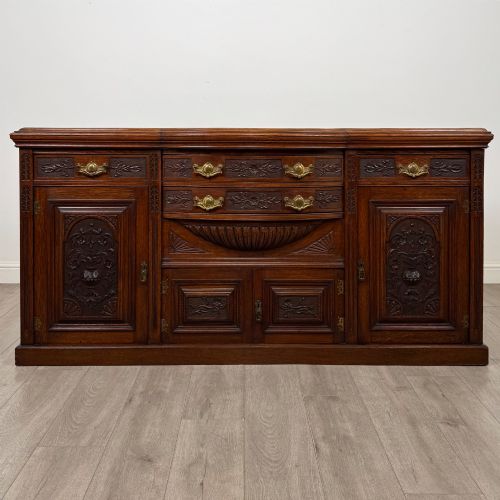
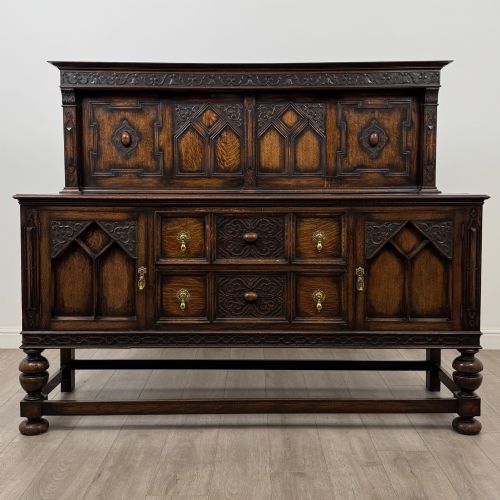
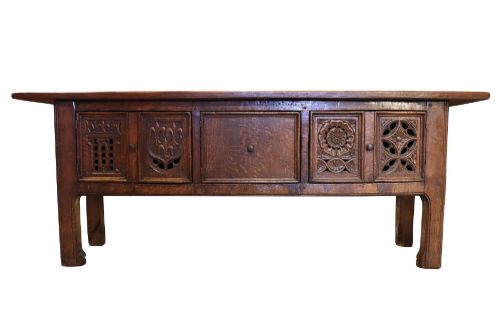
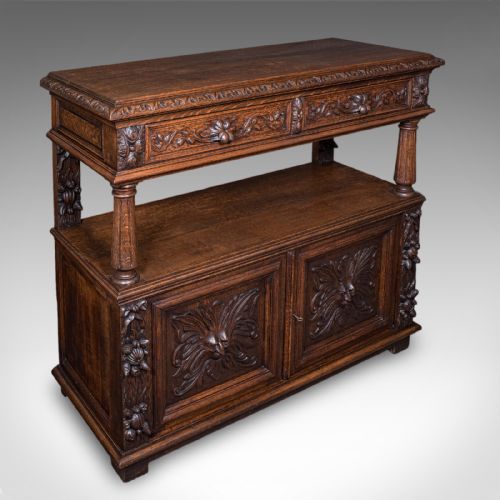
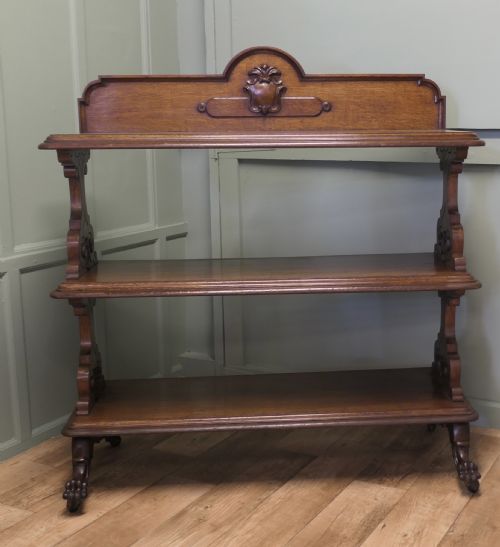
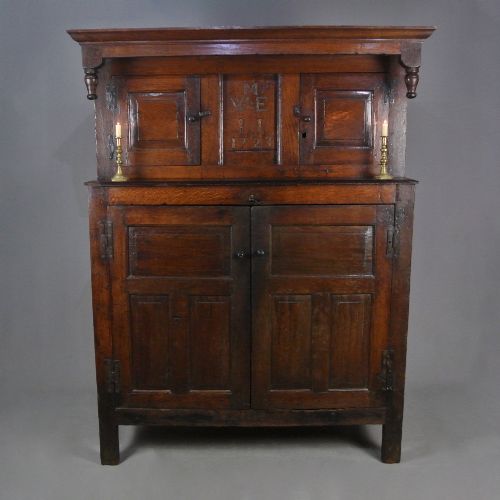
A dark oak buffet functions as a substantial serving surface and storage unit, appearing in forms such as sideboards, dresser bases, court cupboards, and dumbwaiters. These pieces span centuries of cabinet making, ranging from restrained Georgian proportions to heavily carved Victorian and Edwardian revivals.
Buyers meet examples shaped by distinct regional tastes and revival styles, including Jacobean, Gothic, and French Renaissance influences. The timber displays rich natural grain darkened by age, wax, or polish, forming the primary anchor for dining room furniture collections.

How they were made
Cabinet makers constructed these pieces primarily from solid oak, sometimes combining secondary woods like walnut alongside metal, brass, and iron hardware. Glass, mirror, and lead occasionally appear in display doors and upper compartments.
Joinery techniques relied on pegged mortise and tenon frames, panelled doors, and hand-carved ornamentation. Surfaces received hand-applied finishes that deepened the natural tone of the timber over generations of use.
Dark Oak Buffet Retail Price Guide 2026
Typical asking prices for dark oak buffet among the pieces listed under this phrase on Sellingantiques today, from the lower quarter to the upper quarter. They describe what is for sale here now, not the wider market.
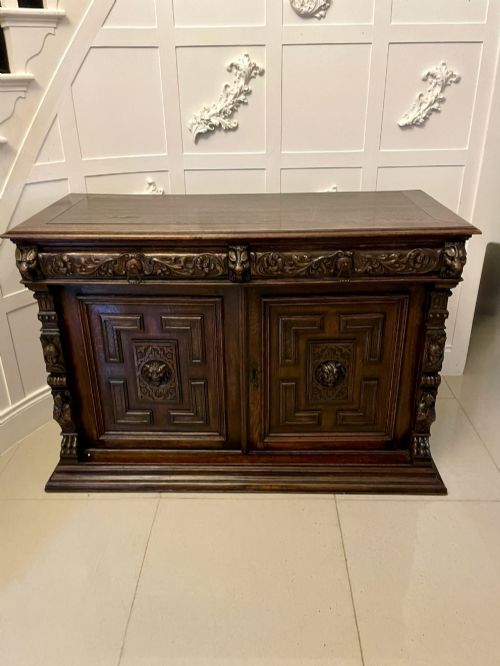
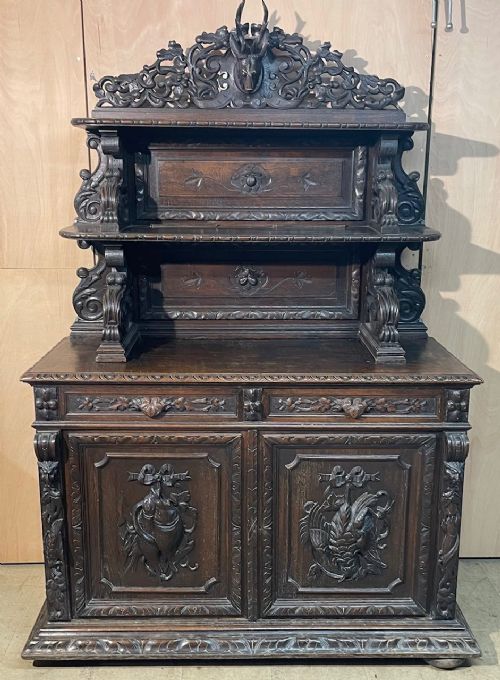
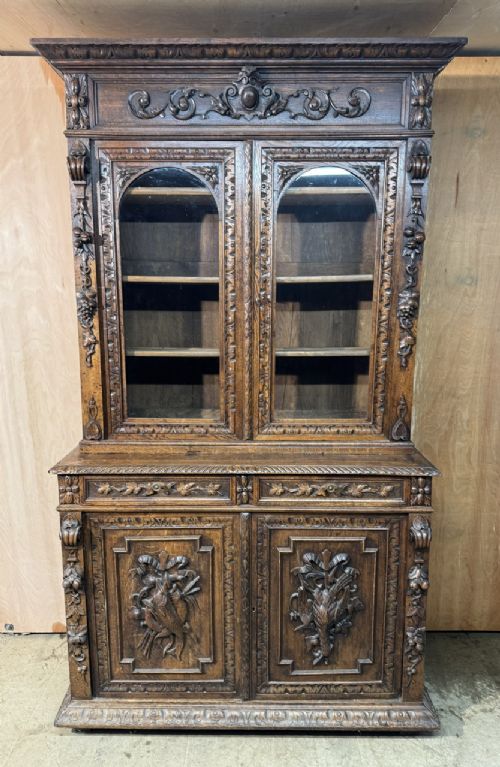
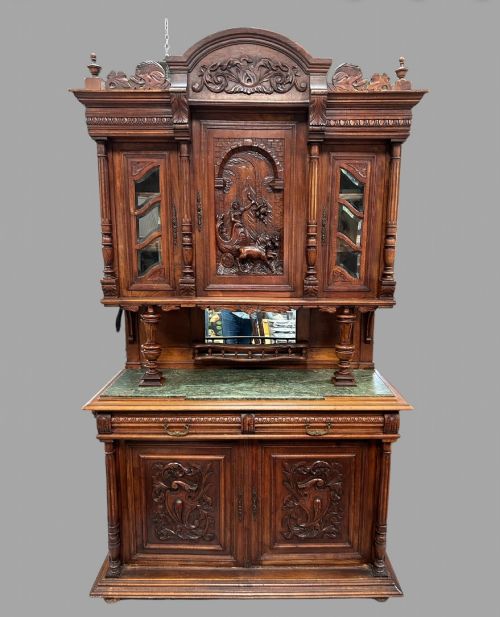
Several French hunting buffets include carved game birds and wild boars peering out from the sideboard doors.
What varies in quality
Quality rests in the crispness of the hand-carving and the structural integrity of the timber frame. Heavy relief work and balanced proportions distinguish finer workshop pieces from standard utility furniture.
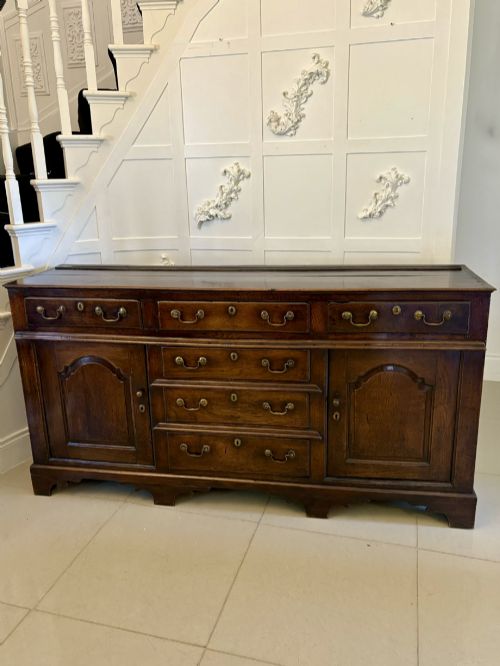
The integration of original hardware, such as brass drop handles and iron hinges, elevates a piece. Superior examples maintain uncompromised joinery and timber surfaces without excessive modern alterations.
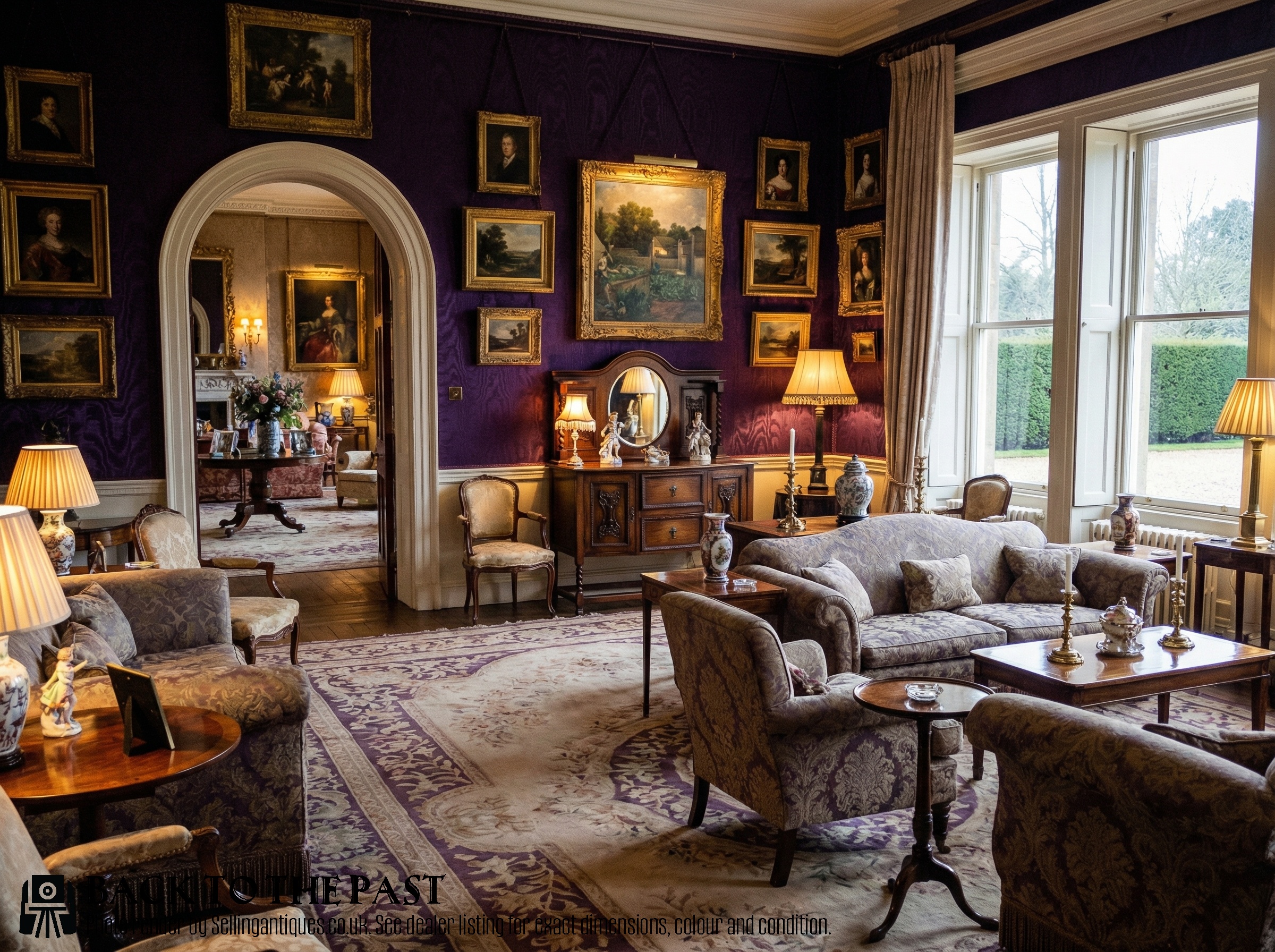
The Dark Oak Buffet Glossary
- Court cupboard
- A short, enclosed cupboard with upper and lower tiers used for displaying plate and storing provisions. These pieces date back to earlier centuries and often feature elaborate carved panels.
- Dresser base
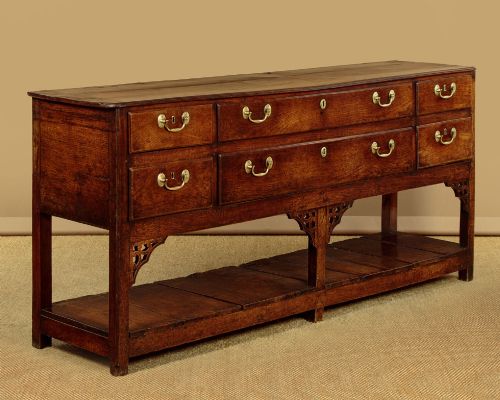
- A low cabinet fitted with drawers and cupboards beneath a flat top, serving as a traditional kitchen or dining room sideboard. They typically display open potboards or shelves below.
- Dumbwaiter
- A tiered serving table designed to hold dishes and cutlery without the need for attendants during meals. Examples in this category utilise rotating or fixed circular trays mounted on central columns.
- Barley twist
- A decorative turning technique resembling a twisted rope, popular in furniture legs and vertical supports during revival periods. This form adds dynamic movement to otherwise solid timber designs.
Dark Oak Buffet: Frequently Asked Questions
What is a dark oak buffet used for?
These pieces serve as dining room servers, holding tableware, linens, and serving platters on their top surfaces and inside enclosed cupboards.
They also function as display furniture for decorative ceramics and silver, anchoring the room with solid timber storage.
How do I date a dark oak buffet?
Dating relies on examining construction methods, hardware types, and stylistic details like carving motifs and leg turns. Early pieces show hand-chamfered panels and pegged joinery.
Later Victorian and Edwardian revival items often incorporate machine-cut elements and applied mouldings that imitate earlier centuries.
Where were these buffets made?
The pieces originate from British, Scottish, and French workshops, reflecting regional cabinet making traditions from the seventeenth century onward.
French examples frequently display hunting motifs and heavily panelled doors, while British pieces favour geometric mouldings and linenfold panels.
How do I care for dark oak furniture?
Maintain the timber by applying traditional beeswax periodically to nourish the dry wood and preserve the dark finish.
Keep the buffet away from direct heat sources and strong sunlight to prevent the oak from splitting or fading over time.