






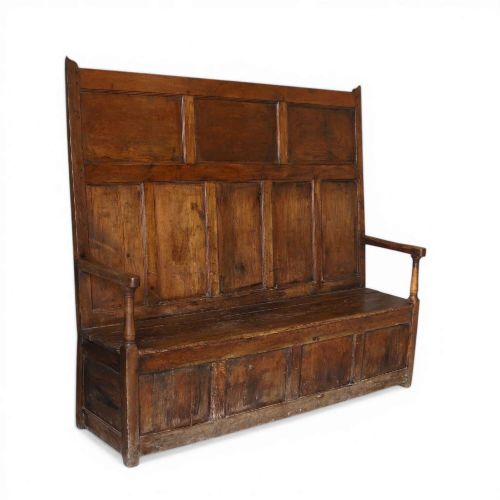
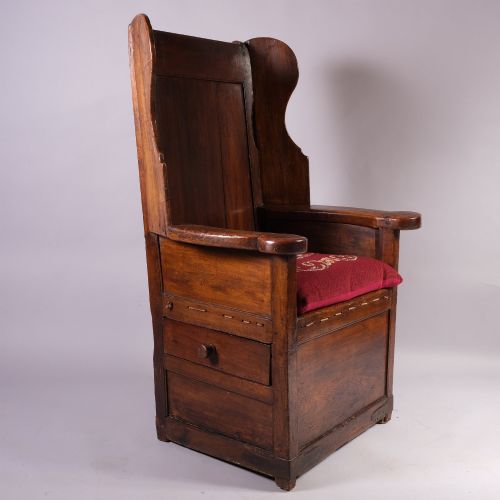
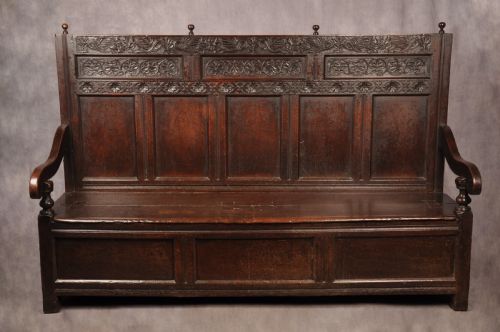
Dark Oak Box Settle
A dark oak box settle is a substantial timber seat with built-in storage beneath the squab, offering draught-proof comfort by the hearth.
Dark Oak Box Settle
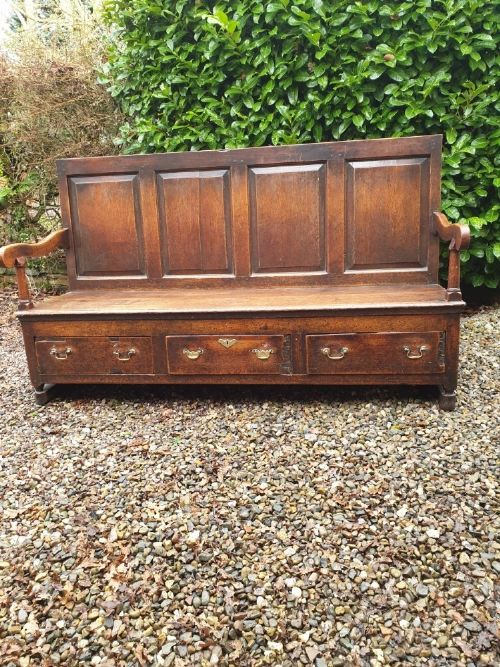
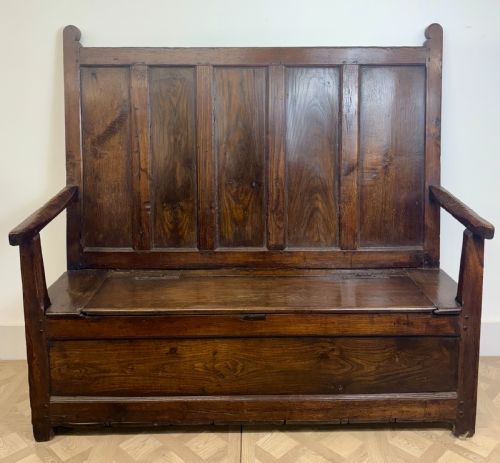
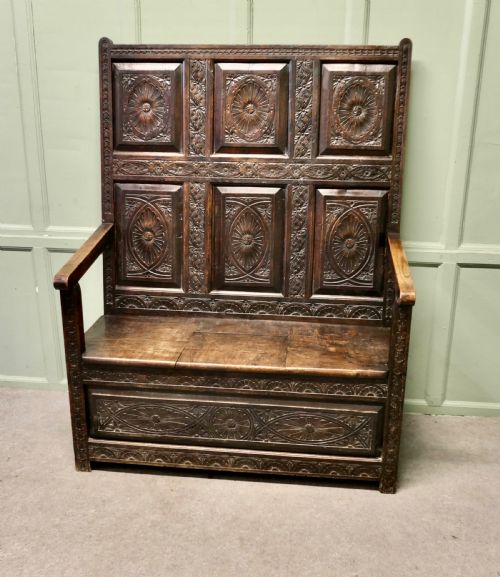
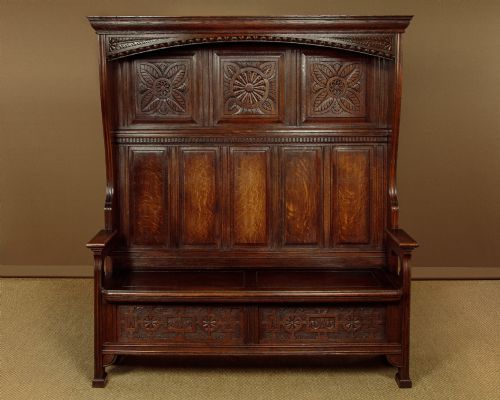
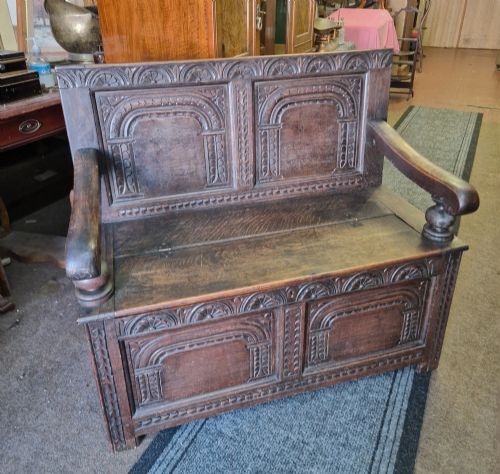
A dark oak box settle provides high-backed seating combined with a lidded chest beneath the seat, serving as both a bench and a domestic trunk. These items emerge in regional workshops from the sixteenth century onwards, with eighteenth-century examples appearing frequently in country houses and farmsteads.
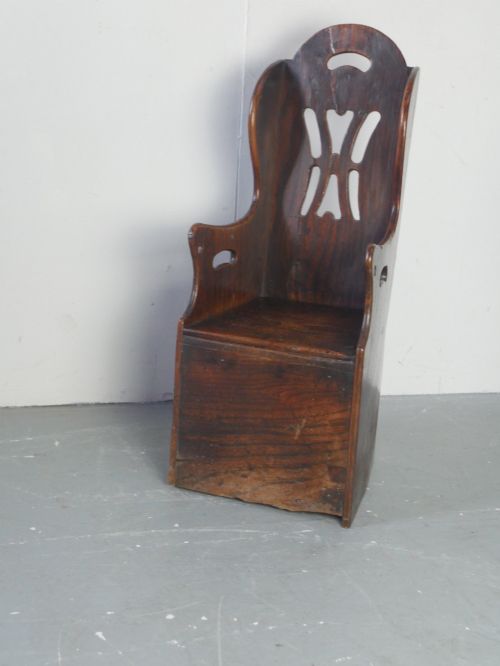
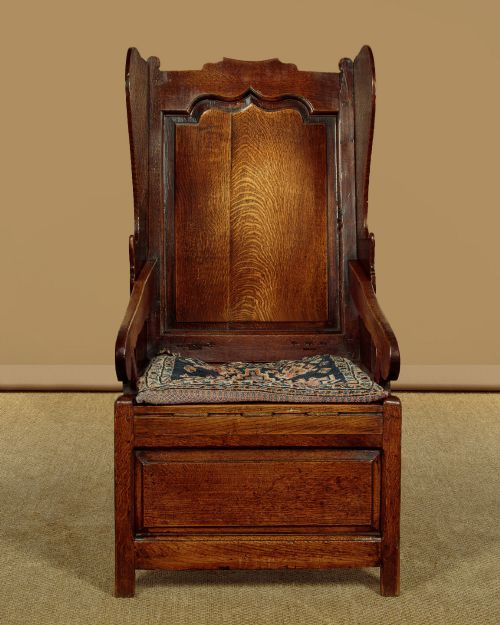
The form includes high panelled backs designed to keep out cold draughts, occasionally topped with a canopy or carved frieze. Variations span from compact child-sized versions and lambing chairs to large multi-seater benches intended for communal halls.
Regional variations appear across Britain and Europe, encompassing Welsh, Lakeland, and continental pieces. While oak forms the primary timber, makers frequently incorporated elm, ash, and fruitwood within the construction.
Materials and construction
Makers utilised solid oak for the primary framework, panels, and seats, often combining secondary timbers such as elm and ash for structural supports or country versions. Joints were typically pegged and tenoned to withstand heavy daily use in domestic settings.
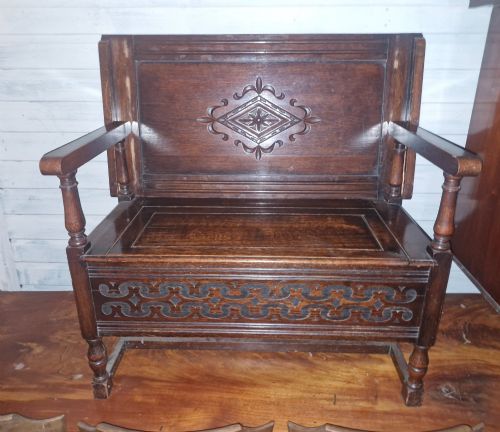
The storage compartment relied on a lift-up lid or hinged seat, occasionally accompanied by fold-over tops that transformed the bench into a table. Iron hinges and brass fittings secured the movable sections.
Carving and panelling on the high backs reflect vernacular styles, ranging from plain seventeenth-century panels to elaborate Jacobean revival decoration and geometric mouldings.
Dark Oak Box Settle Retail Price Guide 2026
Typical asking prices for dark oak box settle among the pieces listed under this phrase on Sellingantiques today, from the lower quarter to the upper quarter. They describe what is for sale here now, not the wider market.
Current listings include vernacular items built from oak, elm, ash, and fruitwood spanning the sixteenth century to the Edwardian period.
Assessing quality and proportion
The integrity of the timber and the retention of original boards dictate the standing of a piece. Superior examples display patination earned through centuries of friction, while lesser items suffer from excessive later carving or mismatched replacement timber.
Proportion and scale distinguish standard domestic seating from awkward conversions or marriage pieces where elements from different centuries have been joined. Clean lines in the panelwork and well-balanced arms reveal the hand of a skilled regional joiner.
The Dark Oak Box Settle Glossary
- Settle
- A wooden bench with high back, solid arms, and enclosed base designed to keep out draughts. They were traditionally placed near the hearth in domestic halls and kitchens.
- Lambing chair
- An enclosed high-backed armchair, frequently fitted with wings and a solid wooden box seat. These pieces provided shelter from cold air currents in rural farmhouses.
- Monks bench
- A convertible piece of furniture featuring a hinged top that folds forward to form a table over a box seat. They combine seating, storage, and surface utility.
- Vernacular
- Architecture and furniture built by local craftsmen using traditional regional materials and techniques, distinct from court or metropolitan design styles.
- Panelling
- Framework constructed from fitted wooden styles and rails holding thinner internal boards. This method accommodated natural wood movement in large structural backs.
Dark Oak Box Settle: Frequently Asked Questions
Where were box settles placed in old houses?
These seats stood near the fireplace in the main hall or kitchen, where the high back and enclosed base blocked cold draughts from stone floors.
Their dual function as storage chests kept blankets, dry goods, or fuel close to the hearth.
How do I use a box settle in a modern room?
A box settle functions well in an entrance hallway as a bench for putting on shoes while hiding hats and gloves inside the storage compartment.
Alternatively, placing one in a dining area or living room provides substantial seating with hidden space for household items.
How do I date an antique oak settle?
Dating relies on construction methods, timber movement, and stylistic details such as panel thickness, joint pegged construction, and surface patination.
Earlier examples from the sixteenth and seventeenth centuries show heavy framing and hand-riven boards, whereas revival pieces from the Victorian and Edwardian eras display machine-sawn timber and different tool marks.