

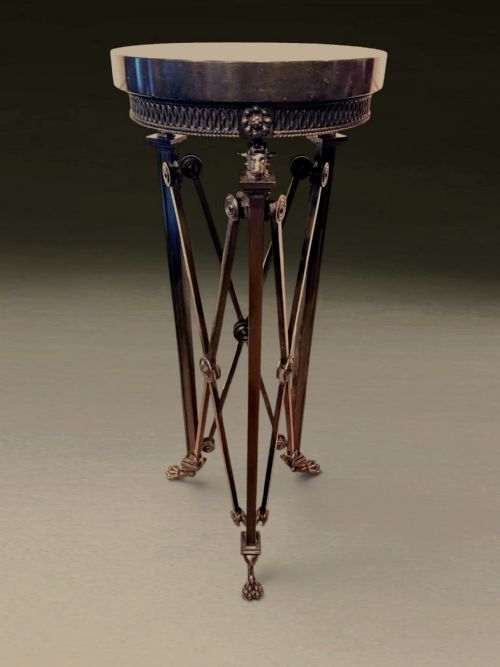
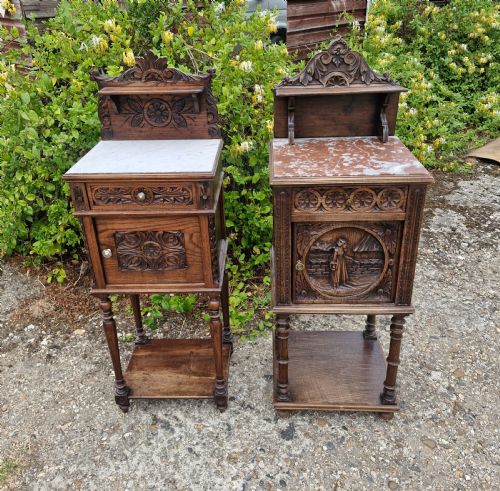
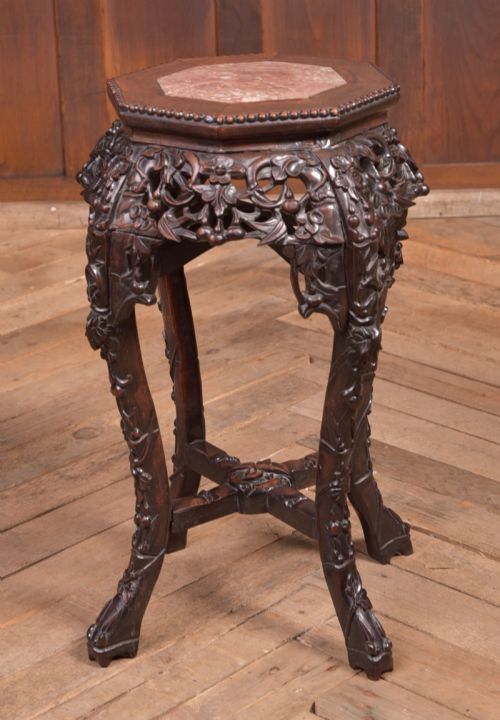
Dark Marble Top Table
A dark marble top table brings a cool, smooth stone surface and heavy timber structure into a room, favoured for both utility and display.
Dark Marble Top Table
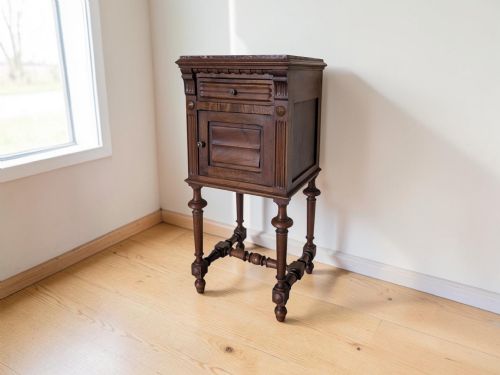
A dark marble top table encompasses a wide variety of domestic furniture, ranging from grand console and centre tables to compact bedside cabinets and plant stands. These pieces appear across multiple historical periods, notably the Victorian era, the Regency period, and the eighteenth and nineteenth centuries.
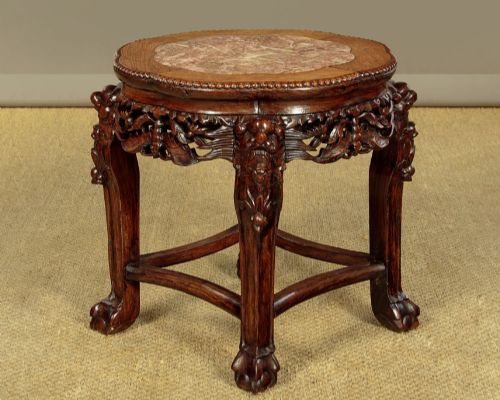
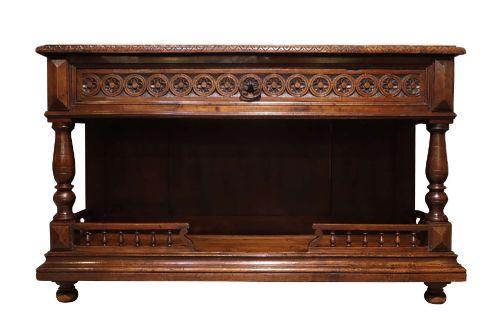
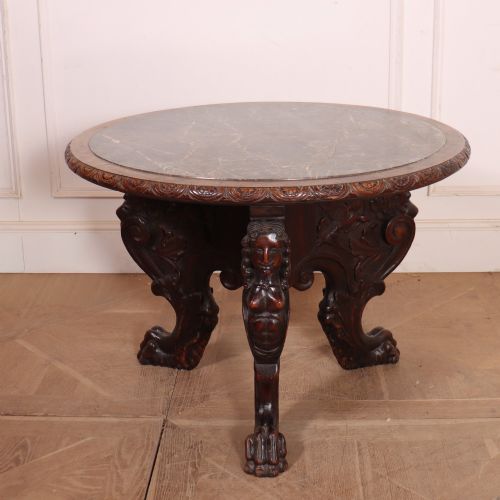
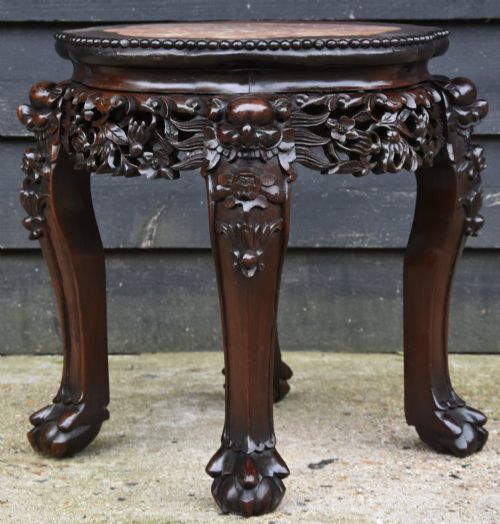
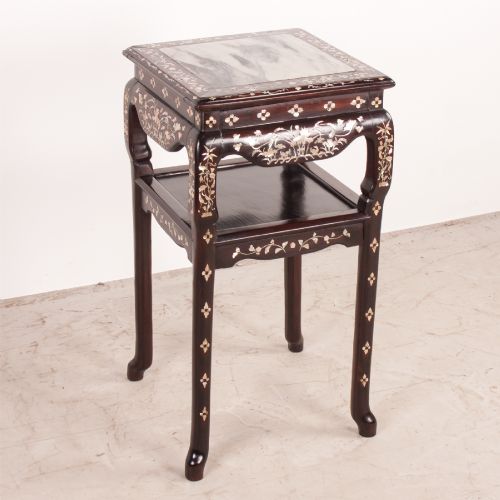
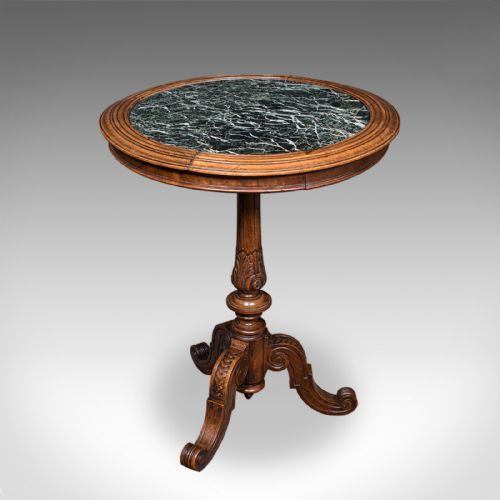
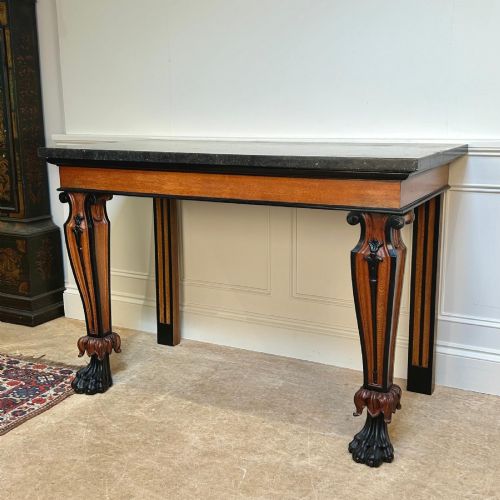
The most common formats on this page are French and English console tables alongside Chinese carved hardwood stands, frequently employing heavy timber frames to support substantial stone slabs. Occasional tables and gueridons also feature strongly, designed with circular or shaped marble inserts.
Origins vary significantly, drawing on English cabinet-making, French stylistic traditions such as Empire and Louis Philippe, and Chinese export craftsmanship. Buyers encounter diverse scales, from low plant stands to large serving and console tables intended for principal reception rooms.
Materials and construction methods
Makers utilised dense timbers such as mahogany, walnut, rosewood, oak, and general hardwoods to form the structural bases that safely carry heavy stone surfaces. Brass, ormolu mounts, and iron frequently provide structural reinforcement and decorative contrast against the dark wood and marble.
Marble slabs are set directly into carved wooden frames, sometimes secured with moulding or resting on specialised pedestals and swan supports. Joinery ranges from traditional English cabinet-making to intricate Chinese carving and mother of pearl inlay.
The listings show nineteenth-century pieces alongside eighteenth-century examples, utilising materials like walnut, mahogany, rosewood, and brass.
Distinctions in craftsmanship and materials
Quality rests heavily on the selection of the stone and the ambition of the timber carving, where specialist specimen marbles or deeply carved hardwood frames elevate a piece above standard utility items. The integration between the heavy stone top and the supporting base dictates the structural integrity of the table.
Origin and maker attribution play a defining role, as demonstrated by documented pieces from workshops such as James Shoolbred or distinct stylistic schools like French Empire and Chinese export work. Finer examples display meticulous attention to detail in secondary woods, mounts, and inlay work.
James Shoolbred·Thomas Hope
The Dark Marble Top Table Glossary
- Gueridon
- A small round table, typically supported by a central column or pillar, frequently fitted with a stone top. These French forms serve as centre tables or lamp stands.
- Console table
- A table designed to stand against a wall, traditionally supported by brackets or console legs rather than four independent vertical posts.
- Specimen marble
- A decorative surface composed of various coloured and patterned marbles assembled to create geometric or pictorial patterns. These tops demonstrate high technical skill in stone masonry.
- Ormolu
- Gilded bronze mounts applied to furniture for decoration, commonly seen on French Empire and nineteenth-century pieces. The finish adds bright metallic contrast to dark timber.
Dark Marble Top Table: Frequently Asked Questions
Where should I place a dark marble top table?
These tables suit hallways as console pieces, sitting rooms as centre or lamp tables, or bedrooms as bedside cabinets. The cool stone surface handles daily use well.
Ensure the floor level is even so the heavy combination of stone and timber rests securely without rocking.
How do I clean the marble top?
Wipe the surface with a damp cloth and mild, neutral soap, avoiding acidic cleaning products that can etch the polish. Dry thoroughly with a soft cloth.
Dark marble can show dust and water marks more readily than lighter stone, so regular gentle wiping maintains the finish.
What is the difference between a console and a centre table?
A console table is built to stand flat against a wall, frequently relying on that wall for stability or featuring decorative brackets at the back. A centre table stands freely in the middle of a room, finished on all sides.
Both forms frequently share the heavy stone surfaces seen across these listings.
How do I identify a nineteenth-century piece?
Look at the timber selection, construction methods, and stylistic cues such as Victorian mahogany framing or French Empire ormolu mounts. Secondary woods and hand-cut joinery provide clear indicators of age.
Comparing the specific carving style and marble thickness helps distinguish nineteenth-century production from later adaptations.