
Dark Mahogany Tilt Top
Dark mahogany tilt top tables combine ingenious folding mechanisms with rich timber surfaces, offering practical space-saving elegance for any traditional interior.
Dark Mahogany Tilt Top
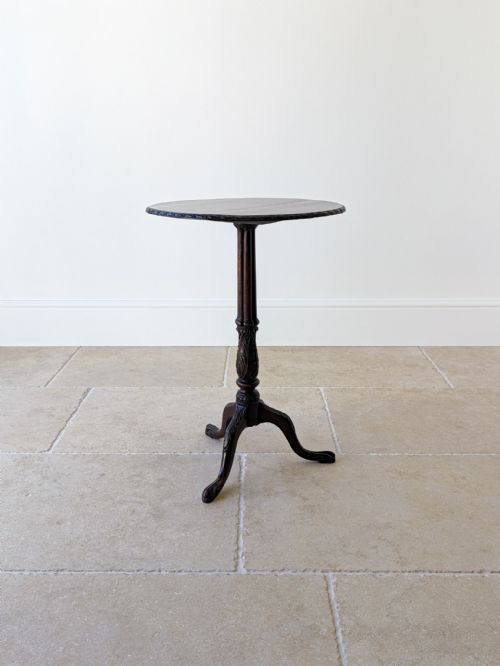
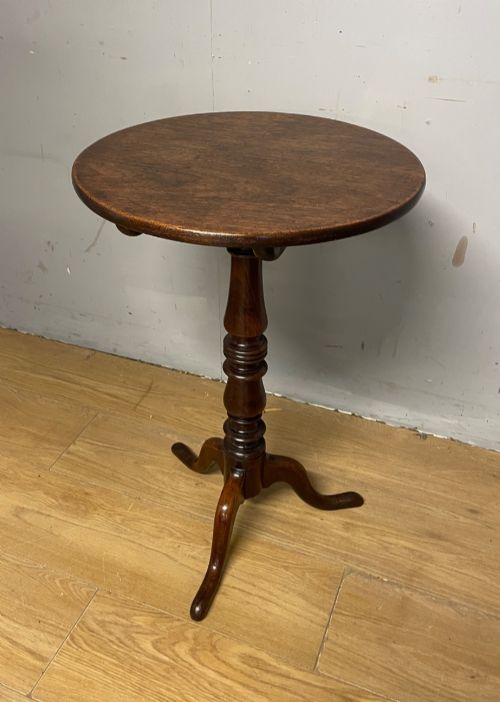
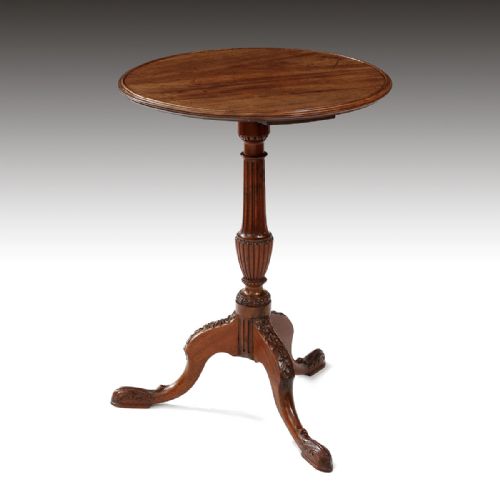
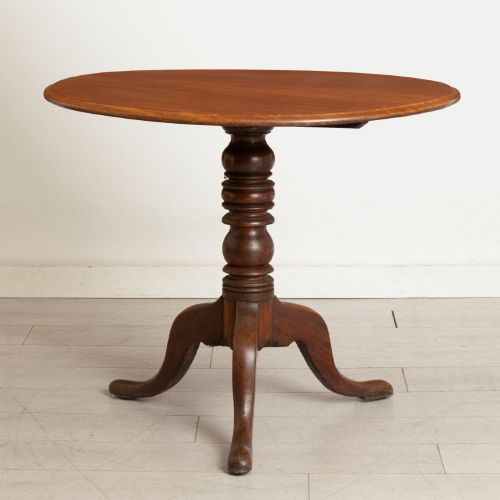
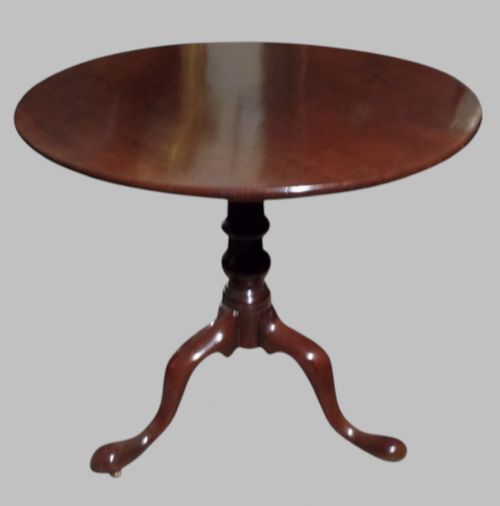
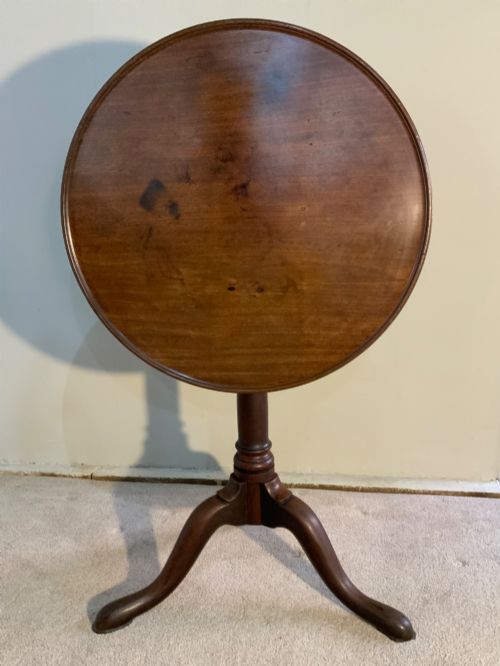
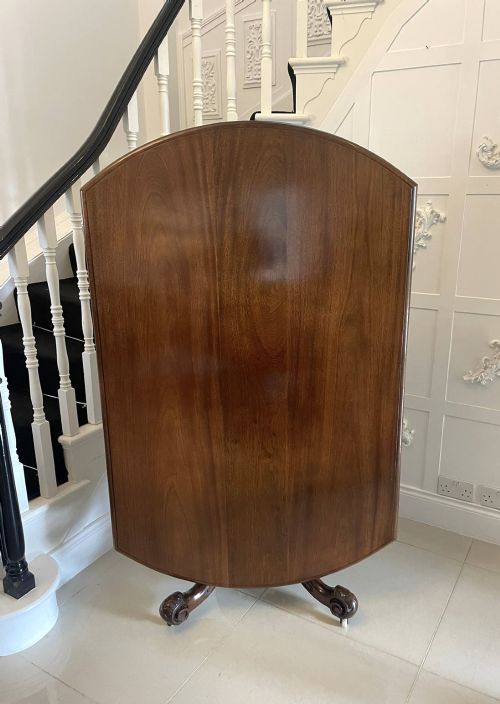
A dark mahogany tilt top table serves primarily as a versatile occasional or wine table, designed to tip vertically when not in use. These pieces emerge chiefly from the Georgian, Regency, and Victorian periods, spanning the eighteenth and nineteenth centuries.
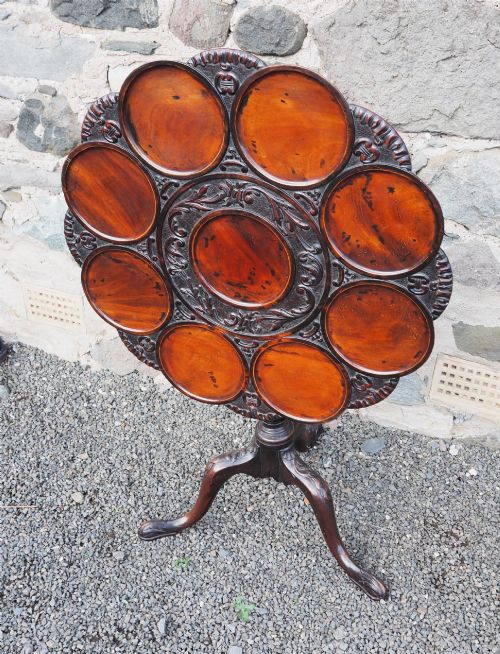
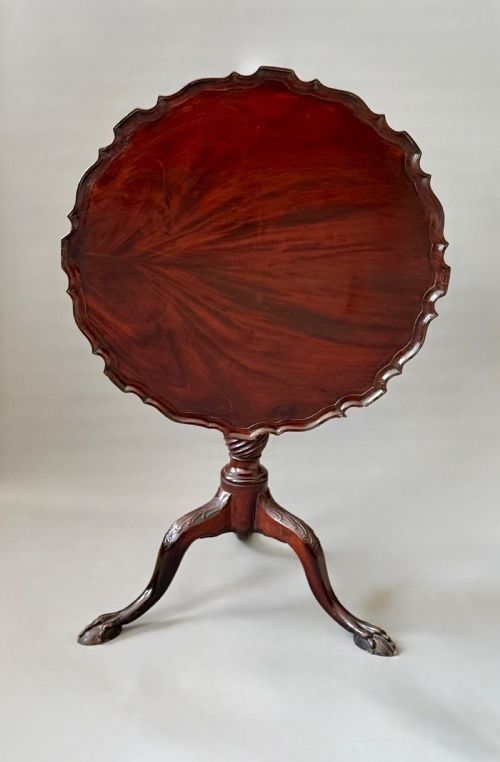
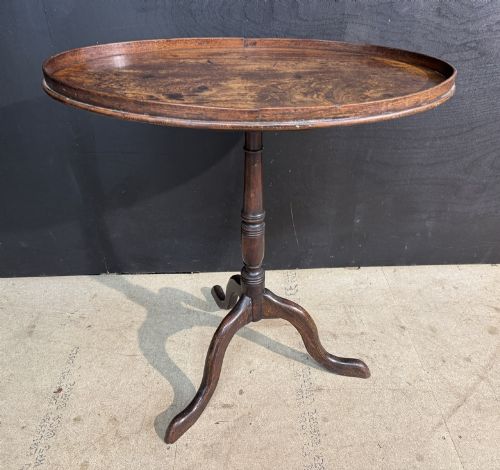
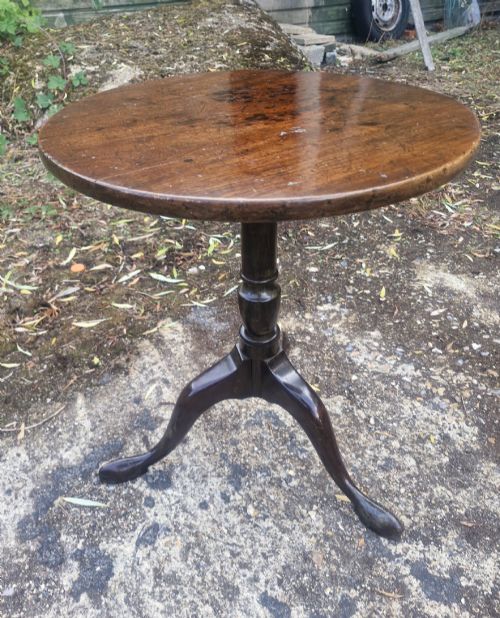
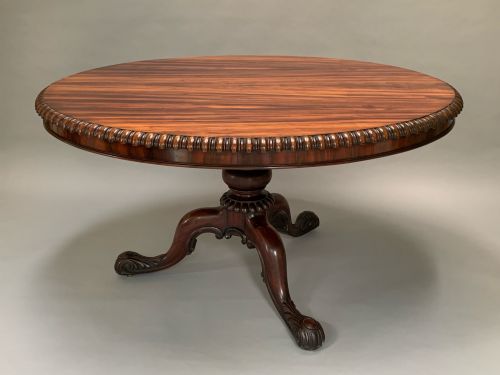
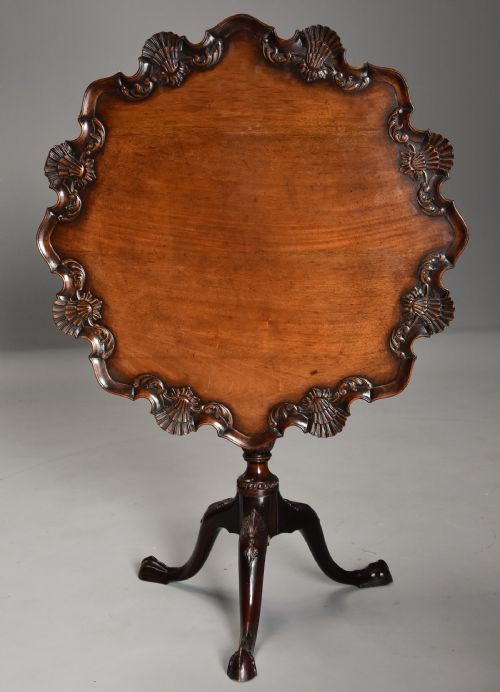
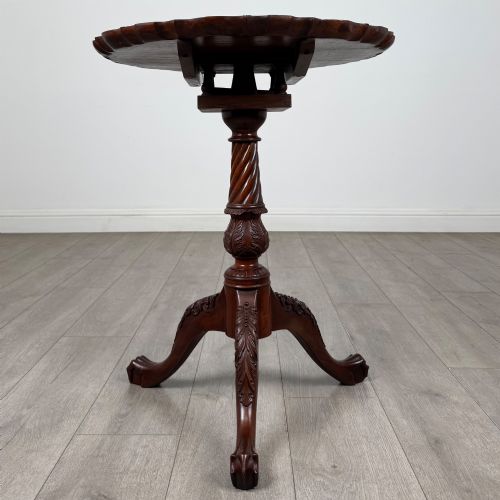
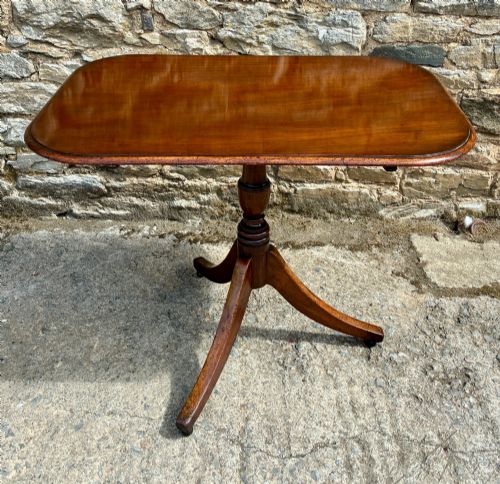
Forms vary from simple circular tops to pie crust edges, octagonal shapes, and trays supported by a central pillar and tripod feet. Examples range from compact wine tables to grander tea and pedestal dining tables.
The buyer meets both genuine antique pieces from the Georgian and Victorian eras alongside later revivals like the Chippendale style and Georgian Revival. Each variant retains the signature tilting mechanism that defines this category.
Craftsmanship and Materials
Makers construct these tables predominantly from solid mahogany, frequently utilising dense Cuban mahogany and flame mahogany veneer to create deep, dark surface figures. Secondary woods and occasional accents of walnut, rosewood, and albuera wood appear across the periods.
The tilting action relies on specialist joinery such as the birdcage mechanism, which allows the top to both pivot and rotate. A central pedestal shaft anchors firmly into tripod legs, often terminating in pad feet or brass castors.
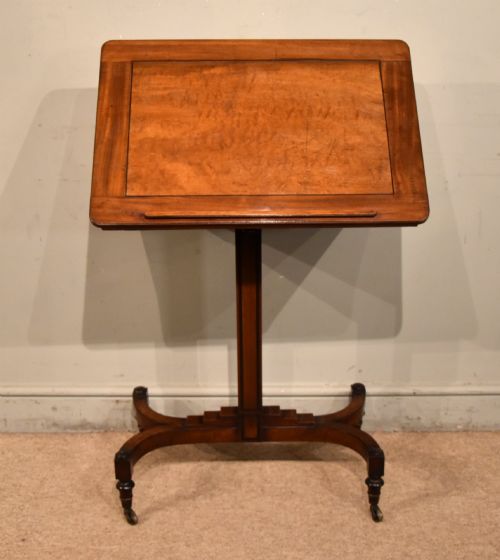
Listings feature woods spanning mahogany, walnut, rosewood, and albuera wood, shaped into wine tables, occasional tables, and reading stands.
Judging Quality
The grade of timber dictates visual depth, where carefully selected flame mahogany veneer or heavy Cuban mahogany displays superior grain patterns and natural lustre. Richness of colour and well-maintained patination elevate an example significantly.
Structural integrity of the tilting mechanism separates standard production from finer output. A rigid fit when locked horizontally and smooth movement in the birdcage or pivot joint indicate superior workshop execution.
Gillows
The Dark Mahogany Tilt Top Glossary
- Tilt top
- A tabletop mounted on a pivot mechanism that allows the surface to fold into a vertical position for storage or display against a wall.
- Tripod base
- A central pedestal support anchored by three spreading legs, commonly terminating in pad feet or castors on eighteenth and nineteenth-century tables.
- Birdcage
- A timber framework beneath the tabletop that enables the surface to both rotate and tilt, typical of better-quality Georgian tripod tables.
- Pie crust
- A raised, carved decorative edge shaped in undulating curves, frequently found on eighteenth-century mahogany tea and wine tables.
- Snap top
- An alternative term for a tilt top table, held horizontally by a spring-loaded catch or wooden catch mechanism.
Dark Mahogany Tilt Top: Frequently Asked Questions
What is a tilt top table used for?
These tables served historically as tea, wine, or occasional tables in Georgian and Victorian parlours. Their pivoting tops allowed servants to tuck them away against the wall to save floor space when entertaining.
Today, they function well as decorative accent pieces beside seating or as small display surfaces for lamps and ceramics.
How do I operate the tilt mechanism?
Most pieces utilise either a simple pivot pin or a complex birdcage mechanism beneath the surface. Releasing the catch lets the circular or octagonal top fold upward into a flat vertical plane.
Ensure you support the weight of the timber with one hand while releasing or securing the latch to protect the antique pivot joints.
How can I tell a Georgian table from a Victorian revival?
Georgian pieces from the eighteenth century exhibit hand-cut joinery, timber shrinkage appropriate to age, and softer patination earned through decades of use. Later Victorian revivals and Edwardian pieces often display heavier machine-tooled elements and crisper, less worn carving.
Examining the underside of the top and the peg construction usually reveals the true period of manufacture.
What is Cuban mahogany?
Cuban mahogany is a dense, heavy timber sourced from the Caribbean that became immensely popular among British cabinetmakers during the eighteenth century. It takes a deep, dark polish and shows rich grain variation.
Its superior density allows for sharper carved details on tripod legs and pillar turnings.