



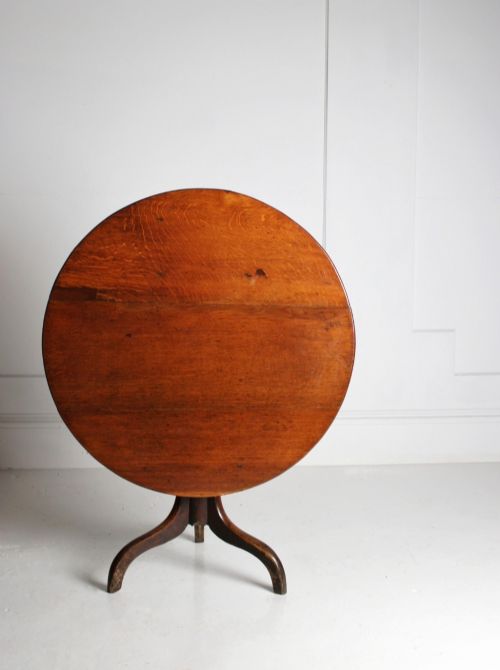

18th Century Supper Table
An 18th century supper table offers a compact surface that tilts or folds when not in use, suiting spaces where flexibility matters.
18th Century Supper Table
When you search for an 18th century supper table, you encounter tripod designs, gateleg configurations and occasional pieces from the Georgian era. These tables were designed for dining, reading and social gatherings in domestic interiors.
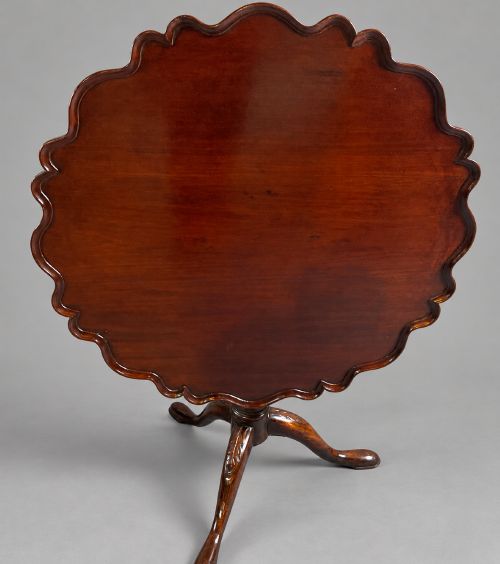
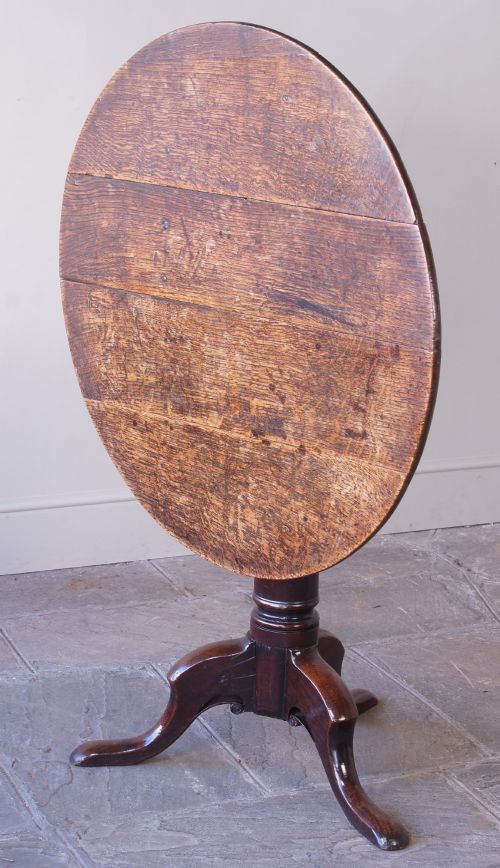
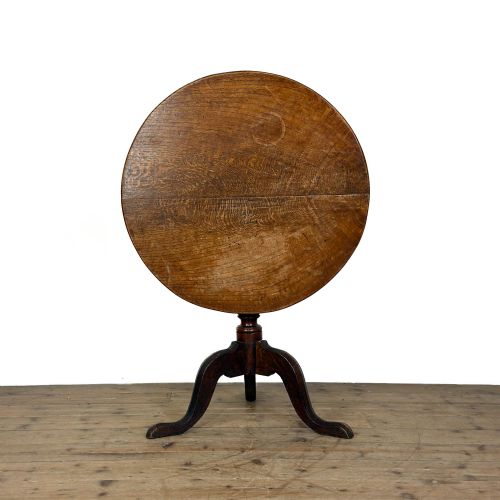
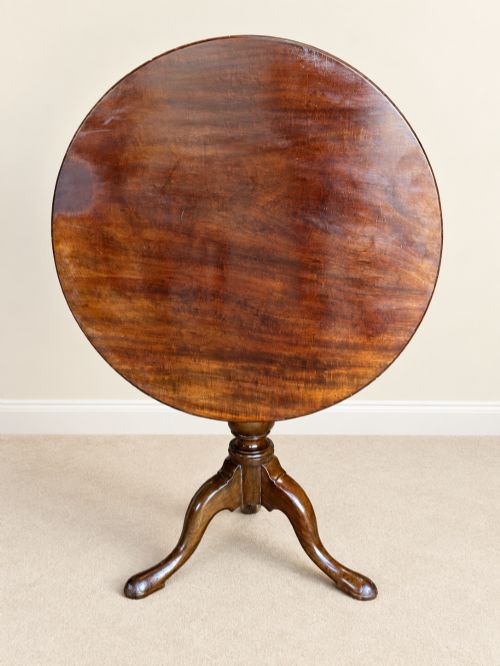
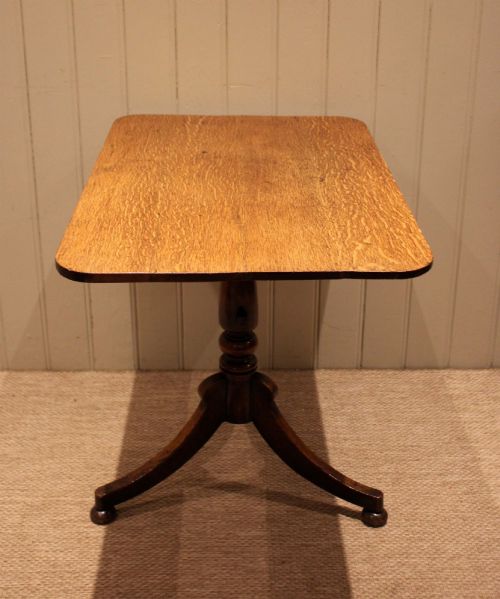
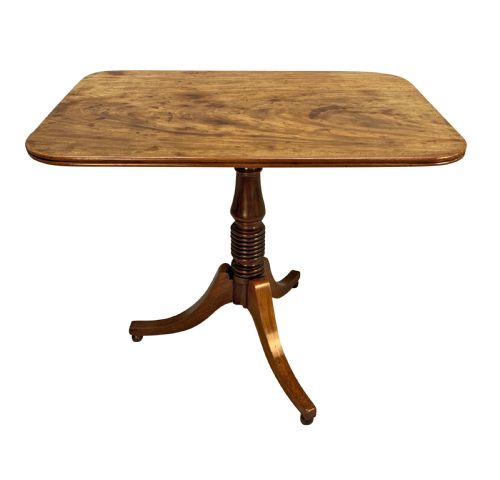
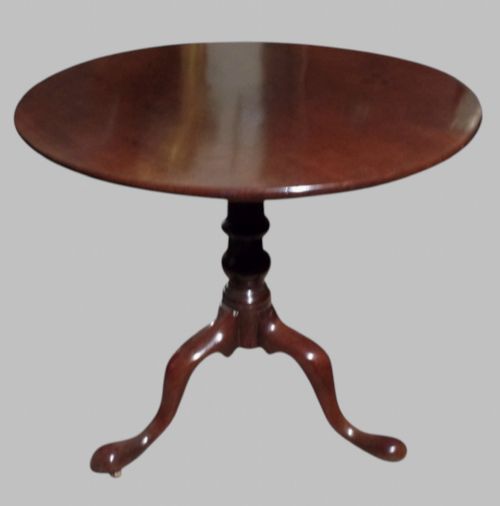
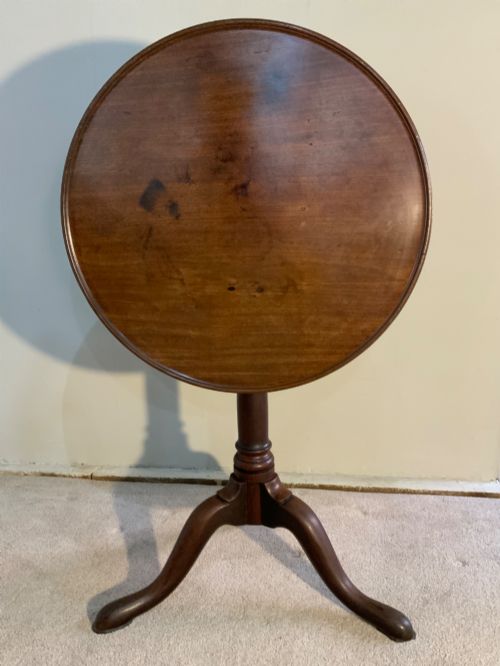
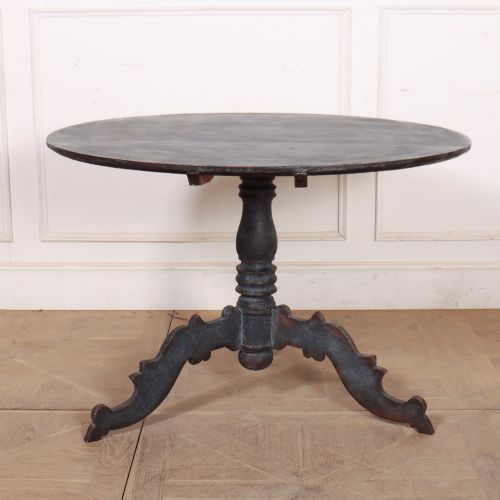
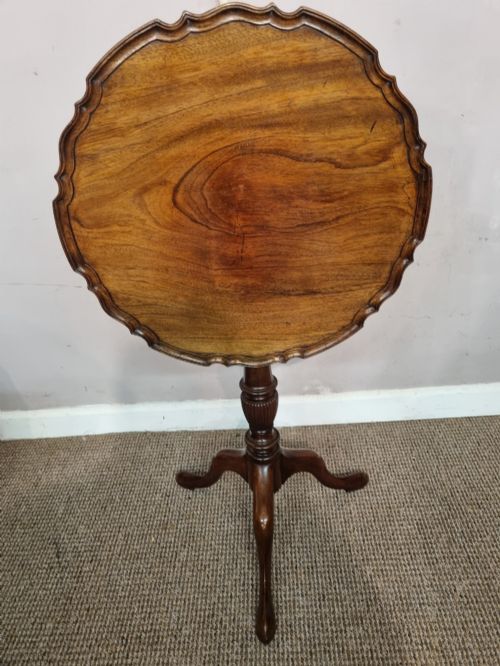
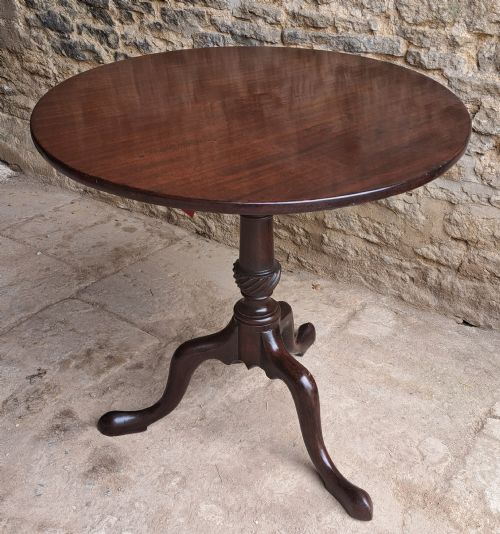
The version you meet most often on this page is the tilt-top tripod table in mahogany or oak. These examples feature circular tops supported on a central pedestal with three legs, allowing the surface to tip vertically against the base for storage.
Other variations include drop-leaf gateleg forms and birdcage actions that permit the top to rotate as well as tilt. Regional pieces span English workshops, Swedish painted items and 18th century Italian walnut examples.
How they were made
Makers utilised solid timbers such as mahogany, Cuban mahogany, oak, walnut and satinwood, frequently turning central pedestals on a lathe and carving tripod legs with pad, claw and ball or spade feet. Tops were often fashioned from a single broad board or hinged with drop leaves.
Many tripod versions incorporate a birdcage mechanism beneath the top, a wooden frame allowing the surface to revolve and tilt independently of the pillar. Joinery relied on precise dovetails, tenons and iron or brass hardware to secure folding actions.
18th Century Supper Table Retail Price Guide 2026
Typical asking prices for 18th century supper table among the pieces listed under this phrase on Sellingantiques today, from the lower quarter to the upper quarter. They describe what is for sale here now, not the wider market.
Object forms span tripod tables, tilt-top actions, birdcage mechanisms, gateleg tables and occasional dining surfaces.
What varies in quality
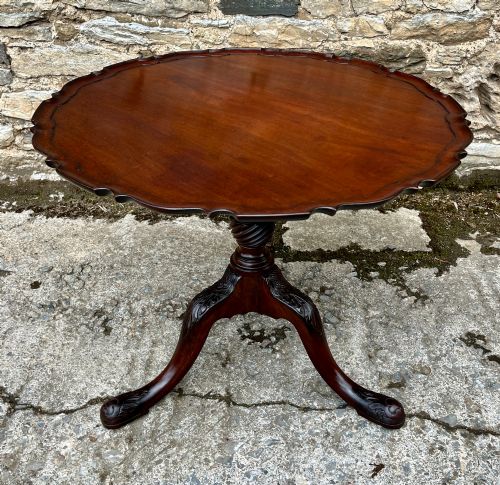
The distinction between standard examples and the finest pieces lies in the choice of timber figure, such as richly grained Cuban mahogany or figured walnut, and the depth of carving on the knees and feet. Crisp execution of pie crust edges moulded from solid wood indicates higher workshop skill.
Proportion and stability define better construction, particularly in the fit of the birdcage mechanism and the alignment of the tripod base. Retained original surfaces with deep patina separate pieces that have survived with intact finishes from those heavily restored.
John Bivins
The 18th Century Supper Table Glossary
- Tilt-top table
- A table with a hinged mechanism allowing the top to pivot vertically into a flat position when not in use. This design saved floor space in smaller period rooms.
- Tripod table
- A piece supported by a single central pillar resting on three legs. It provides stable placement on uneven floors.
- Birdcage action
- A rotating wooden frame situated between the table top and the central pillar. It permits the surface to turn horizontally and tilt vertically.
- Pie crust edge
- A raised, scalloped edge carved directly into the solid timber top of a table. It prevents items from sliding off the surface.
- Gateleg table
- A table with hinged flaps supported by swing-out legs that resemble a swinging gate. This configuration allows the surface area to expand or contract.
18th Century Supper Table: Frequently Asked Questions
What is a birdcage action?
A birdcage action is a pivoting wooden assembly fitted beneath the table top. It connects the surface to the central pillar and allows the table to both rotate horizontally and tilt vertically.
This mechanism gave users greater flexibility when positioning the furniture against a wall or clearing floor space.
Why do some tops have pie crust edges?
Pie crust edges are raised, scalloped rims carved directly from the solid wood of the table top. They served a practical purpose during dining and social occasions by keeping cups and plates secure.
Cabinet makers spent considerable time shaping these borders from thick timber blanks rather than applying separate mouldings.
How were tripod supper tables used?
These tables served flexible roles in domestic interiors for evening meals, tea drinking and card games. Their lightweight construction allowed servants to move them easily around the room.
When the meal concluded, the top was tilted upright and the table placed against the perimeter of the parlour.
What is Cuban mahogany?
Cuban mahogany is a dense, dark timber imported from the Caribbean during the 18th century. It became favoured by cabinet makers for its rich colour and heavy grain pattern.
Tables constructed from this material often possess substantial weight and a deep natural lustre.
How do I distinguish oak from mahogany pieces?
Oak tables generally display a lighter golden-brown tone with visible medullary rays and coarse grain textures. They frequently associate with country vernacular styles and earlier Georgian periods.
Mahogany examples exhibit darker reddish-brown hues with tighter grain structures and typically align with more formal urban workshops.