




Dark Mahogany Lectern
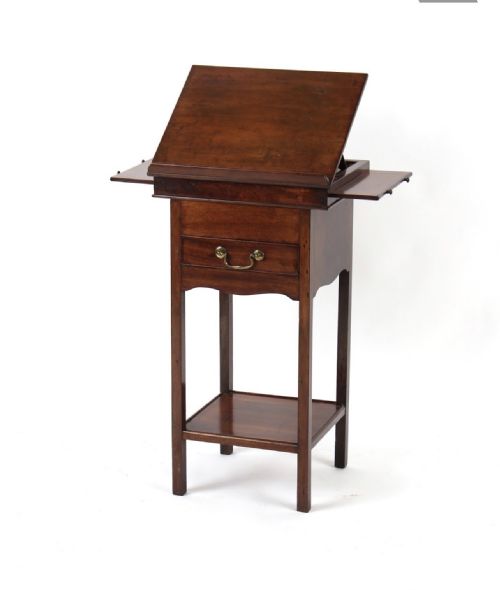
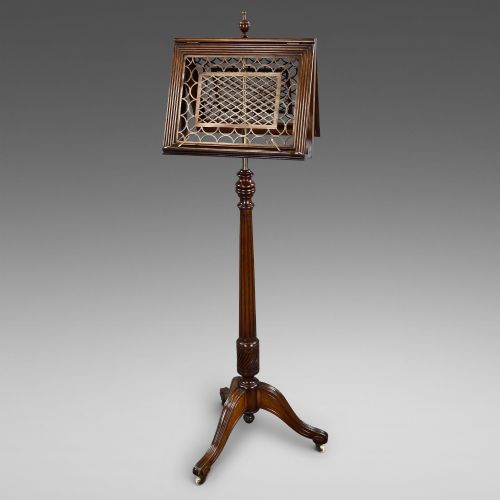
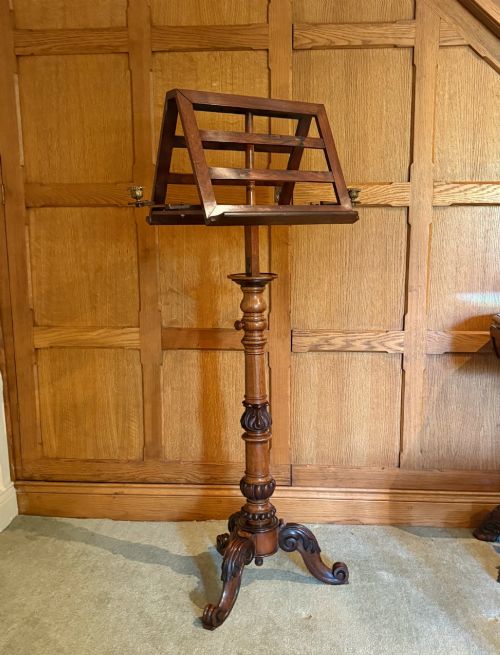
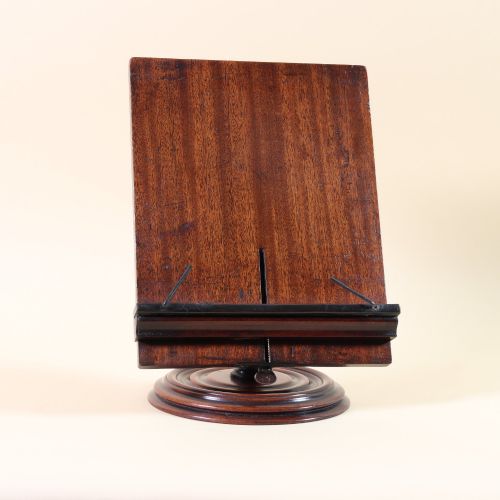
These dark mahogany lecterns are practical reading stands and music tables designed to hold books and scores at a comfortable height.
Dark Mahogany Lectern
A dark mahogany lectern functions primarily as a reading stand, music stand, or book rest for practical daily use. The selection spans periods from the Georgian and Regency eras through the Victorian period, along with late nineteenth-century examples.
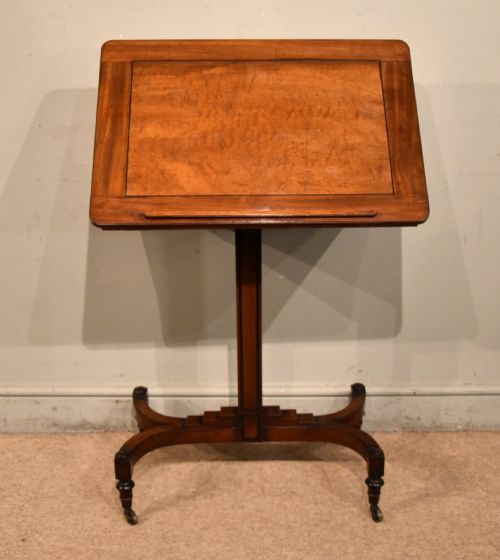
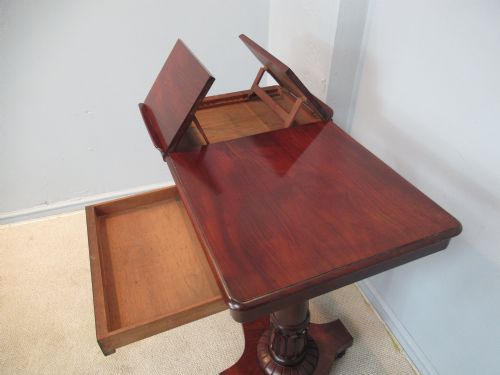
Most pieces take the form of adjustable reading tables or duet music stands intended for desktop or freestanding placement. Buyers frequently encounter forms associated with library furnishings, such as folding book rests and adjustable writing tables.
Originating largely from the nineteenth century, these items combine dark timber surfaces with functional mechanics for tilting and raising the reading platform. Alongside standard mahogany, some variants incorporate rosewood or brass fittings to suit domestic libraries and music rooms.
How they were made
Joiners and cabinet makers utilised solid timber and veneers of mahogany, occasionally incorporating rosewood or contrasting inlay work for decorative effect. The wood was polished to a dark finish that highlights the natural grain of the timber.
Functional pieces incorporate brass fittings, metal ratchets, and cast iron components to permit height and angle adjustment. These mechanical elements allow the reading platform to tilt securely for musicians and readers.
Dark Mahogany Lectern Retail Price Guide 2026
Typical asking prices for dark mahogany lectern among the pieces listed under this phrase on Sellingantiques today, from the lower quarter to the upper quarter. They describe what is for sale here now, not the wider market.
Listings feature mahogany, rosewood, brass, and cast iron across nineteenth-century and Georgian periods.
What varies in quality
The sophistication of the adjustable mechanism distinguishes standard utilitarian stands from more elaborate library or parlour furniture. Smooth movement in the ratchets and screws indicates superior manufacturing standards.
The choice of secondary materials, such as heavy brass mounts or fine inlay work, elevates the status of a piece beyond a simple reading stand. Cabinet work involving sculpted pedestals and well-figured timber reflects greater workshop skill.
GILLOWS
The Dark Mahogany Lectern Glossary
- Duet stand
- A music stand or reading rest wide enough to accommodate two open books or musical scores side by side. These pieces often feature adjustable twin ledges.
- Regency
- A stylistic period dating from the early nineteenth century defined by classical restraint and clean architectural lines. Furniture from this era frequently employs dark mahogany and brass details.
- Whatnot
- A piece of open shelving designed for displaying books or small objects within a room. Examples in this category occasionally integrate reading surfaces or adjustable ledges.
- Adjustable reading table
- A specialised table equipped with a tilting top and rising column to hold volumes at a readable angle. Such tables were standard fixtures in nineteenth-century libraries.
Dark Mahogany Lectern: Frequently Asked Questions
What is a dark mahogany lectern used for?
These pieces serve as functional stands to support books, manuscripts, and musical scores during reading or performance.
Historically placed in libraries, studies, and drawing rooms, they provide an angled surface that reduces strain while holding heavy volumes open.
How do you adjust the height on these stands?
Many examples feature central columns with screw mechanisms, wooden pegs, or brass ratchets that allow the user to raise or lower the reading surface.
Desktop versions often rely on hinged wooden supports and folding struts to alter the angle of the book rest.
Are these stands suitable for modern daily use?
The sturdy timber construction and adjustable platforms make these pieces practical for holding modern books, tablets, or sheet music.
Their traditional designs also allow them to function as decorative display surfaces or reading desks in contemporary interiors.
How can you tell a Regency stand from a Victorian one?
Regency pieces typically display restrained classical proportions and clean lines inspired by ancient Roman and Greek forms. Victorian examples often incorporate heavier carving, more ornate turned columns, and broader platform bases.