
Dark Mahogany Credenza Cabinet
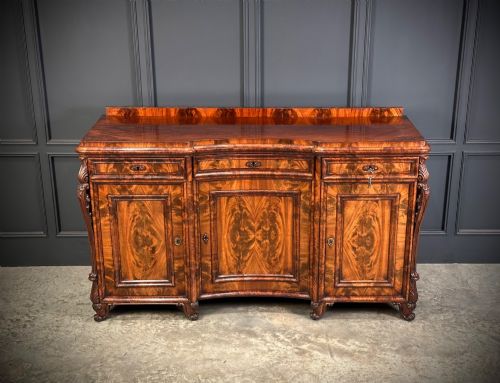
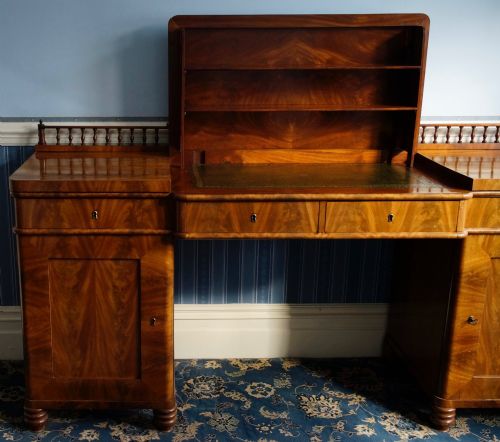
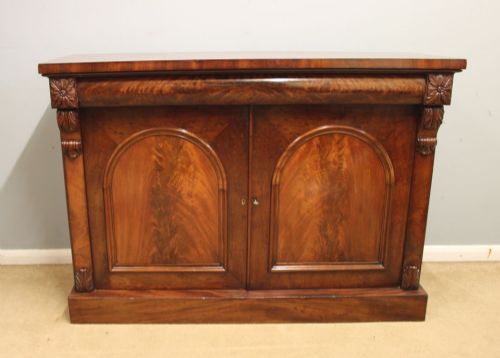
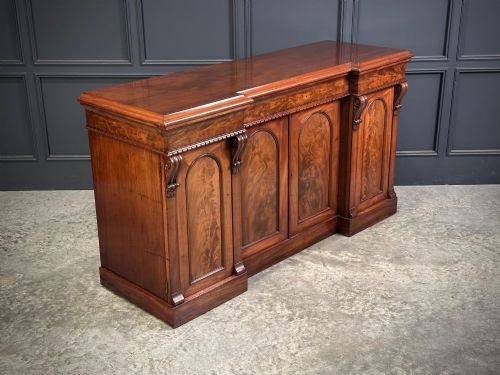
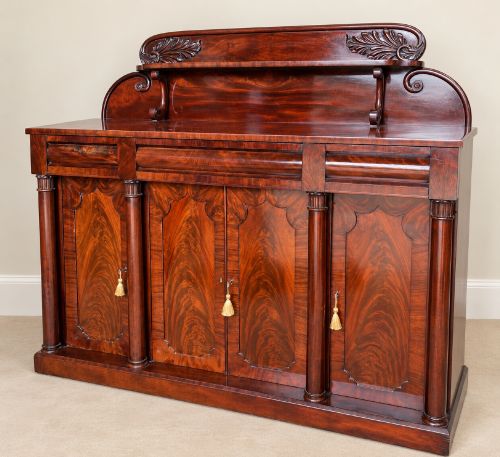
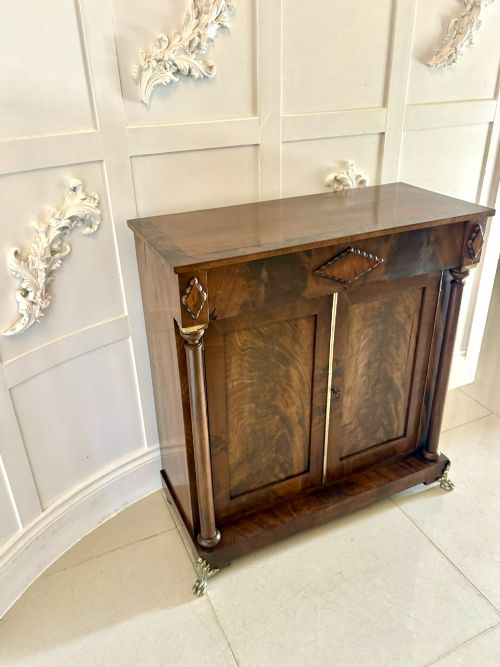
A dark mahogany credenza cabinet offers substantial storage and deep timber tones, grounding a dining room or hallway with period presence.
Dark Mahogany Credenza Cabinet
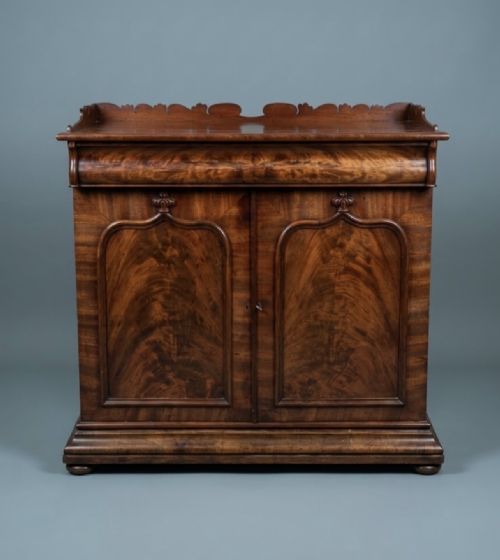
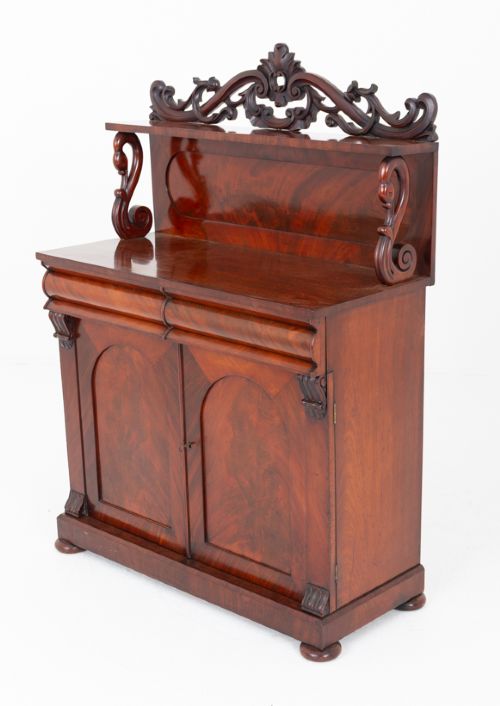
A dark mahogany credenza cabinet encompasses various substantial storage furniture pieces designed for dining rooms and grand hallways. When exploring this selection, buyers frequently encounter nineteenth-century sideboards, side cabinets, and chiffoniers alongside earlier Georgian and Regency iterations.
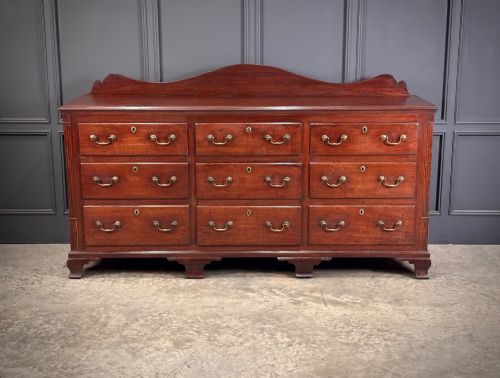
The objects span multiple eras, stretching from eighteenth-century workshops through Victorian adaptations and Edwardian revivals. Makers of these periods favoured dense tropical hardwoods, producing low cupboards, breakfront bookcases, and serving pieces tailored to formal domestic interiors.
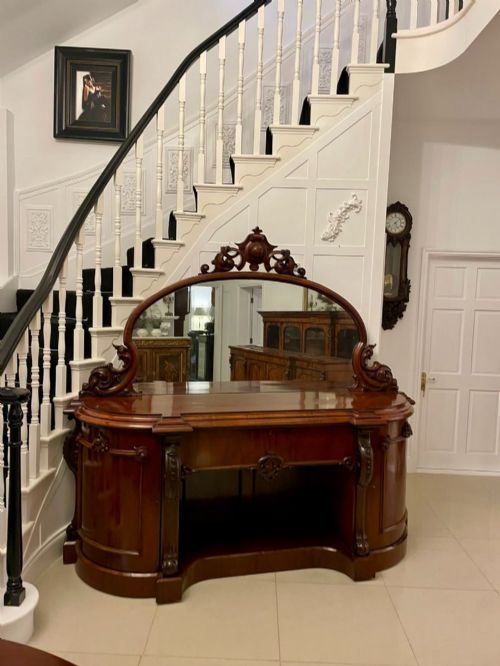
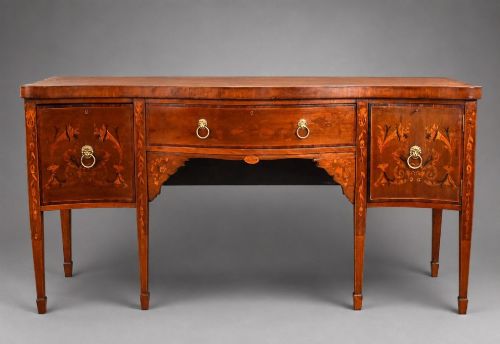
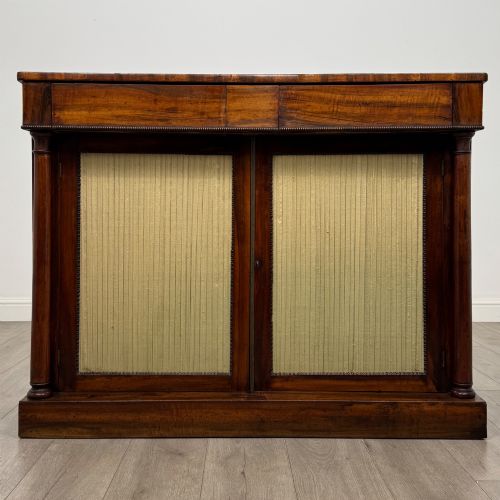
While the search points to credenza forms, the actual pieces available reflect a broad British tradition of sideboard and cabinet making. Buyers will find configurations featuring multiple doors, drawers, and occasional mirror-backs designed to anchor a room.
Defining Quality
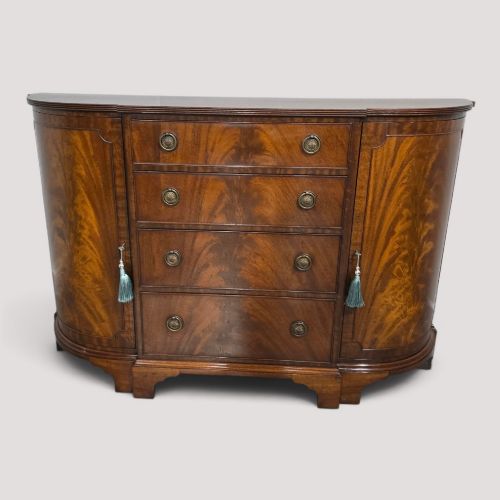
Quality in these cabinets rests upon the choice of timber and the precision of the veneer work. Superior examples display mirrored flame mahogany grains across wide surfaces, whereas lesser pieces rely on plain, uniform boards.
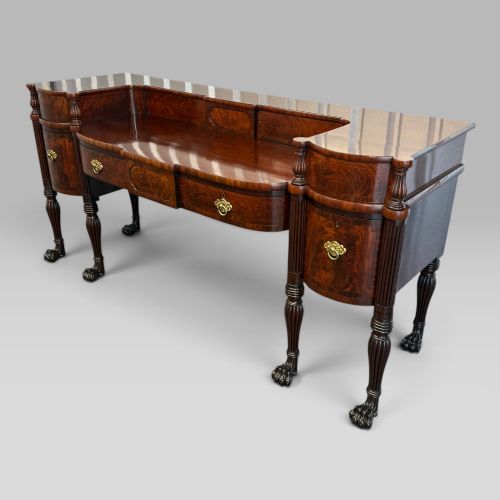
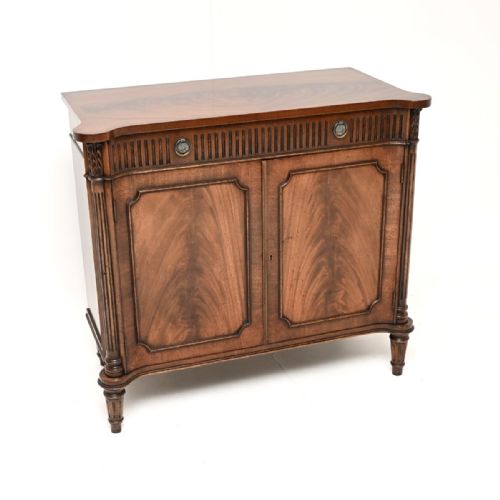
Carved details and mountings separate standard production from exceptional pieces. Crisp hand-carving on pilasters and paws indicates skilled workshop execution, while secondary wood selection reveals whether a maker compromised on hidden internal structures.
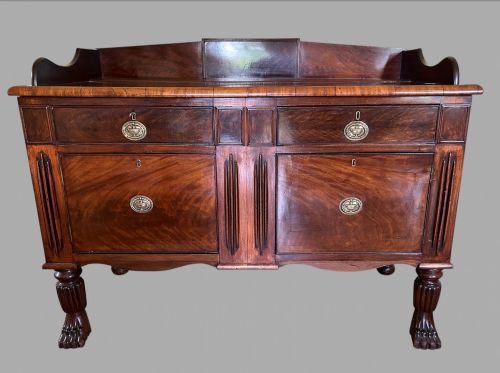
Several nineteenth-century specimens proudly stand on carved wooden lion paw feet, guarding your dining room floor.
Gillows·M. D. Miller & Sons
The Dark Mahogany Credenza Cabinet Glossary
- Flame mahogany
- A veneer figure characterised by swirling, flame-like patterns created by slicing across intersecting branches.
- Chiffonier
- A compact sideboard or low cabinet typically fitted with shelves enclosed by doors, popular during the nineteenth century.
- Breakfront
- A piece of furniture where the central section projects forward from the flanking outer wings.
- Inlay
- A decorative technique where contrasting materials such as lighter woods are inserted into recesses cut into the primary surface.
Dark Mahogany Credenza Cabinet: Frequently Asked Questions
How do I date a mahogany cabinet?
Dating relies upon examining construction methods, timber choice, and hardware styles. Regency pieces often feature brass mounts and distinct feet, while Victorian examples frequently incorporate mirror-backs and heavier carved mouldings.
Secondary woods inside drawers also help determine the period. Oak linings typically point to earlier Georgian or provincial work, whereas later pieces may utilise different interior timbers.
Where should I place a credenza?
These cabinets suit dining rooms, large hallways, and spacious living areas where their length can anchor the room. Ensure you measure the floor space and clearance for opening doors or drawers before positioning.
Keep the piece away from direct heat sources and strong sunlight to protect the mahogany polish and prevent veneer from drying out.
What is the difference between a sideboard and a credenza?
Traditional British terminology generally favours sideboard, buffet, or chiffonier over credenza, which tends to describe low storage furniture with sliding or hinged doors. Many pieces listed under this search function as formal dining room servers with cupboards and drawers.
Both forms share the primary purpose of storing tableware and providing a surface for serving food or displaying decorative objects.
How do I care for antique mahogany?
Maintain the finish by dusting with a soft, dry cloth and applying traditional beeswax occasionally to nourish the timber. Avoid silicone-based polishes that can build up and dull the polish over time.
Maintain stable humidity levels in the room to prevent the solid mahogany and its underlying veneers from warping or cracking.