
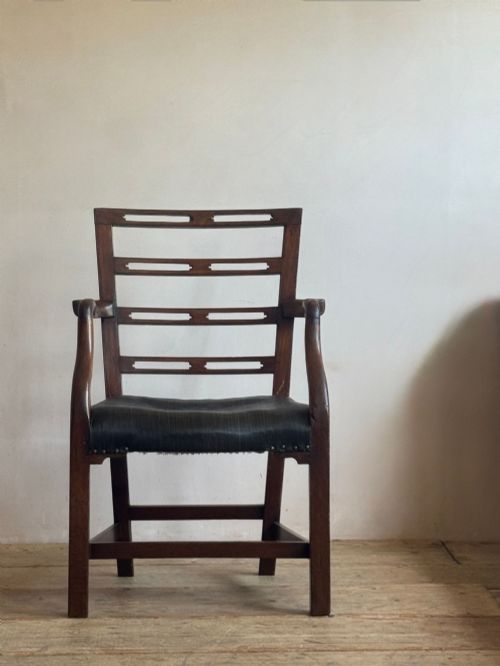
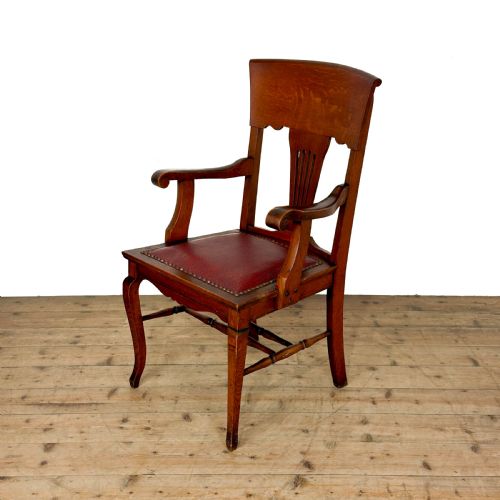


Dark Leather Carver Chair
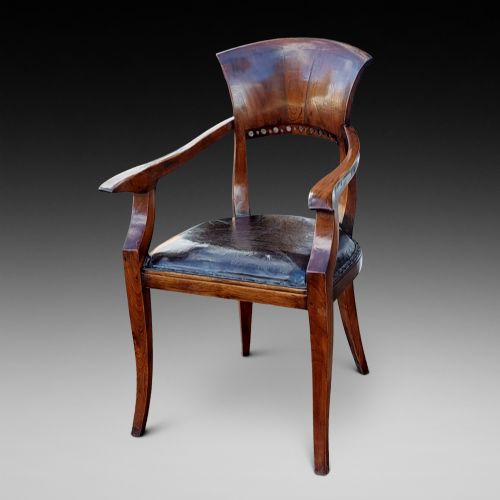
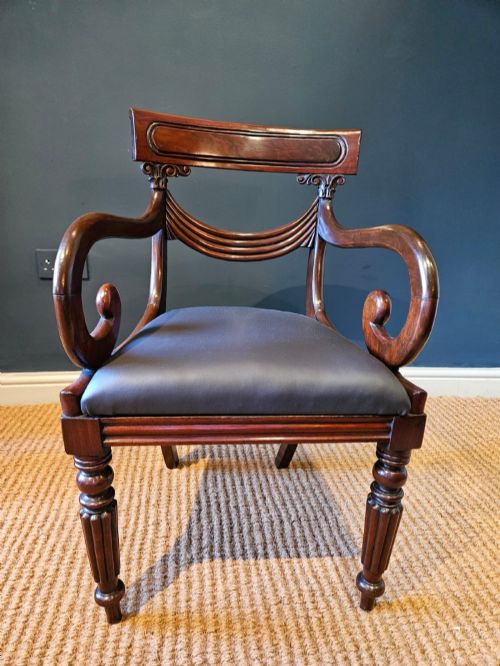
A dark leather carver chair provides solid timber framing and an upholstered seating surface designed for the heads of dining tables.
Dark Leather Carver Chair
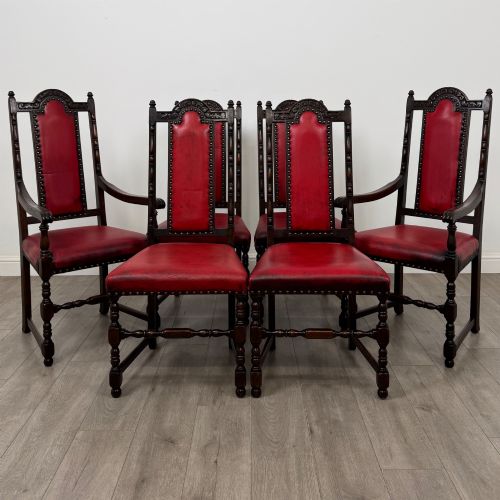
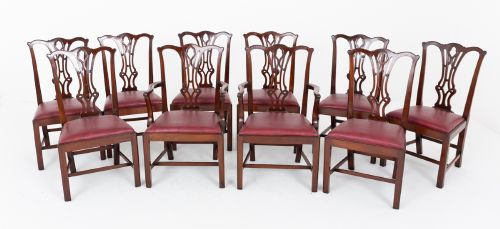
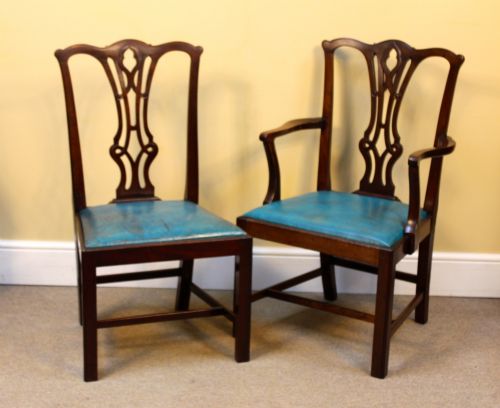
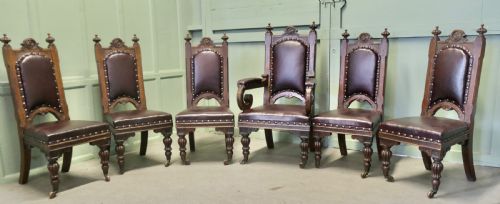
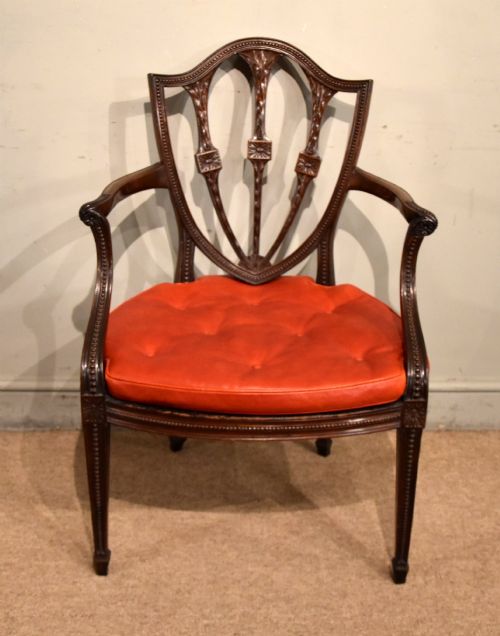
A dark leather carver chair typically appears as an armchair with wooden arms flanking a seated position, often originating from periods spanning the eighteenth, nineteenth, and early twentieth centuries. These seats draw upon historical design idioms such as Chippendale, Gothic, and Jacobean revivals alongside Arts and Crafts movements.
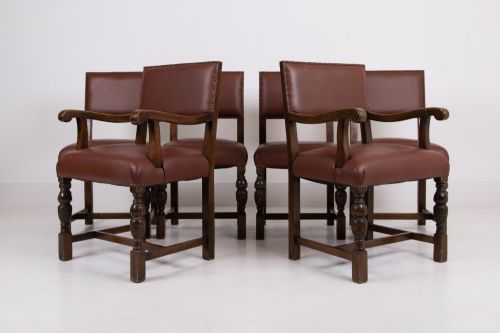
Buyers browsing this selection encounter timber frames constructed from oak or mahogany paired with hide upholstery, frequently featuring carved details or high backs. The pieces manifest primarily as single elbow chairs or as components of larger dining sets.
Origins trace across British cabinet-making traditions, incorporating styles from Georgian eras through to the Edwardian period and the 1930s. The form serves functional seating roles at desk spaces, libraries, and dining table heads.
Materials and construction methods
Carpenters utilised dense hardwoods like mahogany and oak for the structural framing, ensuring stability across armrests, legs, and back rails. Wood inlay and brass elements occasionally augmented the primary timbers.
Upholstery techniques involved stretching leather hides across frames, frequently securing the edges with visible metal studs. Carving and joinery relied on traditional hand tools to shape decorative motifs into the solid wood.
Some nineteenth-century makers evidently believed that if a chair back was not aggressively Gothic enough to pierce a hat, it simply lacked ambition.
Distinctions in quality
The refinement of hand-carved ornamentation on the timber frame separates standard examples from exceptional pieces, particularly in revival styles where crisp detailing denotes skilled carpentry. The choice of primary timber grain and the integrity of the original joints dictate structural longevity.
Leather selection and the preservation of hide surfaces influence the overall standard, alongside the harmony between the upholstered components and the supporting wooden structure.
William Walker And Sons
The Dark Leather Carver Chair Glossary
- Carver chair
- An armchair designed with open sides to accommodate the wider garments of seated individuals, typically placed at the ends of dining tables.
- Chippendale style
- A decorative design vocabulary originating from eighteenth-century patterns featuring cabriole legs, interlaced splats, and ornate carved woodwork.
- Jacobean revival
- An architectural and furniture style reproducing seventeenth-century English motifs with heavy oak construction, geometric panels, and straight lines.
- Elbow chair
- An alternative term for an armchair, referencing the supportive wooden rests positioned for the arms.
- Studded
- A method of securing upholstery materials using metal tinned or brass nails spaced systematically along the edge of the leather.
Dark Leather Carver Chair: Frequently Asked Questions
What defines a carver chair?
A carver chair is an armchair featuring structural wooden armrests built to match a set of dining chairs. These pieces typically sat at the head and foot of a formal dining table.
The term distinguishes an elbow chair from standard side chairs without arms. They offer broader proportions and heavier framing.
How do I identify oak versus mahogany?
Oak displays a prominent, open grain pattern with visible medullary rays creating flecked markings across the surface. The wood carries a naturally lighter tone that deepens under dark polishes.
Mahogany presents a tighter, straighter grain with reddish-brown undertones. The material accepts fine carving crisply compared to coarser-grained timbers.
What periods do these chairs represent?
The available selection spans from the eighteenth century through the Victorian and Edwardian eras into the 1930s. Many pieces adopt revival aesthetics inspired by earlier Georgian and Jacobean designs.
Construction details and timber treatments help distinguish genuine period items from subsequent stylistic revivals.
How should I care for leather upholstery?
Leather upholstery requires conditioning to maintain flexibility and prevent the material from drying out over time. Regular dusting with a soft cloth preserves the hide.
Keep these chairs away from direct heat sources and strong sunlight to protect both the leather surface and the underlying wooden frame.