
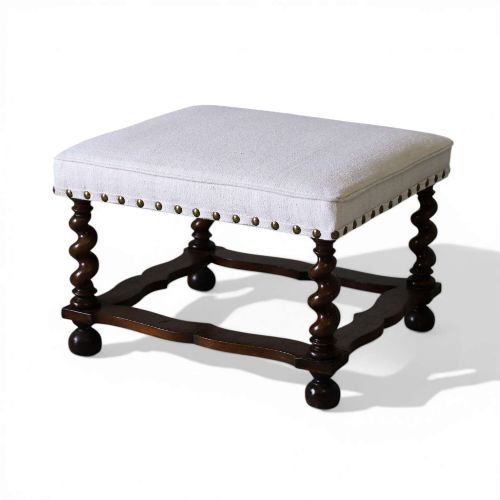


Oak Barley Twist Seating
Oak barley twist seating brings sculptural turned timber into domestic spaces, offering sturdy construction and enduring historical style.
Oak Barley Twist Seating
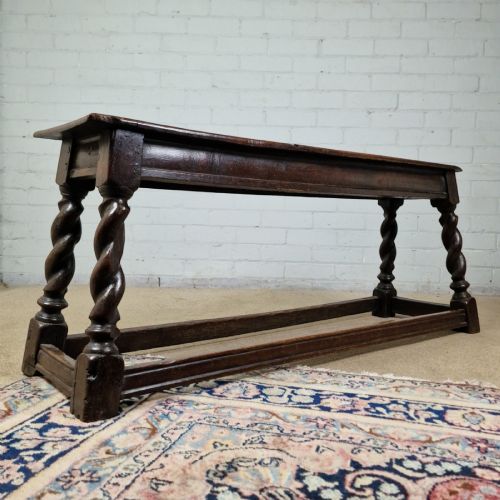
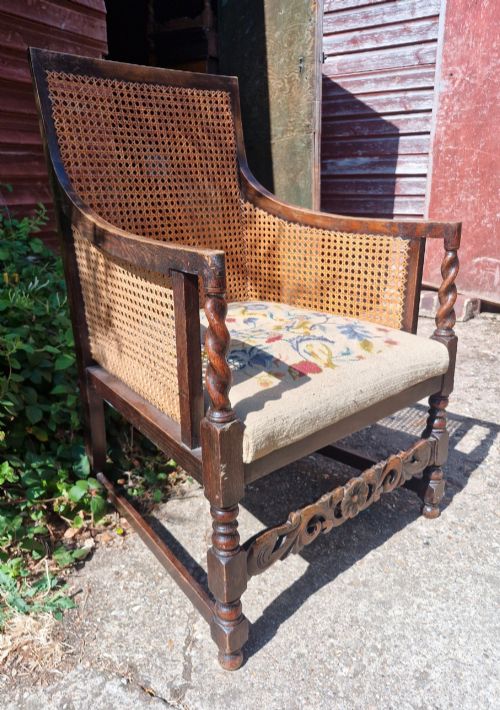
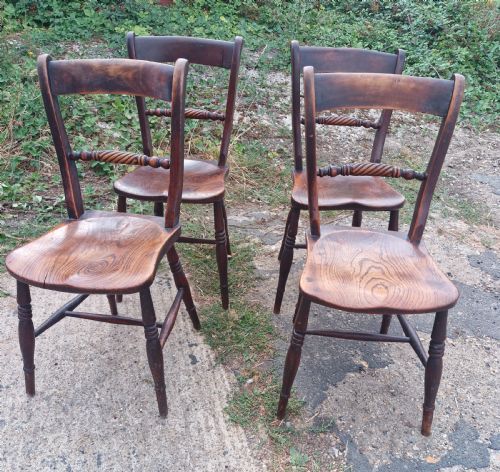
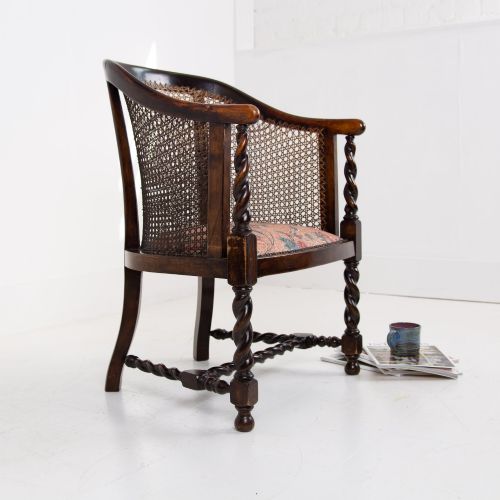
Oak barley twist seating comprises chairs, stools, and settees built from timber and defined by spiral turned supports. Buyers exploring this category encounter dining sets, armchairs, and single hall seats originating from the eighteenth century through to the nineteen-twenties.
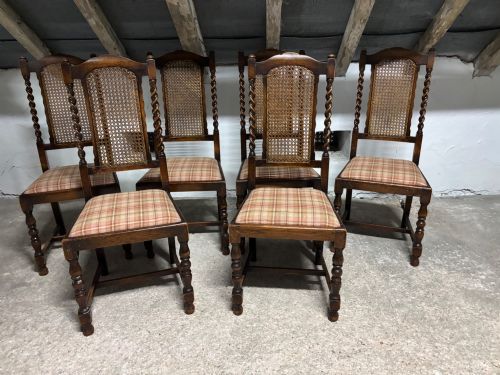
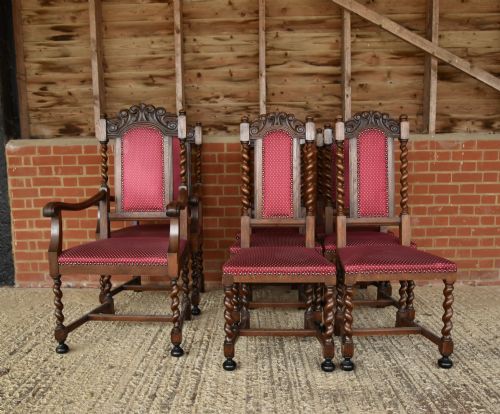
The most common pieces on this page are dining chairs and armchairs produced around nineteen-twenty in revival styles such as Jacobean and Carolean. These later interpretations draw closely upon seventeenth-century forms while providing serviceable seating for modern rooms.
Originating across the nineteenth and early twentieth centuries, these chairs frequently incorporate carved details alongside turned members. Stools and settees appear less often than upright chairs, yet offer matching spiral turnings on their stretchers and legs.
Evaluating Quality
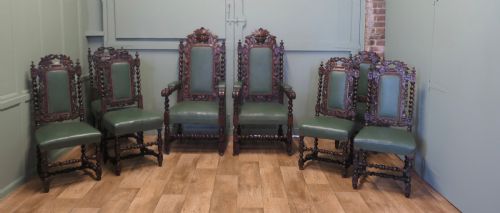
The standard of a piece rests upon the crispness of the timber carving and the uniformity of the spiral turnings. Superior examples display deeply cut relief work on crest rails and lion head motifs, whereas simpler items rely entirely on plain turned members.
Construction methods also separate standard production from finer work, visible in the tightness of frame joints and the quality of applied cane or upholstery materials. Original surfaces and patinated timber distinguish older eighteenth-century pieces from later revival interpretations.
Materials documented across the pieces include solid oak, walnut, cane, brass, leather, velvet, and tapestry fabric.
Liberty and Co
The Oak Barley Twist Seating Glossary
- Barley twist
- A spiral turning resembling the stalk of barley, created on a lathe or by hand carving. This decorative motif defines the legs, stretchers, and uprights of the furniture.
- Bergere
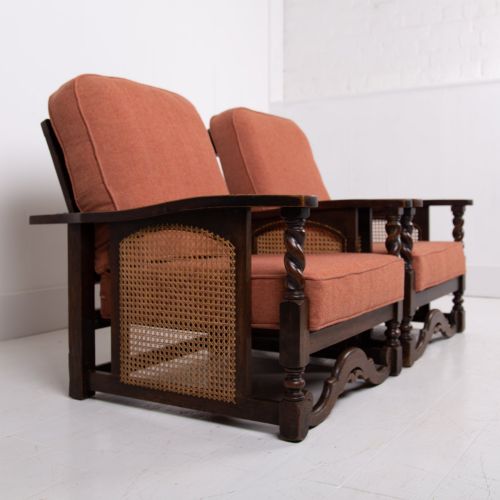
- An enclosed armchair featuring woven cane panels on the back and sides. It often includes a loose upholstered seat cushion.
- Carolean Revival
- A nineteenth or twentieth-century style imitating furniture from the reign of Charles the Second. It incorporates rich carving, scrollwork, and twisted uprights.
- Prie-Dieu
- A devotional chair designed for private prayer, featuring a low seat and a padded upper rail for kneeling or resting arms.
- Stretcher
- A horizontal wooden brace connecting the legs of a chair or table to provide structural stability. On these pieces, stretchers frequently feature matching spiral turns.
Oak Barley Twist Seating: Frequently Asked Questions
How do I date an oak barley twist chair?
Dating relies on timber colour, joinery techniques, and secondary materials. Eighteenth-century examples display hand-cut joints and deep patination, whilst nineteen-twenty revival pieces often use machine-turned components and standardised fixings.
Stylistic markers also help distinguish periods. Pieces bearing Gothic Revival or Victorian Carved details contrast with the lighter oak frames produced during the Edwardian era.
Are these chairs suitable for daily dining use?
Most dining chairs and carvers are constructed from solid oak to support regular seating. Many surviving sets remain robust enough for daily placement around a dining table.
Consider checking the stability of the frame joints and the condition of any cane or upholstered seat pads before heavy daily use.
What is the difference between a carver and a side chair?
A carver armchair includes structural armrests designed to support the occupant's arms, making it suitable for the head of a dining table or as a fireside seat. Side chairs lack arms, allowing multiple chairs to sit closely together.
Both forms frequently share identical barley twist leg turnings and carved back panels within matched dining sets.
How do I care for cane and leather seats?
Caned panels require occasional dampening with a sponge to maintain moisture and prevent snapping. Leather seats benefit from neutral leather balms applied sparingly to preserve suppleness.
Keep wooden frames away from direct heat sources to prevent the solid oak from splitting over time.