
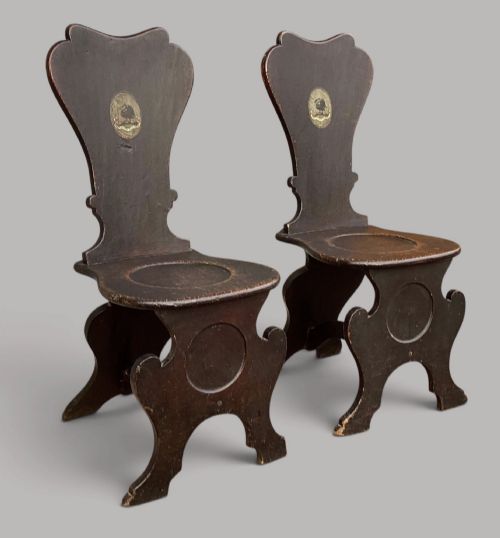
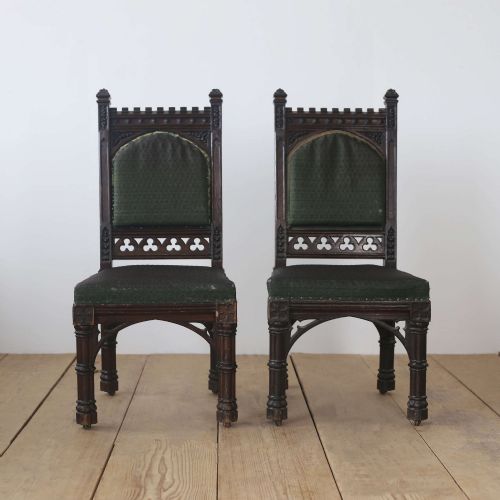
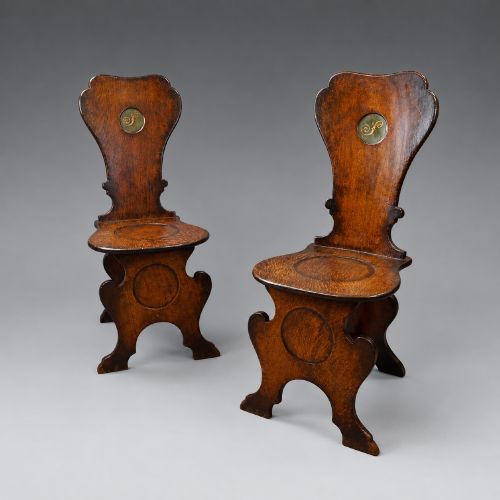
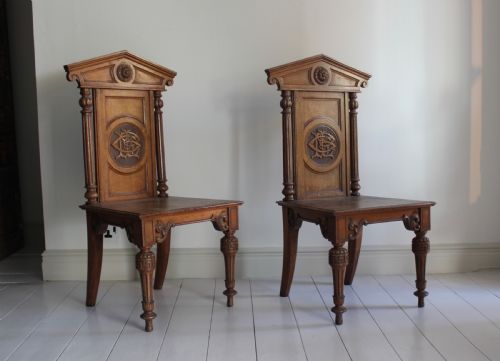
Pair Oak Accent Chairs
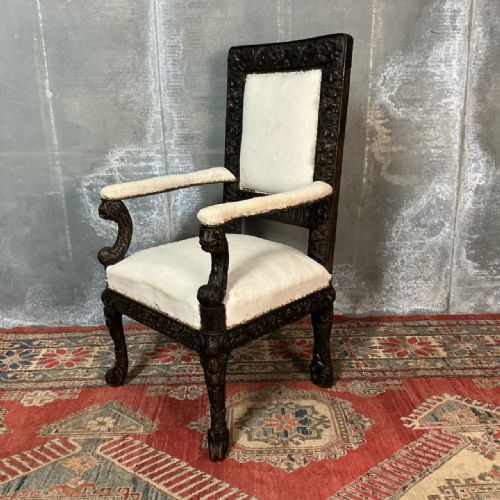
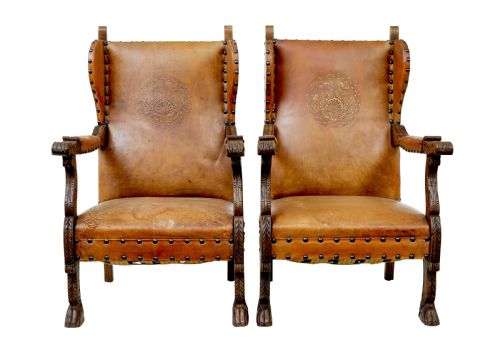
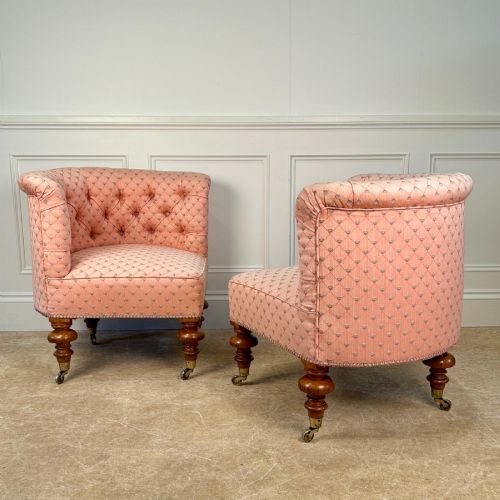
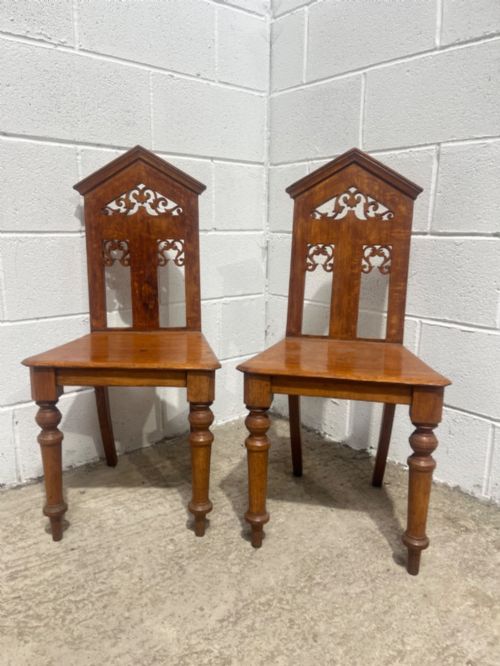
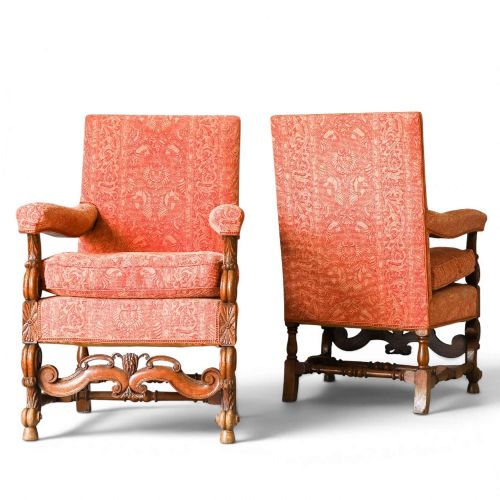
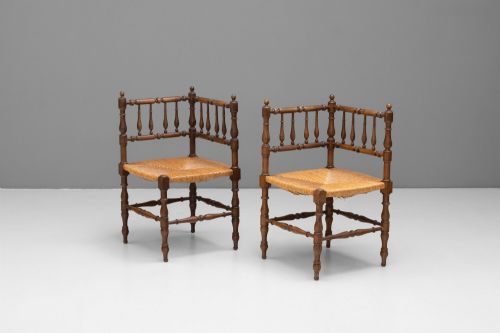
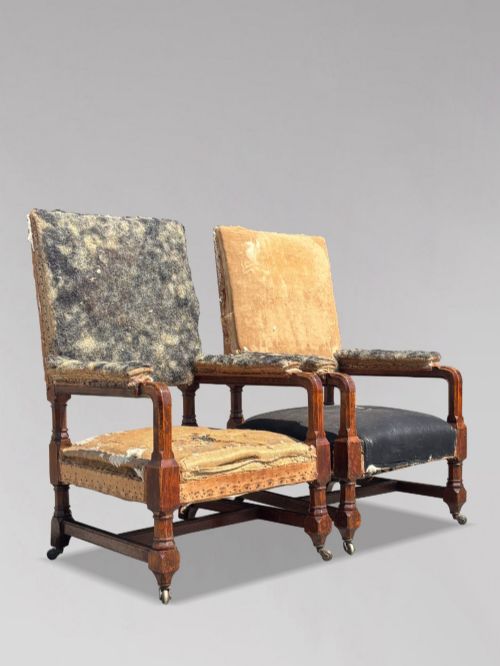
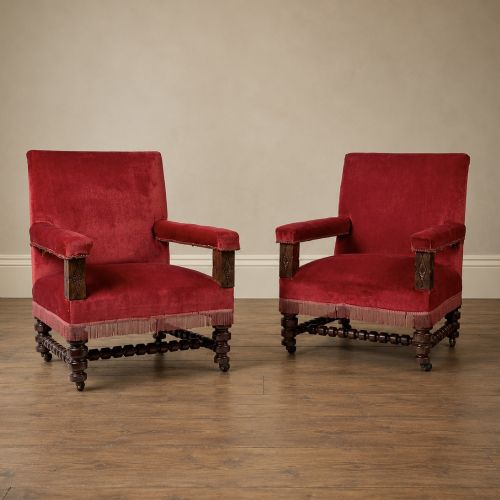
These pair oak accent chairs bring substantial timber presence and period character into a room.
Pair Oak Accent Chairs
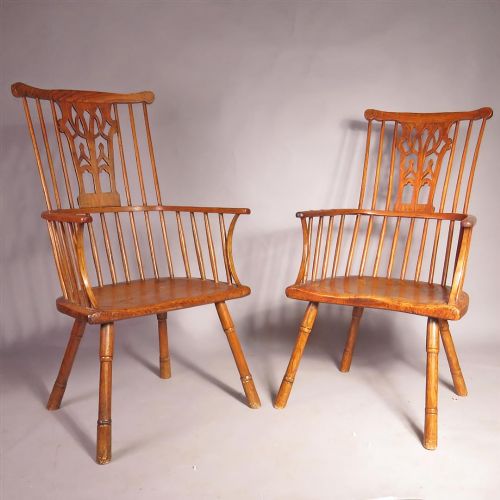
When you search for pair oak accent chairs, you encounter seating constructed predominantly from solid timber across various historic periods. The selection ranges from robust 18th century country designs to elaborate Victorian revival pieces.
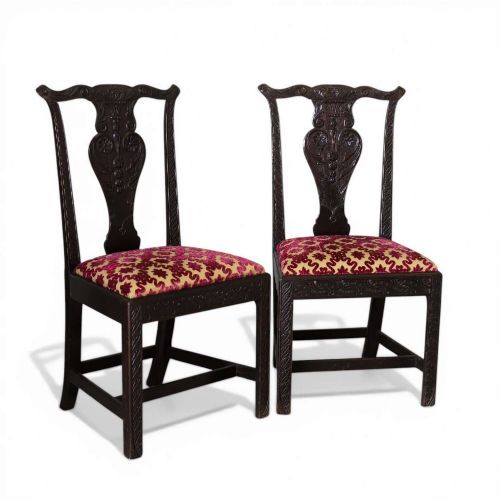
Most examples you meet on this page function as hall chairs, side chairs, or occasional armchairs. They bring sturdy construction and carved detailing into domestic spaces as decorative yet functional seating.
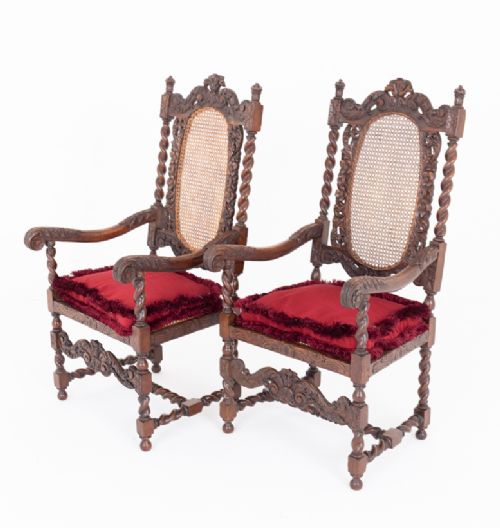
Makers and workshops utilised domestic and continental influences, producing everything from austere high-back forms to heavily padded velvet and leather armchairs. Each pair reflects the prevailing tastes of its respective century.
How they were made
Carpenters relied heavily on solid oak, frequently paired with secondary woods like elm and beech to form rigid frames. Joinery methods included traditional mortise and tenon joints secured with wooden pegs.
Decoration involved deep relief carving, bobbin turning, and applied heraldic shields. Upholstery materials such as embossed leather, woven leather, red velvet, and patterned fabrics were fixed with brass studs.
Several armchairs arrive equipped with heraldic crests, ready for a clan dispute over the dining table.
What varies in quality
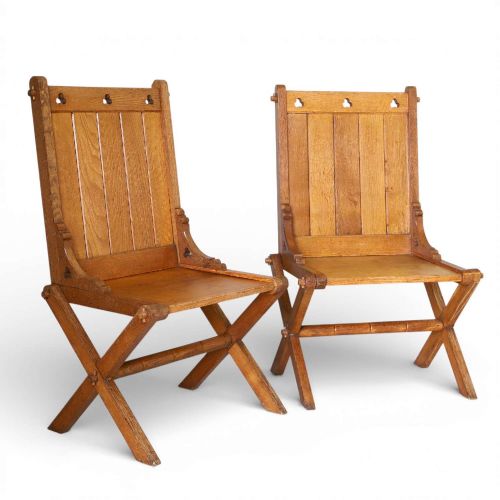
The standard of carving distinguishes standard production from exceptional examples. Crisp execution in floral motifs, armorial crests, and trefoil details indicates skilled workshop output.
Integrity of the timber frame and the quality of period-appropriate upholstery materials determine the long-term character of each pair. Original surfaces and authentic period joinery elevate the overall execution.
Gillows of Lancaster·Liberty and Co
The Pair Oak Accent Chairs Glossary
- Sgabello
- A light wooden chair with a high back and solid trestle supports, common in hall settings. They often feature carved panels.
- Bobbin turned
- Timber turned on a lathe to resemble a string of beads or bobbins. This technique creates a distinctive repeating spherical profile.
- Glastonbury chair
- A low-arm folding chair with intersecting legs and a sloped back panel. They are typically associated with Gothic revival designs.
- Windsor chair
- A chair built with a solid wooden seat into which the legs and back spindles are directly inserted. Regional variants include comb backs and lyre backs.
- Fauteuil
- An open-armed upholstered armchair with exposed wooden framing. Originating in France, they appeared in various revival styles.
Pair Oak Accent Chairs: Frequently Asked Questions
Where should I place these chairs?
These chairs suit entrance halls, living rooms, and studies where their solid timber frames and carved details can be appreciated. Pair configurations work well flanking a fireplace or console table.
Because many examples feature high backs or heraldic shields, they also serve effectively as anchor pieces in larger rooms without requiring daily heavy use.
How do I identify the period?
Dating relies on observing construction methods, turning styles, and carved ornamentation. 17th and early 18th century pieces often feature bobbin turning and high panel backs, while Victorian items lean into heavy Gothic revival or Renaissance revival motifs.
Examining the underside and joinery helps confirm whether the framing aligns with Georgian country standards or later 19th century revival movements.
Are these chairs comfortable for daily use?
Comfort varies depending on whether the design is an austere carved hall chair or an upholstered armchair. Many Victorian and Edwardian variations include padded leather, velvet, or fabric cushioning.
Side chairs and sgabello forms are built primarily for upright posture and decorative presence rather than prolonged lounging.
How do I care for antique oak?
Maintain the timber by keeping the chairs away from direct heat sources and rapid humidity changes, which can cause wood to split. Regular dusting with a soft cloth preserves the dry finish.
Leather and fabric upholstery benefit from gentle cleaning appropriate to their specific textile type, avoiding harsh chemical treatments.