
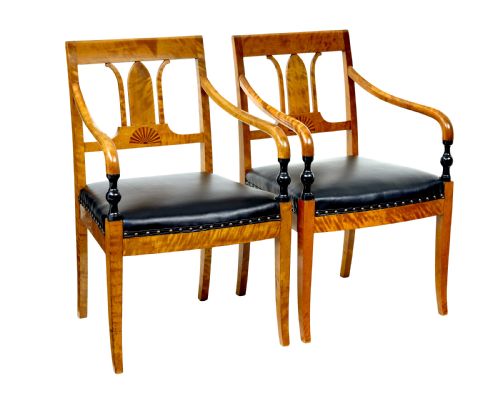
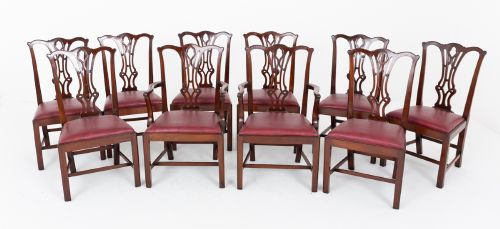
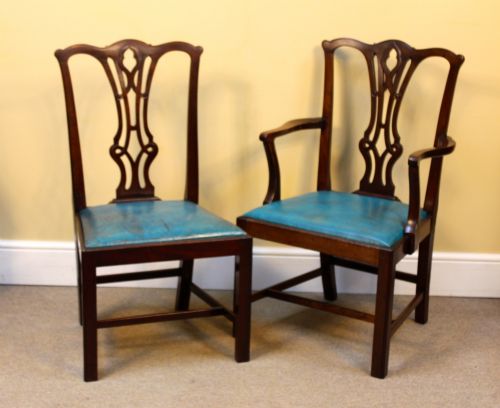
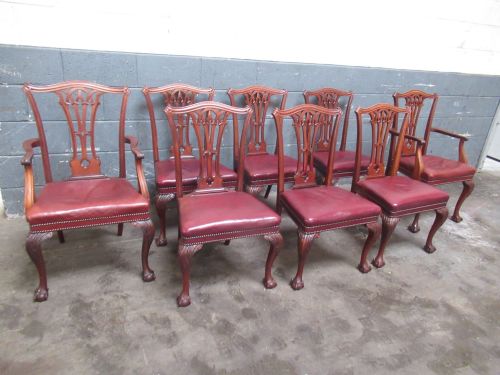
Antique Leather Carvers
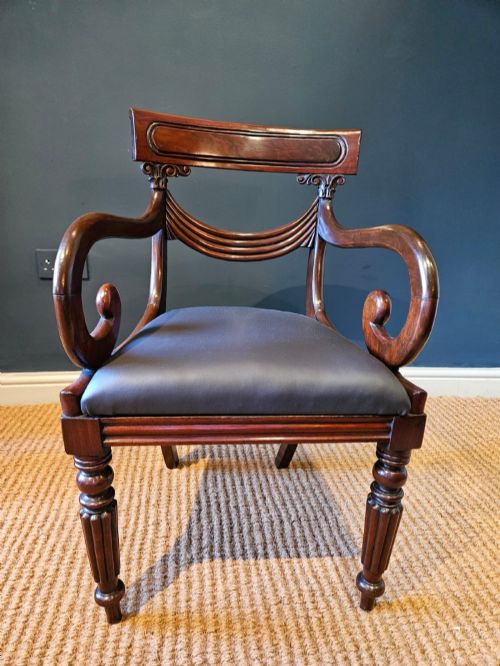
These antique leather carvers are sturdy seating pieces built for the head of a dining table or a desk, offering substantial timber frames and upholstered hide.
Antique Leather Carvers
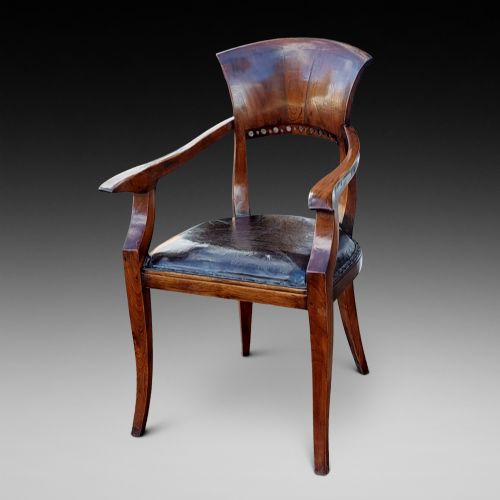
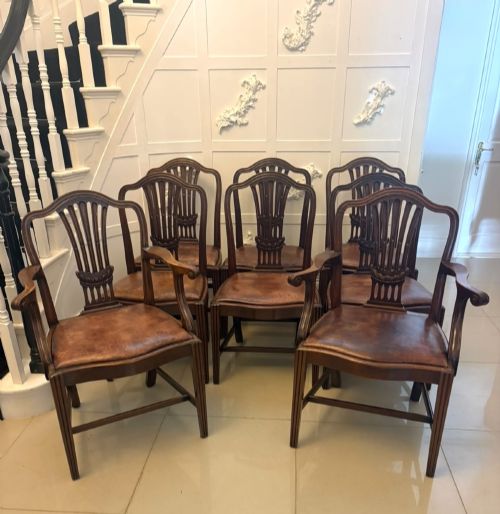
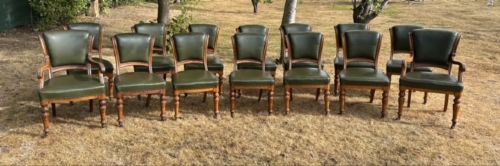
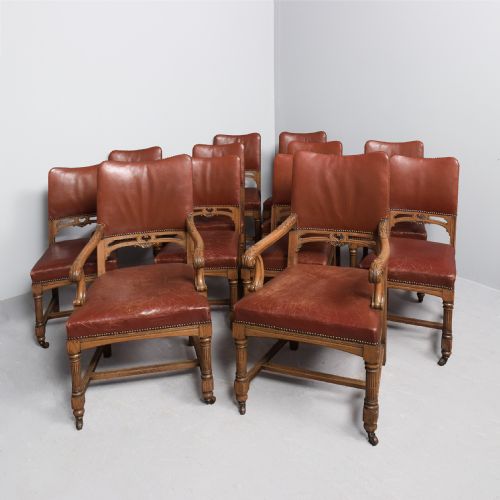
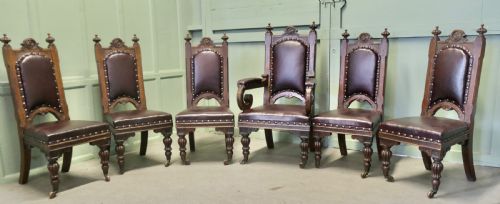
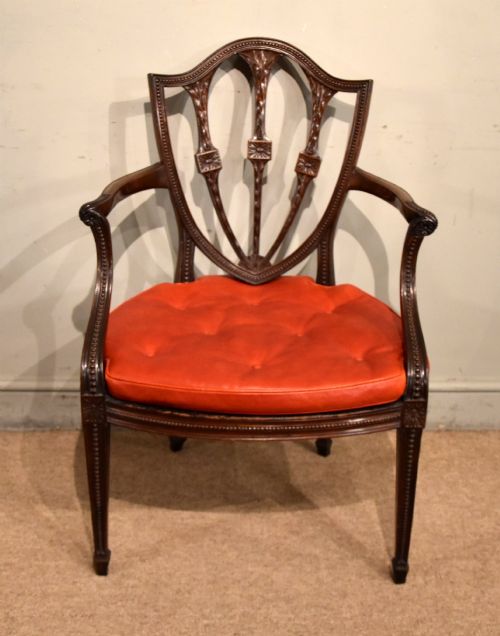
These antique leather carvers represent armed seating built to stand at the head and foot of dining tables or beside partners desks, distinguished from standard side chairs by their supporting side rests. They appear predominantly across nineteenth-century and early twentieth-century formats, drawing on Victorian, Edwardian, and earlier revival aesthetics.
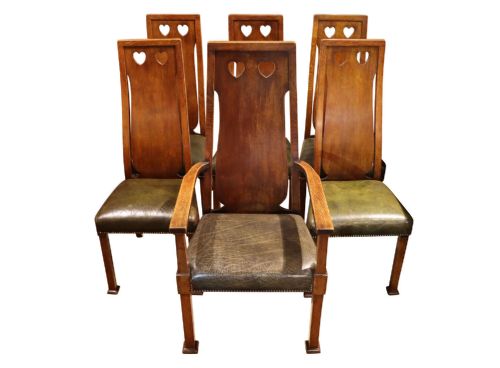
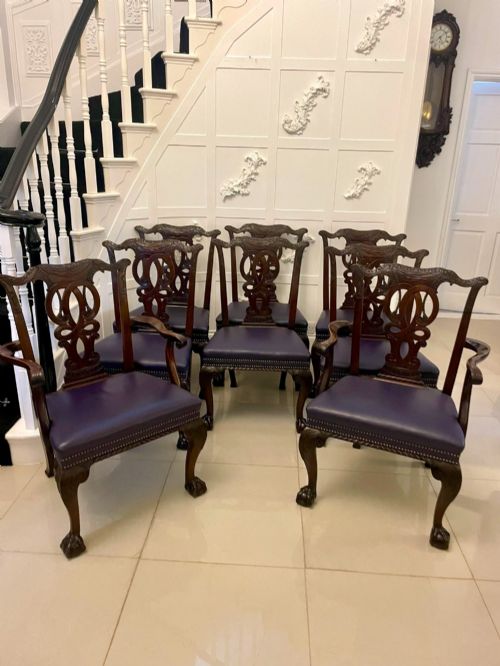
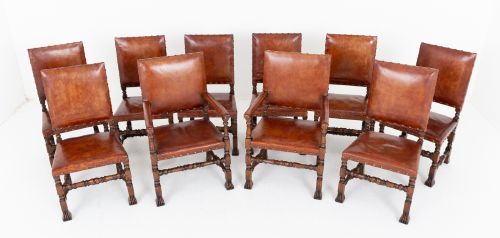
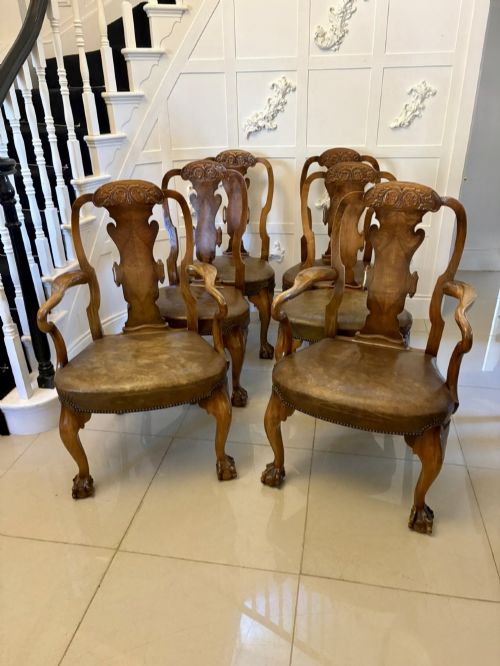
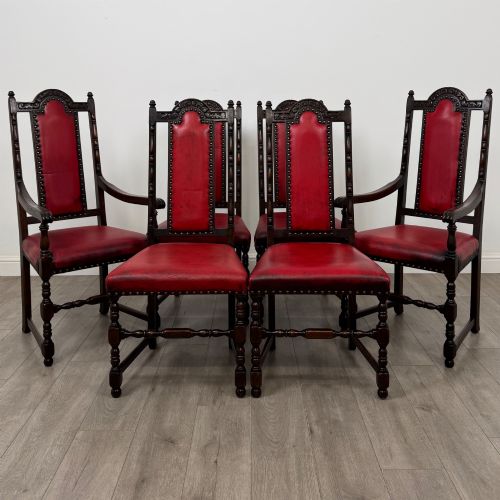
The material combination brings together dense hardwoods like mahogany, oak, and walnut with durable hides, often secured with brass studs along the seat or back borders. Buyers encounter individual armchairs, matched pairs, and larger suites where a pair of carvers accompanies a set of matching side chairs.
Originating largely from British and continental workshops, the pieces span Georgian proportions, ornate Victorian carving, Edwardian restraint, and twentieth-century Art Deco curves. They function today both as practical dining furniture and as characterful desk chairs in traditional or mixed interiors.
How they were made
Cabinetmakers constructed the structural frames using traditional joinery such as mortise and tenon joints, employing dense timbers like mahogany, oak, and walnut to ensure stability under daily use. Secondary elements sometimes incorporated softer woods or brass fittings, whilst decorative finishes relied on hand-applied wax or polish to highlight the natural grain.
Upholstery techniques involved stretching cattle leather over webbed foundations and stuffings of horsehair or wool, finished along the edges with hand-hammered brass studding. Carved details on the wooden arms, splats, and legs were executed by hand using chisels and gouges, reflecting the prevailing style of the period from Chippendale revival ribbon backs to plain Arts and Crafts geometry.
The listings show oak and mahogany as the primary framing timbers, complemented by walnut, birch, and ebonised wood across Victorian and Edwardian periods.
What varies in quality
Quality rests upon the crispness of the timber carving and the architectural proportion of the frame, where confident hand-cut details outshine mechanical or shallow mouldings. The choice of timber grain, whether figured mahogany, burr walnut, or quarter-sawn oak, determines the visual depth of the piece before polish is applied.
The integrity of the construction and the grade of the leather upholstery dictate longevity, with vegetable-tanned hide ageing gracefully through patination compared to corrected modern replacements. Original surface finishes and tight, unyielding joinery separate utilitarian workshop output from exceptional cabinetmaker commissions.
W. Williamson And Sons·Epstein
The Antique Leather Carvers Glossary
- Carver chair
- An armchair designed with open sides to accommodate voluminous historical clothing, traditionally placed at the ends of a dining table.
- Chippendale style
- A mid-eighteenth-century design vocabulary featuring interlaced ribbon splats, cabriole legs, and claw-and-ball feet, which saw extensive revivals during the nineteenth and twentieth centuries.
- Jacobean revival
- A nineteenth-century stylistic movement copying seventeenth-century English furniture characterised by heavy turning, rectilinear frames, and deep geometric panel carving.
- Cockpen chair
- A lattice-backed armchair of Chinese Chippendale inspiration, featuring an open grid design and straight wooden legs.
- Studded leather
- Upholstery secured to the timber frame using individual metal tacks, often brass, spaced closely along the perimeter of the seat or back pad.
Antique Leather Carvers: Frequently Asked Questions
What is a carver chair?
A carver chair is an armchair traditionally placed at the head of a dining table, featuring supportive armrests that distinguish it from standard side chairs. These pieces provided a commanding seat for the host.
Today, they function equally well as standalone desk chairs or accent seating in a study or hallway, adding structural weight and traditional character to a room.
How do I date an oak and leather chair?
Dating relies on examining the construction methods, tool marks, timber selection, and stylistic details such as leg turnings or back splat shapes. Revival pieces often mimic earlier centuries but betray their true era through secondary woods and machine-cut elements.
Comparing the upholstery substrate and the wear patterns on the leather and timber helps establish whether the piece originates from the Victorian era, the Edwardian period, or later revival movements.
Are these chairs suitable for daily use?
These sturdy wooden armchairs and leather seats were originally built for heavy daily dining use, employing robust joinery like mortise and tenon framing. Provided the internal webbing and joints are sound, they handle modern domestic life with ease.
Leather surfaces improve with handling and conditioning over time, making them practical choices for regular seating at desks or dining tables without demanding delicate treatment.
What is the difference between a carver and a desk chair?
Carver chairs generally feature broad armrests and high backs designed for dining tables, whilst desk chairs often incorporate swivelling mechanisms, lower profiles, or specific ergonomic curves for writing. However, nineteenth-century desk chairs frequently share the exact same structural timber frames and leather upholstery as dining carvers.
Buyers often interchange these roles depending on the height of the kneehole and the desired aesthetic in a study or library.