




Oak Dining Chairs Pair
When you search for an oak dining chairs pair, you encounter sturdy seating forged across centuries of domestic and vernacular design.
Oak Dining Chairs Pair
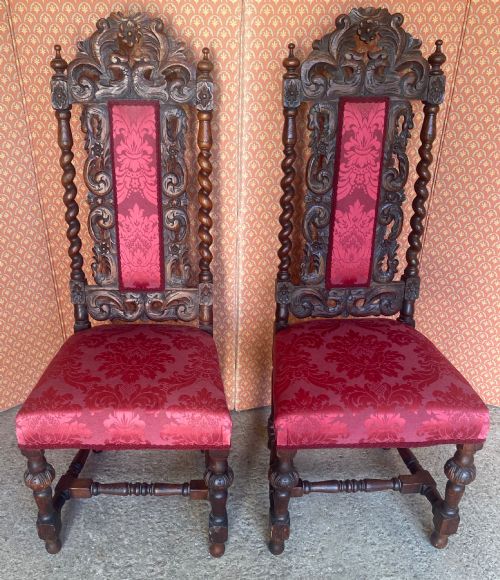
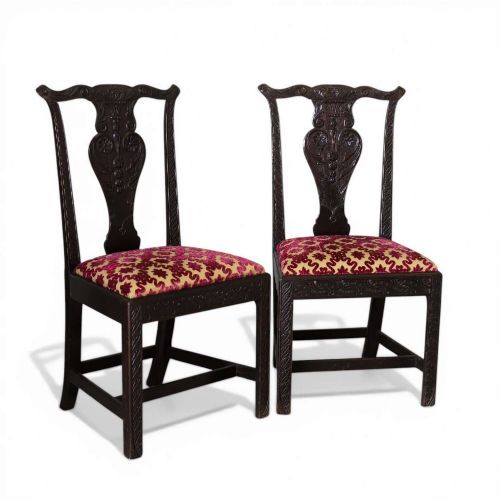
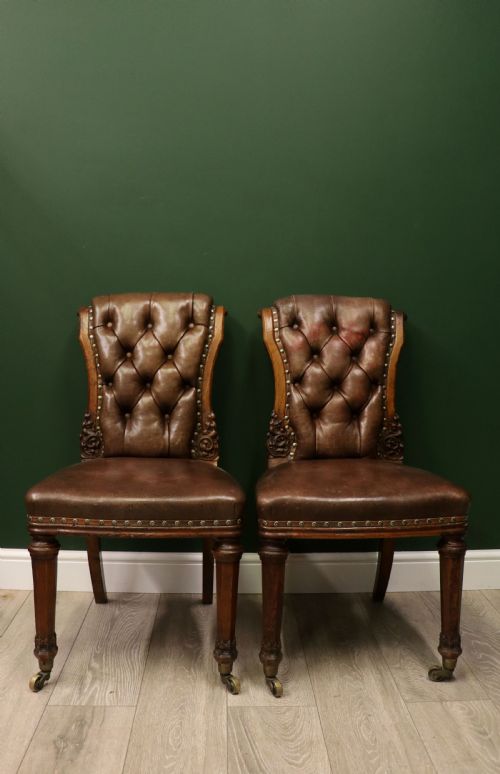
An oak dining chairs pair spans robust country kitchen Windsors, formal Chippendale models, and high-backed Victorian styles. These matching sets serve communal meals or provide architectural weight in a hallway.
The material lineage stretches from seventeenth-century joined timber through nineteenth-century vernacular production into twentieth-century studio craft. Pieces range from simple ladder-backs to heavily carved armorial clan seating.
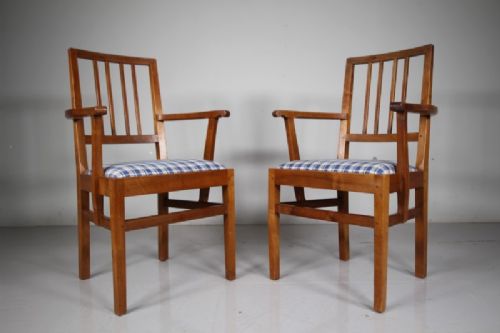
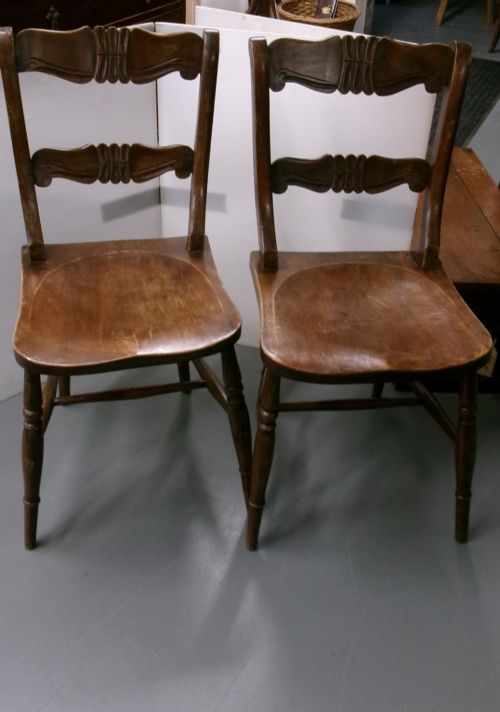
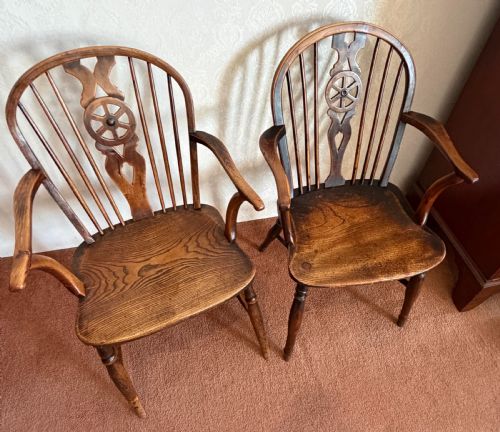
On this marketplace, the most frequent survivals are nineteenth-century kitchen and Windsor variations alongside early twentieth-century Arts and Crafts interpretations.
Timbers and Construction Methods
Makers utilised solid oak for frames, frequently combining it with elm, beech, or ash for seats and turned spindles. Joinery relied on traditional mortise and tenon joints secured with wooden pegs.
Surfaces were shaped using drawknives, lathes, and hand chisels, leaving subtle tool marks on country windsors and joined chairs. Upholstery materials such as leather, rush, velvet, and woven cane were integrated into seats and backs.
Listings feature oak combined with elm, beech, and ash across periods spanning from the seventeenth century to the 1930s.
Distinctions in Execution
Quality depends on the integrity of the timber selection and the precision of the joinery rather than mere age. Superior examples display thoughtful grain matching and robust structural framing that resists wobble.
Artisanal touches, such as hand-carving, bobbin turning, or maker stamps from notable workshops, elevate standard domestic seating into significant collectible examples.
Edward Barnsley·Dicon Nance·Lawrence Neal·Shapland & Petter
The Oak Dining Chairs Pair Glossary
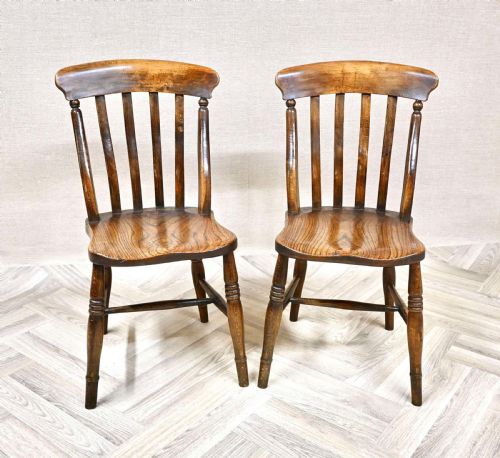
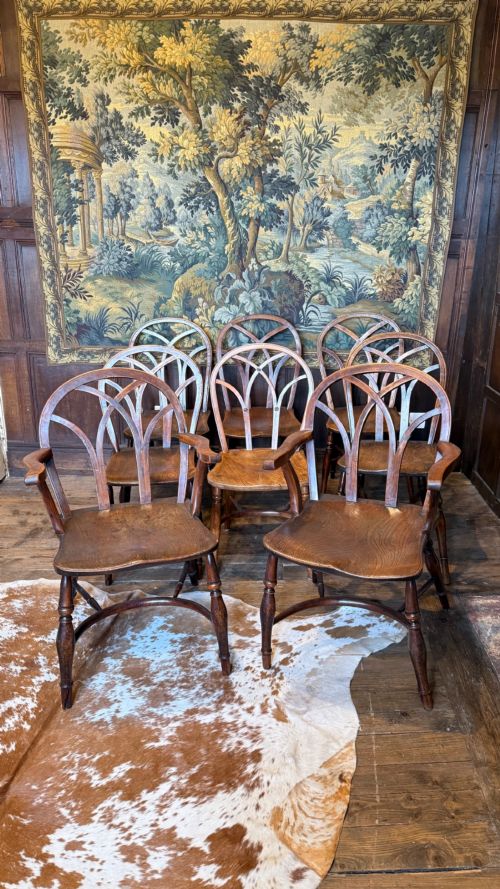
- Windsor
- A chair built with a solid wooden seat into which the legs and stick back are bored directly. This form relies on steam-bent elements for its arched upper rail.
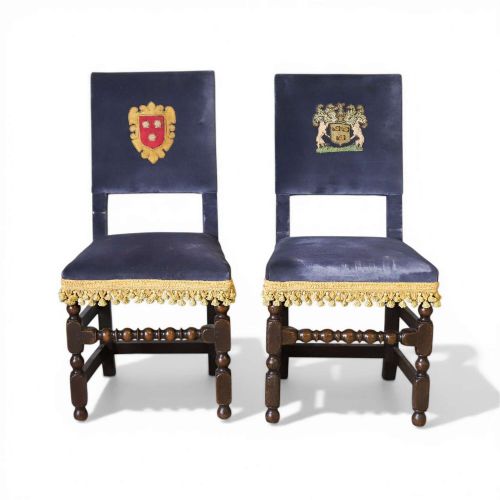
- Bobbin turned
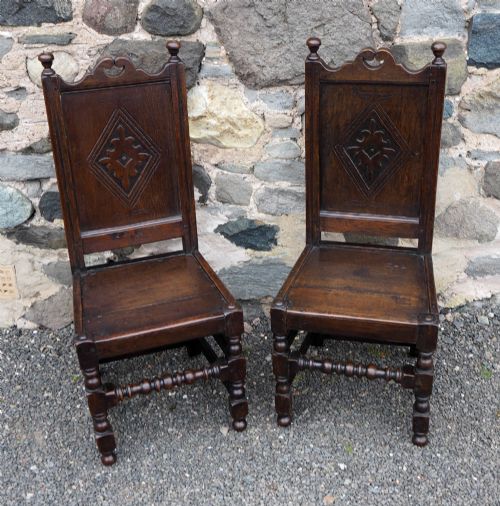
- A style of furniture leg or stretcher shaped on a lathe to resemble a series of wooden bobbins or spools. This decorative turning appears frequently on seventeenth-century and revival pieces.
- H stretcher
- A horizontal wooden brace connecting the legs of a chair in the shape of the letter H. It provides structural rigidity to the underframe.
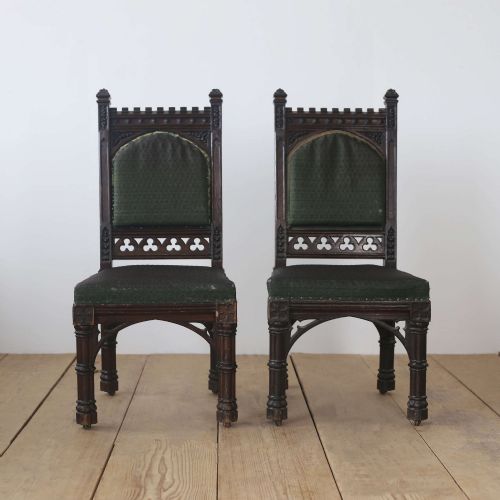
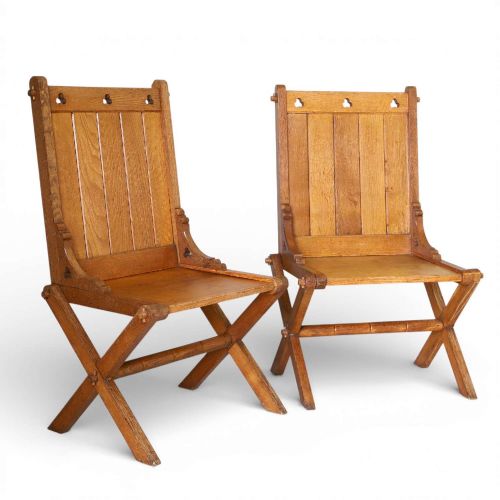
- Gothic Revival
- A nineteenth-century architectural and decorative style incorporating pointed arches, trefoils, and ecclesiastical motifs into domestic furniture. Chairs in this manner echo medieval church furnishings.
- Armorial
- Bearing heraldic crests or family coats of arms carved into the woodwork or embroidered on upholstery. These bespoke elements denote specific lineage or clan ownership.
Oak Dining Chairs Pair: Frequently Asked Questions
Were these chairs used only for dining?
While many served around dining tables, heavier high-back and hall variants functioned as statement pieces in entranceways and reception rooms. Kitchen Windsors saw daily utilitarian service in farmhouses.
Lighter side chairs moved easily between desks, halls, and dining spaces as household needs shifted.
How should I care for antique oak?
Maintain the timber by applying traditional beeswax sparingly to nourish the grain and preserve the surface sheen. Avoid placing the chairs near direct heat sources that cause wood to dry and split.
Protect fabric and leather inserts with appropriate specialist conditioners depending on the textile type.
What defines a country oak chair?
Country pieces prioritise functional durability and local timber availability over courtly fashion, often combining oak frames with elm seats. Makers utilised vernacular designs passed down through regional traditions.
These chairs display honest peg construction and simpler turning compared to urban workshop output.