
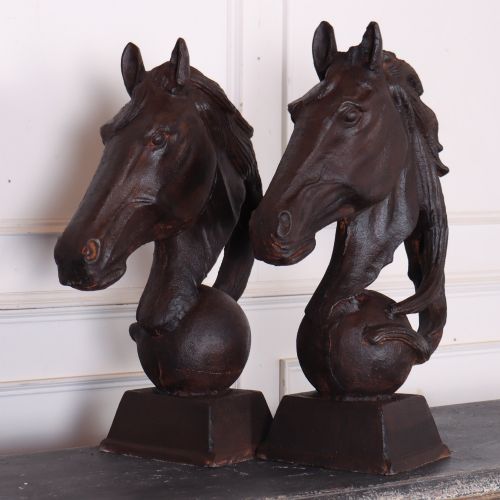


Dark Iron Sculpture
These dark iron sculpture pieces bring weight and character to a room, cast or wrought in iron and bronze.
Dark Iron Sculpture
A dark iron sculpture brings solid form and historical presence into a room, taking shapes from animal figures to architectural fragments. When you search for dark iron sculpture, you meet utilitarian objects turned ornamental, such as hitching posts, paperweights and doorstops alongside standalone animalier figures.
The pieces on this page span the eighteenth, nineteenth and early twentieth centuries, including Victorian and Edwardian works alongside continental French and Japanese examples. Animal subjects recur frequently, from horses and hunting dogs to lions and foo dogs, modelled with varying degrees of anatomical detail.
Utility meets display in items like fireplace fenders, garden cannons and anchors, demonstrating how durable metals served decorative roles in domestic and exterior settings. Busts and portrait pieces also appear, offering a formal presence through cast iron and bronze construction.
How they were made
Foundries utilised casting techniques to shape molten iron and bronze into intricate figures, pouring metal into moulds that captured fine textures in fur, mane and surface decoration. Wrought iron pieces relied on the forge and anvil, where smiths shaped hot metal by hand into structural forms like anchors and fenders.
Surface finishes protect the metal and define the visual tone, employing patination, paint and occasional gold inlay to accentuate details on figures and busts. Bases of black marble or mixed metals provide stable mounting for smaller sculptures and desktop pieces.
Cast iron hunting spaniels and Chinese foo dogs keep watch over papers and hearths alike.
What varies in quality
Surface preservation dictates the visual impact, where undisturbed patination or deliberate paint finishes retain their original character without heavy pitting or loss. The weight and stability of the piece, particularly in architectural or desktop items, reflect the substance of the metal used.
Unno Shomin·Leonhard Posch
The Dark Iron Sculpture Glossary
- Cast Iron
- Molten iron poured into a mould to create solid figures and decorative objects. This technique allows for repeating complex shapes with textured surfaces.
- Wrought Iron
- Iron heated and hammered into shape by a smith rather than poured into a mould. It yields strong, fibrous structures visible in functional items like anchors.
- Animalier
- Art focusing on the realistic depiction of animals, particularly prevalent in nineteenth-century sculpture. These works capture creatures in dynamic or resting poses.
- Patinated Iron
- Metal treated with chemicals or heat to alter its surface colour and tone. This finish protects the underlying iron while providing a dark, uniform appearance.
- Okimono
- Japanese decorative sculpture designed for display on a tabletop or in a tokonoma alcove. These pieces demonstrate high levels of craftsmanship in metal or ivory.
Dark Iron Sculpture: Frequently Asked Questions
How do I clean a cast iron sculpture?
Dust the surface regularly with a soft, dry cloth to prevent dirt accumulation in recessed details. Avoid using water or chemical cleaners that can strip patination and encourage rust.
Apply a light microcrystalline wax if the metal requires protection from moisture in the room. Buff gently after application to maintain a subtle sheen without creating a glossy coat.
Where should I place a heavy iron sculpture?
Support heavy iron pieces on sturdy furniture or directly on the floor to accommodate their substantial weight. Ensure mantels and tabletops can bear the load before positioning desktop weights or small statues.
Keep pieces away from damp environments such as unheated conservatories to prevent oxidation. Interior placement in stable room temperatures preserves the original surface finish.
How can I tell a nineteenth-century piece from a later one?
Examine the casting texture and seams for signs of nineteenth-century foundry methods, which often display hand-chased details and heavier patination. Earlier pieces frequently show tool marks where surface imperfections were smoothed by hand.
Twentieth-century reproductions tend to have smoother, more uniform surfaces with less variation in the metal texture. Compare the weight and stylistic conventions against documented examples from the period.
What is the difference between cast and wrought iron?
Cast iron is poured into a mould as liquid metal, making it hard and brittle with complex surface detail. It suits sculptural forms, animal figures and decorative plaques.
Wrought iron is worked hot by hand, resulting in a fibrous material that bends rather than snaps under pressure. It appears in functional items like anchors and structural brackets.