


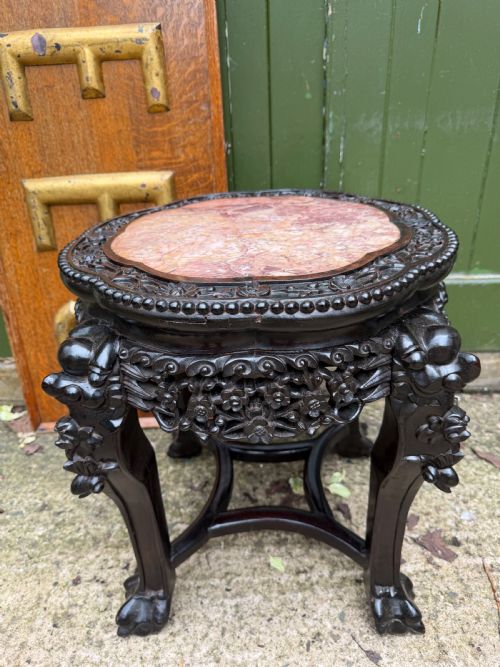

Dark Hardwood Urn Stand
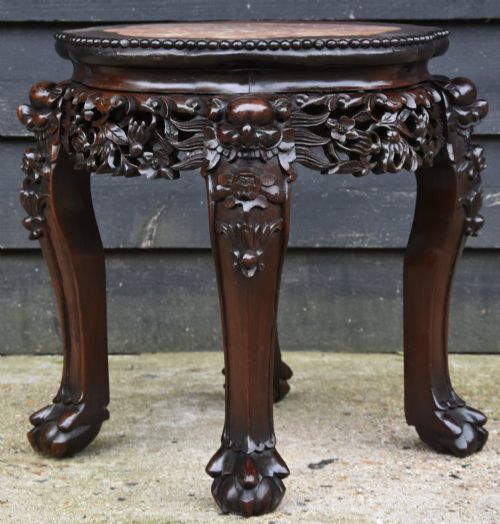
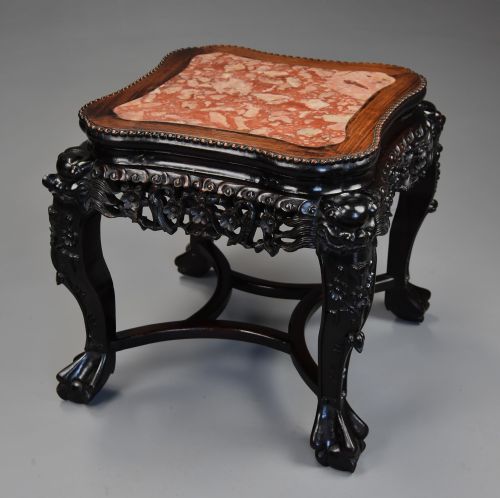
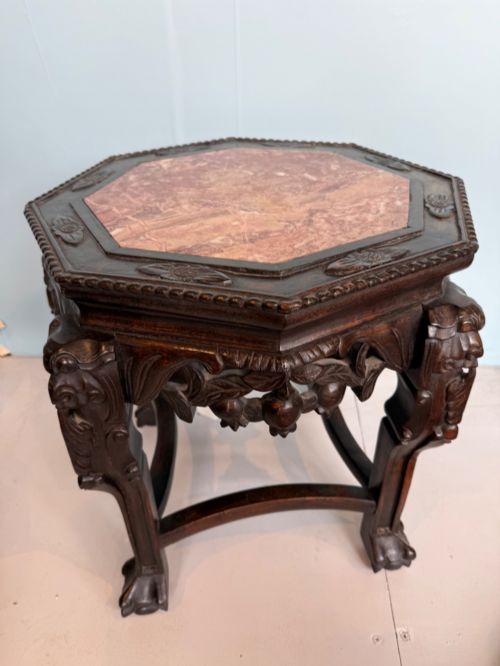
These dark hardwood urn stand examples are carved pedestals and low tables designed to elevate decorative pieces, originating primarily from nineteenth-century Chinese workshops.
Dark Hardwood Urn Stand
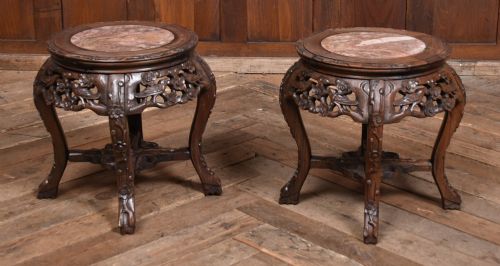
When you search for a dark hardwood urn stand, you are looking at sturdy pedestals, jardiniere stands, and low occasional tables created to support heavy ceramic vessels, plants, and decorative objects. Most examples originate from nineteenth-century Chinese export production, spanning the Victorian and Edwardian periods.
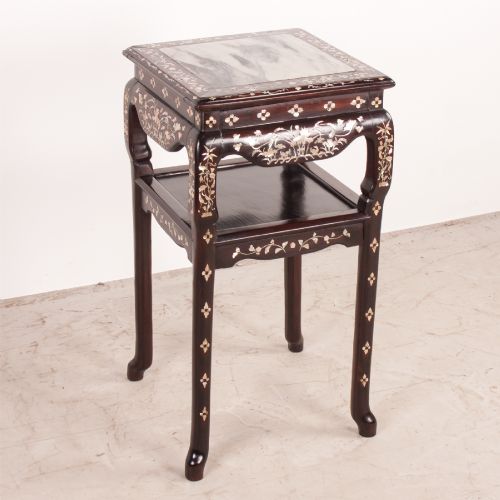
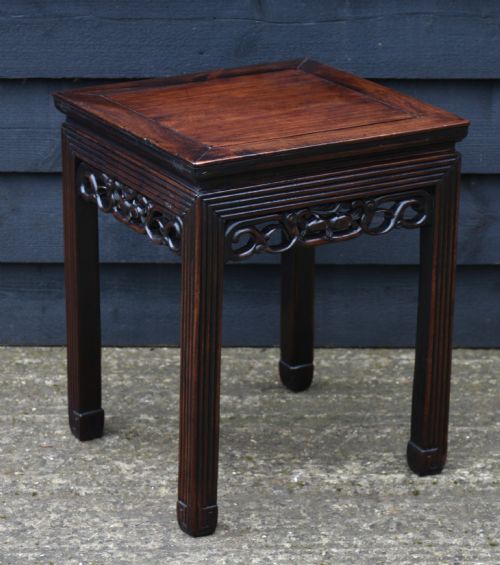
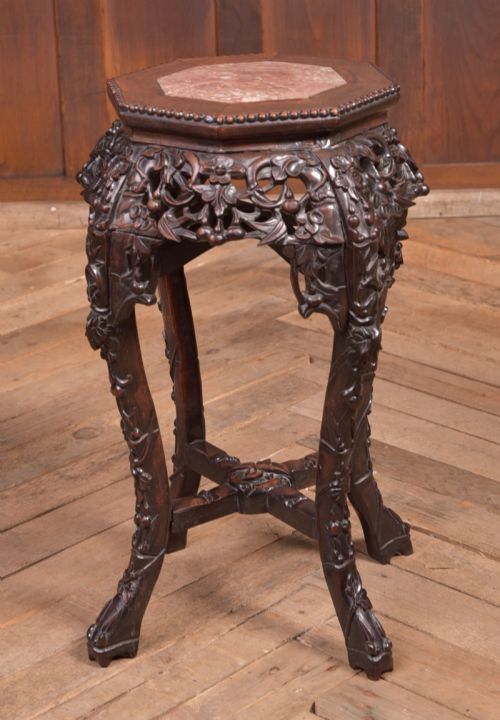
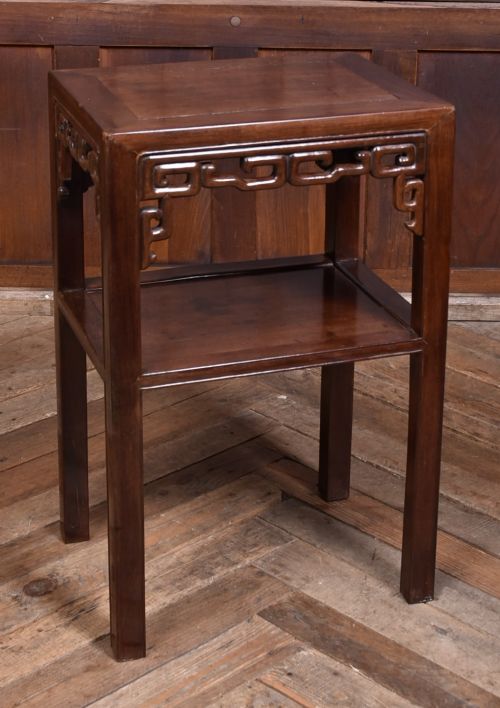
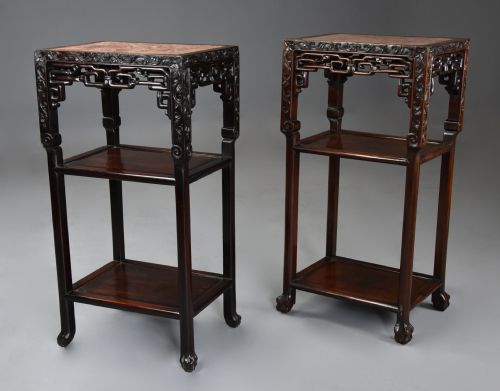
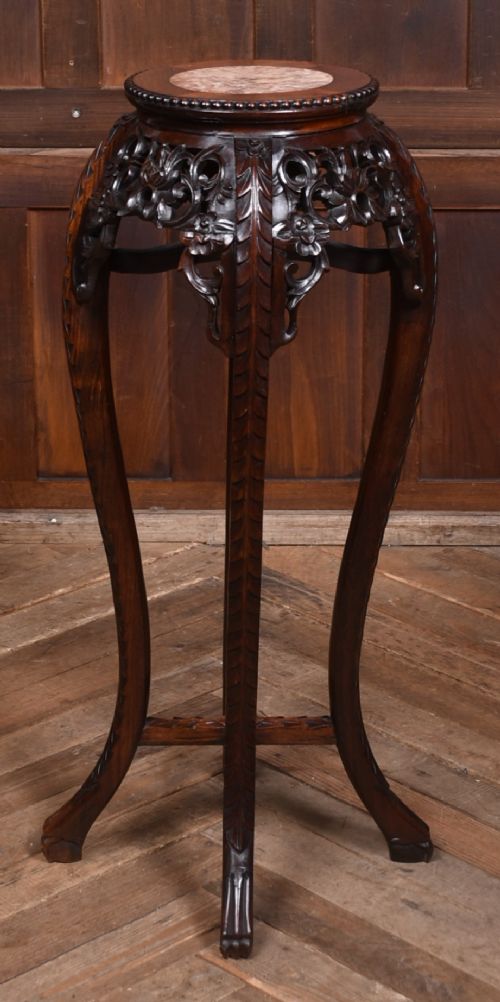
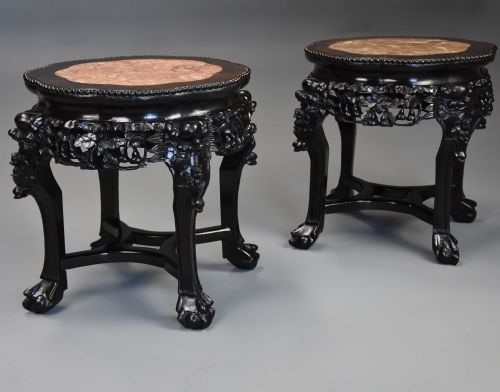
The forms vary from low square tables to tall torchère stands and shaped pot stands designed for specific display purposes. These pieces often serve multiple functions in a room, acting as side tables or lamp tables alongside their original role as urn supports.
Materials and construction
Maker workshops utilised dense timbers such as rosewood, padouk, and hongmu, often ebonised or carved with traditional Chinese motifs. These heavy dark hardwoods provide the structural strength necessary to support inset marble tops without warping.
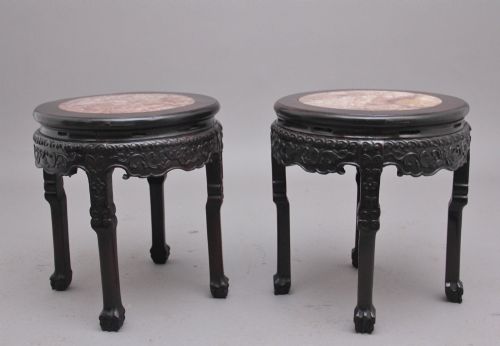
Many pieces incorporate circular or variegated rouge marble inserts into the wooden top, fitted flush to provide a stable, heat-resistant surface for ceramic pots. Subsidiary materials include mother of pearl inlay used for delicate ornamentation across table surfaces.
Listings demonstrate that nineteenth-century Chinese export stands frequently combine heavy rosewood or padouk frames with inset marble tops.
Judging quality in construction
Quality rests in the depth and crispness of the hand carving, where superior examples show intricate undercut foliage and figures rather than shallow, mechanical tooling. The density and grain of the rosewood or padouk timber also distinguish finer pieces from standard production.
Structural integrity depends upon traditional joinery that accommodates the seasonal movement of dense hardwood. The precise fitting of the inset marble top into the wooden frame indicates the standard of workshop execution.
Liberty of London
The Dark Hardwood Urn Stand Glossary
- Jardiniere stand
- A tall or low support specifically built to hold a heavy ceramic flower pot or jardiniere. These tables often feature water-resistant marble tops to protect the wood from moisture.
- Hongmu
- A traditional Chinese classification for dense, red-brown or dark hardwoods used in fine furniture manufacture. The term translates literally as red wood.
- Padouk
- A heavy, durable tropical timber with a reddish tint that darkens with age to a deep brown. It is frequently encountered in nineteenth-century Chinese stands.
- Torchere
- A tall stand or pedestal originally designed to hold a torch or candle, later adapted for lamps and decorative urns. These pieces emphasise vertical height and slender proportions.
Dark Hardwood Urn Stand: Frequently Asked Questions
What were dark hardwood urn stands used for?
These stands were built to elevate heavy decorative items such as Chinese porcelain urns, bronze vessels, and large indoor plants. By raising the object, craftsmen protected delicate floor surfaces and placed the decorative piece at an optimal viewing height within the room.
In period interiors, they functioned as focal points in drawing rooms, hallways, and conservatories. Their sturdy construction allowed them to double as occasional tables for lamps and small decorative objects.
How do I date a nineteenth-century stand?
Dating relies upon stylistic markers, timber choice, and construction methods recorded in Victorian and Edwardian manufacturing traditions. Pieces associated with the Qing Dynasty often display traditional carving styles that evolved through the nineteenth century.
Material analysis also helps, as dense rosewood and padouk usage shifted over decades alongside the introduction of European retail influences. Labels or stamps from firms like Liberty of London provide a precise manufacturing window for later pieces.
How do I style these stands in a modern room?
The compact footprint of these tables allows them to fit easily beside seating as lamp tables or in corners to support trailing plants. Their dark timber tones and contrasting marble inserts anchor lighter modern colour schemes effectively.
Pairing a low pot stand with a modern ceramic bowl or placing a tall torchere in an empty hallway creates a functional display space. The neutral combination of dark wood and stone complements both traditional and contemporary interiors.
Why do many stands have marble tops?
Marble inserts provided a practical, heat-resistant, and water-resistant surface that prevented damp soil from ceramic pots or spilled water from damaging the underlying hardwood. This functional feature protected the wooden frame during daily use.
Over time, the cool stone surface also provided a pleasing visual contrast against the dark, carved grains of rosewood and padouk. Variegated rouge and grey marble varieties were selected to complement the colour of the timber frame.