

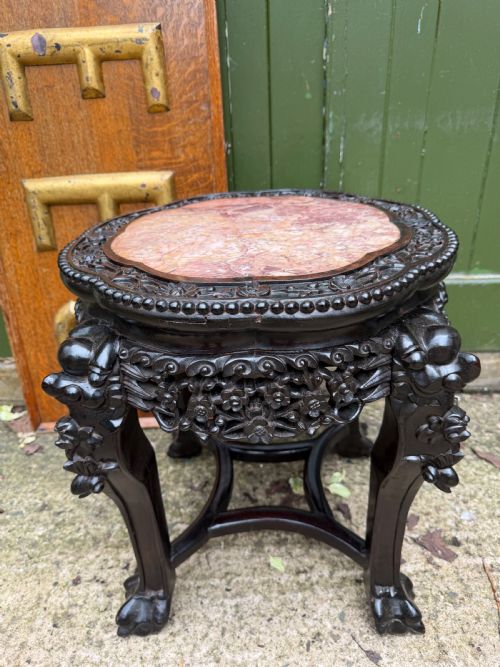


Dark Hardwood Jardiniere Stand
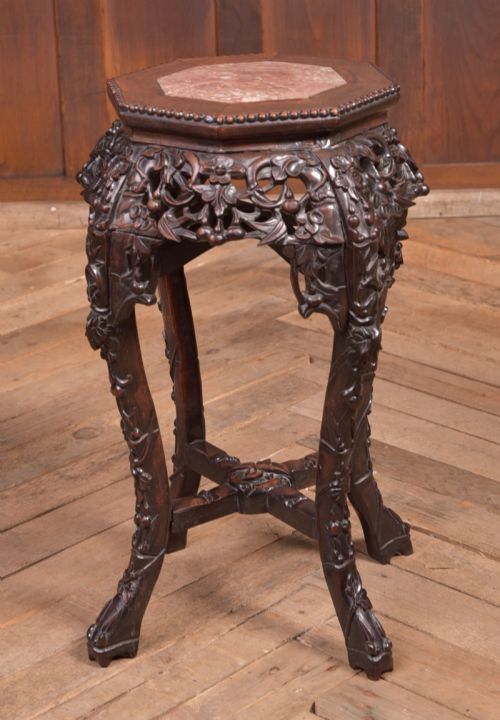
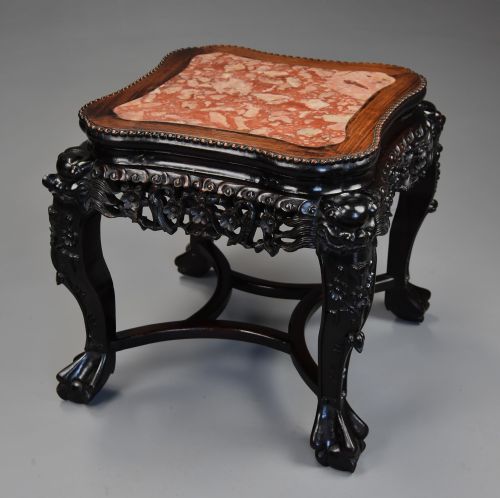
A dark hardwood jardiniere stand elevates your interior greenery, bringing carved timber and inset marble together for a classic display.
Dark Hardwood Jardiniere Stand
A dark hardwood jardiniere stand serves primarily to elevate plants, vases, and urns within a room, functioning both as a practical support and a decorative table. Buyers searching this phrase will find a concentrated selection of nineteenth and early twentieth-century pieces designed for floral displays and interior ornamentation.
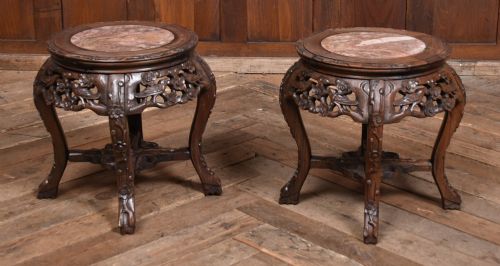
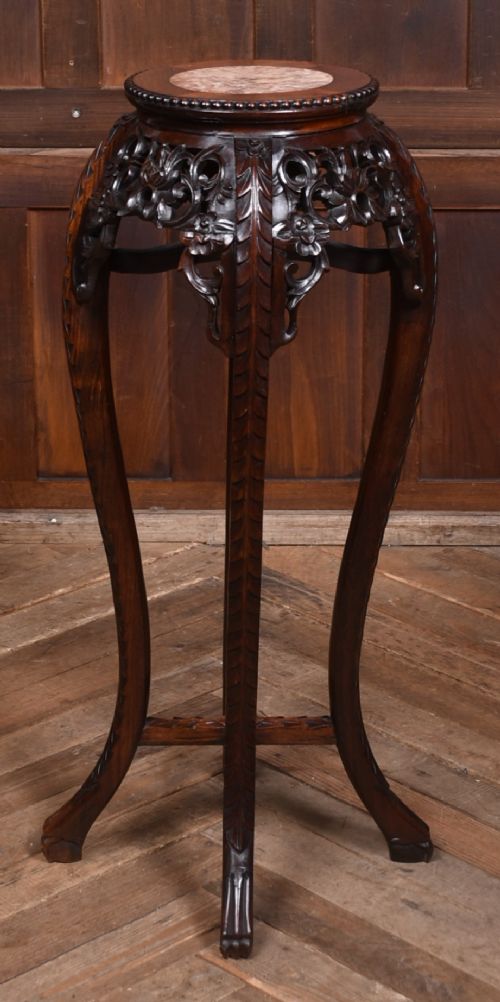
The most common examples on this page originate from Chinese workshops, alongside Japanese and Anglo-Indian variants. These pieces frequently take the form of low tables, pedestals, or tall plant stands built to showcase heavy ceramic planters.
Makers fashioned these stands using dense timbers such as rosewood, padouk, and ebonised wood, often pairing the dark wood with a contrasting stone inset. The resulting forms range from simple round tops to elaborately carved structures featuring pierced aprons and cabriole legs.
What varies in quality
The depth and crispness of the hand-carving separate standard utility tables from exceptional decorative pieces. Superior stands exhibit deeply undercut foliage, dragons, or geometric patterns that retain sharp edges rather than soft, rounded contours.
The quality of the materials and the precision of the marble fit also dictate value. Tightly grained hongmu and rosewood combined with a neatly fitted, unbroken marble inset indicate superior workshop execution.
Materials recorded across the inventory include padouk, rosewood, ebonised wood, and teak, frequently paired with fitted marble tops.
Liberty of London
The Dark Hardwood Jardiniere Stand Glossary
- Hongmu
- A traditional Chinese term for dense red and dark hardwoods used in fine furniture making. These heavy timbers take a high polish and resist shrinking.
- Jardiniere
- A large ornamental pot or planter designed to hold growing plants. These stands were built specifically to support such heavy ceramic vessels.
- Padouk
- A heavy, durable tropical timber with a deep reddish-brown colour that darkens with age. It appears frequently in nineteenth-century Chinese plant stands.
- Rouge marble
- A deep red ornamental limestone with white or grey veining. It provides a smooth, contrasting surface inset into the tops of these stands.
- Torchere
- A tall stand or pedestal originally intended to hold a candle or lamp. In later contexts, these forms served equally well for display vases and plants.
Dark Hardwood Jardiniere Stand: Frequently Asked Questions
What is a dark hardwood jardiniere stand used for?
These pieces were originally designed to elevate heavy ceramic planters and floral arrangements off the floor, protecting delicate flooring from moisture and displaying greenery at a visible height. Today, collectors utilise them as small side tables, lamp stands, or pedestals for decorative objects.
Their compact footprints make them versatile for corners and hallways where larger furniture will not fit. The flat top provides a stable surface for everyday domestic items.
How do I date a Chinese hardwood plant stand?
Dating relies on examining the timber density, the style of the hand-carving, and the construction methods used in the frame. Nineteenth-century examples often feature heavier padouk or rosewood with deep, organic carving inspired by Qing Dynasty motifs.
Later pieces from the Edwardian period or the early twentieth century may show sleeker lines or different joinery. The presence of original marble inserts and natural wear patterns also helps determine age.
Are marble top stands fragile?
The marble inserts are heavy and solid, but they can chip along the edges if struck hard by heavy objects. The wooden frames themselves are built from dense tropical hardwoods designed to bear substantial weight.
Normal daily use with lamps or ceramic pots poses no risk to the structure. Care should simply be taken when moving the stands to avoid shifting the inset stone.
How do I care for antique dark hardwood?
Maintain the timber by dusting it regularly with a dry, soft cloth and avoiding direct sunlight or excessive heat sources that could dry out the wood. Occasional light waxing helps preserve the polished finish of dense woods like rosewood and padouk.
Protect the marble inset from acidic spills by using coasters under liquids. Avoid harsh chemical cleaners that can strip the historic polish.