




Dark Hardwood Desk
A dark hardwood desk brings dense grain, grounded weight and rich colour to a study, drawing from nineteenth-century forms and export workshops.
Dark Hardwood Desk
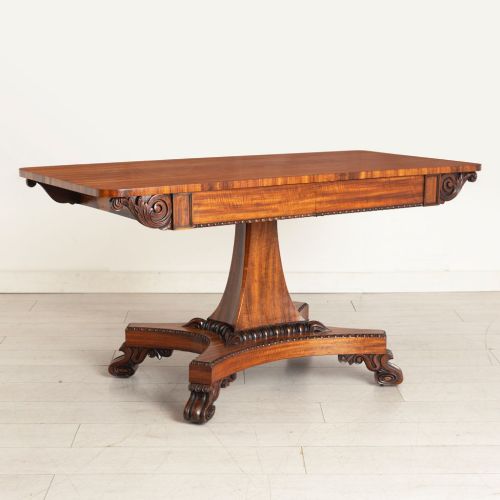
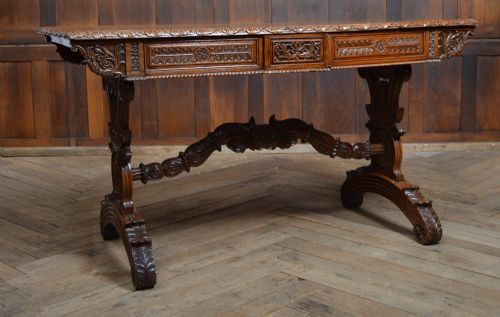
A dark hardwood desk groups together nineteenth-century library tables, partners desks, bureau desks and pedestal writing furniture constructed from dense timbers. When searching for this phrase, collectors encounter Anglo-Indian padauk pedestal desks, nineteenth-century partners desks, and bureau desks showing regional carving traditions. These pieces reflect global trade and nineteenth-century cabinet-making styles, ranging from British colonial workshops to Chinese export production.
The versions most common on this page date predominantly from the Victorian era and the broader nineteenth century, utilising dark exotic timbers like padauk, teak and rosewood. Forms span large double-sided partners desks designed for professional use to smaller bureau desks tailored for private correspondence. Regional styles such as Anglo-Indian carving and Chinese export cabinet work strongly influence the surface ornamentation.
How they were made
Cabinet makers built these desks using heavy tropical hardwoods such as padauk, rosewood, teak and elm, selected for density and deep natural colour. These timbers were joined using traditional framing techniques and finished to highlight natural grain patterns without relying on heavy stains.
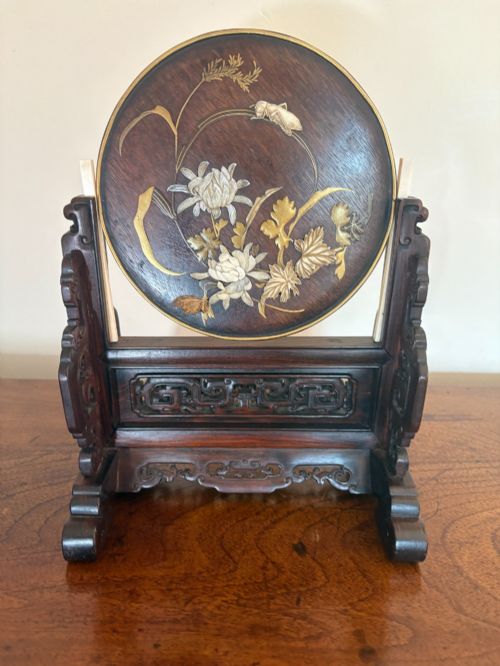
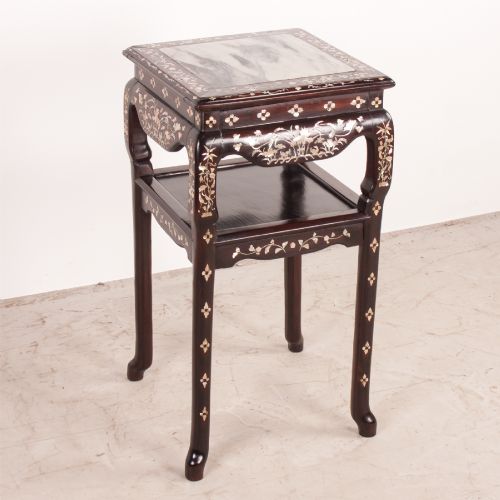
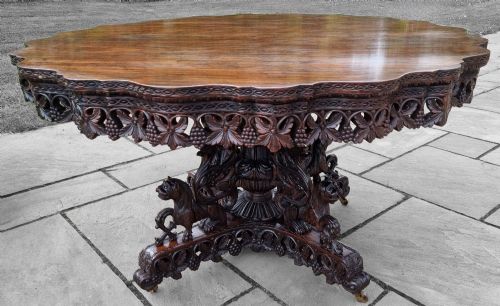
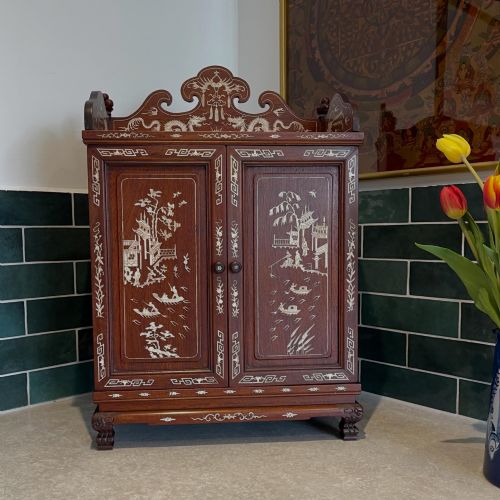
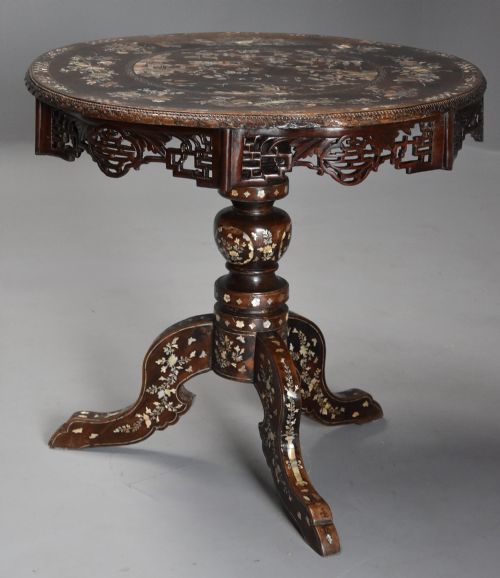
Surface decoration frequently involved intricate hand-carving executed directly into the dense timber or detailed mother of pearl inlay set flush into the hardwood panels. Brass mounts, campaign handles and occasional mixed metal elements provided structural reinforcement and contrast against the dark polished surfaces.
A tiny ivory slider hidden in an Anglo-Indian bureau once unlocked secret drawers designed for smuggling love letters past prying eyes.
What varies in quality
Quality rests in the selection of the timber and the crispness of the hand-carved details, where deep relief work remains sharp and well-defined across the structure. Superior examples display precise joinery that keeps large writing surfaces stable despite changes in temperature and humidity.
The integrity of secondary woods, original brass hardware and the secure setting of mother of pearl inlay separate standard utility pieces from exceptional workshop creations. A higher grade of execution shows continuity in style across concealed structural elements and harmonious grain matching on major panels.
The Dark Hardwood Desk Glossary
- Padauk
- A heavy, dense tropical hardwood displaying a deep reddish-brown colour that darkens with age and exposure to light. This timber was favoured by cabinet makers in British India and Southeast Asia for formal furniture.
- Partners desk
- A large double-sided writing table designed for two people to work face-to-face, featuring drawers and cupboards on both sides. These desks were standard fixtures in nineteenth-century offices and libraries.
- Bureau desk
- A writing cabinet featuring a sloping fall-front lid that opens to reveal an internal arrangement of small pigeonholes and drawers. It combines enclosed storage with a dedicated writing surface.
- Mother of pearl
- The iridescent internal layer of mollusc shells, carved into thin pieces and set into wooden channels to create floral or geometric patterns. It provides pale contrast against dark hardwood surfaces.
- Anglo-Indian
- A style of furniture produced during the British colonial period in India, combining traditional European forms with intricate local carving traditions. These pieces often utilise dense native timbers like teak and padauk.
Dark Hardwood Desk: Frequently Asked Questions
What is a partners desk?
A partners desk is a large writing table configured so that two people can sit opposite each other with matching drawer space on both sides. They were built for professional offices and libraries.
These desks often feature pedestals containing banks of drawers and cupboards beneath a leather or timber top.
How do I care for hardwood furniture?
Hardwood furniture benefits from stable indoor humidity and protection from direct sunlight to prevent the timber from drying or cracking. Regular dusting with a dry cloth maintains the surface.
Avoid silicone-based polishes, opting instead for traditional beeswax applied sparingly to nourish the natural grain.
Where were Anglo-Indian desks made?
Anglo-Indian desks were produced in workshops across the Indian subcontinent during the nineteenth century under British rule. Local craftsmen applied traditional regional carving to European furniture forms.
These workshops frequently utilised native hardwoods like padauk and teak rather than imported European timber.
How do I identify a nineteenth-century desk?
Nineteenth-century desks exhibit construction methods typical of the period, including hand-cut dovetails in the drawer linings and heavy solid timber framing. Examining the secondary woods and tool marks helps confirm the age.
Styles from this era often incorporate Victorian or colonial revival motifs executed in dense tropical hardwoods.