


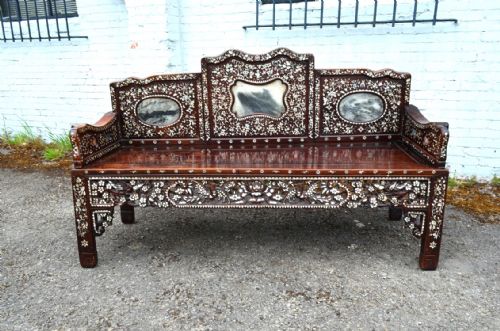


Dark Hardwood Bench
A dark hardwood bench offers solid timber seating steeped in global history, bringing rich grain and character to a hallway or living space.
Dark Hardwood Bench
A dark hardwood bench encompasses robust seating pieces originating from diverse global traditions spanning the nineteenth and early twentieth centuries. These forms include altar benches, hall seats, window rests and daybeds carved from dense timbers.
Buyers frequently encounter Chinese examples from the Qing Dynasty alongside Anglo-Indian creations, African tribal items and Moorish revival designs. Such pieces serve practical seating roles or function as distinctive low tables within modern interiors.
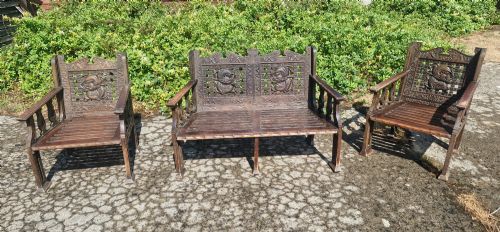
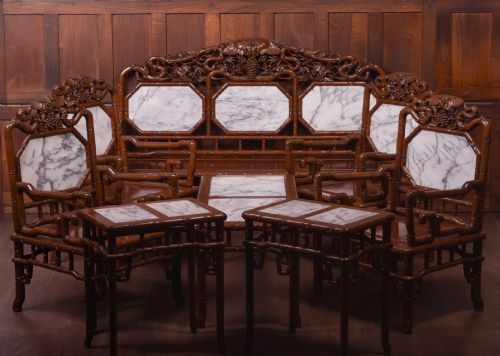
The selection ranges from simple plank-top trestle forms to elaborately carved parlour suites and mother-of-pearl inlaid seating. Each piece reflects the specific regional craftsmanship of its period of origin.
How they were made
These items rely on dense tropical hardwoods, sometimes complemented by secondary materials such as cane, marble, brass, lacquer and fabric. Artisans employed traditional joinery techniques to shape heavy timbers into sturdy frames.
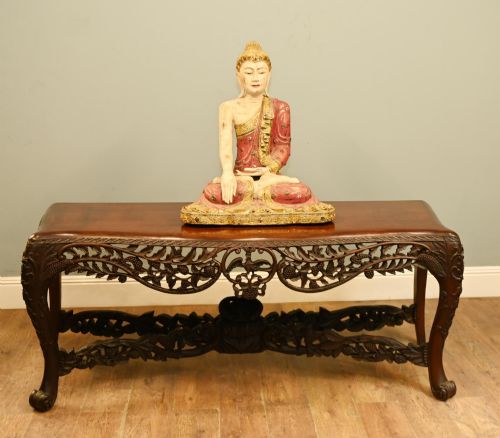
Carving represents a primary decorative method, with many pieces featuring intricate relief work depicting floral, scroll or figurative motifs. Inlaying with mother of pearl further enhances the visual depth of select export pieces.
Surface treatments vary from polished natural grain displaying the dark colour of huali or hongmu to applied lacquer finishes. Metal embellishments, including brass decoration, provide structural reinforcement and contrast.
Listings feature items dated across the nineteenth century, nineteen-hundred, eighteen-ninety and nineteen-twenty.
What varies in quality
Quality rests heavily upon the density and selection of the timber, with specific woods like huanghuali and huali commanding greater regard among collectors. The weight and natural figure of the hardwood dictate the initial substance of the object.
The depth and crispness of the hand-carving distinguish finer examples from simpler vernacular production. Skilled execution in relief work or precise mother-of-pearl inlay indicates superior workshop standards.
Structural integrity and the preservation of original surfaces also separate standard pieces from exceptional survivals. Minimal intervention and intact joinery maintain the historical value of these functional antiques.
The Dark Hardwood Bench Glossary
- Hardwood
- Timber derived from broad-leaved trees, noted for density, durability and rich natural dark tones. Examples include huali and hongmu used in traditional Asian seating.
- Kang table
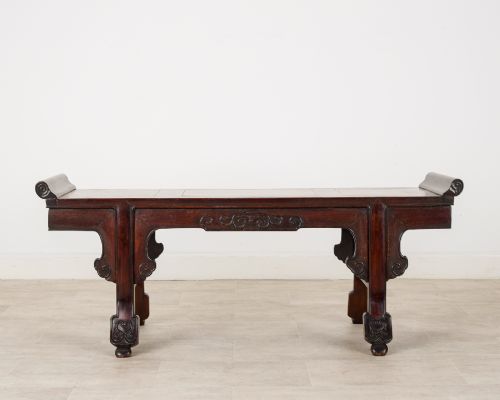
- A low platform table traditionally placed on a heated brick bed in northern China for sitting, dining or resting. These low forms often function as coffee tables in contemporary rooms.
- Altar bench
- A long, narrow seating or display form originating from temple or domestic ancestral halls. They feature clean linear profiles or elaborate carved aprons.
- Anglo-Indian
- Describing furniture made in India under British colonial rule, combining European furniture forms with local carving traditions and dense tropical timbers.
- Mother of pearl
- The iridescent internal layer of mollusc shells, utilised in thin sections to create intricate inlaid geometric or floral patterns on dark timber surfaces.
Dark Hardwood Bench: Frequently Asked Questions
How do I use a dark hardwood bench at home?
A dark hardwood bench serves well in entrance halls, mudrooms or at the foot of a bed for seating and placement.
Shorter or lower versions also function effectively as coffee tables or low display surfaces in living rooms.
What is the difference between a hall bench and an altar bench?
Hall benches are designed primarily for seating visitors in entryways and often feature high backs or arms.
Altar benches originate from domestic or temple settings and typically present a longer, narrower plank top with simple or carved supports.
How do I identify a Qing Dynasty bench?
Qing Dynasty pieces frequently exhibit deep hand-carving, scroll ends and dense timbers such as huali or hongmu.
Stylistic markers include traditional Chinese architectural joinery and iconography distinct to the nineteenth and early twentieth centuries.
How do I care for antique hardwood furniture?
Maintain the timber by keeping pieces away from direct heat sources and sudden temperature fluctuations that cause wood to split.
Apply natural beeswax occasionally to nourish the grain and protect the polished surface without building up residue.