
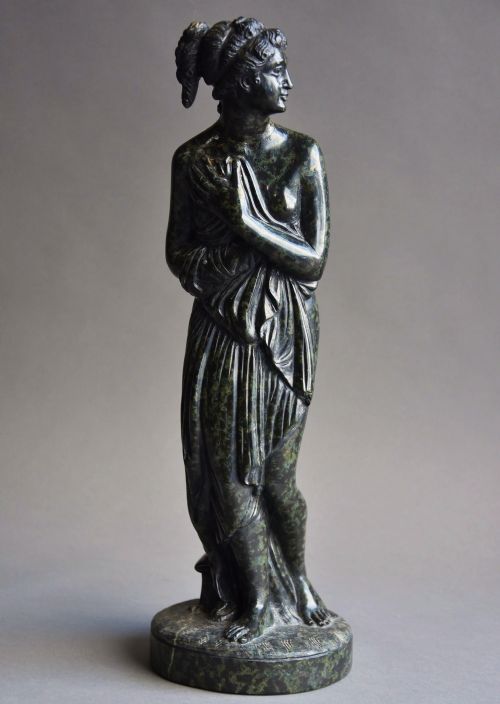

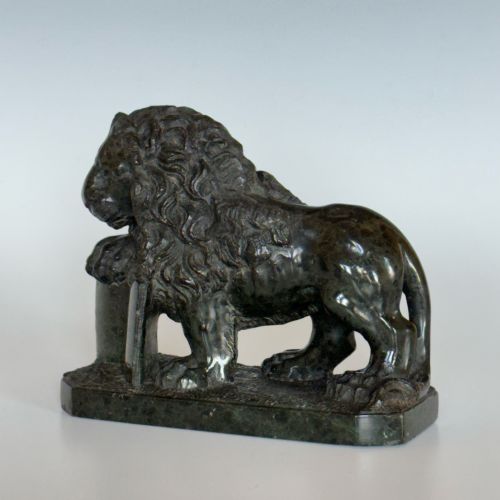





Dark Green Marble Figure
A dark green marble figure brings the stone of ancient Italy and nineteenth-century parlours directly to your desk or mantelpiece.
Dark Green Marble Figure
A dark green marble figure typically emerges from nineteenth-century workshops producing Grand Tour souvenirs and classical ornaments. Collectors seeking a dark green marble figure encounter carved serpentine, verde prato, and assorted stone models depicting antique animals, classical lions, and mythological subjects. These pieces capture the taste for classical antiquity that shaped European interiors during the Victorian era and earlier decades.
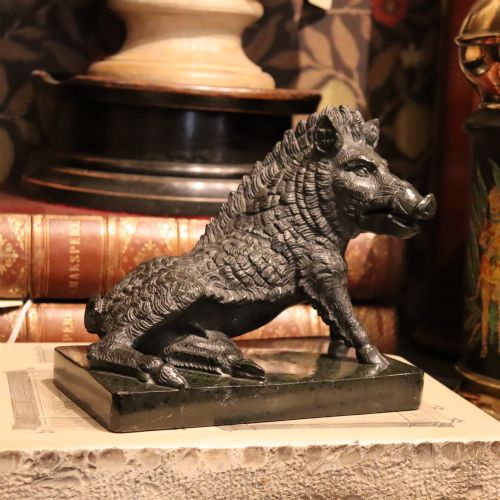
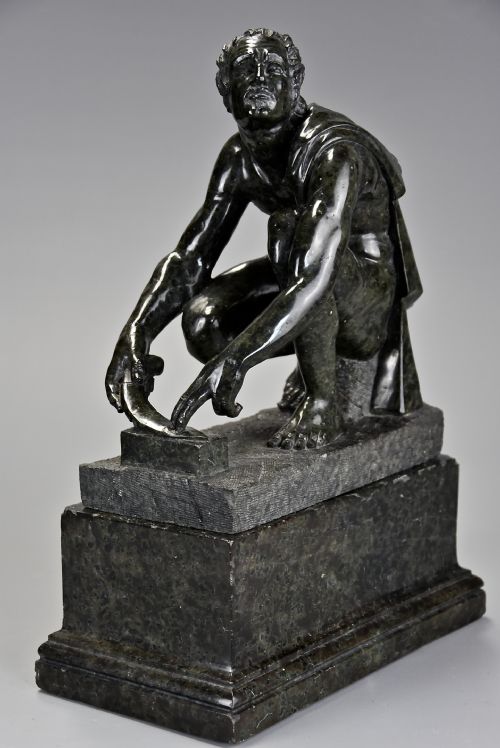
Italian carvers dominated the production of these stone models, often working in Florence and Rome to supply travellers returning from the Grand Tour. The subjects range from the Florentine boar and Venetian lions to reduced versions of famous sculptures like the Venus Italica and the Knife Sharpener. Surviving examples demonstrate how closely nineteenth-century artisans studied ancient prototypes in museums and archaeological sites.
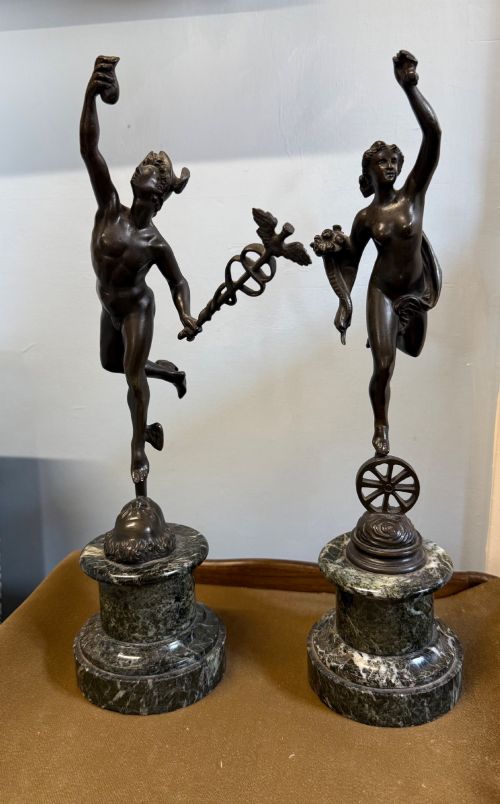
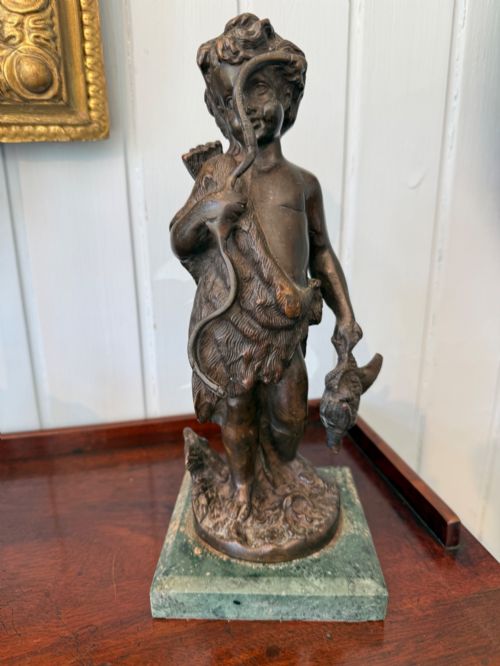
Many listings pair these green stone carvings with patinated bronze figures mounted upon marble bases, or present standalone stone sculptures of considerable weight. The variety spans small souvenir animals to substantial architectural models and fountain heads carved from dense, mottled stone. Each object reflects the nineteenth-century passion for placing tangible pieces of classical heritage inside private homes.
Materials and Technique
Carvers shaped these figures from dense natural stones, utilising serpentine, verde prato, and variegated green marbles that take a high, lustrous polish. The geological composition of these marbles produces characteristic white veining and clouding across the surface of the sculpture. Artisans selected blocks with uniform grain to execute fine anatomical details without fracturing the stone.
Hand chiselling and abrasive polishing defined the production process, drawing on traditional stonemasonry techniques passed down through Italian workshops. Sculptors relied on callipers and proportional dividers to copy ancient statues held in public and private collections. Final smoothing was achieved using progressively finer grades of grit and oil, creating the tactile finish characteristic of nineteenth-century Grand Tour artefacts.
Object forms range from classical animal models and nude figures to architectural fountain heads and clock garnitures.
Assessing Quality
Quality rests upon the crispness of the carving and the fidelity of the proportions to the classical source material. Superior pieces exhibit confident handling of muscle, drapery, and facial expression, whereas lesser examples appear soft and indistinct in their details. The natural figuring of the green marble also influences visual success, as well-placed veining enhances the sculptural form.
The degree of finish on the reverse and underside reveals the diligence of the workshop. Master carvers polished hidden surfaces with the same care applied to the principal viewing angles, while lesser items show tool marks left unrefined. The integration between stone figures and any accompanying bronze mounts or bases further distinguishes workshop standards.
Jules Bonheur·Delabrierre·Antoine L Barye·Franz Bergman·E Drouot
The Dark Green Marble Figure Glossary
- Grand Tour
- A traditional trip through Europe, particularly Italy, undertaken by wealthy young men in the eighteenth and nineteenth centuries to study classical art and architecture.
- Serpentine
- A group of green silicate minerals that take a smooth polish and resemble snake skin, frequently utilised for nineteenth-century carvings.
- Verde Prato
- A distinctive dark green Italian marble sourced near Prato, prized for its dense colour and subtle veining in classical sculptures.
- Clock Garniture
- A decorative set comprising a central clock flanked by matching ornamental side pieces, often cast in bronze and mounted on marble bases.
Dark Green Marble Figure: Frequently Asked Questions
What is a Grand Tour figure?
A Grand Tour figure is a souvenir sculpture purchased by nineteenth-century travellers visiting historical sites and museums in Italy. These objects served as portable reminders of classical antiquity.
Craftsmen produced reductions of famous ancient statues, architectural models, and local animals in materials such as bronze and green marble. They allowed collectors to display a cultivated appreciation for classical history within their own homes.
How do I clean green marble?
Cleaning green marble requires a soft, dry cloth to remove surface dust without disturbing the polished stone. Avoid water, soap, and chemical cleaners that can penetrate porous natural minerals.
Gentle maintenance preserves the historic surface sheen developed over decades of handling. Professional conservation advice should be sought if deeper staining or structural residue requires attention.
Are these figures solid marble?
Many figures carved entirely from stone are solid blocks of serpentine, verde prato, or general green marble. Their weight often reflects this dense composition.
Other listings feature bronze figures mounted upon stone plinths or bases rather than carved entirely from marble. Examining the material descriptions clarifies whether the sculpture is solid stone or a mixed-media piece.
How do I date these pieces?
Dating relies on stylistic clues, historical records, and the manufacturing techniques visible in the stone and metal components. Most items on this page originate in the nineteenth century, reflecting the peak of Grand Tour souvenir production.
Workshop signatures, foundry marks, and the specific patina of the bronze or polish of the marble help narrow the period of creation. Comparative study with documented museum examples confirms the era of manufacture.