

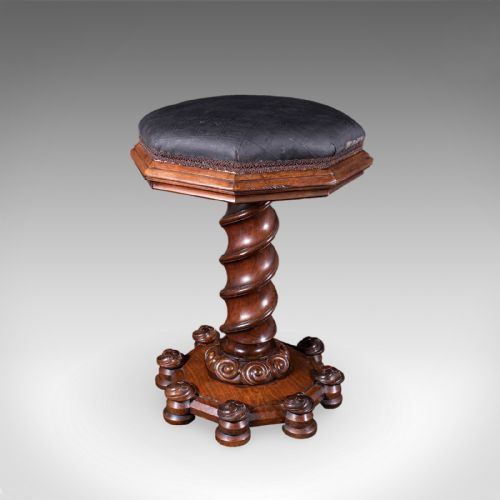


Dark Brown Walnut Chairs
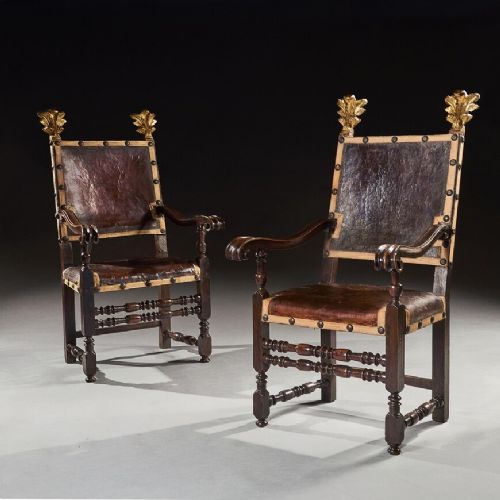
These dark brown walnut chairs range from seventeenth-century Italian Baroque armchairs to nineteenth-century Victorian dining seats, offering rich timber tones and solid construction for period interiors.
Dark Brown Walnut Chairs
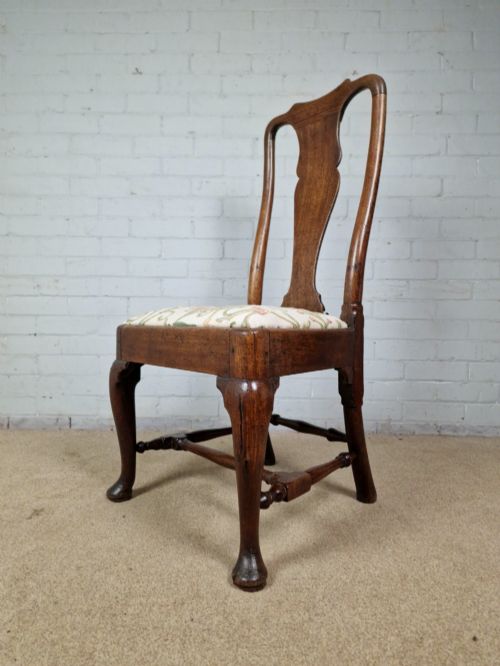
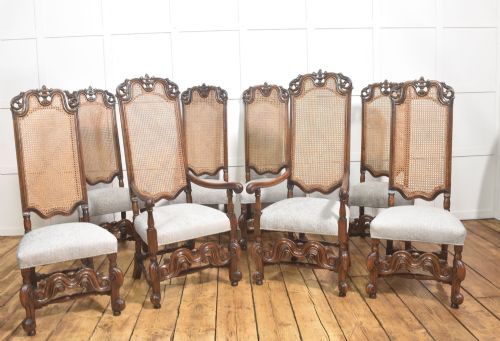
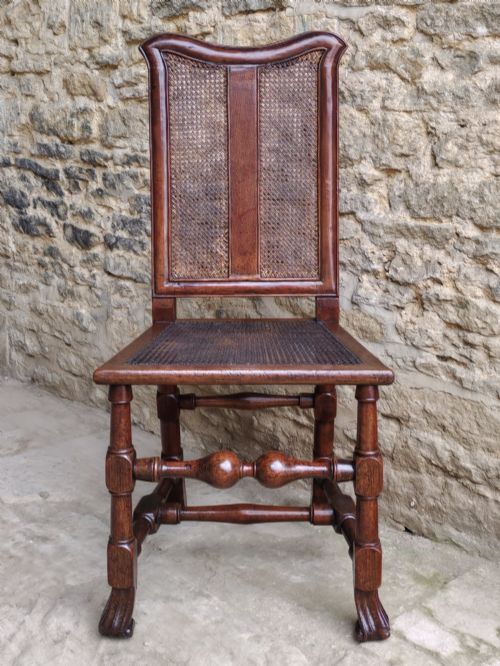
Dark brown walnut chairs span several centuries of seating design, appearing most frequently as side chairs, armchairs, and dining sets from the seventeenth, eighteenth, and nineteenth centuries. Buyers encounter diverse forms ranging from high-back cane dining chairs to sturdy desk chairs, hall chairs, and corner seating.
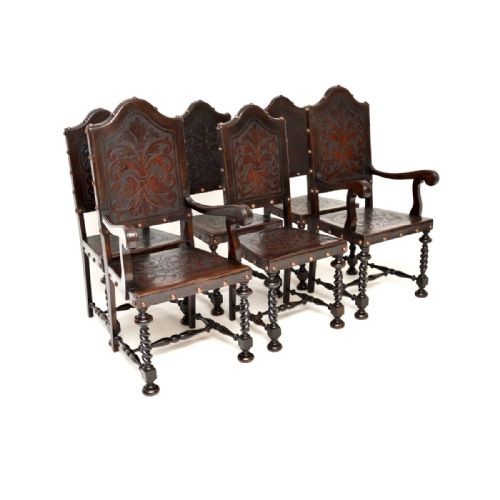
The selection includes regional pieces such as Italian Baroque armchairs, Portuguese embossed leather dining sets, and Swiss Alpine models alongside English Georgian and Victorian examples. These diverse origins bring distinct regional carving styles and proportions to the walnut timber framework.
Materials and construction techniques
Makers utilised solid walnut timber for the primary frames, frequently combining the dark wood with inserts of cane, brass fittings, and upholstery fabric or embossed leather. Seats and backs often incorporate woven cane panels or stretched textiles secured with traditional fixings.
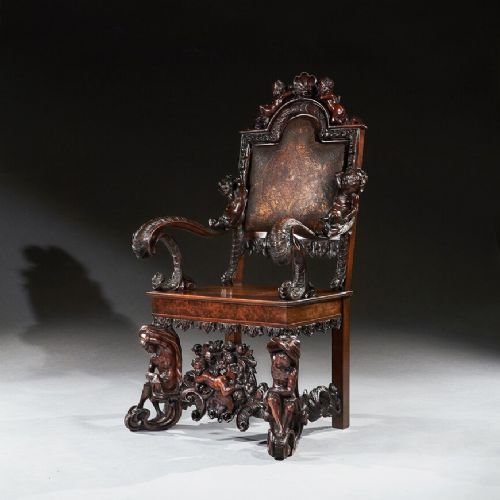
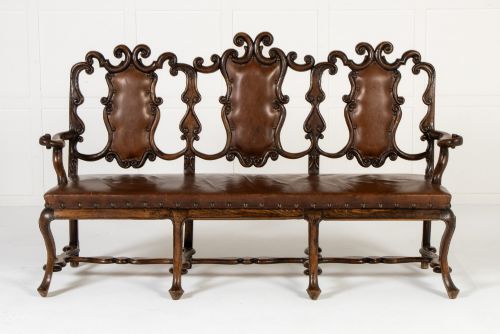
Joinery relies on traditional framing techniques complemented by ornate hand-carving, parcel-gilt highlights, and turned elements such as bobbin legs. Craftsmen shaped the dense walnut to create high backs, curved cabriole legs, and elaborate figural or ribbon-back details.
Dark Brown Walnut Chairs Retail Price Guide 2026
Typical asking prices for dark brown walnut chairs among the pieces listed under this phrase on Sellingantiques today, from the lower quarter to the upper quarter. They describe what is for sale here now, not the wider market.
Certain antique chapel organists and correction chairs join the walnut lineup, ready for posture adjustments of yesteryear.
Factors influencing quality
Quality rests upon the depth of the hand-carving, the crispness of the timber moulding, and the architectural proportion of the frame. Pieces produced by skilled workshops display intricate joinery and balanced framing that endure through centuries of use.
The selection of the walnut timber itself, along with the preservation of original leather, cane, or fabric elements, dictates the standing of a piece. Finer examples maintain their structural integrity and surface patination without losing the definition of their carved ornament.
The Dark Brown Walnut Chairs Glossary
- Cane
- Woven rattan material utilised for chair seats and high backs. It provides a lightweight yet durable surface.
- Cabriole leg
- A furniture leg that bends outward and then tapers inward, common in eighteenth-century designs. This shape mimics animal limbs.
- Parcel-gilt
- Partially gilded surface decoration applied to woodcarving. It highlights specific details with gold leaf against the dark walnut.
- Commode chair
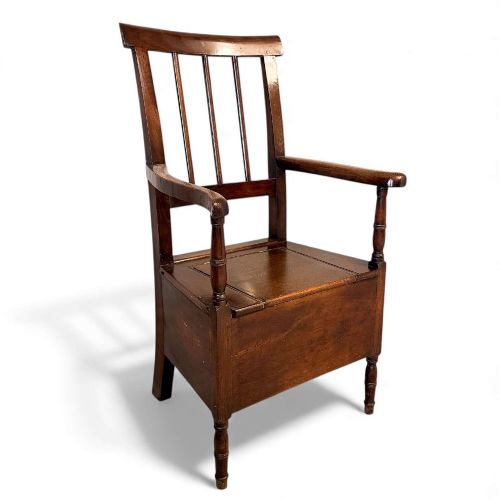
- An enclosed chair designed to house a chamber pot beneath the seat. Eighteenth-century versions often disguise the function within a standard seating frame.
- Sgabello
- A light wooden chair originating from the Italian Renaissance featuring a box base or trestle supports. These early seats often display carved walnut panels.
Dark Brown Walnut Chairs: Frequently Asked Questions
How do I date an antique walnut chair?
Dating relies on examining the joinery methods, tool marks, and stylistic indicators such as leg shapes and carving motifs. Seventeenth-century examples often feature turned stretchers and high backs, while eighteenth-century pieces frequently display cabriole legs and ribbon-back designs.
Secondary woods used in the frame construction also offer clues to the origin and period. Comparing the structural framing to documented pieces from the same region helps narrow down the decade of manufacture.
Are these chairs suitable for daily dining use?
Many of these chairs served as dining furniture originally and remain robust enough for regular seating. Solid walnut frames provide sturdy support, though antique cane or upholstered inserts may require careful handling.
Checking the stability of the joints ensures the chair can bear weight safely. Placing protective pads under the feet prevents wear on modern flooring.
How should I maintain walnut timber and leather?
Maintaining walnut involves dusting regularly with a soft cloth and applying appropriate wax polish periodically to nourish the grain. Avoid placing antique timber in direct sunlight or near heat sources to prevent cracking.
Leather seats benefit from specialised conditioning balms to keep the hide supple. Gentle cleaning preserves the natural patination built up over centuries.